Best Hiking Tops for a Large Bust
A pack-on guide to bra-compatible trail tops, chest depth, shoulder-harness seams, sternum-strap comfort, moisture movement, sun coverage and adaptable layers.

The 90-second pack-on fit check
- Wear the exact sports bra and base layer planned for the hike.
- Load the pack with a safe, representative day-hike weight.
- Adjust the hip belt, shoulder harness and sternum strap as instructed.
- Reach forward and upward as if using poles or scrambling.
- Rotate the torso and take several long uphill-style steps.
- Check bra straps, top seams and pack straps for stacked pressure.
- Confirm the front hem stays clear of the hip belt without rolling.
- Take full breaths; chest pressure or numbness requires a refit.
Best hiking tops for a large bust by construction
Hiking tops are a system choice, not a single-feature purchase. The right construction depends on heat, exposure, precipitation, pack contact, trail intensity and the support layer underneath. A loose top can still bind across the chest once shoulder straps pull it backward; a close top can feel comfortable until sweat, seams and a hip belt add friction.
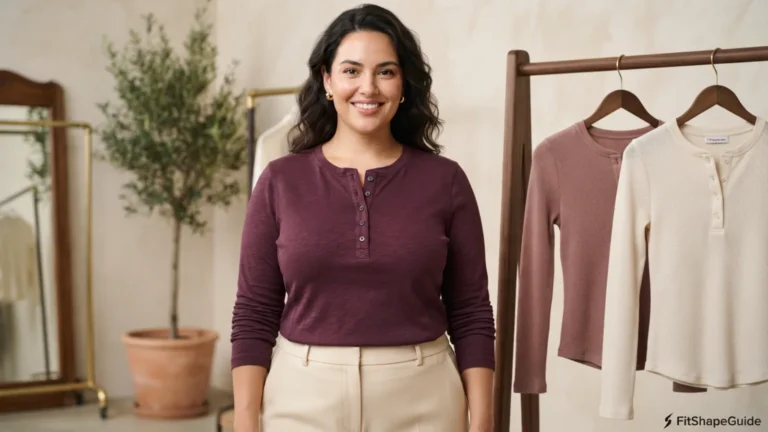
Shaped quick-dry crew tee
Best for: warm day hikes and simple layering. Curved panels or sufficient front volume can preserve chest depth while a slightly dropped hem stays covered under the pack. Trade-off: very thin fabric may reveal bra edges or pill faster where pack straps rub.
Quarter-zip long-sleeve trail top
Best for: adjustable ventilation, cool starts and exposed routes. A guarded zipper can open without pulling the whole neckline. Trade-off: stiff zipper tape may wave or press when the front panel lacks depth.
Lightweight button-front sun shirt
Best for: arm coverage, ventilation and wearing open over a base layer. Back pleats or gussets can improve reach. Trade-off: shallow button spacing may gape at the bust, and chest pockets can sit beneath pack straps.
Bra-compatible technical tank
Best for: hot, low-exposure walks or use beneath another sun layer. Look for armholes that cover the chosen bra and a stable neckline. Trade-off: pack straps can contact bare shoulder edges and increase rubbing.
Lightweight wool-blend base top
Best for: temperature versatility and multi-day layering when its fabric and care suit the trip. Trade-off: fine knits can require gentler care and may abrade beneath repeated harness contact.
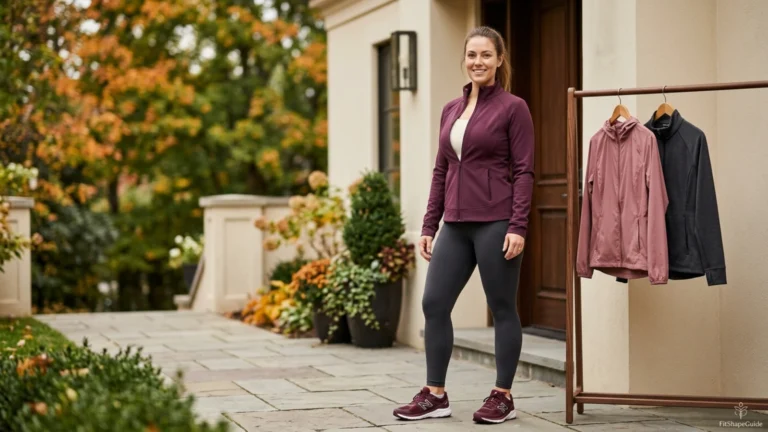
Base top, fleece and shell system
Best for: changing wind, rain and temperature. Separate layers let you regulate comfort without relying on one heavy shirt. Trade-off: three garments can combine into chest, armhole or zipper pressure if each fits too close.
The best hiking tops create room through the pattern rather than borrowing it by stretching the shoulder seams or lifting the front hem. Fabric performance cannot correct a shallow cut.
Choose the sports-bra foundation for hiking
Walking intensity, elevation change, pack weight and terrain affect support needs. The bra must also coexist with backpack straps. A perfectly acceptable gym fit can become uncomfortable when a shoulder harness presses its adjuster, hook area or raised seam for hours.
Band and cup containment
The band should remain level while stepping uphill and reaching for poles. Cups should contain without cutting at the neckline or armhole. Encapsulation or hybrid construction may give more defined depth than a flat compression panel, but support should remain breathable.
Strap position
Compare bra straps with the actual pack harness. Parallel straps may stack beneath the shoulder straps; a racerback may move the junction toward the neck. Neither route is automatically better. Use the racerback sports bra guide to compare routing, then perform the loaded-pack test.
Support level
A smooth trail walk may need different control from fast hiking, steep descents or scrambling. Stronger support can be useful, but excessive compression beneath a snug shirt and sternum strap can reduce comfort. Compare the sports bra guide and high-impact sports bra guide without assuming the firmest option is always best.
| Foundation detail | Useful evidence | Pack-on test | Trade-off |
|---|---|---|---|
| Level underband | Firm recovery and complete cup connection | Uphill steps without band rise | Very firm elastic may conflict with pack movement |
| Shaped cups | Adequate depth and side containment | Forward pole reach without spill | Raised seams can show under thin tops |
| Racerback straps | Stable central route | Check pack harness and neck clearance | Junction may stack beneath sternum-strap area |
| Parallel straps | Adjustable placement and even tension | Check for shoulder-harness overlap | Sliders can become pressure points |
| Front closure | Guarded, secure fastening | Bend and breathe beneath sternum strap | Center hardware may feel prominent |
| Smooth wire-free frame | Low-profile seams and stable side panels | Full pack adjustment without rubbing | Flat patterns may lack cup depth |
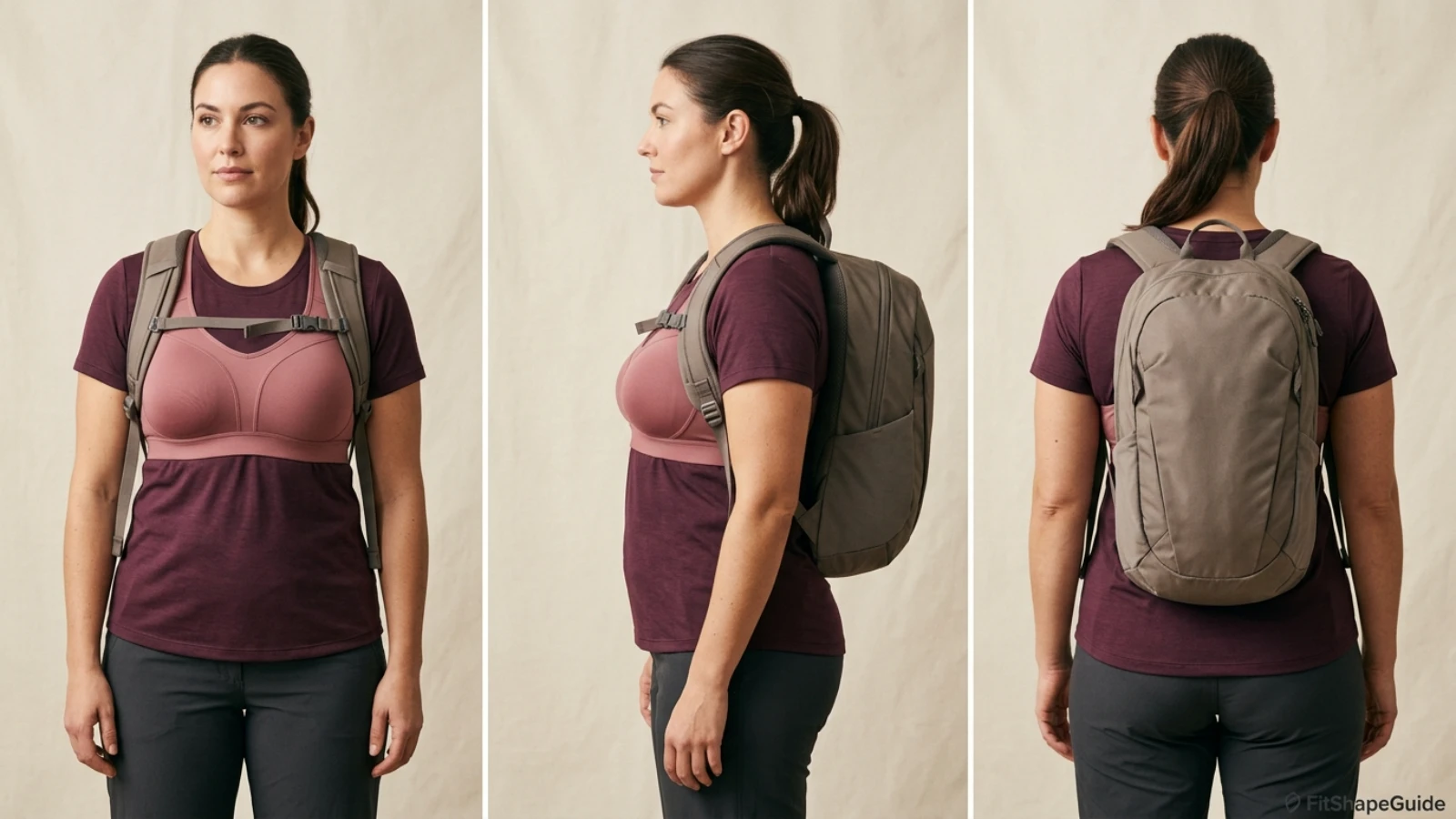
The best hiking tops for a large bust protect the support system from avoidable harness friction instead of adding more compression.
Backpack straps, seams and front-length balance
A pack changes the shirt. Shoulder straps pull fabric toward the back, the sternum strap connects the harness across the upper torso, and the hip belt can trap the hem. Fit decisions made without the intended pack are incomplete.
Shoulder-harness path
Look for flat seams or seam placement that avoids the harness edge. Raglan sleeves may move a shoulder seam away from the top ridge, but their diagonal seam can still sit beneath a strap. Back yokes, mesh panels and pocket flaps need the same contact check.
Sternum-strap position
Follow the pack manufacturer’s fitting instructions. The strap should connect the shoulder harness comfortably without forcing the top neckline, compressing the chest or interfering with full breaths. If the usable position conflicts with the bust, adjust the compatible pack components or choose a harness design with a more suitable adjustment range.
Front chest depth
Horizontal drag lines, neckline lift and a raised front hem indicate that the shirt lacks volume or length. A pack can magnify the problem by drawing the back fabric rearward. Sizing up is useful only when the shoulder width, sleeves and hem remain controlled.
Hip-belt interaction
A slightly longer or dropped hem may stay tucked beneath the hip belt, while a shorter hem may sit cleanly above it. The least useful length is one that repeatedly folds inside the belt. Test walking and bending before deciding which configuration is more comfortable.
Chest pockets and zippers
Raised pockets, snaps and zipper garages can become pressure points under the harness. A pocket placed away from the strap path may remain usable, but load it lightly during fitting. Hard items should not press against the chest.

The best hiking tops stay balanced after the pack is tightened, not only when the wearer is standing without gear.
Hot, sunny, humid, cold and wet trails
There is no universal hiking fabric for every climate. Choose the top for expected conditions, route exposure, effort and available layers. Check the forecast and trail guidance close to departure because conditions can change.
Hot and exposed
A lightweight long-sleeve top or sun shirt can provide physical coverage while remaining breathable. The National Park Service notes that many hikers choose lightweight breathable long sleeves on exposed desert trails. Verify any UPF value on the exact product page; coverage alone does not prove a specific rating.
Warm and humid
Quick-drying fabric, ventilation and low-profile seams can reduce prolonged damp contact. A close base layer may move moisture efficiently, while a slightly relaxed overshirt can improve airflow. Avoid claiming that one fiber always dries fastest because knit, weight and finish matter.
Cool and variable
Use removable layers to avoid overheating on climbs and chilling at rest. NPS hiking guidance recommends layers that can be added or removed as conditions change. Pack an insulating layer and weather protection appropriate to the route, even if the trailhead feels mild.
Wet and windy
A base top should sit smoothly beneath a fleece or shell without bunching. NPS cold-weather guidance warns that cotton holds moisture and emphasizes wool or synthetic layers plus waterproof protection. The final choice still depends on the actual trip, garment label and forecast.
| Condition | Useful top system | Verify before hiking | Trade-off |
|---|---|---|---|
| Hot exposed trail | Breathable long-sleeve sun shirt | Coverage, ventilation and verified UPF claim | More fabric can feel warmer at low airflow |
| Warm shaded trail | Shaped quick-dry tee | Chest depth, pack seams and drying instructions | Short sleeves provide less physical coverage |
| Humid climb | Close base plus vented overshirt | Layer friction and button/zip placement | Two layers can trap heat |
| Cool variable day | Base top plus light fleece | Combined armhole and chest pressure | Midlayer may be bulky under a pack |
| Wind or rain risk | Base, insulation and protective shell | Forecast, shell fit and full pack reach | Three zippers may stack at center front |
| Multi-day use | Durable quick-dry or wool-blend top | Care, abrasion and overnight drying plan | Fine fabrics may require gentler handling |
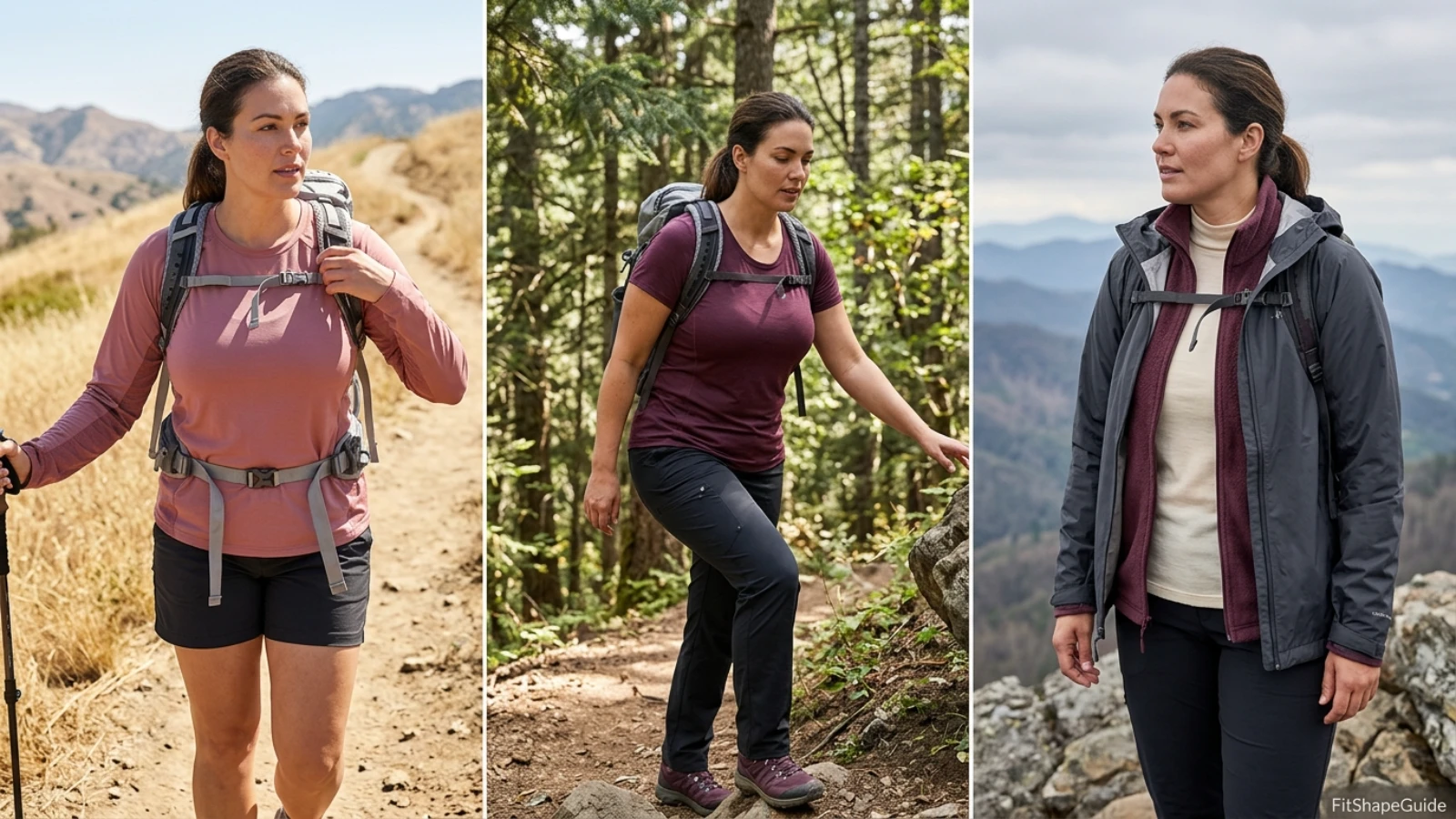
The best hiking tops for a large bust manage the expected environment without sacrificing pack fit or breathing room.
Layering a base top, fleece and shell
Each hiking layer may fit alone but become restrictive when combined. The bra band, base-layer seams, fleece zipper, shell zipper, sternum strap and pack harness can converge on the same area. Test the complete stack before the trail.
Base layer
The base should contact the body closely enough for comfort without flattening cups or pulling the underarms. It needs sufficient front length so the pack does not drag it backward. Compare armhole and neckline placement over the actual bra.
Midlayer
A light fleece or grid-knit layer should close without forcing the zipper sides together. Raglan or articulated shoulders can improve pole reach. If the hem rolls beneath the hip belt, compare a shorter cut or longer dropped hem rather than repeatedly tucking folds.
Protective shell
The shell must cover the base and insulation with room for full breaths, shoulder movement and pack adjustment. Zipper waves, lifted front hem and tight upper back suggest insufficient volume. Compare outer layers in the athletic jackets guide.
Warm-up and travel layer
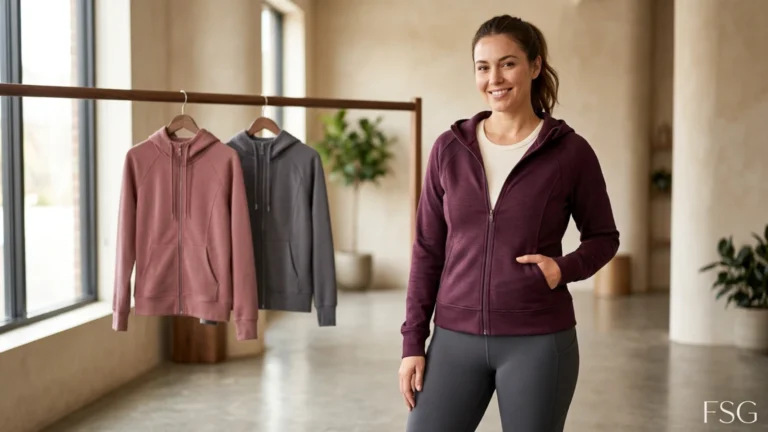
A zip hoodie may work before or after a mild hike, but verify its drying behavior and weather suitability. It is not automatically a rain or insulation layer. See the zip-up hoodie guide for fuller-bust zipper and hem checks.
How to shop online for a hiking top
A useful listing provides a current size chart, front/side/back images, body or garment measurements, fiber content, seam and pocket views, intended activity, care and returns. Words such as “outdoor,” “performance” or “technical” do not prove pack compatibility or fuller-bust fit.
Measure with the intended bra
Follow the seller’s method for bust, waist, hip and torso length. Also measure a known-good top laid flat, noting chest width, front length, back length, shoulder width, sleeve opening and hem. The seller may provide body measurements rather than garment dimensions, so do not mix the two.
Inspect construction views
Front images reveal chest seams, zippers and pockets; side views show front-to-back hem balance; back images reveal yokes, ventilation and pack-contact seams. Zoom in on plackets, zipper garages, raised logos, bra-compatible armholes and any trim that could sit beneath a strap.
Verify performance claims
Check UPF, moisture, odor, abrasion and weather claims on the exact manufacturer page. Do not transfer a technology claim from one product to another. Read the care label because washing, drying and treatment instructions can affect performance and longevity.
Read reviews for pack-specific evidence
Useful reviews state measurements, purchased size, pack type or trip, temperature and a concrete outcome: chest pull, hem rise, shoulder rubbing, pocket conflict, slow drying or shrinkage. Ratings without context cannot predict fit.
Amazon verification workflow
Confirm the direct live page, brand or authorized seller, exact variant, current chart, material, seams, pockets, care and return eligibility. Never publish a search-result URL or copy a changing price, coupon, rating, review count, stock statement or delivery promise. Keep the affiliate disclosure close to recommendations.
For hot-weather sleeveless layering, compare the tank-top fit guide and then verify trail fabric and pack-strap comfort separately.
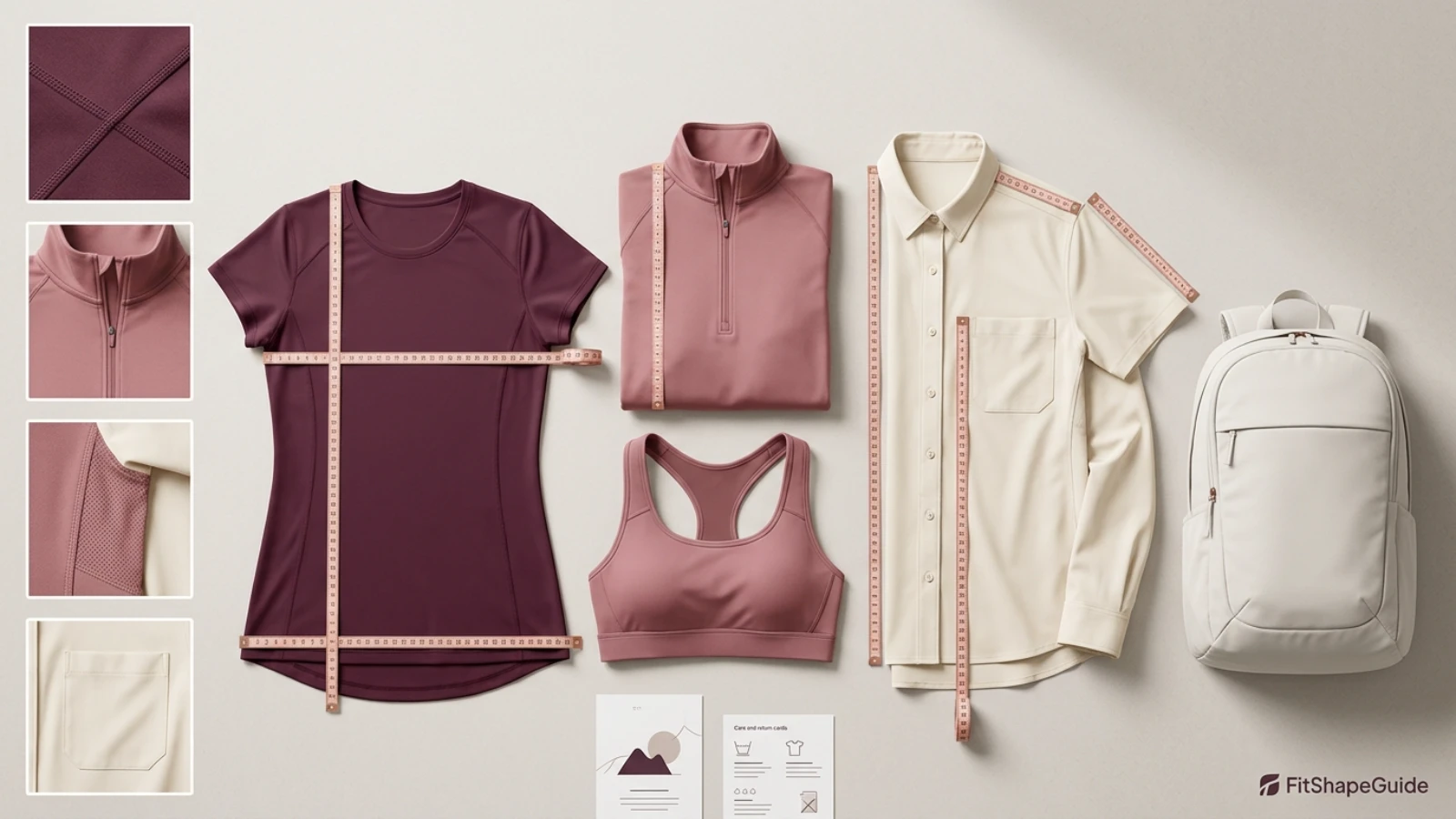
Listings for the best hiking tops should make fabric, construction and pack-contact evidence visible before checkout.
Common hiking-top fit problems
| Symptom | Likely cause | Better next step |
|---|---|---|
| Front hem rides upward | Insufficient chest depth or front length; pack pulls fabric back | Choose shaped front volume and retest with pack |
| Neckline presses throat | Short front, tight upper back or sternum-strap interaction | Restore shirt ease and refit pack components |
| Shoulder seam rubs | Seam sits beneath harness edge | Try raglan/offset seam or different pack position |
| Button placket gaps | Shallow front panel or wide button spacing | Choose more chest depth, stretch panel or base-layer overshirt |
| Quarter zipper waves | Stiff tape against overstretched chest fabric | Choose shaped front or softer compatible construction |
| Hem rolls under hip belt | Length ends inside belt pressure zone | Try clearly shorter or longer hem placement |
| Pack traps wet fabric | Slow drying, excess back fabric or poor ventilation | Compare lighter knit, back ventilation and layer plan |
| Pain, numbness or restricted breath | Combined bra, shirt, pack or strap pressure | Stop and refit the complete system |
Do not solve every issue by sizing up
A larger shirt may add chest room but also lower the armholes, widen the shoulders and create folds beneath the hip belt. Look for pattern depth, front length or different seam placement before changing every dimension.
Do not fit the shirt without the pack
Harness tension changes neckline, hem and seam position. Load the actual pack safely and adjust it according to its instructions before deciding whether a top is trail-ready.
Do not let the top replace support
The best hiking tops for a large bust work over a properly fitting support layer. Extra-tight outer fabric is not a substitute for a level band, sufficient cup depth and secure straps.
Fit the top with the bra, pack and weather layers
The best hiking tops for a large bust combine chest-shaped room, bra-compatible openings, forward shoulder reach, stable front length and pack-friendly seams. Choose a quick-dry tee for warm day hikes, a long-sleeve sun shirt for exposure, a quarter zip for ventilation or a base–fleece–shell system for changing conditions. Keep the top that stays comfortable through full breathing, pole reach, uphill steps and a properly adjusted loaded pack.
Frequently asked questions
These answers explain how the best hiking tops for a large bust should fit, layer and work beneath a pack.
What hiking top is best for a large bust?
A chest-shaped quick-dry tee is a versatile starting point because it can fit over a sports bra, move beneath a pack and layer under fleece or a shell.
Should a hiking top fit tightly over the bust?
It can sit close without flattening cups, pulling the neckline, lifting the front hem or restricting breathing. Stable fit is more useful than maximum compression.
What sports bra should I wear for hiking?
Choose a level band, containing cups and secure straps, then test the bra with the loaded pack because harness pressure can change comfort and strap placement.
Are racerback tops good under a hiking backpack?
They can free the shoulder blades, but their seams and the bra junction may overlap the harness. Test the exact top, bra and pack together.
Why does my hiking shirt ride up under my pack?
Common causes include insufficient chest depth or front length, a hem ending inside the hip-belt zone, or shoulder straps drawing fabric backward.
Is a long-sleeve hiking shirt too hot for summer?
Not necessarily. A lightweight breathable shirt can provide coverage, but comfort depends on fabric, ventilation, humidity, effort and the actual weather.
How should I layer hiking tops in cool weather?
Use a moisture-managing base, removable insulation and suitable weather protection, checking that the combined chest, armholes and zippers remain comfortable.
How do I test a hiking top before keeping it?
Wear the intended bra and layers, load and adjust the pack safely, then walk, reach, rotate, bend, climb a step and take full breaths.
Editorial and verification standards
This guide evaluates observable construction: chest depth, front length, bra compatibility, shoulder reach, harness-contact seams, sternum-strap interaction, hem and hip-belt position, fabric, pockets, layers, care and returns. It recommends garment systems rather than inventing unverified products or universal fit claims.
Trail-clothing principles reference official National Park Service hiking guidance on removable layers and sun protection, plus NPS cold-and-wet guidance on moisture-managing clothing and carrying weather layers. Always check current route conditions and product labels.
Before publishing a product module, verify the direct live seller, chart, fabric, seams, pockets, care, pack compatibility and returns. Affiliate relationships should be disclosed clearly and close to the recommendation under the FTC endorsement guidance.
“Best” means a suitable verified top for an individual body, sports bra, pack, trail, conditions and layer system—not a promise that one garment works for every hiker.