Best Tops to Tuck Into Jeans with a Large Bust
A construction-first guide to tops that stay smooth through the bust, enter the waistband without bulky folds and remain comfortable after sitting, reaching and moving.
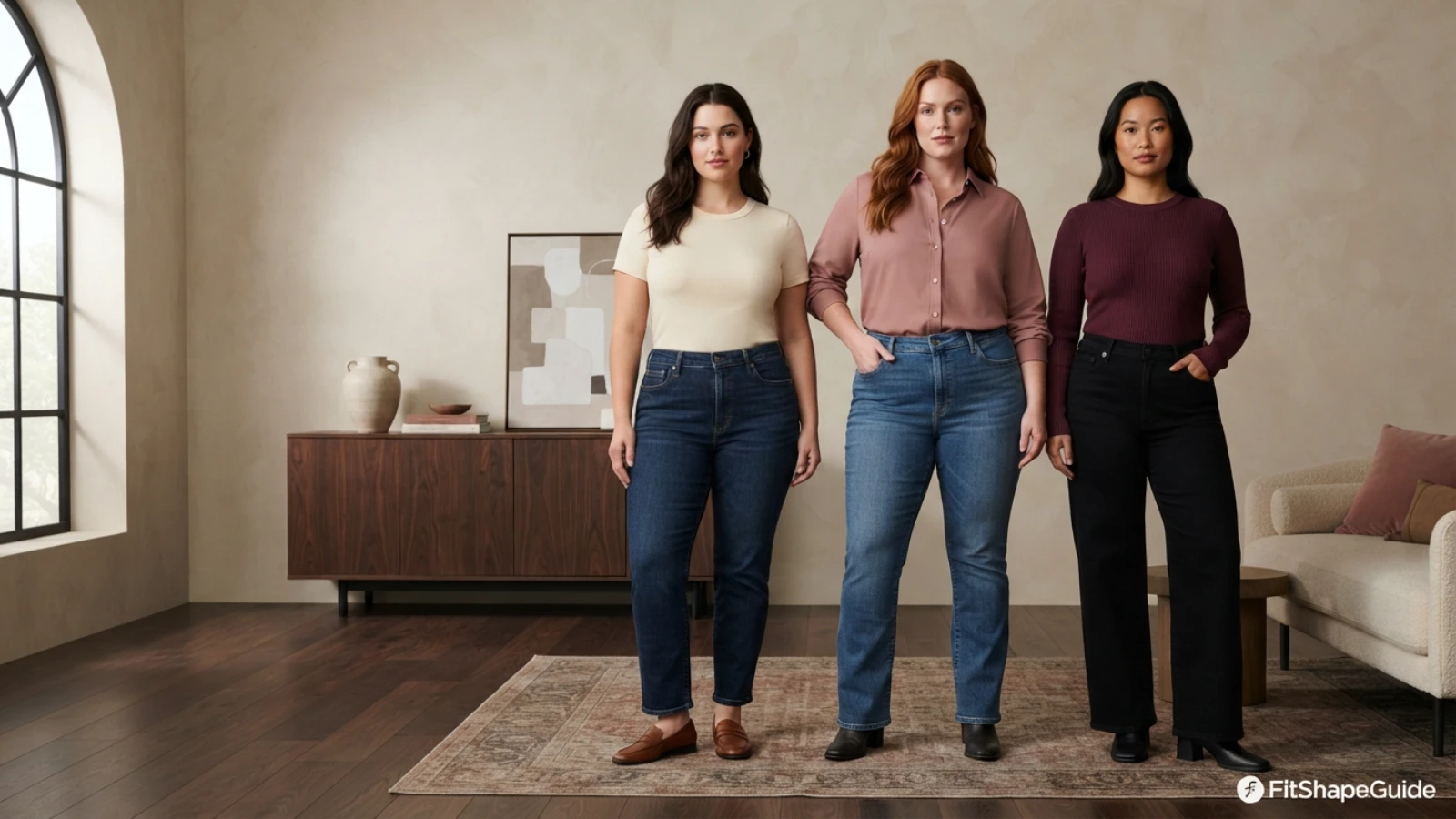
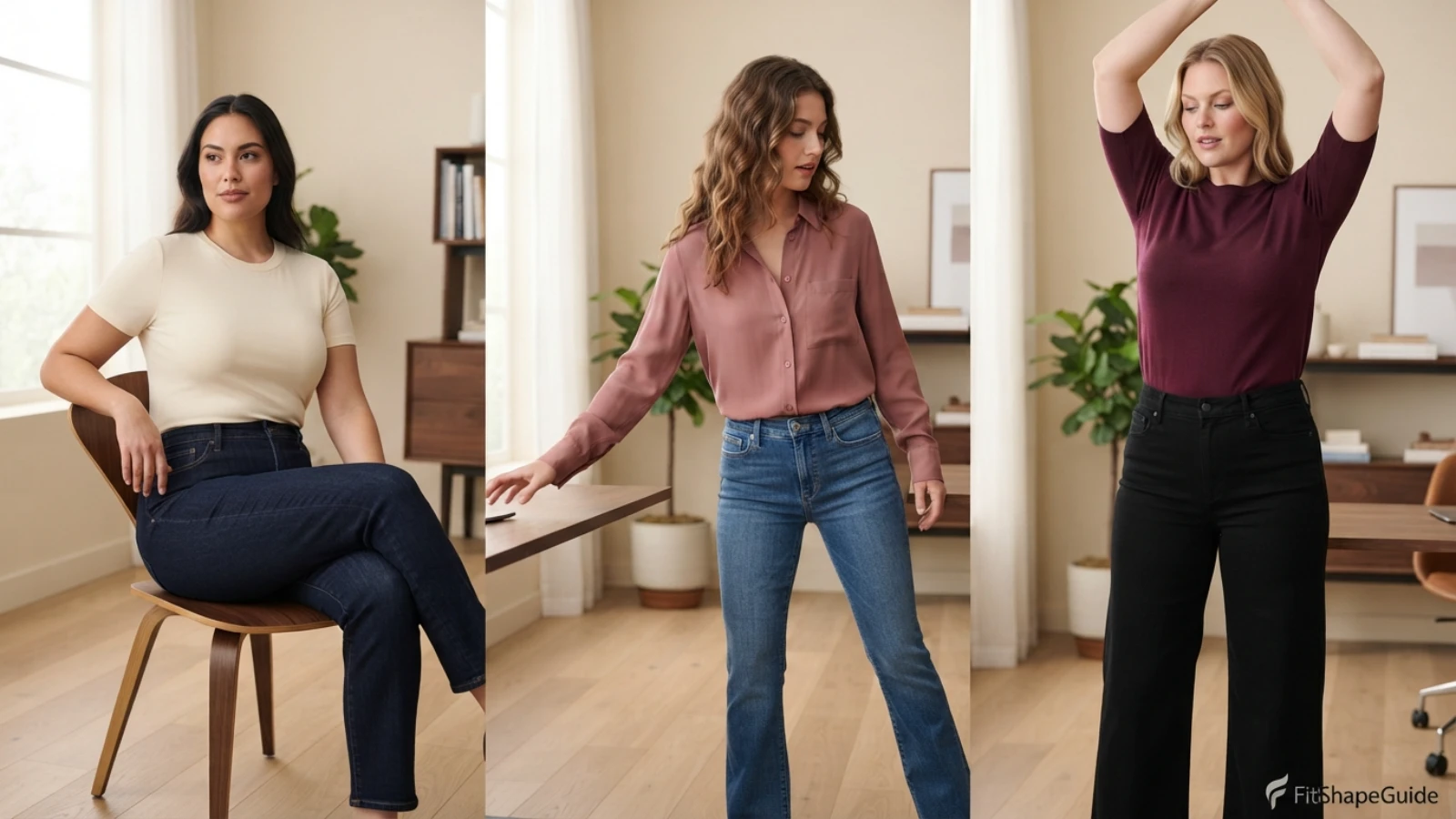
The 90-second tuck test
- Wear the intended bra and fasten the jeans fully before tucking.
- Raise both arms, reach forward, twist gently and sit for at least thirty seconds.
- Check that the neckline stays secure, bust seams remain positioned and buttons stay flat.
- Stand without pulling the top down; note how much hem escaped or bloused.
- Slide two relaxed fingers inside the waistband where the top is thickest.
- Use the pockets and bend once; the tuck should not block movement or force the fly open.
If the bust fits only when the hem becomes too wide for the waistband, change the top’s shaping or tuck method rather than compressing excess fabric inside the jeans.
Why a tucked outfit succeeds or fails
A tucked outfit is a connected system. The top must travel over the bust and reach the waistband; the jeans must then contain its hem without losing comfortable waist room. A fuller bust can use more of the top’s front length, so a hem that appears long on a hanger may become short once worn. If the pattern provides no additional front length or shaping, the top may rise, the side seams may swing forward and the back may appear longer.
Start by fitting the top independently. Measure the fullest bust over the intended bra with the tape level, then compare it with the brand’s chart. Official measurement guides, such as the Lands’ End women’s tops guide, separate bust and sleeve measurements because one size label cannot describe every proportion. For a tuck, also record shoulder-to-front-hem length, back length and hem circumference when garment measurements are available.
Next assess the jeans before adding fabric. Fasten them, sit and breathe normally. If the waistband is already at its comfortable limit, even a thin tee may make it restrictive. The Levi’s women’s jeans guide distinguishes multiple rises and fits; this matters because the same top enters a high-rise waistband higher on the torso and needs less exposed length than it does with mid- or low-rise jeans.
The best tops to tuck into jeans with a large bust do not rely on stretch alone. They combine adequate circumference, deliberate shaping, compatible front length and a hem finish that remains flat. Every recommendation still has a trade-off: more shaping can feel tailored but less relaxed, more stretch can move well but cling, and more length can stay tucked but create bulk.
| Top fit area | What good fit looks like | Warning sign after tucking | Better construction response |
|---|---|---|---|
| Bust | Fabric follows shape without pulling neckline or armholes | Horizontal drag, button strain or side seam rotation | Darts, princess seams, curved panels or more bust-specific room |
| Front length | Reaches waistband with movement allowance | Front hem escapes while back stays tucked | Longer or curved front hem; bodysuit only if torso length works |
| Hem | Thin, stable and compatible with waistband space | Ridge, rolling or bunching above fly | Finer fabric, narrower finish or partial tuck |
| Shoulder/armhole | Stays placed when arms reach | Whole top lifts and pulls out of jeans | Better armhole mobility, sleeve pitch or shoulder width |
| Jeans waistband | Closes comfortably with top inside while seated | Digging, fly tension or pocket flare | Thinner top, different tuck, more waist room or softer waistband |
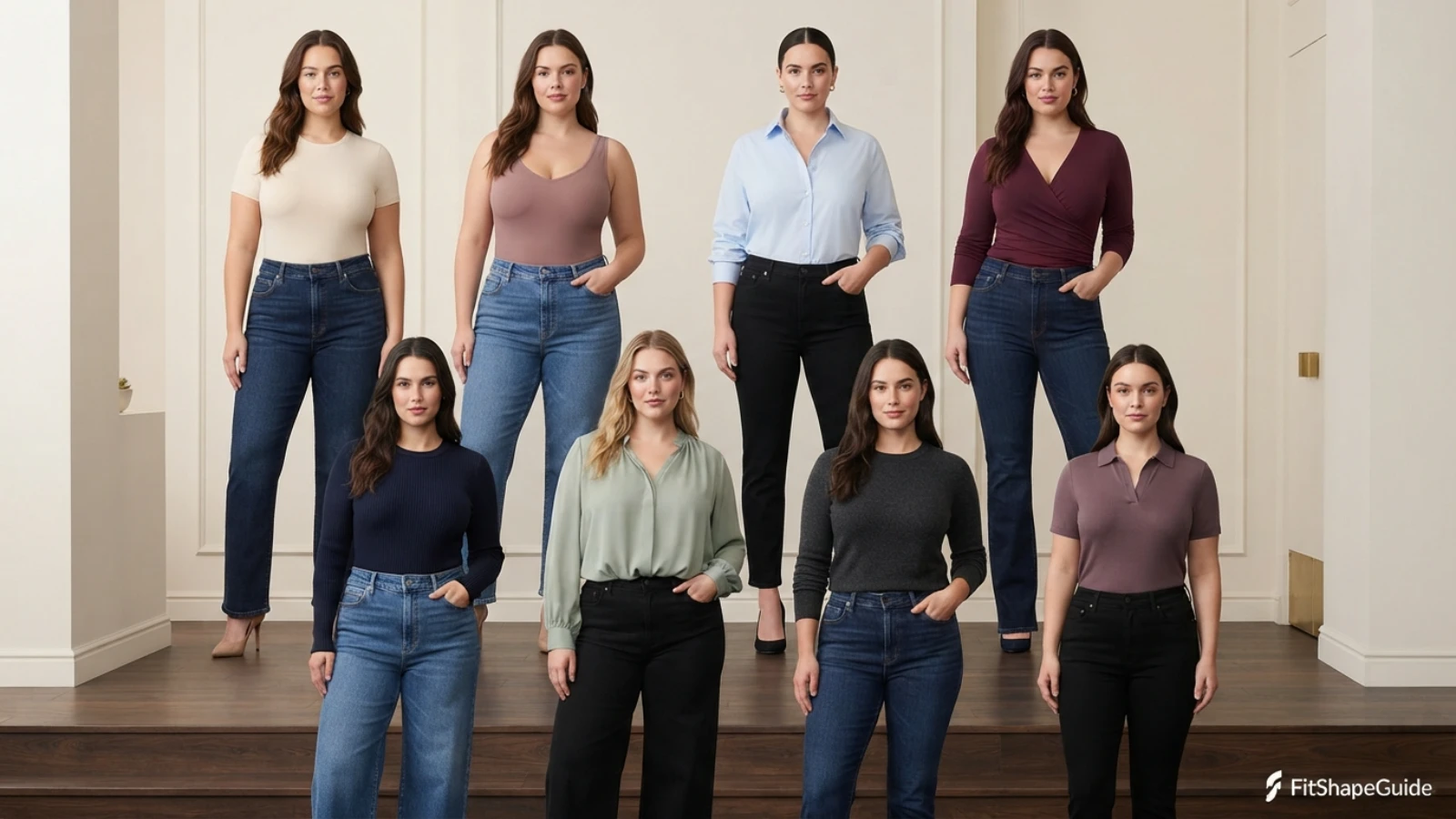
Eight best tops to tuck into jeans with a large bust
Shaped stretch tee
Best for: everyday full tucks and clean layering. A medium-weight knit with side shaping, sufficient bust circumference and a smooth hem gives movement without excessive fabric.
Trade-off: very soft stretch can cling or reveal waistband texture; thick interlock may create more tuck bulk than expected.
Fuller-bust bodysuit
Best for: the cleanest uninterrupted tuck under high- or mid-rise jeans. Bust shaping, a secure neckline and adequate torso length stop the top from escaping.
Trade-off: a short torso section pulls at shoulders, neckline and leg openings. Closures and bathroom practicality must be tested, not assumed.
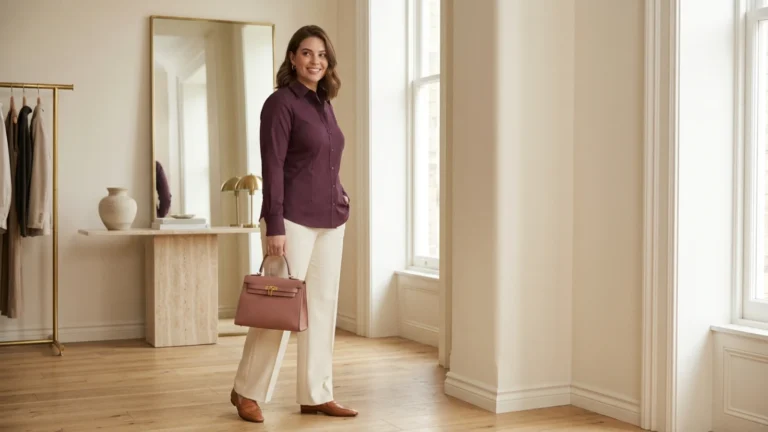
Non-gape button-down
Best for: polished denim outfits and office-casual use. Hidden reinforcement, close button spacing, darts or curved panels protect the placket through the bust.
Trade-off: crisp woven fabric adds waist bulk, while sizing up for the bust can leave excess cloth to distribute at the back.
Stable wrap or surplice top
Best for: adjustable-looking neckline geometry and a shaped waist. A secured overlap can create front length and guide fabric diagonally around the bust.
Trade-off: uncontrolled overlaps can open or shift when tucked. Choose a stitched, snapped or otherwise stable neckline for active wear.
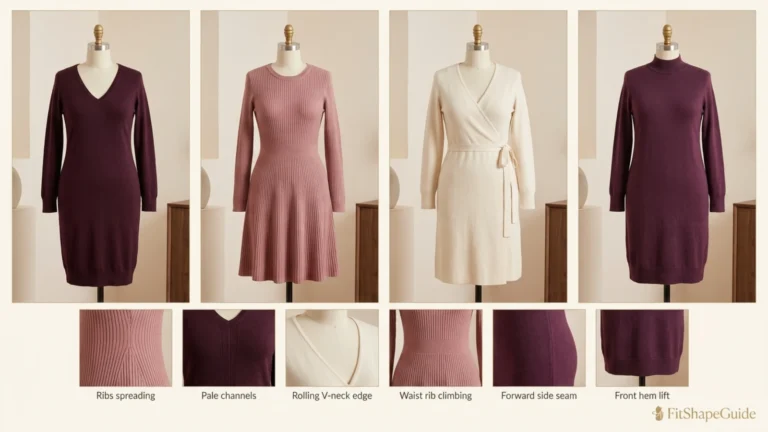
Fine rib-knit top
Best for: close layering, long sleeves and a low-bulk full tuck. Fine ribs stretch through the bust while keeping a defined vertical texture.
Trade-off: ribs spread at high-tension points and may become sheer. Recovery and fabric density matter more than the label “ribbed.”
Lightweight fluid shell
Best for: French tucks, bloused full tucks and dressier jeans. A matte fluid fabric can distribute softly without a thick hem ridge.
Trade-off: slippery fabric escapes more easily, and static or transparency may require a carefully chosen underlayer.
Fine-gauge sweater
Best for: cooler weather and front or asymmetric tucks. A fine knit gives warmth without the bulk of a chunky rib or heavy cable.
Trade-off: full tucking can stretch the hem and crowd the waistband. A selective front tuck often preserves the sweater better.
Knit polo or henley
Best for: a structured-casual neckline with knit movement. A secure placket, shaped torso and fine collar frame jeans without a formal shirt’s stiffness.
Trade-off: chest plackets can still strain, and a heavy collar may pull backward if the front length or bust room is insufficient.
Full, French, bloused and bodysuit tucks compared
The tuck method should follow the top’s fabric and the jeans’ waistband—not a rule about body shape. A full tuck gives the clearest waist and works best with thin, shaped tops. A French tuck anchors only the front and preserves ease at the sides and back. A bloused tuck fully anchors the hem, then releases a controlled amount of fabric above the waistband. An asymmetric tuck places one front section inside and can work with split hems. A bodysuit tuck has no loose hem but introduces torso-length and closure requirements.
For a full tuck, smooth fabric downward before fastening the jeans. Distribute modest excess toward the side-back rather than forming a single lump over the fly. Do not pull the top drum-tight; leave enough vertical ease to reach. For a French tuck, insert a hand-width or slightly wider section above the fly, then soften the transition toward each side. The tucked section should be broad enough to resist popping out but narrow enough to avoid dragging the entire hem forward.
A bloused tuck works when the top has controlled extra length. After fastening, raise both arms once and let the fabric settle naturally; then adjust only major unevenness. This creates movement allowance without repeated pulling. With a bodysuit, perform the opposite check: raise the arms and sit to confirm that the garment does not use the neckline or leg openings as its stretch reserve.
| Tuck method | Best top construction | Compatible jeans | Movement advantage | Main trade-off |
|---|---|---|---|---|
| Full tuck | Shaped tee, rib knit, thin shirt | High or mid rise with waistband room | Stable and polished | Shows or creates hem bulk |
| French/front tuck | Fluid shell, relaxed tee, fine sweater | Structured front waistband | Preserves side/back ease | Front can escape or look too narrow |
| Bloused full tuck | Light blouse or soft shirt | Stable high/mid rise | Built-in reaching allowance | Can pool if top is too wide |
| Asymmetric tuck | Split hem or soft button-down | Mid/high rise, simple fly | Less fabric contained | May look accidental without clear line |
| Bodysuit | Torso-length-specific knit bodysuit | Most rises if closures remain accessible | Cannot untuck at waist | Crotch, shoulder and bathroom comfort |
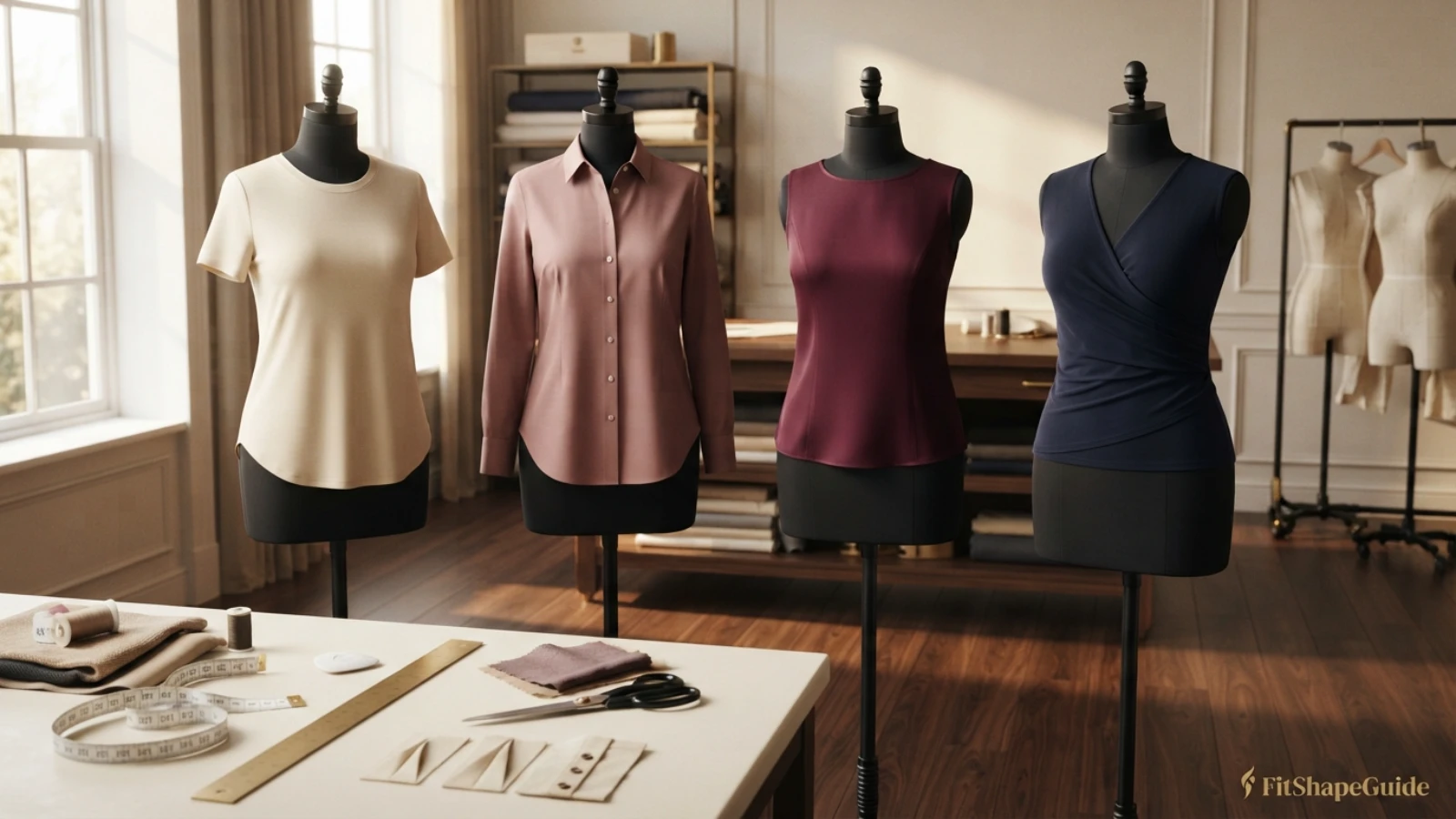
Bust shaping, front length and button security
Darts transfer fabric from the waist or side seam toward the bust, allowing circumference without making the entire torso wide. Princess seams distribute shape vertically and can create a closer waist. Knit tops may use negative ease rather than seams, but the stretch must be controlled: the neckline, armholes and hem should not be pulled toward the fullest point.
Look at the side seam before tucking. It should remain close to vertical. A seam that swings forward shows that the front is borrowing fabric from the back. Tucking may hide the hem but does not correct this rotation; it can actually lock the imbalance into the waistband. A curved or longer front hem is useful because the bust consumes front length. High-low hems should be evaluated carefully: a very short front and long back may be designed for untucked wear and leave too little front anchor.
Button-downs need enough circumference plus secure spacing. Close every button, sit and reach. The placket should remain a straight line rather than forming small diamonds between buttons. Hidden snaps can provide reinforcement, but they do not replace adequate cut. A shirt that fits the bust but is loose at the waist can be tucked with side-back distribution or altered through darts. The construction checks in our non-gape button-down guide help separate placket design from simple sizing.
Neckline stability matters because tucking places downward tension on the top. A deep V, wrap or square neckline may sit perfectly untucked but shift once the hem is anchored. Test the top tucked and seated with the intended bra. If the neckline drops, straps show or the front panel is pulled downward, the garment needs more vertical ease or a more secure neckline—not stronger waistband compression.
Match the top to jeans rise and waistband
High-rise jeans reduce the distance a top must travel before entering the waistband, which can help a shorter front stay tucked. Their trade-off is that the waistband may sit closer to the ribcage and contain the top at a point where seated expansion is felt more strongly. A rigid high waistband plus a thick shirt hem can become uncomfortable even when each garment fits alone.
Mid-rise jeans usually offer a versatile balance: more tuck depth is required, but the waistband may sit below the most compressible upper torso. Low-rise jeans need substantially more top length and a stable hem; short tops may escape with any reach. Rise names are not standardized, so compare actual front-rise measurements and where the waistband lands on your body. Our guide to high-waisted jeans with a large bust explains how rise changes torso proportion and comfort.
Waistband construction affects capacity. A contoured waistband follows the difference between waist and hip; a straight band may gap or dig depending on shape. Stretch denim creates more temporary space but must recover. Front pockets, a button fly, thick belt loops and a belt all add layers exactly where a tuck enters. If the top is fluid, avoid forcing it into the fly components; distribute it toward smoother sections.
Leg shape changes the visual result but not the requirement for comfort. Straight, bootcut and wide-leg jeans can create different balance with the same top. The decision framework in our jeans guide for a large bust can help choose the lower silhouette without framing the bust as something that needs correction.
Fabric thickness, stretch, drape and hem finishes
Fabric behavior determines how much material the waistband must contain. Fine jersey and lightweight rib knits compress easily, but very thin versions may reveal the outline of pockets, fly and belt loops. Medium-weight interlock is smoother and more opaque, yet its doubled hem can create a ridge. Woven poplin keeps a crisp line but folds rather than compresses; fluid twill or crepe distributes more softly but can slip.
Stretch should support movement without pulling every seam toward the bust. Textile construction can create flexibility even without a large elastane percentage; Cotton Incorporated’s CottonWorks natural-stretch overview notes that woven cotton can be engineered for comfortable flexibility. For shoppers, the practical test remains recovery: stretch the fabric gently, release it and see whether the surface, neckline and hem return.
Examine the hem itself. A narrow coverstitched knit hem is usually easier to tuck than a wide bonded band, drawcord, elastic casing, scallop, peplum or thick rib welt. Side slits can reduce hip tension and enable an asymmetric tuck, but the slit top must sit above or below the waistband intentionally. A bulky seam trapped exactly under the band may rub.
Transparency changes after stretch and tuck. Place a hand behind the bust area and pull the fabric only as much as normal wear; check in daylight. Then inspect the hem against dark denim. A pale thin top may show the waistband through it, while dark denim may transfer dye to a light hem. Care labels govern washing, and repeated high heat can affect some stretch fibers and finishes.
Movement, belts and outfit balance
Do not perfect a tuck while standing still. A realistic sequence is sit, type or drive, reach to a shelf, use the pockets and stand. The top may blouse slightly; that is movement allowance, not failure. Repeated escape at the front suggests insufficient front length, while escape all around suggests insufficient overall length or too little anchor depth. If only the back pulls out, shoulder or back-width movement may be the issue.
Belts can stabilize a tuck visually, but they do not create waistband space. Add the belt after the jeans and top pass the seated test. A medium-width belt usually interacts with fewer shirt folds than a very wide belt, while a narrow belt adds less bulk. Buckle position should not stack on a thick placket, bodysuit seam or fly. A belt that must be tightened to stop the top moving is compensating for incompatible construction.
For work, a shaped shirt, shell or fine knit tucked into dark straight or bootcut jeans can look deliberate where denim is permitted. Use the same movement checks as formal workwear. Our business-casual outfit guide covers layers and dress-code judgment, while the work-pants and top pairing guide provides construction ideas that also transfer to polished jeans.
A monochrome top and jeans can create a continuous line; contrast emphasizes the waistband; a patterned top draws attention to print and construction. None is universally better. Choose according to setting and preference, then make the tuck technically calm. The strongest outfit is the one that can be forgotten after dressing.
Shopping, alterations and a tuckable-top capsule
Before ordering, record bust, under-bust, shoulder, upper arm and preferred front length. Measure a top that already tucks successfully: pit-to-pit, shoulder-to-front-hem, back length, hem width and sleeve opening. Garment measurements are more useful than a model’s height alone. Confirm whether listed length is front, back or center-back and whether fabric stretch is described.
Product images should show the top untucked as well as styled. Look for the actual hem, side seam, darts, back shape and fabric thickness. If every image hides the hem, the tuck may be doing marketing work rather than demonstrating fit. For buttons, zoom in on spacing and reinforcement. For bodysuits, verify torso length or fit notes, closure style, gusset width and return restrictions before purchase.
Simple alterations can expand options. Waist darts may reduce extra fabric on a woven shirt that already fits the bust and shoulders. A tailor can sometimes add hidden snaps between buttons, though this does not add circumference. Shortening an overlong straight hem may reduce bulk, but only after confirming that enough usable tuck depth remains. Adding front length or reshaping armholes is more complex, so buy those areas correctly first.
A compact capsule can contain four roles: one shaped everyday tee, one fine rib long-sleeve, one non-gape shirt and one dressier fluid shell or stable wrap top. Add a bodysuit only if its torso and closure genuinely improve function. These tops should work across at least two jean rises and more than one tuck method. For a broader foundation, compare necklines and constructions in our best tops for a large bust guide.
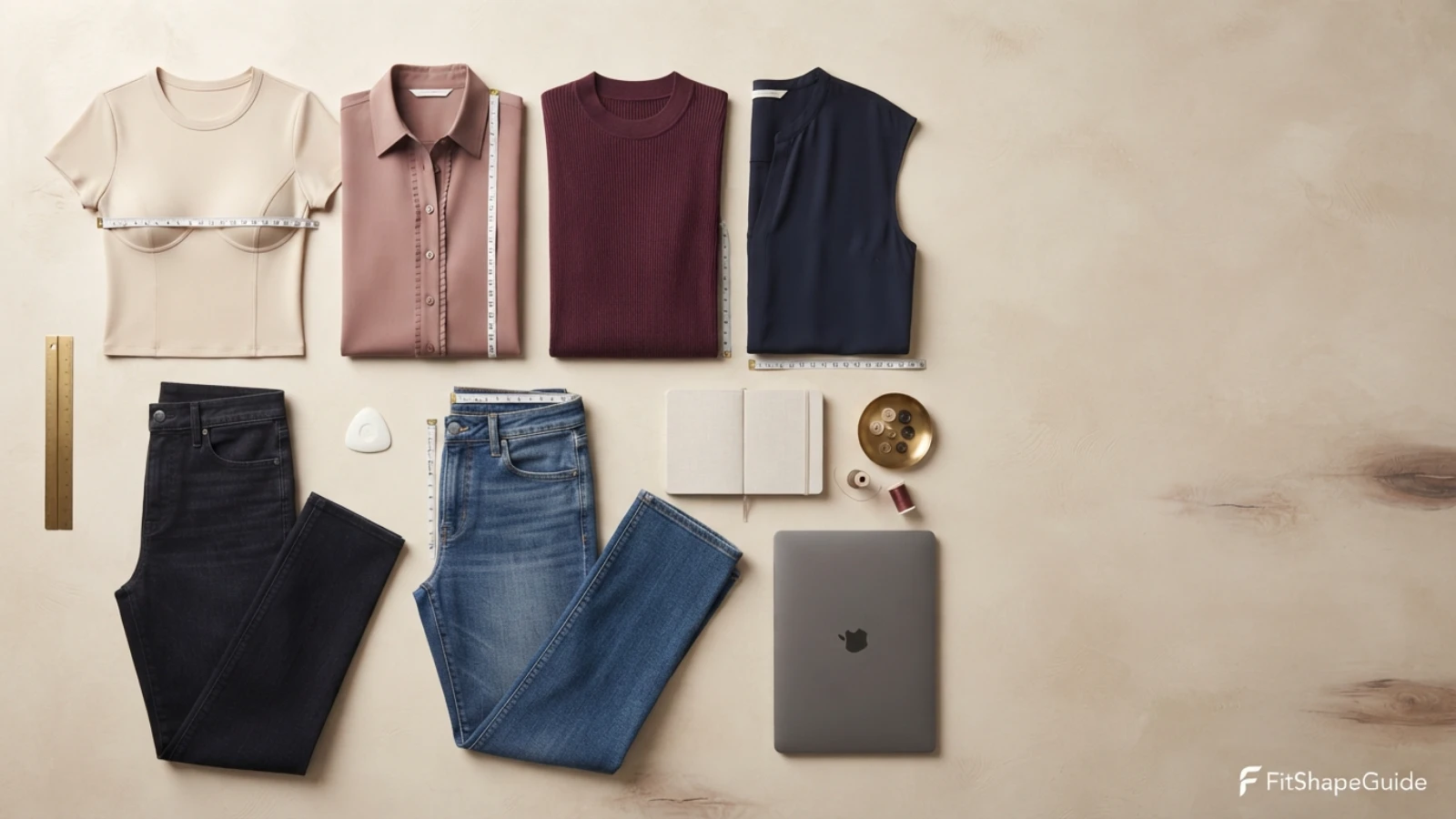
Common tuck problems and construction fixes
| What happens | Likely cause | First test | Better solution |
|---|---|---|---|
| Front hem escapes first | Insufficient front length over bust | Compare front and back tuck depth | Longer/curved front, shaped top or higher compatible rise |
| Buttons gape after tucking | Placket strain or hem anchored too tightly | Untuck without changing posture | More bust room, closer buttons, darts or stable reinforcement |
| Top bunches above fly | Excess width or thick hem concentrated centrally | Distribute fabric toward side-back | Shaped waist, thinner fabric or French tuck |
| Waistband digs when seated | Jeans lack room for top thickness | Sit first without the top tucked | Thinner top, softer/larger waistband or partial tuck |
| Neckline pulls downward | Too little vertical ease or short bodysuit torso | Raise arms and release the hem | More front length/torso length or secure neckline |
| Side seams rotate forward | Front borrowing fabric from back | Inspect seams before tucking | Bust shaping or added front circumference |
| French tuck pops out | Tucked section too narrow or top too short/slippery | Increase anchor width modestly | More usable depth, stable fabric or higher waistband |
| Bodysuit pulls at crotch | Torso section too short | Sit and reach with jeans unfastened | Long-torso cut, adjustable closure or separate top |
| Hem ridge shows | Wide/thick finish under close denim | Turn hem once without fastening | Narrower hem, fluid fabric or partial tuck |
| Back looks overbloused | Top sized for bust without waist shaping | Pin temporary back darts | Tailoring, shaped cut or intentional relaxed tuck |
Do not solve every problem with a tighter tuck. Pulling harder can straighten the hem temporarily while increasing placket, neckline and waistband tension. Correct the first incompatible construction point instead.
Fit the bust first, then engineer the tuck
The best tops to tuck into jeans with a large bust combine bust-specific room, adequate usable front length, stable necklines and a hem the waistband can contain comfortably. A shaped stretch tee is the easiest everyday option; a correctly proportioned bodysuit stays anchored; a non-gape shirt adds polish; a stable wrap shapes without a rigid placket; fine knits reduce bulk; and fluid shells or sweaters work best with selective tucks.
Fasten the jeans before choosing the technique, then sit, reach, stand and use the pockets. A good tuck may blouse slightly, but it should not pull buttons apart, drag the neckline, compress the waistband or escape immediately. When top construction, tuck method and jeans rise agree, the outfit stays composed without asking the wearer to keep fixing it.
Frequently asked questions
What tops are best to tuck into jeans with a large bust?
Shaped stretch tees, correctly proportioned bodysuits, non-gape button-downs, stable wrap tops, fine rib knits and lightweight shells work well when they have enough bust room and front length.
Should I fully tuck or French tuck a top?
Use a full tuck for thin, shaped tops and a French tuck for fluid or relaxed tops. The jeans waistband must remain comfortable and the tucked section must stay anchored during movement.
Do bodysuits work for a large bust?
Yes, if they provide bust shaping, a secure neckline and enough torso length. A short bodysuit can pull at the shoulders, neckline, leg openings and closure.
Why does my shirt untuck at the front?
The bust may use more front length, leaving too little fabric below the waistband. A longer or curved front hem, better bust shaping or a compatible higher rise can help.
Which jeans rise is easiest for tucking tops?
High and mid rises usually require less top length than low rises, but the waistband still needs enough comfortable space for the fabric, especially while seated.
How do I stop a tucked button-down from gaping?
Start with enough bust circumference, close button spacing and useful shaping. Leave vertical movement ease and avoid anchoring the hem so tightly that it increases placket tension.
Can I tuck a sweater into jeans?
Yes. Fine-gauge sweaters suit a front or asymmetric tuck best; thick knits can crowd the waistband, distort the hem and become uncomfortable when fully tucked.
How should I test a top before buying it for tucking?
Wear the intended bra and jeans, tuck the top, sit, reach, raise both arms, use the pockets and check the neckline, seams, hem depth and waistband comfort afterward.
Editorial standards
This guide prioritizes garment construction, measurable fit, movement and explicit trade-offs. It does not treat a large bust as a flaw, promise that one tuck suits every reader or infer product performance from marketing language. Measurement and textile concepts were checked against official resources, while exact care instructions remain those on each garment’s sewn-in label.
Before publishing a commercial recommendation, FitShapeGuide should verify a direct live listing, seller, exact style and color, current size range, garment measurements, intended fit, bust shaping, front/back length, neckline, closure, hem, fiber content, stretch/recovery, opacity, care, stock and return policy. Any material connection should be disclosed clearly and near the recommendation in line with the FTC endorsement guidance.