
Best Nursing Bras for a Large Bust
A fuller-bust nursing bra has to solve more than ordinary support. It needs enough cup depth for changing breast volume, a band that supports without excessive pressure, easy feeding access, straps that stay comfortable and fabric that can adapt as the breasts become fuller or softer between feeds.
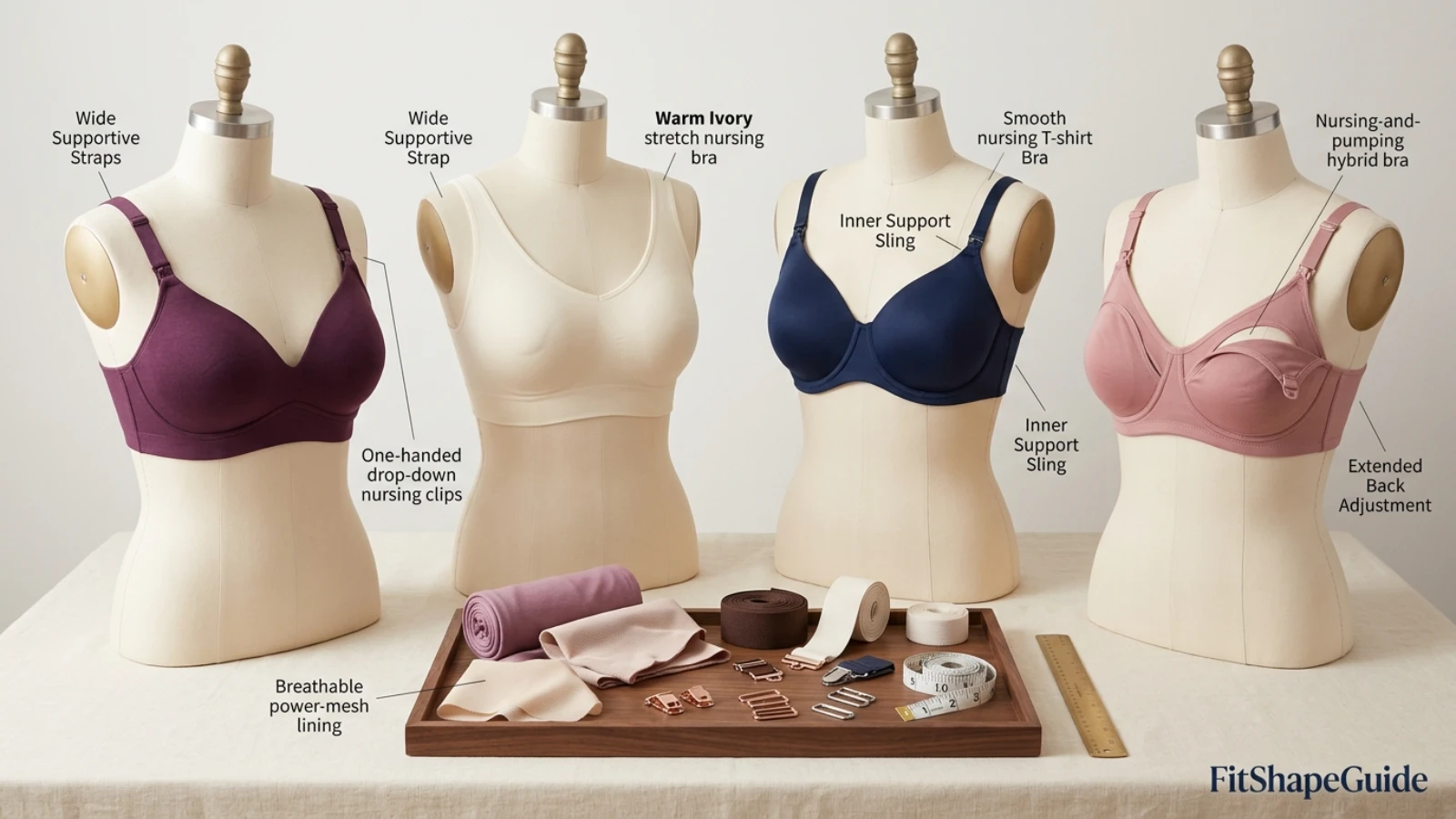
The 90-second nursing-bra fit test
- Fit the bra when your breasts are reasonably representative of your current feeding cycle.
- Settle all breast tissue inside the cup without forcing it into a shallow shape.
- Check that the underband feels supportive without strong localized pressure.
- Open one nursing clip with one hand.
- Make sure the cup drops far enough away for comfortable feeding access.
- Close the cup again and check whether it returns to its normal position.
- Raise both arms and check whether the band rides upward.
- Sit, lean forward and check for pressure at the underarm or lower cup.
- Leave some realistic room for ordinary fullness changes rather than choosing a cup that fits only at one point in the day.
What makes a good nursing bra for a large bust?
A nursing bra is not simply an everyday bra with a clip added to the strap.
During pregnancy and breastfeeding, breast and ribcage measurements can change. Within a single day, breast fullness can also vary around feeding or pumping.
A useful nursing bra therefore needs controlled flexibility. The cup should accommodate reasonable volume change without losing all shape, while the band should provide a stable base without feeling excessively restrictive.
For a fuller bust, that balance matters even more because simply choosing a very stretchy oversized bralette can create room without providing enough support.
Enough depth and stretch to accommodate normal fullness changes without obvious overflow.
A wider band, useful rear adjustment and strong side wings keep the bra anchored.
Secure clips and a cup that moves fully out of the way without rebuilding the bra after every feed.
Best nursing bra styles for a large bust
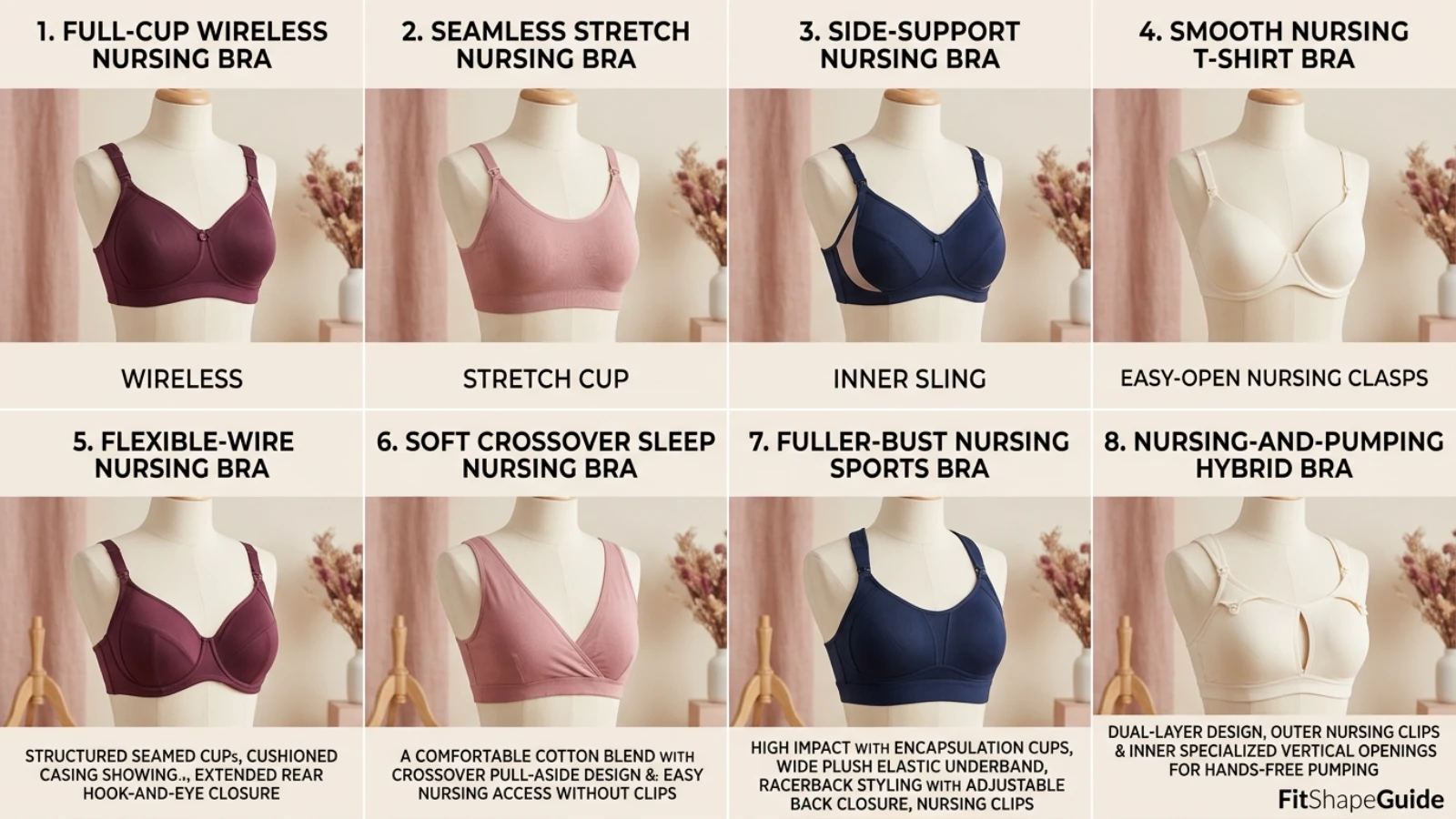
Full-cup wireless nursing bra
Deep shaped cups, a broad underband and internal support panels create everyday containment without underwire.
Best for: fuller-bust daily nursing support.
Seamless stretch nursing bra
Flexible knit cups can adapt to changing breast volume while a wide bottom band and adjustable back help stabilize the torso.
Best for: pregnancy, early postpartum and fluctuating fullness.
Side-support nursing bra
A support sling remains around or beside the breast when the outer cup drops, helping the fuller cup maintain structure.
Best for: more centered everyday shaping.
Smooth nursing T-shirt bra
A smooth molded or spacer-style surface can disappear beneath fitted tops while nursing clips preserve feeding access.
Best for: workwear, T-shirts and fine knits.
Flexible-wire nursing bra
Some specialist designs use a more flexible wire together with deeper cups and multiple back-adjustment positions.
Best for: wearers who prefer wired shaping once their current fit is stable and comfortable.
Sleep and lounge nursing bra
Soft pull-aside or crossover cups provide quick access and light containment without the structure of an all-day bra.
Best for: sleeping, home and lower-support periods.
Nursing sports bra
A supportive underband, movement-control cup construction and nursing access can reduce the need to change bras around light or moderate activity.
Best for: walks and activity at the level the bra is actually designed to support.
Nursing-and-pumping hybrid bra
Layered cup construction combines nursing access with openings intended to hold compatible pump flanges.
Best for: mixed direct-feeding and pumping routines when the exact pump system is compatible.
Fit for changing breast and ribcage measurements
One of the hardest parts of shopping for a nursing bra is that the body may not stay at one measurement throughout pregnancy and breastfeeding.
Do not buy every bra too early
A bra bought far ahead of when you plan to use it may not match your later ribcage or breast measurements.
Look for useful rear adjustment
Several hook positions can give the band room to adapt as the torso changes.
Flexible cups need controlled stretch
Stretch helps accommodate fullness changes, but a very loose cup can stop supporting a fuller bust. Look for fabric or panels that stretch while still recovering toward their original shape.
Fit the fuller breast
If one breast is noticeably larger, choose enough cup room for the larger side rather than compressing it to make both breasts appear symmetrical.
Reassess as feeding patterns change
A bra that worked during early postpartum fullness may become too loose later, while an older pregnancy bra may become too tight after milk volume increases.
Keep more than one support level if practical
A flexible early-stage bra and a more structured everyday nursing bra can serve different moments better than asking one garment to cover every stage.
What a fuller-bust nursing band should do
The band remains one of the main anchors of a nursing bra, but breastfeeding adds an important constraint: unnecessary pressure on breast tissue is not desirable.
A wider underband can distribute contact
Broad elastic spreads pressure over more torso area than one narrow strip.
The band belongs beneath breast tissue
It should not ride upward onto the lower breast.
Rear adjustment is useful
An extended hook-and-eye closure gives more room to respond to ribcage changes than a fixed pull-on band.
A very tight band is not “extra support”
Support should come from appropriate elastic recovery, cup structure and fit—not from painful compression.
Check the entire side wing
Pressure can come from more than the underband. A tall side panel, seam or strap attachment should not press strongly into breast tissue near the underarm.
Cup depth, side slings and full-drop nursing cups
Deep cup space
Breast volume should sit inside the cup rather than flattening against the front panel or escaping at the side.
Fuller coverage can help containment
A full-cup shape can provide useful security as the breast becomes heavier or fuller between feeds.
Internal side sling
Many nursing bras use an inner support sling that remains attached while the outer cup drops down. This can help stabilize the bra frame and provide a clear path to the nursing clip.
Full drop-away access
When the clip is released, the cup should move far enough away that you are not fighting stiff cup material during feeding or skin-to-skin contact.
Stretch upper sections
Controlled stretch near the upper cup can provide room for changing fullness without requiring the whole bra to become loose.
Watch shallow molded cups
A smooth molded nursing bra may look ideal under clothing but still needs enough breast projection. Smoothness should not come from forcing the breast into a cup that is too shallow.
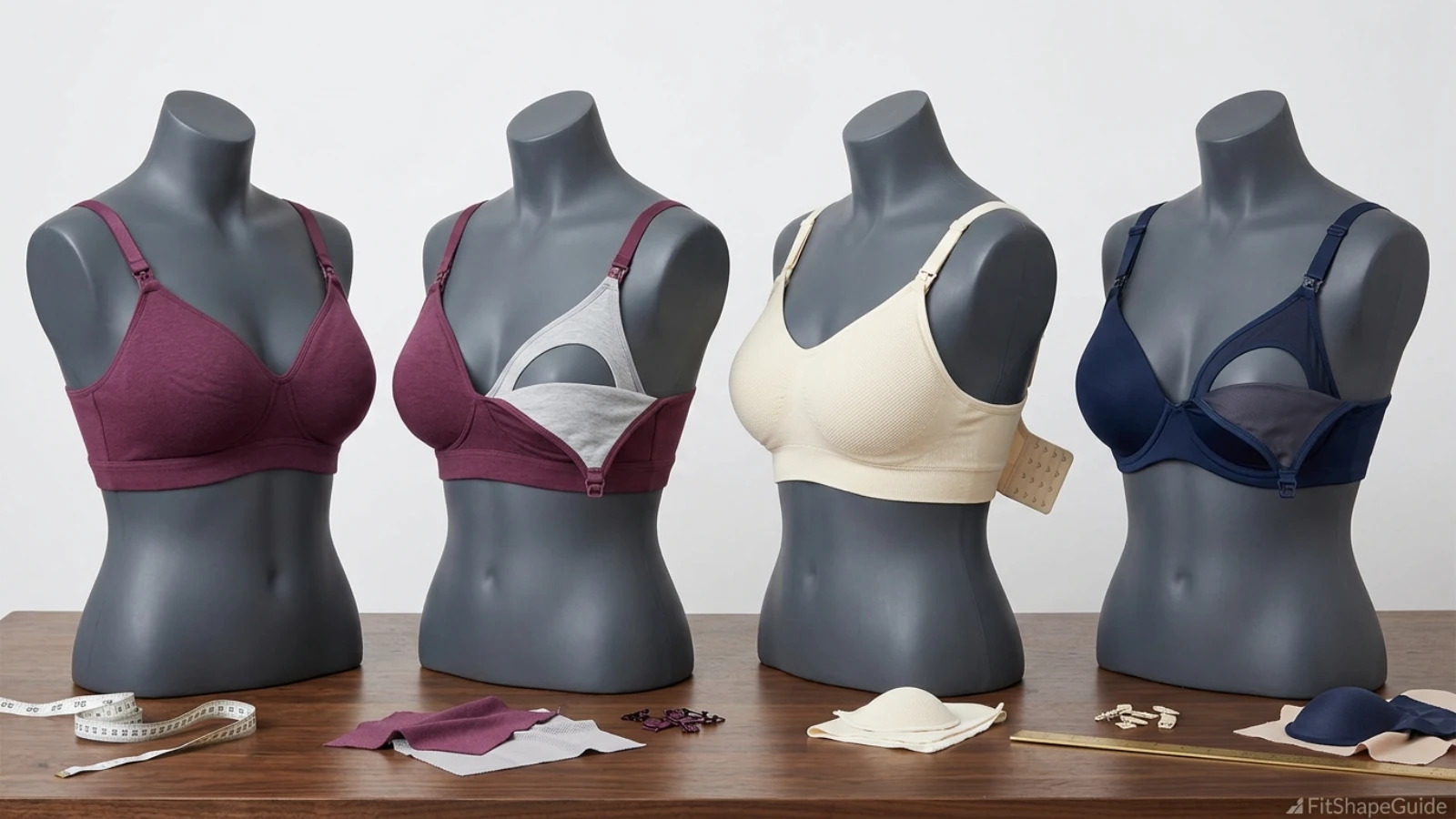
Nursing clips and one-handed access
One-handed release
A useful clip should be easy to release while the other arm may be supporting the baby or adjusting clothing.
Secure closure
The clip should stay closed during ordinary movement rather than releasing unintentionally.
Check strap position after unclipping
The strap and inner sling should remain accessible so the bra can be reclosed without searching for hardware behind the breast.
Full cup drop matters
Some cup constructions fold out of the way more completely than others. Test whether the cup stays clear rather than repeatedly springing back toward the breast.
Practice before wearing outside the home
A nursing bra can feel easy when you use both hands in a fitting room and surprisingly awkward when one hand is occupied.
Think about the outer top too
Bra access and clothing access work together. A clip-down bra does not automatically make a high, tight non-stretch neckline convenient for breastfeeding.

Wireless vs flexible-wire nursing bras
Wireless nursing bras
Wireless designs are especially useful when breast size is changing, the breast feels tender or you simply prefer to avoid a rigid underwire frame.
For a large bust, look for deeper shaped cups, a substantial bottom band, supportive side panels and adjustable straps rather than assuming all stretch bralettes provide the same support.
Flexible-wire nursing bras
Specialist nursing bras may use flexible wire to create more separation and shaping while accommodating changing proportions through wider size ranges or extended rear closures.
The important point is fit. Any wire should surround breast tissue rather than press into it, and the bra should not feel restrictive as fullness changes.
Do not treat wire as mandatory
A well-engineered wireless nursing bra can provide substantial everyday support.
Do not treat all wired nursing bras as identical
Wire shape, cup depth and garment fit matter more than the presence of wire alone.
Recheck fit if breast volume changes
A bra that fitted beautifully one month may begin pressing differently after your feeding pattern or breast volume changes.
Pumping bras, nursing sports bras and hybrid designs
Nursing-and-pumping hybrids
Hybrid bras use layered openings so the same garment can provide direct nursing access and hold compatible pump flanges.
Do not assume compatibility with every pump system. Verify the exact product and your pump configuration before buying.
Dedicated pumping bra
A dedicated hands-free pumping bra may offer firmer flange support than an everyday nursing bra, especially when pumping is a major part of your routine.
Nursing sports bra
For walking or exercise, choose a bra designed for the impact level you plan to do. A racerback silhouette alone does not make a nursing bra appropriate for high-impact activity.
Breast fullness affects sports fit too
A sports bra that is comfortable shortly after feeding may feel tighter when the breasts are fuller. Avoid relying on an overly compressive fit simply for motion control.
Separate bras may work better
One everyday nursing bra, one softer sleep bra and one activity-specific style may be more useful than one garment attempting to perform every job.
Avoid unnecessary pressure on the breast
Supportive does not mean restrictive.
Current breastfeeding guidance advises avoiding tight bras and clothing that place excessive pressure on the breast. This is especially relevant when breast volume changes throughout the day.
Watch for pressure from the cup edge
A cup that once fitted can begin cutting across fuller breast tissue as volume changes.
Watch the underarm area
Side wings, seams and strap attachments should not create strong localized pressure on breast tissue.
Do not use a smaller bra to control fullness
If your breast is fuller than usual, increased compression is not the same thing as support.
Reassess a suddenly uncomfortable bra
If the bra becomes painful or begins pressing into an area that previously felt comfortable, do not assume you simply need to tolerate it.
Know when symptoms are more than a fit issue
A breast that is hot, swollen or painful, significant redness or skin-color change, fever, flu-like symptoms or worsening symptoms can require professional assessment.
How to buy a nursing bra for a large bust
- Check your current measurements. Pregnancy and postpartum body changes can make an old bra size unreliable.
- Check cup depth. Stretch alone does not guarantee enough fuller-bust space.
- Look for controlled flexibility. The cup should adapt without becoming shapeless.
- Inspect the underband. Look for broad, supportive construction without excessive restriction.
- Check rear adjustability. Extra hook positions can be useful as the ribcage changes.
- Inspect the inner sling. Make sure it supports without cutting across breast tissue.
- Test the nursing clip one-handed. Convenience matters during repeated daily use.
- Check how fully the cup drops. The outer cup should move sufficiently out of the way.
- Check strap width and adjustment. Fuller-bust support should not depend on overtightened shoulder straps.
- Verify pumping compatibility if claimed. Do not assume every nursing opening securely supports every flange system.
Do not buy only by pre-pregnancy size
Use the current size guidance for the exact nursing-bra manufacturer and reassess if your body changes.
Do not oversize the entire bra just for breast room
A very loose band can remove the torso stability a fuller bust needs. Look for fuller cup capacity or adaptable sizing instead.
Do not buy the tightest bra for maximum lift
A nursing bra should support the bust without excessive breast pressure.
Check pad behavior
If the bra uses removable or sewn-in pads, verify whether they stay flat after nursing access and washing. Folded removable pads can become frustrating in a frequently opened cup.
Think in stages
Your best early-postpartum bra may not be your best later everyday nursing bra. A small rotation can make more sense than buying several identical bras before your fit stabilizes.
Common nursing bra fit problems with a large bust
| Problem | Likely cause | Better next move | Avoid |
|---|---|---|---|
| Cup cuts in when breasts are fuller | Insufficient flexible cup space | More adaptable/deeper cup | Accepting strong breast pressure |
| Band rides upward | Band too loose | Reassess band fit | Tightening straps to compensate |
| Band feels restrictive | Size/elastic mismatch | Recheck current measurement and construction | Assuming tighter means more supportive |
| Breast spills beside sling | Cup or sling too small | More cup capacity / different sling | Forcing breast behind sling |
| Nursing cup does not move aside | Rigid cup/access design | Fuller drop-away construction | Folding stiff cup against breast |
| Clip is difficult one-handed | Hardware or placement mismatch | Test another access system | Assuming you’ll adapt after purchase |
| Straps dig | Too much load / narrow strap | Check band; try wider straps | Overtightening |
| Wireless cup collapses | Insufficient internal support | Side sling / stronger lower cup | Tighter shoulder straps |
| Pump flange is not secure | Hybrid opening incompatible | Verify pump-specific compatibility | Assuming universal fit |
| Hot, painful or swollen breast area | May be more than bra fit | Reduce pressure and seek appropriate advice | Trying to solve symptoms only by changing bras |
My breasts are different sizes after feeding
That can happen. Fit enough cup space for the fuller breast and use flexible cup construction rather than compressing one side for visual symmetry.
My favorite nursing bra suddenly feels too tight
Breast or ribcage volume may have changed. Reassess fit rather than assuming the bra should continue working because it fitted earlier.
The bra is soft but gives almost no support
Look for a broader band, deeper shaped cup and internal sling. Softness and support are separate garment features.
I prefer a normal bra to every nursing bra
The issue may be cup geometry rather than nursing access itself. Look for nursing bras based on the ordinary bra constructions that already fit you well—full cup, side support, smooth molded or flexible wire.
Which nursing bra should you choose for a large bust?
Start with a full-cup wireless or structured wireless nursing bra if you want dependable support with adaptable breast room. Choose a seamless stretch style when volume is changing quickly, a smooth nursing T-shirt bra when clothing visibility matters, and a nursing-and-pumping hybrid only when its pump compatibility matches your actual setup.
The most important rule is support without restriction. Your nursing bra should give the fuller bust a stable foundation while still allowing breast-volume changes and easy feeding access. If the bra begins pressing strongly into breast tissue or breast symptoms develop, reassess the fit rather than simply tolerating more pressure.
Frequently asked questions
What nursing bra is best for a large bust?
A strong starting point is a full-cup wireless or structured wireless nursing bra with deep cups, a broad supportive band, internal side support, adjustable straps and easy drop-down nursing access.
Should a nursing bra be tight?
No. It should feel supportive but not excessively restrictive or create strong localized pressure on breast tissue.
Are wireless nursing bras supportive enough for a large bust?
They can be when they use shaped deeper cups, a strong underband, supportive wings, internal slings and adjustable straps.
Can I wear an underwire nursing bra while breastfeeding?
Some specialist nursing bras use flexible wire, but fit is critical. Any wire or bra edge should not press into breast tissue or feel restrictive as breast volume changes.
When should I buy nursing bras?
Because breast and ribcage measurements can change during pregnancy and postpartum, avoid assuming one early measurement will remain accurate. Recheck your current size when buying bras for a new stage.
What is a nursing side sling?
It is an inner support panel that remains attached when the outer nursing cup drops, helping keep the bra frame stable while providing feeding access.
Can a nursing bra also work for pumping?
Some hybrid bras are designed for both nursing and pumping, but flange compatibility and hold vary. Verify the exact bra with your pumping setup rather than assuming all hybrids are universal.
Can a tight nursing bra cause breastfeeding problems?
Breastfeeding guidance recommends avoiding tight bras and clothing that put excessive pressure on the breast. If you develop pain, swelling, a hot area, fever or other concerning symptoms, seek appropriate professional advice.
How FitShapeGuide evaluates nursing bras
This guide evaluates nursing bras through fuller-bust cup depth, flexibility, band stability, rear adjustment, wing support, nursing sling construction, cup drop, clip access, strap width, pumping compatibility and comfort as breast volume changes.
FitShapeGuide does not assume that the stretchiest bra is the best nursing bra. A fuller bust generally needs controlled flexibility: enough stretch to adapt to changing volume, combined with enough recovery and internal structure to keep the breast supported.
Current nursing-bra construction demonstrates several valid approaches. Modern wire-free nursing bras can use wide bottom bands, adjustable straps, full drop-away cups and one-handed nursing clips. More structured options can add molded cups, internal support zones, side slings or longer rear-adjustment ranges.
Specialist fuller-cup nursing ranges also demonstrate why generic S/M/L sizing should not automatically be assumed to suit every large bust. Cup capacity and band proportion need to be checked on the exact current size system.
For breast health, FitShapeGuide follows conservative breastfeeding guidance: a bra should be comfortable and supportive without unnecessary breast compression. Tight clothing or bras that place pressure on the breast are not treated as a desirable support strategy.
Before publishing any commercial recommendation, FitShapeGuide should verify the exact live seller, product name, current size range, cup-capacity guidance, wireless or flexible-wire frame, cup depth, stretch zones, inner sling, underband width, back adjustment, nursing clip, full drop-away access, strap width, pad construction, pumping compatibility, fabric, care, current availability and return eligibility.
No ASIN, band range, cup range, medical claim, pumping compatibility, support rating, material claim, price, review count, stock or delivery promise should be published unless directly verified.