Best Bras for Uneven Breasts
Uneven breasts do not require you to squeeze the fuller breast into a smaller cup just to make both sides look identical. A better approach is to fit the larger breast correctly first, then fine-tune the smaller side with flexible cup fabric, independent strap adjustment, a removable insert or a pocketed cup when you want a more balanced clothing silhouette.
The 90-second uneven-breast bra test
- Fasten the band in the manufacturer’s intended starting position.
- Settle each breast into its cup separately.
- Evaluate the fuller breast first.
- Make sure its cup edge does not cut into breast tissue.
- Check that any underwire surrounds rather than sits on the fuller breast.
- Now inspect the smaller cup for gaping or empty space.
- Shorten the smaller-side strap only slightly if needed.
- Add a thin insert only if the remaining gap bothers you.
- Put on a fitted top and repeat the check while sitting, reaching and raising your arms.
How should a bra fit when one breast is bigger?
Breasts can differ in size, shape, projection, height, root width and where the tissue is fullest. That means “uneven” does not always look like one breast being obviously larger in every direction.
One side may simply fill the upper cup more. One nipple may sit higher. One breast may project farther forward while the other has a wider root. Those differences can make identical bra cups behave differently.
The most reliable fitting approach is to protect the fuller breast from being compressed simply to eliminate empty space on the smaller side.
Choose enough cup volume and depth for the fuller breast.
Keep the band level and fit both breasts inside the intended cup frame.
Use the smallest useful adjustment on the smaller side.
| Fit situation | Useful first option | Why | Avoid |
|---|---|---|---|
| Small volume difference | Stretch upper cup | Adapts to both sides | Rigid closed cup |
| Smaller cup gaps visibly | Thin removable insert | Adds volume only where needed | Smaller cup size for both breasts |
| One breast sits higher | Independent strap adjustment | Fine-tunes cup position | Overtightening one shoulder |
| Fuller bust needs projection | Three-part seamed cup | Creates tailored depth | Shallow rigid mold |
| T-shirt requires smooth line | Soft molded/spacer cup + insert | Smooths silhouette | Very rigid tall cup |
| Regular insert use | Pocketed bra | Secures insert | Loose insert that shifts |
| Difference mostly at neckline | Stretch-lace balconette/full cup | Flexible upper edge | Closed rigid neckline |
| Mild asymmetry + wireless preference | Wireless removable-pad bra | Flexible fit | Unstructured stretch with no band support |
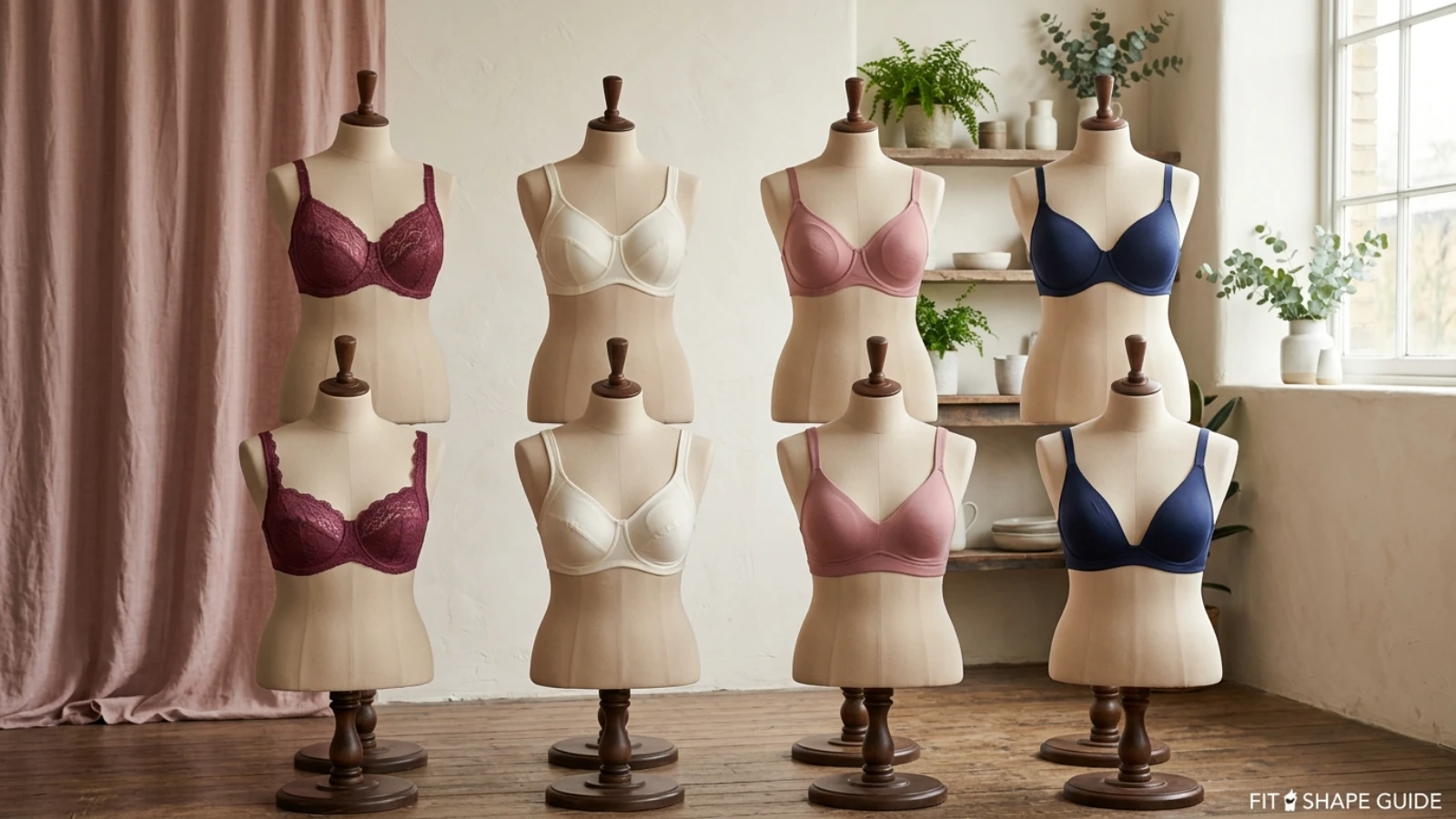
Best bra styles for uneven breasts
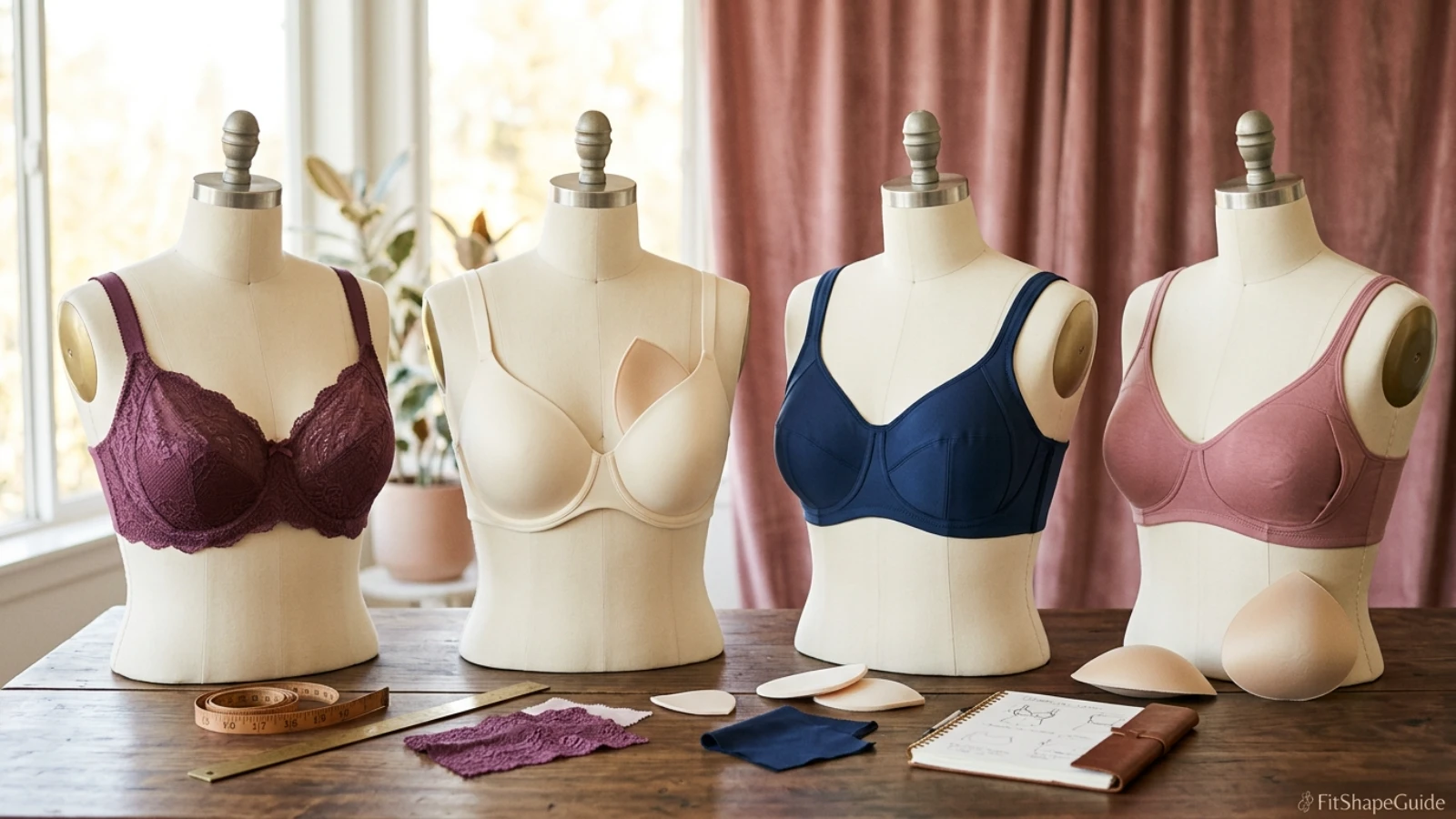
Stretch-lace full-cup bra
A structured lower cup provides fuller-bust support while controlled stretch at the top adapts to differences in upper-breast fullness.
Best for: mild to moderate asymmetry without padding.
Three-part side-support bra
Fabric panels create cup depth while a side sling directs outer breast tissue forward. A flexible upper edge makes the style more forgiving between sides.
Best for: large cups needing projection and structure.
Bra with removable inserts
Independently removable padding lets you keep or add volume only on the smaller side.
Best for: visible volume difference beneath clothing.
Soft contour T-shirt bra
A smooth cup can create a consistent outer silhouette, especially when the smaller side can accept a lightweight insert.
Best for: fitted T-shirts and fine knitwear.
Stretch-edge balconette bra
An open neckline with a flexible edge can be more forgiving when one breast has less upper fullness.
Best for: asymmetry concentrated near the cup neckline.
Pocketed bra
An internal cup pocket keeps a balancing insert or appropriate breast form more securely positioned.
Best for: regular insert use or specific post-surgical needs when medically appropriate.
Wireless bra with removable pads
A supportive wireless frame can accommodate mild asymmetry while separate pads allow side-to-side adjustment.
Best for: relaxed everyday support.
Flexible plunge bra
A lower center and adaptable cup edge can work when asymmetry is more noticeable at the top than through the lower cup.
Best for: lower necklines when cup depth remains sufficient.
Fit the larger breast first
The fuller breast is the side that tells you whether the cup has enough volume, depth and width.
Check the cup edge
There should not be a distinct ridge where the cup cuts through the fuller breast.
Check the outer cup
Breast tissue should not be pushed outside the wire or side seam toward the underarm.
Check the lower cup
A too-shallow cup can be forced downward by breast projection, leaving empty fabric near the bottom while pressure builds elsewhere.
Check the wire
If the style is underwired, the wire should surround the fuller breast rather than rest on it.
Check the center
A center gore that is intended to sit against the torso may be pushed away by insufficient cup depth. Consider the whole cup shape before changing the band.
Do not sacrifice the fuller side for a clean smaller cup
The smaller side can be adjusted. Breast tissue compressed by an undersized cup is the more important fit failure.
Why stretch-lace cups work so well for uneven breasts
Controlled stretch lace can adapt to slightly different breast volumes without requiring an insert.
Look for structure underneath
For a large bust, an ideal asymmetry-friendly cup often combines a stable lower section with stretch only where adaptability is useful.
Stretch at the neckline
An elasticated or stretch upper edge can lie closer to the smaller breast while expanding around the fuller side.
Useful for normal volume fluctuations
If asymmetry becomes more or less noticeable during hormonal changes or other ordinary size fluctuations, flexible cups may remain easier to fit than rigid molds.
Too much stretch can reduce support
A cup made entirely from very soft elastic fabric may adapt beautifully but provide less shaping than you want. Look for controlled stretch combined with a stable band and lower cup.
Seamed does not mean uncomfortable
Flat cup seams can create support and depth without heavy padding.
How to use removable inserts for uneven breasts
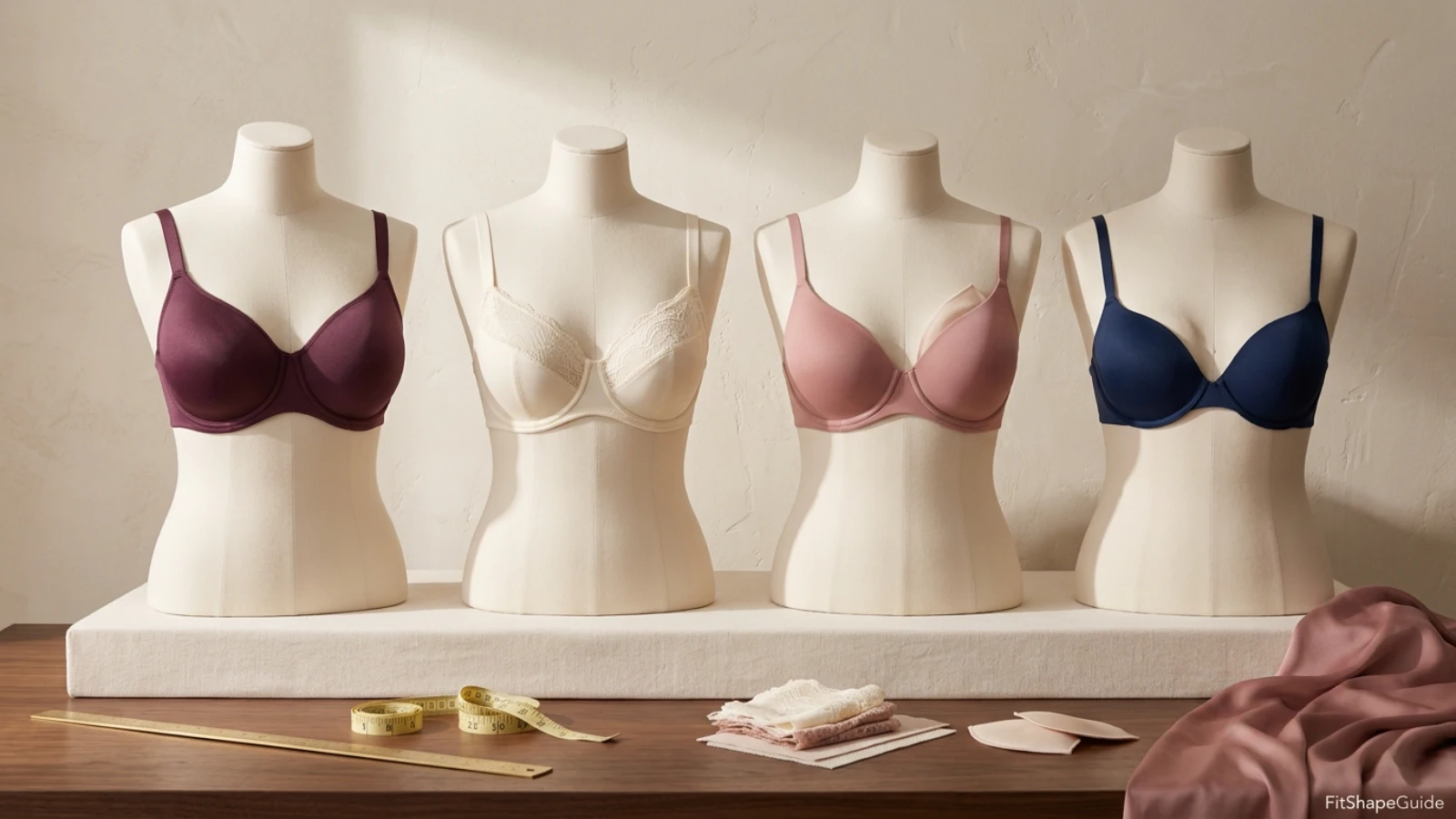
A thin removable insert can be one of the simplest ways to refine a noticeable difference beneath fitted clothing.
Use the insert on the smaller side only
The goal is not to add equal padding to both cups if only one side needs additional volume.
Start thin
A lightweight insert usually creates a more natural transition than immediately using a very thick push-up pad.
Place the insert where volume is missing
If the difference is mostly in the lower or outer cup, position the insert in that area when the bra design allows it.
Do not crowd the neckline
If the insert pushes the smaller breast over the cup edge, it is too thick or incorrectly placed.
Secure it when possible
A dedicated insert pocket can prevent movement during walking and dressing.
Check from the side
The front may look balanced while one insert creates excessive projection in profile. Assess the complete silhouette.
Adjust each bra strap independently
A small difference in strap length is completely practical when the breasts sit at different heights or fill their cups differently.
Adjust the fuller side first
Set the strap so it positions the cup comfortably without pulling upward against the breast.
Shorten the smaller side slightly
A modest adjustment may help the cup edge sit closer to the smaller breast.
Stop before the shoulder starts doing the cup’s job
The smaller-side strap should not be tightened enough to lift the band, distort the neckline or create shoulder pain.
Do not force nipple height symmetry
Breasts can sit at different heights. The aim is a secure bra and the clothing silhouette you prefer, not mechanically placing both breasts at an identical point.
Fully adjustable straps are valuable
Half-adjustable straps can limit how much side-to-side fine-tuning is possible, especially on a shorter torso.
T-shirt bras for uneven breasts
T-shirt bras can create an extremely smooth result, but preformed cups maintain their own shape when breast tissue does not completely fill them.
Choose a softer contour cup
A more flexible molded or spacer cup may sit closer to the smaller breast than a very rigid foam shell.
Use a removable insert if necessary
One insert in the smaller cup can fill the air space between breast and cup without compressing the fuller side.
Check cup height
A very tall molded cup may gape more obviously on the smaller breast even when the lower cup fits.
Spacer cups can be more adaptable
Light spacer construction can provide a smooth clothing surface with less rigidity than some dense molded foam.
Test your thinnest top
Check whether the smaller-side cup edge, insert or neckline becomes visible under the actual shirt you plan to wear.
For more on smooth cups, see Best T-Shirt Bras for a Large Bust .
Pocketed bras and breast forms
A pocketed bra includes fabric compartments inside the cups designed to hold an appropriate insert or breast form securely.
Useful for consistent insert placement
The pocket prevents an insert from shifting freely inside the cup.
Useful when asymmetry is more substantial
A carefully selected insert can provide more controlled volume than a small removable “cookie.”
Post-surgical fitting is different
After breast surgery, garment choice depends on the procedure, healing stage and instructions from the clinical team.
Do not assume a standard fashion bra, underwire or weighted form is appropriate during recovery simply because it makes the breasts look balanced.
Follow clinical guidance after surgery
Use the bra type, compression level, insert and timing recommended by the surgeon or breast-care team.
Symmetry is optional
Some people use a form or insert because they prefer a balanced clothing silhouette; others do not. Either approach is valid.
The fitted-top and movement test
Put on a close-fitting top
This shows whether the smaller cup edge, insert or upper cup is visible.
Raise both arms
The insert should stay positioned and the band should remain stable.
Reach forward
Check whether the smaller breast falls away from a rigid cup when the shoulders move.
Sit down
Make sure one wire or cup edge does not become more uncomfortable than the other.
Check front and three-quarter views
You may decide the difference is already invisible enough under clothing and does not need further adjustment.
Remove unnecessary padding
If stretch lace alone produces a smooth result, there is no reason to add an insert just because asymmetry exists.

When uneven breasts are more than a bra-fit question
Many people naturally have breasts that differ in size or shape, and long-standing asymmetry can simply be part of normal anatomy.
A new change should be handled differently.
Notice your normal baseline
If one breast has always been somewhat fuller, that is different from one breast suddenly changing size, shape or appearance.
Do not use padding to hide a new unexplained change
If a previously stable breast changes significantly, seek appropriate medical assessment rather than treating it only as a lingerie problem.
Pay attention to additional changes
A new lump or swelling, skin dimpling or other skin changes, nipple inversion or unusual discharge, or persistent localized pain should be discussed with a healthcare professional.
Post-pregnancy and nursing changes can affect fit
Breast volume and shape can change through pregnancy, breastfeeding and after weaning. Recheck size rather than assuming an old bra should still fit both sides.
Post-surgical asymmetry needs individualized guidance
Follow the medical team’s recommendations for post-operative bras, compression, inserts and return to ordinary underwire or fashion bras.
How to buy a bra for uneven breasts
- Fit the fuller breast first. It determines the minimum cup capacity.
- Check whether the asymmetry is mainly volume, height or shape. Different differences need different adjustments.
- Look for stretch at the upper cup. This is especially useful for mild asymmetry.
- Consider a multi-part seamed cup. It can create projection without forcing both breasts into one rigid molded shape.
- Check whether padding is independently removable. You should be able to modify one side without changing the fuller cup.
- Check for insert pockets. Useful if you plan to wear a balancing insert regularly.
- Look for fully adjustable straps. Each side may need a slightly different setting.
- Check cup-edge flexibility. A hard edge can gape on the smaller side or cut into the fuller side.
- Test the bra beneath clothing. The best solution depends partly on whether you prioritize natural flexibility or a visually even T-shirt silhouette.
- Check returns before adding or removing inserts. Follow the retailer’s try-on rules.
Do not buy by the smaller breast
A cup that looks perfect on the smaller side but compresses the fuller breast is too small for the overall fit.
Do not assume every padded bra works
Fixed equal padding can add the same volume to both sides and do nothing to solve asymmetry.
Do not overcorrect
A very thick insert can create more asymmetry in profile than the natural difference you were trying to balance.
Do not tighten one strap aggressively
A small independent adjustment is useful. A dramatically shorter strap can pull the band, cup and shoulder out of position.
Consider different bras for different clothing
A stretch-lace seamed bra may be your easiest everyday fit, while a soft T-shirt bra with one insert can give the smoothest result under fine jersey.
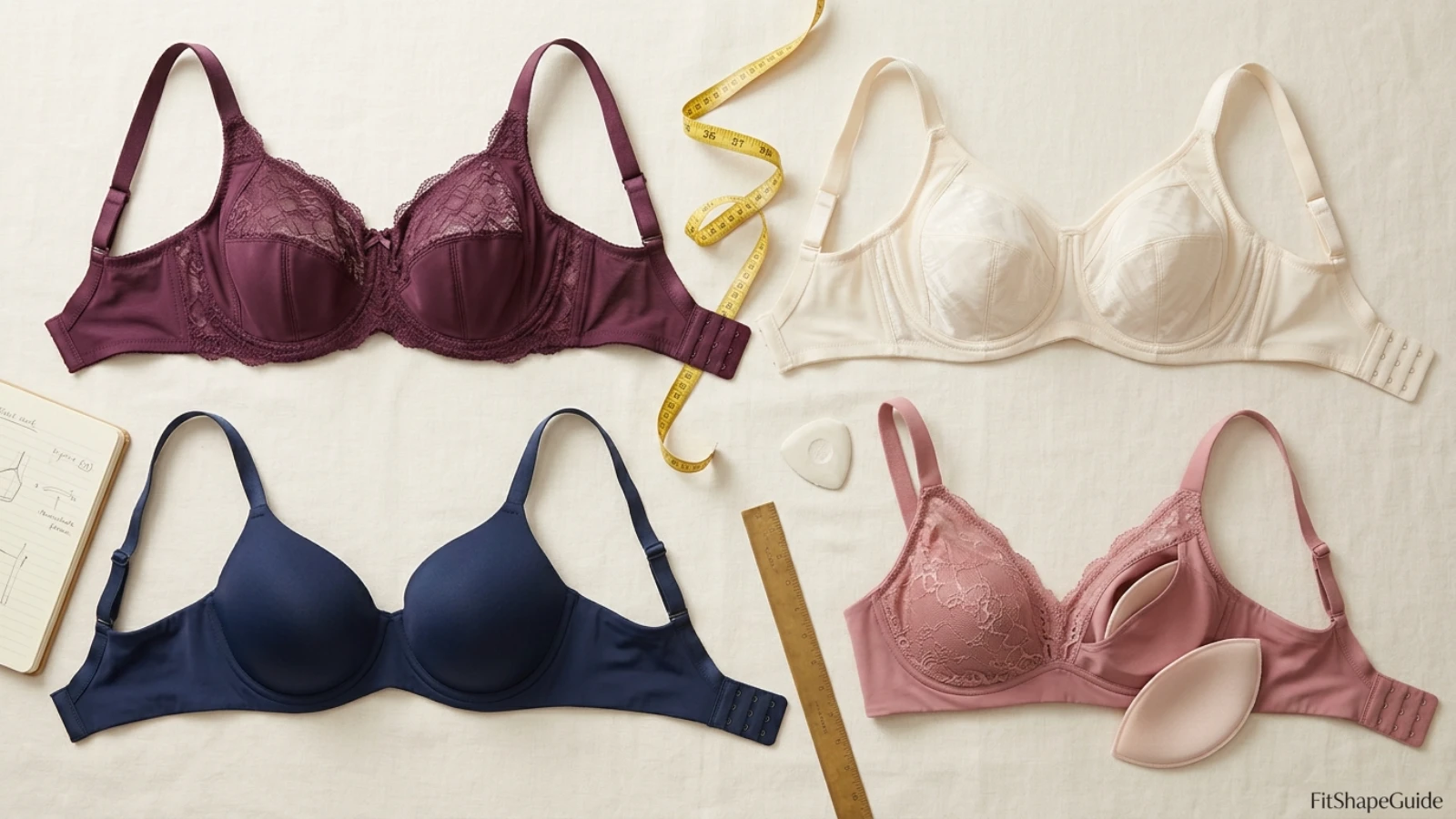
Common bra problems with uneven breasts
| Problem | Likely cause | Try next | Avoid |
|---|---|---|---|
| Fuller breast spills | Cup fitted to smaller side | Increase/deepen cup | More strap tension |
| Smaller cup gaps at top | Volume or cup-height difference | Stretch edge / thin insert | Downsizing both cups |
| Only one molded cup looks empty | Rigid cup holds shape | Softer contour cup / insert | Assuming band is wrong |
| One strap keeps slipping | Breast/shoulder height difference | Adjust that strap independently | Tightening both straps equally |
| One wire sits on breast tissue | Fuller-side cup too small/narrow | Reassess cup geometry | Padding smaller side first |
| Insert moves during day | No pocket / poor placement | Pocketed cup | Thicker loose insert |
| Stretch bra feels unsupported | Too much uncontrolled stretch | Structured lower cup + stretch top | Rigidly molded cup solely for support |
| T-shirt cup edge shows on smaller side | Cup too rigid/tall | Spacer cup / lower edge / insert | Compressing fuller side |
| One breast changed recently | Not necessarily a lingerie issue | Appropriate health assessment | Hiding change only with padding |
| Post-surgery cups differ | Changed anatomy/healing | Follow clinical garment guidance | Using unsupported generic advice |
One cup fits perfectly and the other gaps
If the fuller breast is properly contained, this is exactly the situation where stretch fabric, slight strap adjustment or one thin insert can help.
The smaller breast looks fine but the larger breast has a ridge
The bra is not large or deep enough for the fuller side. Solve that first.
A smaller cup makes both sides look “lifted”
Compression is not the same as fit. If the larger breast is spilling or the wire rests on breast tissue, the result is not a successful bra size.
I do not care whether they look perfectly even
Then you may need no cosmetic adjustment at all. Choose a comfortable flexible cup that supports both breasts and leave the natural difference alone.
Which bra should you choose for uneven breasts?
For everyday flexibility, start with a stretch-lace full-cup or seamed side-support bra sized to the fuller breast. If the smaller cup still gaps and you want a visually balanced line, add one thin removable insert or choose a pocketed cup. For fitted clothing, a soft contour or spacer T-shirt bra with one-sided padding may create the smoothest result.
You do not need to force the breasts into perfect symmetry. A successful bra keeps the fuller breast secure, the band stable and the smaller side comfortable—and uses only as much adjustment as you personally want.
Frequently asked questions
Should I fit my bra to the larger or smaller breast?
Fit the larger or fuller breast first. The cup should contain it without overflow or compression. Adjust the smaller side afterward with flexible fabric, a slight strap adjustment or a removable insert.
What bra is best for uneven breasts?
Stretch-lace full cups, seamed side-support bras, soft molded cups with removable inserts and pocketed bras are useful options because they allow the two sides to be adjusted without compressing the fuller breast.
Can I tighten one bra strap more than the other?
Yes. Each strap can be adjusted independently. A small difference is fine, but do not shorten the smaller-side strap enough to distort the cup, lift the back band or create shoulder pain.
How do I stop one bra cup from gaping?
First make sure the bra correctly fits the fuller breast. Then try a stretch upper cup, a slightly shorter smaller-side strap, a softer molded cup or a thin insert in the smaller cup.
Are removable pads good for breast asymmetry?
They can be very useful because one pad can be used only on the smaller side. Thin inserts usually allow finer adjustment than very thick push-up pads.
Are T-shirt bras good for uneven breasts?
They can be, especially when the cup is soft or spacer-based and has room for a removable insert. Very rigid molded cups may make a smaller-side gap more obvious.
Are uneven breasts normal?
Some long-standing difference in breast size or shape can be normal. A new or unexplained change in one breast should be discussed with an appropriate healthcare professional.
Do I need to make uneven breasts look symmetrical?
No. A bra only needs to support you comfortably. Inserts and asymmetry-balancing techniques are optional clothing tools for people who prefer a more even appearance under certain garments.
How FitShapeGuide evaluates bras for uneven breasts
This guide evaluates asymmetry-friendly bras through cup capacity on the fuller side, cup flexibility, seamed depth, side-support construction, neckline stretch, independent strap adjustment, removable padding, insert pockets, molded-cup rigidity and clothing visibility.
FitShapeGuide does not treat breast asymmetry as a body flaw. The fitting goal is secure, comfortable support. Creating a more visually even clothing silhouette is optional.
The fuller breast determines the minimum cup volume. The smaller side is then adjusted using the least intrusive method that works—often flexible fabric, a slight strap difference or one lightweight insert.
A rigid molded cup can sometimes make asymmetry more visible because the empty cup keeps its preformed shape. Stretch lace, seamed cups and softer spacer or contour cups may adapt more naturally.
Pocketed bras are treated separately from ordinary removable-pad bras because they are specifically constructed to secure an insert or appropriate breast form. Post-surgical use requires individualized clinical guidance.
FitShapeGuide also distinguishes long-standing natural asymmetry from a new breast change. Changes in the size, shape or appearance of a breast should not be diagnosed through lingerie fit.
Before publishing any commercial recommendation, FitShapeGuide should verify the exact live seller, product name, current band and cup range, stretch-lace construction, cup depth, side support, removable-pad design, pad thickness, insert pocket, molded or spacer cup, strap adjustability, underwire or wireless frame, materials, care instructions, current availability and return eligibility.
No ASIN, size range, insert compatibility, medical claim, price, rating, review count, stock statement, coupon or delivery promise should be published unless directly verified.