How to Dress a Large Bust with Short Legs
A fuller bust with shorter legs does not require one “correct” silhouette. You can deliberately create a higher clothing break with high-rise trousers and shorter jackets, or keep a longer top and lower rise if you prefer your natural vertical proportions. The practical part is making sure the bust has enough room while top hems, waistbands, trouser breaks and dress seams land where you intended.
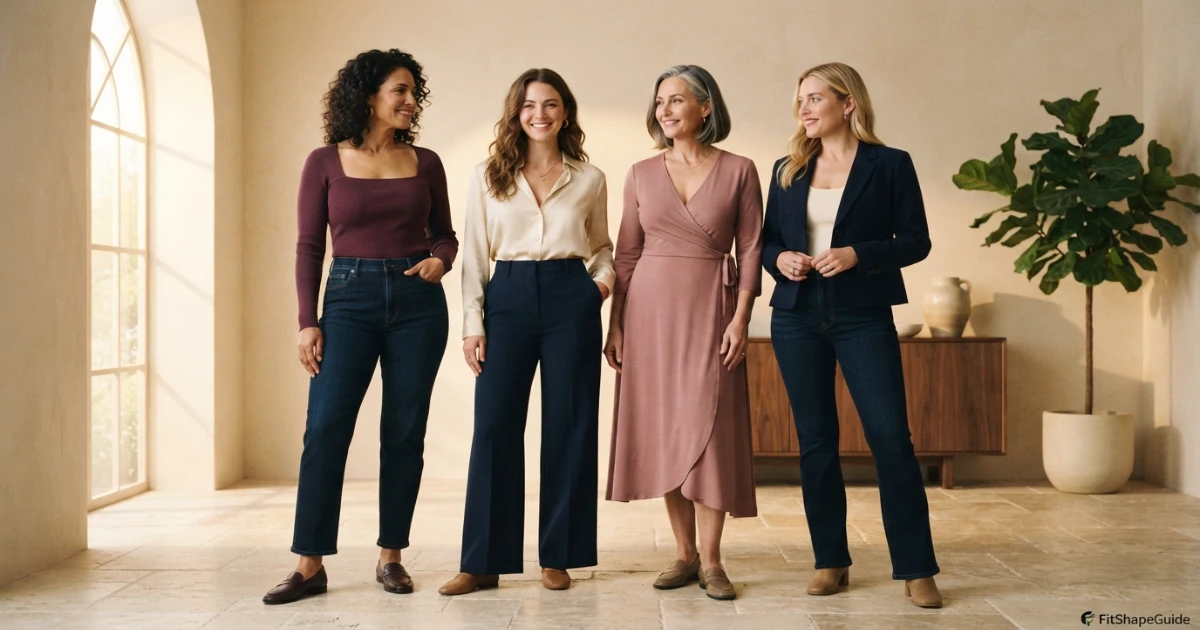
The 60-second proportion and hem test
- Check that the top has enough bust room without pulling upward.
- Look at where the top actually ends relative to your waistband.
- Check whether a high rise feels comfortable rather than crowding your underbust.
- Look at the trouser crotch and rise—excess vertical fabric can make the whole leg fit look off.
- Check the trouser hem with the exact shoes you plan to wear.
- Make sure straight or wide legs fall cleanly instead of pooling excessively.
- With dresses and skirts, check that the hem is an intentional length rather than simply too long.
- Take one full-length photograph and judge the full outfit instead of focusing on leg length alone.
The easiest styling framework for a large bust and short legs
Outfits are divided by visible horizontal points: neckline, top hem, waistband, jacket hem, skirt hem and shoe line. Moving any of these changes the visual composition.
With a fuller bust, there is another practical factor: tops may ride higher in front when there is not enough chest projection or front length. That can accidentally change where the outfit appears to divide.
Make sure the top or dress has enough projection so the hem stays where intended.
High, mid or lower rises all create different vertical outfit proportions.
Trouser and skirt lengths should be intentional rather than determined by excess fabric.
| If you notice… | Try… | What changes | You do not need to… |
|---|---|---|---|
| Top extends far below waistband | Shorter top or tuck | Raises visible clothing break | Change body proportions |
| Trousers pool heavily | Petite length / hemming | Cleans leg line | Wear heels |
| High rise feels good | Use it with tucked/shorter tops | Creates higher waist break | Wear only high rises |
| High rise crowds underbust | Mid rise | Adds torso space | Tolerate discomfort |
| Long blazer dominates outfit | Waist/hip-length jacket | Moves outer-layer hem upward | Avoid long blazers forever |
| Midi skirt feels awkward | Adjust hem above/below widest calf zone if preferred | Changes lower hem position | Stop wearing midi skirts |
| Wide-leg pants overwhelm frame | Cleaner/narrower wide leg | Reduces fabric volume | Wear only skinny pants |
| Top rides upward over bust | More bust room/front length | Restores intended hem | Pull it down all day |
Best top lengths for a large bust with short legs
Waist-length tops
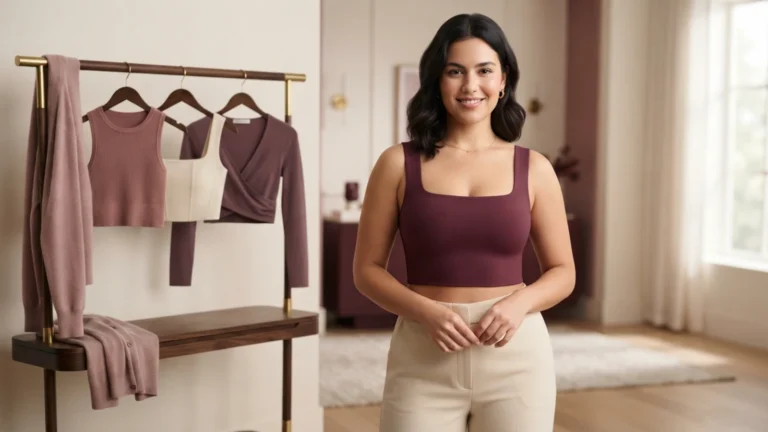
A top ending near the waistband can create a high, clean visual break without requiring a crop that exposes skin.
Longer crop tops
If you enjoy cropped silhouettes, fuller-bust-friendly crops with enough front length can work well with high-rise trousers and skirts.
Tucked shirts
A full tuck removes the visible lower section of the shirt and lets the trouser or skirt waistband define the outfit break.
Partial tuck
Useful when you want some waist definition while keeping the rest of a blouse relaxed.
High-hip tops
A top ending around the high hip can work beautifully with straighter trousers and skirts when you prefer more torso coverage.
Long tunics
Still valid. They create a longer upper garment line, especially with slim or straight trousers. Choose them because you enjoy that composition rather than avoiding them because of leg-length rules.
Peplum tops
A peplum can create a clear waist point while adding fabric below it. Check that the upper bodice is long enough for a fuller bust so the flare starts where intended.
Bodysuits
Useful when you want a smooth tuck without fabric bunching, but make sure both bust fit and torso length are comfortable.
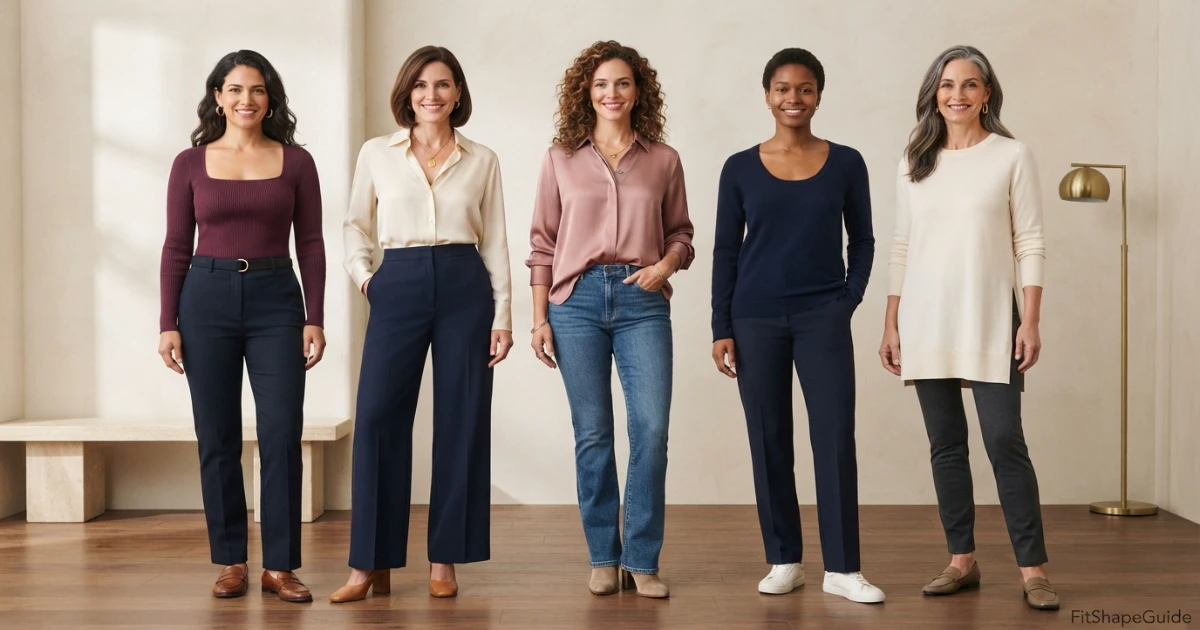
Best necklines for a large bust with short legs
Moderate V-neck
A V creates center-front openness and works with both tucked shirts and waist-length tops.
Square neck
A square neckline adds a clear horizontal upper line and works particularly well with high-rise pants and skirts.
Scoop neck
A broad scoop softens the upper garment while leaving room for different waist placements below.
Open collar
An open shirt collar combines structure near the shoulders with a central opening and can work especially well when tucked.
Sweetheart
Useful in dresses and fitted tops when you want a shaped upper bodice without an extremely low neckline.
Boat neck
Boat necks remain an option, especially when you prefer more horizontal detail across the shoulder line.
High neck
Crew necks and turtlenecks can create a continuous upper garment area. Pair with whatever rise and bottom silhouette you prefer.
High-rise vs mid-rise for a large bust with short legs
High-rise trousers
A higher waistband creates a higher horizontal break and gives more of the visible outfit below that line to the trouser.
High rise is not automatically better
On some torsos, a very high waistband can sit close to the bra band or feel restrictive while sitting.
Mid-rise trousers
A mid rise creates more space between bust and waistband and often works well with waist-length or partially tucked tops.
Lower rises
If you like a longer visible torso and lower clothing break, lower rises remain completely valid.
Check the front rise length
A waistband can be labeled high-rise yet still fit awkwardly if the crotch depth or front rise is too long for you.
Check back rise too
The trouser should remain secure while sitting without needing an excessively high front waistband.
Petite proportions can help
Petite trouser ranges may adjust not only inseam but also rise and knee placement, depending on the brand. Always check the actual garment rather than assuming “petite” means only shorter hems.
Best pants and jeans for a large bust with short legs
Straight-leg trousers
A clean straight leg creates an uncomplicated vertical line and is easy to hem accurately.
Bootcut jeans
A slight flare below the knee can create movement without requiring a very wide trouser throughout.
Flare trousers
Flared styles can work especially well when the knee break sits at the correct place and the hem is tailored for your footwear.
Wide-leg trousers
Wide legs are completely wearable with shorter legs. Look for a clean drape and consider reducing excess width if very voluminous versions overwhelm the outfit you want.
Skinny jeans
A slim line remains useful when you prefer a narrower lower silhouette or want to pair with tunics, blazers and relaxed tops.
Cropped trousers
Cropped hems create another horizontal break. Ankle-length versions often feel intentional; an accidental too-long crop can simply look like an unhemmed full-length trouser.
Full-length trousers
A full-length hem can create a continuous lower garment line when it nearly meets the shoe without dragging.
Petite inseams
Buying the correct inseam or hemming trousers can improve the garment far more than changing the entire trouser style.
For more detail, see Wide-Leg Pants and a Large Bust .
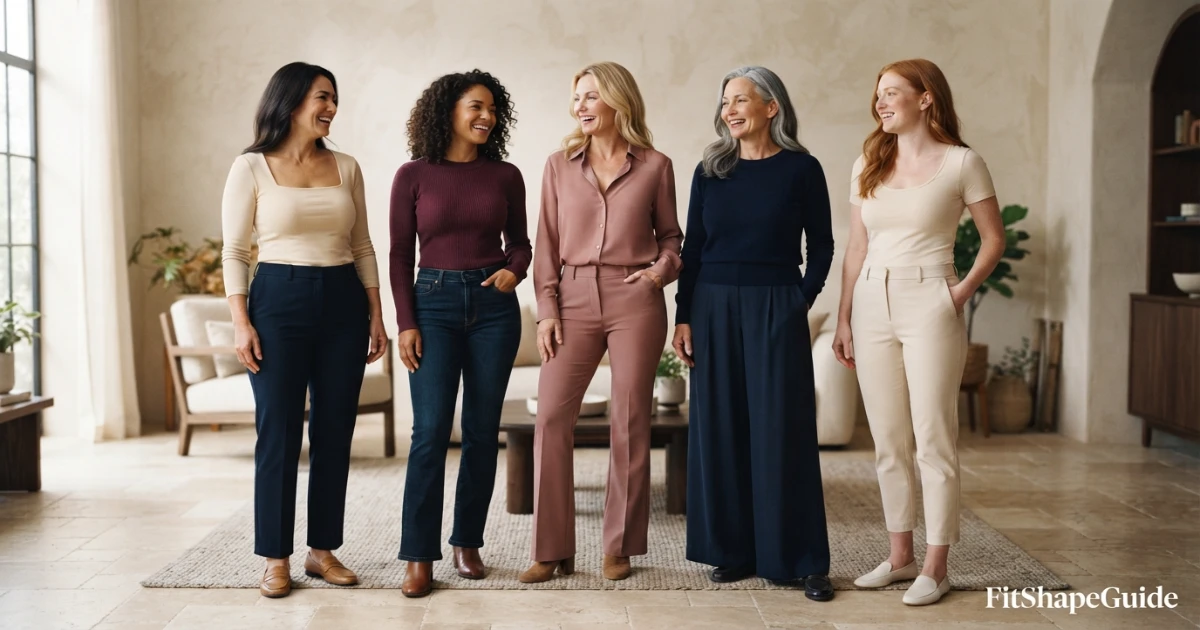
Best skirt lengths and shapes for a large bust with short legs
Mini and above-knee skirts
These place the hem relatively high and leave more leg visible. Choose straight, A-line or pleated construction according to preference and coverage.
Knee-length skirts
A classic option that works easily with fitted, tucked or softly structured fuller-bust tops.
Midi skirts
Midi length absolutely works. Because “midi” covers a large range, small hemming changes can make the skirt feel much more intentional.
A-line midi
A-line construction creates movement below a fitted waistband without needing cling at the leg.
Bias midi
A bias skirt gives a softer vertical fall and can pair well with waist-length or tucked tops.
Straight midi
Creates a clean column and works particularly well when the slit provides comfortable walking room.
Maxi skirts
Maxis are not off-limits. A properly hemmed maxi can create one uninterrupted lower garment line.
High-low or asymmetric hem
These create diagonal movement and can be useful when you want something less static than one horizontal hem.
Best dresses for a large bust with short legs
Wrap dress
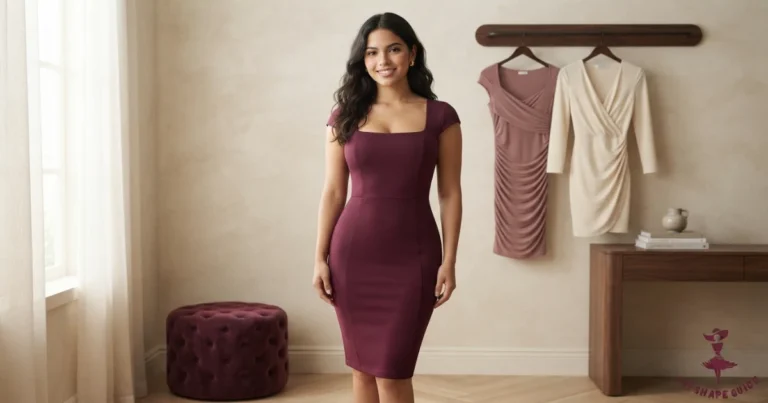
Wrap construction can provide adjustable bust room and a clear waist point. The skirt can be knee, midi or maxi depending on preference.
Fit-and-flare dress
A shaped bodice plus a separate skirt gives you control over waist placement and hem length.
Princess-seam dress
Useful for fitting the fuller bust without adding unnecessary overall width.
Shirt dress
An open collar and adjustable belt can make it easy to choose the exact waist position and amount of definition you want.
Column dress
A straighter dress creates a long uninterrupted clothing line and does not require a visible high waist at all.
Empire dress
A true empire seam intentionally sits beneath the bust and creates a high garment break. Wear it when you like that silhouette—not because short legs demand it.
Midi dress
Check the actual finished hem. A few inches can separate an intentional midi from a dress that simply looks too long for the design.
Maxi dress
A correctly hemmed maxi can work beautifully, especially when the bodice provides enough bust room and the skirt does not drag.
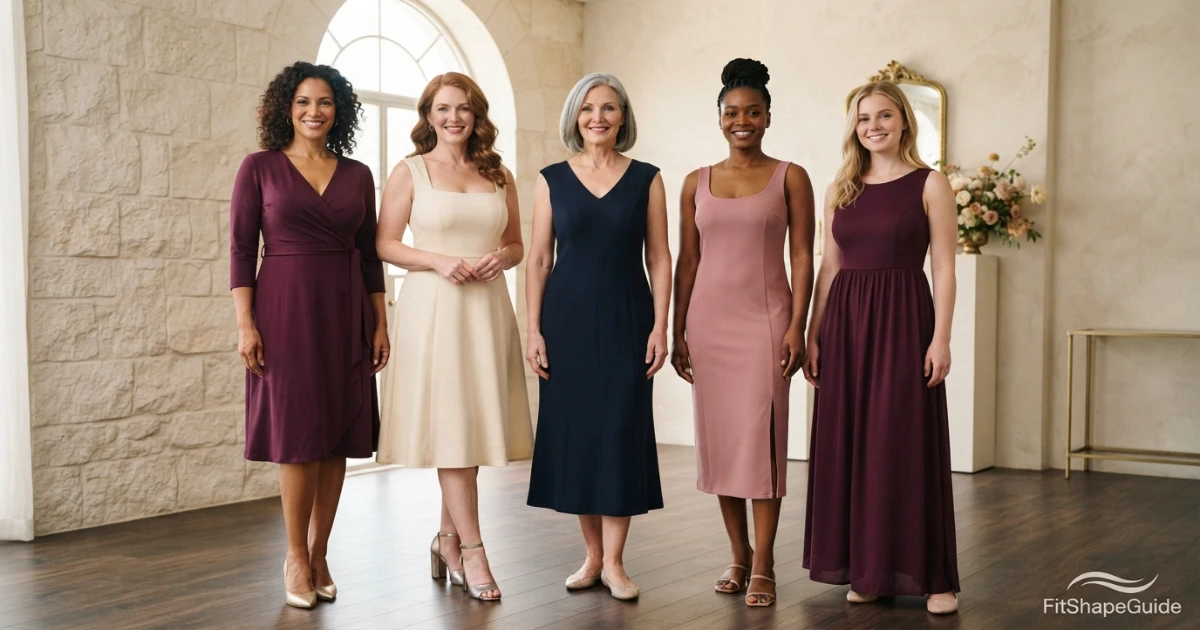
Best jackets and layers for a large bust with short legs
Waist-length blazer
A blazer ending near the waist creates a relatively high outerwear break and works well with high- or mid-rise trousers.
Cropped jacket
A cropped jacket can create an even higher break, but check that fuller bust projection does not make the front dramatically shorter than intended.
Single-breasted blazer
Open lapels give the bust visual space while the jacket length can be selected according to the silhouette you want.
Hip-length jacket
Still entirely workable. It creates a longer upper garment section and pairs well with straight or slim trousers.
Longline blazer
Long layers are not forbidden. A longline blazer can create a strong continuous outer line, especially with monochrome trousers beneath.
Denim jacket
Waist-length denim is easy to combine with wide-leg trousers, skirts and dresses without adding much length to the upper layer.
Long cardigan
A long cardigan creates two vertical front edges and can be worn over a shorter top if you want both a high inner break and a longer outer layer.
Coat length
Choose cropped, knee-length or long coats for the look you want. Accurate sleeve and hem proportion matter more than a universal “short legs” rule.
Do you need heels if you have short legs?
No.
Heel height is optional. The useful styling detail is how the trouser or skirt hem interacts with the shoe.
Flats
Loafers, ballet flats, sneakers and sandals all work when trousers are hemmed for their actual sole height.
Low heels
A small heel changes trouser clearance slightly and may work well with bootcut or flare styles.
High heels
Wear them if you enjoy them, not because they are required to change your proportions.
Ankle boots
Check where cropped pants or skirts meet the boot shaft. The transition can be intentional or visually segmented depending on the outfit.
Color continuity
Matching trousers and shoes can create one continuous color block, while contrasting footwear creates a stronger lower break. Both are valid design choices.
10 outfit formulas for a large bust with short legs
Common outfit frustrations and what to change
| Problem | Likely reason | Try | Avoid assuming |
|---|---|---|---|
| Trousers bunch heavily at ankle | Inseam too long | Petite length / hem alteration | The cut itself is wrong |
| Wide-leg pants feel overwhelming | Too much width or excess length | Narrower wide leg / correct hem | You cannot wear wide legs |
| Top seems to swallow lower body | Long upper hem | Shorter top / tuck | Your torso is wrong |
| High-rise pants feel uncomfortable | Rise too tall / underbust crowding | Mid-rise | You must wear high rise |
| Midi skirt feels awkward | Hem lands at unintended point | Tailor hem | Midi length is impossible |
| Bootcut looks strange | Knee break too low / hem too long | Petite cut or alteration | Bootcut is wrong |
| Cropped jacket looks tiny | Bust uses extra front length | Longer crop / better bust shaping | Short jackets cannot work |
| Maxi drags on floor | Garment too long | Correct hem length | Maxis are unsuitable |
Shopping checklist for a large bust with short legs
- Check bust fit first. A top that rides upward changes the outfit’s vertical proportions unintentionally.
- Look at top hem placement. Decide whether you want waist, high-hip or longer coverage.
- Check the actual rise. High-rise labels vary significantly between garments.
- Check crotch depth. Too much rise fabric can make trousers look and feel proportionally wrong.
- Check knee placement. This is especially important for bootcut and flare pants.
- Check the inseam. Correct hemming can improve straight, wide and flared trousers dramatically.
- Bring or wear the intended shoes. Full-length trouser hems depend on sole and heel height.
- Check jacket length. Waist, hip and longline jackets create different visible torso-to-leg divisions.
- Check skirt and dress hems. Do not assume the factory hem is the intended finished length for you.
- Photograph the full outfit. Evaluate whether the clothing breaks look intentional rather than trying to make your legs meet a particular visual standard.
Look at petite ranges
Petite garments may adjust inseam, knee placement, rise, sleeve length and overall garment length, depending on the brand. Check the actual measurements and construction rather than relying on the label alone.
Do not assume petite means small size
Petite refers to vertical proportion, not body width. A fuller bust can still need substantial cup or chest room within a petite or shorter garment proportion.
Do not buy long trousers planning to “just wear heels”
Buy or tailor the hem for the footwear you realistically expect to wear.
Check cropped pants carefully
An intentionally ankle-length trouser should look intentional rather than simply being a full-length design cut off at an arbitrary point.
Prioritize alterations where they are easy
Trouser and skirt hems are often simpler to adjust than bust shaping, so prioritize correct chest fit and alter straightforward length when practical.
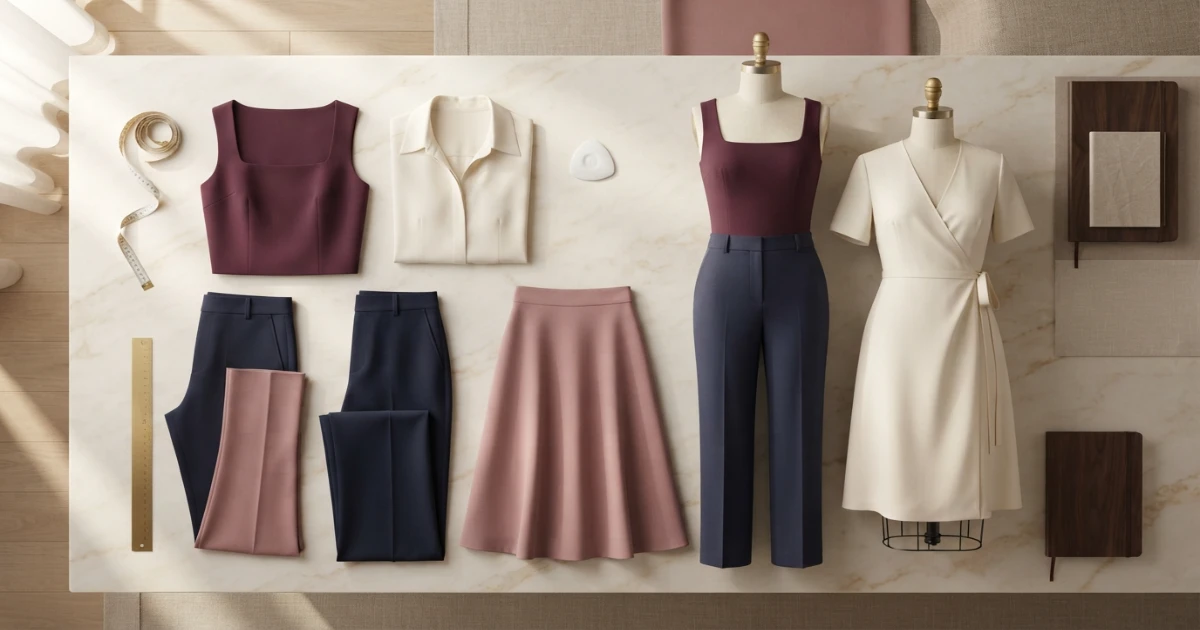
Save the top-length, rise and hem checklist
Keep a quick reference for fuller-bust tops, trouser rises, petite inseams, jacket lengths and dress hems so you can identify whether an outfit needs a different silhouette—or simply a better garment length.
Fit the bust first, then place the clothing breaks where you want them
For a large bust with short legs, start with a top or dress that has enough bust room to keep the front hem stable. Then choose your rise, top length, jacket length and lower hem intentionally.
Use high-rise bottoms and waist-length tops when you want a higher visual clothing break, or keep mid-rise pants, longer tops and long layers when you prefer your natural vertical proportions. Straight, skinny, bootcut, flare and wide-leg trousers can all work once the knee placement and hem are right.
Frequently asked questions
What should I wear if I have a large bust and short legs?
Start with tops that fit the bust without riding up, then choose the waist and hem placement you prefer. High-rise trousers, straight or bootcut pants, waist-length tops, wrap dresses and correctly hemmed skirts are useful options.
Are high-rise pants good for a large bust and short legs?
They can be because they create a higher visible waistband, but comfort matters. If the rise crowds the underbust or feels restrictive while sitting, a mid-rise may work better.
Can I wear wide-leg pants if I have short legs?
Yes. Choose a width you enjoy and make sure the rise, knee placement and finished hem suit your body and footwear. Excess length often causes more problems than the width itself.
What jeans work for a large bust and short legs?
Straight-leg, skinny, bootcut and flare jeans can all work. For bootcut and flare styles, correct knee placement and inseam are especially important.
What dress styles work for a large bust and short legs?
Wrap, fit-and-flare, princess-seam, shirt and column dresses can all work when the bust fits correctly and the waist and hem are positioned intentionally.
Are midi skirts bad for short legs?
No. Midi skirts cover a broad range of lengths. Hemming the skirt to an intentional point can matter more than avoiding the midi category entirely.
Do I need to wear heels to make short legs look longer?
No. Flats, sneakers, sandals, loafers and boots all work. Hem trousers for the footwear you actually intend to wear rather than relying on heel height to correct garment length.
Should I always wear short tops with short legs?
No. Waist-length and tucked tops create a higher clothing break, but longer tops and tunics are equally valid when that is the silhouette you prefer.
How FitShapeGuide approaches fuller-bust and short-leg styling
FitShapeGuide treats leg length as a natural proportion rather than a flaw that clothing must disguise.
For a fuller bust with shorter legs, we first evaluate whether tops and dresses have enough chest projection to keep their hems and waist seams in the intended position. A top that rides upward over the bust can create an accidental proportion change before trousers or skirts are even considered.
Rise height is treated as an optional styling variable. A higher rise creates a higher horizontal clothing break, while mid- and lower-rise garments preserve more visible torso space. None is presented as inherently better.
Trouser recommendations focus on knee placement, rise, inseam and finished hem in addition to leg shape. Straight, skinny, bootcut, flare and wide-leg trousers can all work when their vertical construction matches the wearer.
Skirt and dress hems are also treated as adjustable garment dimensions. Knee, midi and maxi lengths remain available; the relevant question is whether the chosen hem looks intentional and works with the garment design.
FitShapeGuide does not require heels, monochrome clothing, high rises or cropped jackets to create the illusion of longer legs. These are styling options rather than corrective rules.
Every recommendation remains optional. Readers can preserve their natural torso-to-leg proportion or shift visual clothing breaks upward or downward according to personal style.