Best Tank Tops for a Large Bust
A construction-led buying guide to straps that cover a bra, armholes that stay close, necklines that hold their shape, and fabrics that remain opaque over a fuller bust.
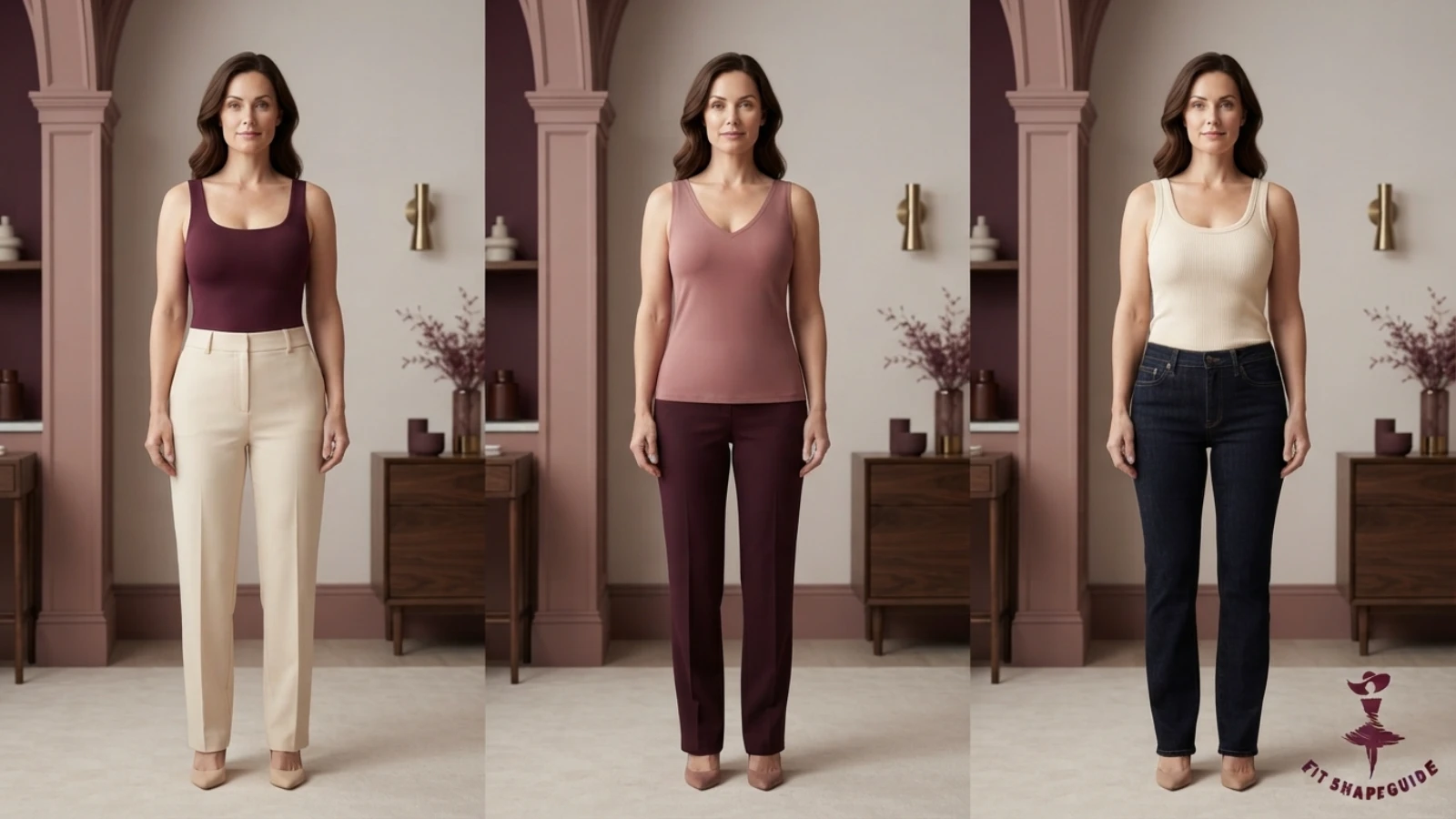
The best tank tops for a large bust do more than stretch far enough to go on. They keep the bra covered during movement, give the bust enough horizontal and vertical room, stay opaque where the fabric is under greatest tension, and return to shape after sitting or layering. A tank can look smooth in a still product photo yet reveal side bra, pull its neckline outward, ride up at the front, or become sheer once worn. This guide translates those problems into details you can inspect before buying: strap geometry, binding quality, armhole depth, fabric weight, rib recovery, garment measurements, and hem balance. It also separates genuinely useful construction from marketing language, so you can shortlist verified products later without relying on fabricated ratings or generic “flattering” claims.
The seven-point tank-top fit check
Use this quick screen to compare the best tank tops before color, price, or trend details influence the decision.
- Straps fully cover the bra straps and do not drift toward the neck or shoulder edge.
- Armholes sit close without cutting into the front of the underarm.
- The neckline keeps its original shape when the bust stretches the body fabric.
- The fabric stays opaque over the fullest point in daylight.
- The front hem remains level enough after the tank settles naturally.
- The back does not ride upward to donate length to the front.
- You can reach and sit without repeatedly pulling the top back into place.
Best tank tops for a large bust by type and purpose
The best tank tops are not one universal shape for every person or outfit. The useful question is which design manages the tension created by your bust while supporting the role the tank must play. A close base layer needs different armholes and surface texture from a standalone summer top. A ribbed tank can be excellent when its ribs recover; a visually identical one can become transparent and wavy within an hour.
1. Wide-strap scoop-neck tank: the dependable all-rounder
A wide-strap scoop is often the safest starting point because it can cover conventional bra straps, provide a generous but controlled opening, and layer beneath jackets without adding a second collar. Look for straps that begin close enough to the neck to cover the inner edge of the bra strap, then widen over the shoulder. A scoop should sit below the collarbone without being stretched into an unintended oval by the bust. Binding that lies flat before and after movement is more important than decorative trim.
2. Controlled V-neck tank: the open-line option
A medium V creates visual space and a vertical direction without requiring a plunge. The best versions have a reinforced point, enough width across the upper chest, and straps that do not angle sharply inward. If the point shifts to one side, the neckline opens when you sit, or the V deepens substantially as the body fabric stretches, the cut is too dependent on tension. A double-layer front or stable neckline facing can make this type feel more secure as a standalone top.
3. Substantial ribbed tank: the close-fitting basic
Rib knit expands readily, which makes it attractive for fuller-bust dressing, but stretch alone is not fit. Choose ribs that spring back after being pulled sideways, remain reasonably compact over the fullest point, and do not make every edge curl. A slightly wider rib or dense fine rib can look polished; thin, loose ribs often become shiny or transparent under stretch. Check whether the side seams remain vertical and whether the hem grips the torso so firmly that it pushes the tank upward.
4. Shaped square-neck tank: the structured summer choice
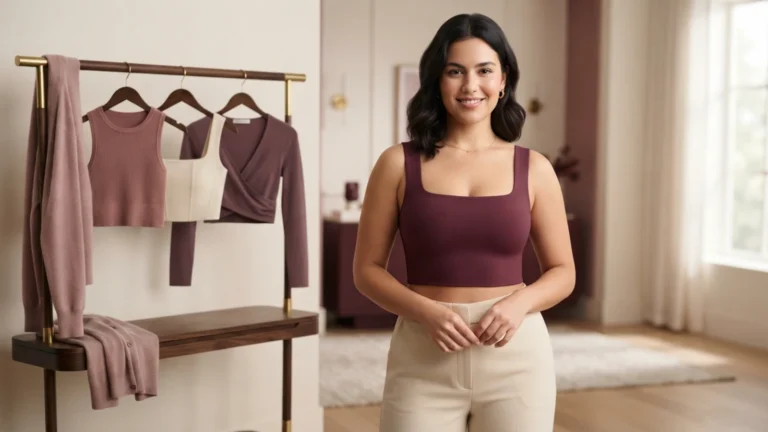
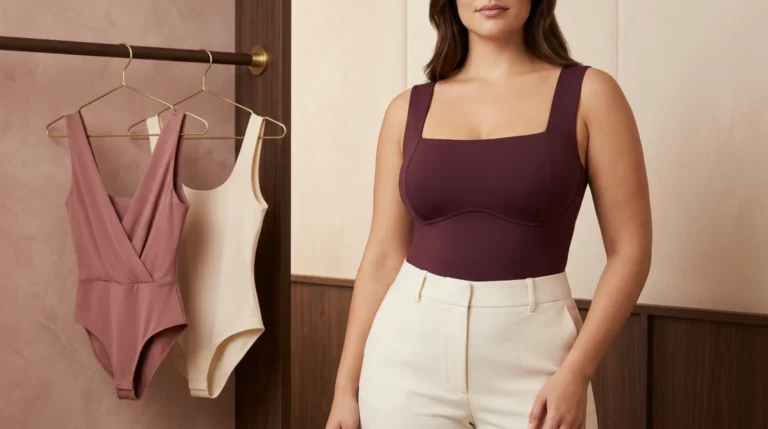
A square neckline can frame the upper chest beautifully when the corners sit flat and the opening is not too wide for the bra. It needs better engineering than a simple scoop because four edge directions must remain stable. Look for wide straps, substantial edge construction, and enough front width. If the corners curl, the straight top edge bows, or the straps sit outside your bra straps, the effect will be difficult to maintain. Square tanks are strongest when worn as an intentional top rather than an invisible base layer.
5. Softly shaped knit shell: the polished option
A knit shell is usually less athletic-looking than a classic tank. It may use a denser jersey, matte sweater knit, or softly draped fabric with a higher armhole and wider shoulder coverage. This can work for offices, dinners, and layering beneath tailoring. Prioritize a front that falls from the bust rather than clinging below it, a neckline that does not collapse, and a shoulder width compatible with your bra. The best tank tops in this category behave more like compact sleeveless blouses than underwear-inspired camisoles.
6. Support-integrated tank: useful only when the sizing is real
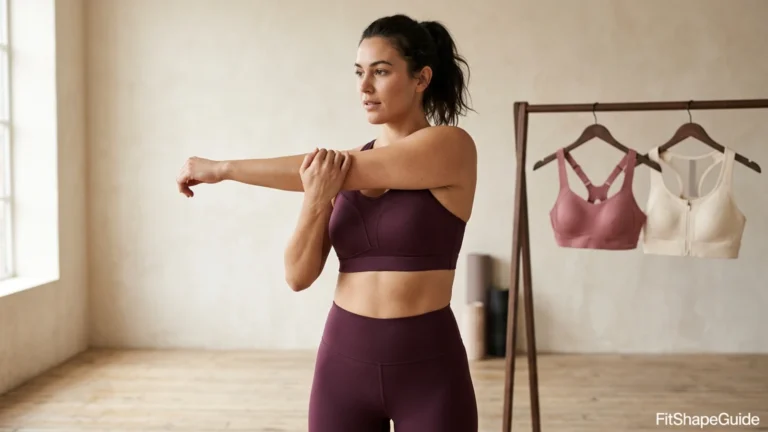
A shelf bra is not automatically fuller-bust support. Many are simply a short elastic band attached to a second fabric layer, with no cup depth or band sizing. They may compress the bust, cut across tissue, or pull the outer neckline down. A support-integrated tank becomes more credible when it offers cup-and-band sizing, adjustable straps, a supportive underband, clear fit guidance, and a return option. Treat vague “built-in bra” language as a feature to investigate, not proof that a separate bra is unnecessary.
| Tank type | Best use | Construction to prioritize | Main risk |
|---|---|---|---|
| Wide-strap scoop | Everyday wear and layering | Flat binding, bra-covering straps, medium scoop | Scoop spreading under bust tension |
| Controlled V-neck | Standalone outfits and open layers | Reinforced V point and stable front edge | Neckline deepening or shifting |
| Substantial rib | Close base layer and casual outfits | Dense ribs, strong recovery, opaque stretch | Sheerness and hem creep |
| Square neck | Structured warm-weather look | Wide straps, stable corners, double edge | Bra exposure and corner curl |
| Knit shell | Work and polished layering | Higher armhole, matte surface, controlled drape | Tenting below the bust |
| Support-integrated | Low-impact convenience when correctly sized | Band-and-cup sizing, underband, adjustable straps | Compression without support |
How the best tank tops handle straps and bra coverage
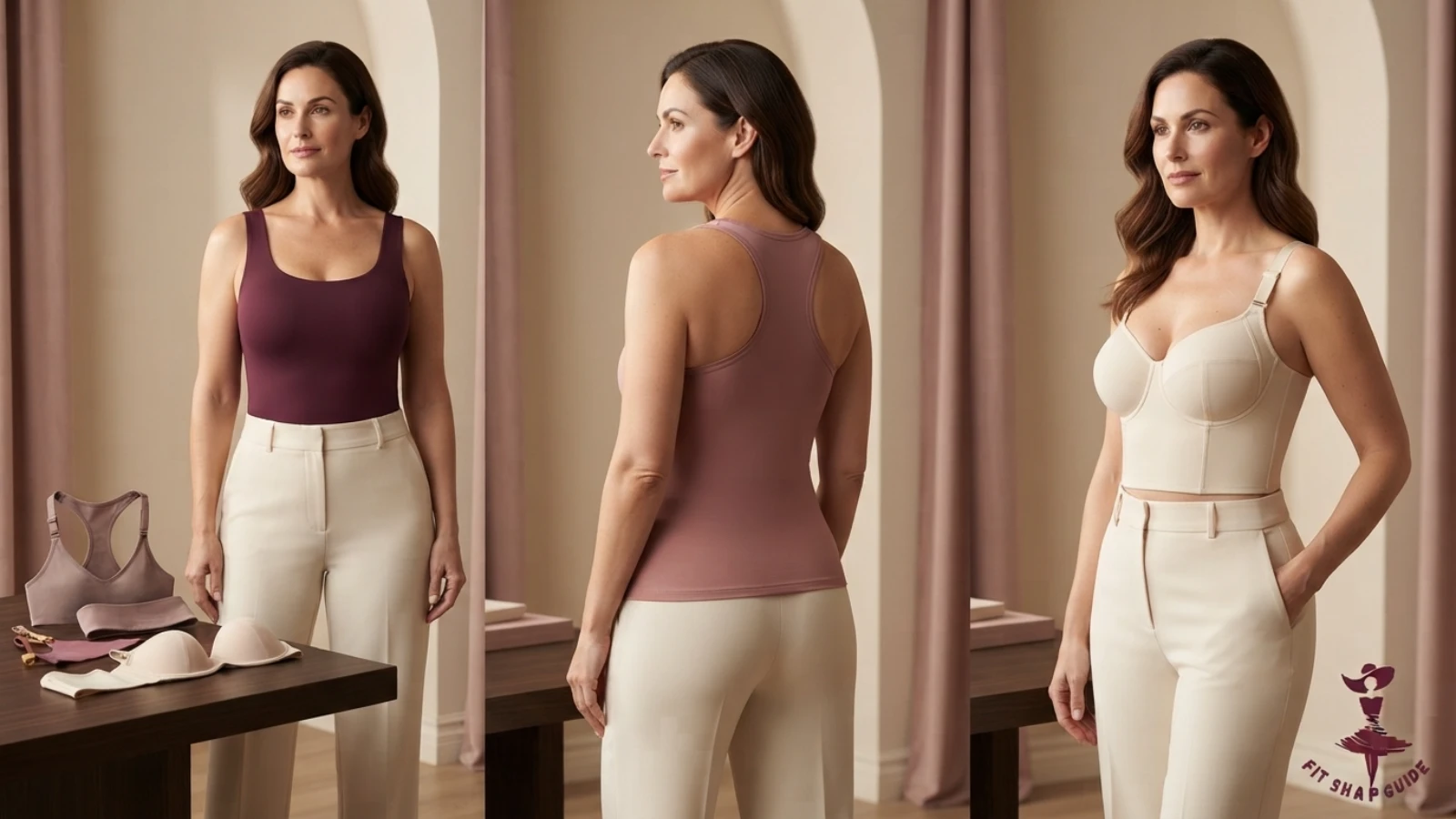
On the best tank tops, straps are not an isolated design feature. Their width, angle, spacing, and attachment points determine whether the neckline stays centered, the armholes remain close, and the bra can do its job discreetly. Product photos often show a coordinated strapless bra or strategic pose; your test should use the bra you expect to wear most often.
Strap width should be judged against your bra, not a trend label
Measure the visible width of your most-used bra strap and compare it with the tank at the shoulder. A tank strap that is technically wide may still expose the bra because it sits farther toward the shoulder edge or angles inward at the back. Complete coverage through a normal range of motion is more useful than coverage while standing perfectly still. Reach forward and overhead, then let the tank settle without adjusting it.
Strap placement controls the neckline and armhole at the same time
Straps placed too far apart can slide outward and pull a scoop or square neck wider. Straps placed very close to the neck may conceal a racerback bra but create a halter-like line and open the outer armhole. The strongest placement follows the support garment closely enough to cover it while allowing the neck and shoulder line you prefer. Back views matter because a straight front strap may angle inward behind the shoulder.
Adjustable straps solve length, not poor body geometry
Adjustment can raise a low neckline or shorten a strap that falls, but it cannot add missing bust width, move an armhole inward, or change where the strap attaches. Over-shortening often pulls the front hem upward, raises the underarm uncomfortably, and makes the back neckline climb. Adjust only until the strap feels stable; if major tightening is needed, the tank is probably the wrong proportion.
Racerback and cutaway shoulders need a planned bra solution
A racerback can feel secure because the straps cannot fall outward, but the cutaway shape may reveal a standard bra near the armhole or back. Use it when you already own a compatible racerback or convertible bra and the tank’s armholes are not deeply cut. Do not buy a top that requires an entirely new support system unless that tradeoff is intentional. For broader proportion guidance, the complete large-bust styling guide explains how open necklines, shoulder lines, and vertical layers work together.
Necklines and armholes that stay controlled on a fuller bust
The best tank tops keep more of their fit dependent on stable edges. The neckline and armholes must resist distortion while the center front accommodates projection. If those edges are weak, sizing up can make them gape; sizing down can make them cut and pull. The goal is not the smallest possible opening but an edge that follows the body without depending on constant tension.
Look for binding that supports rather than merely decorates
Good binding returns to its original shape, lies flat, and has even tension around curves. A neckline that ripples on the hanger may worsen in wear, while a very tight binding can cause the body fabric to gather below it. Gently stretch a small section in store or inspect close-up customer photos online. Double-turned edges, facings, and self-fabric bands can all work; execution matters more than the named method.
Choose neckline depth for movement, not only the mirror
Sit, lean forward, and reach rather than judging only the upright view. A neckline may shift lower because bust projection consumes front length. Medium scoops and V-necks often balance openness with stability, but the exact depth depends on torso length, bust position, and bra coverage. Compare additional shapes in the best necklines for a large bust guide.
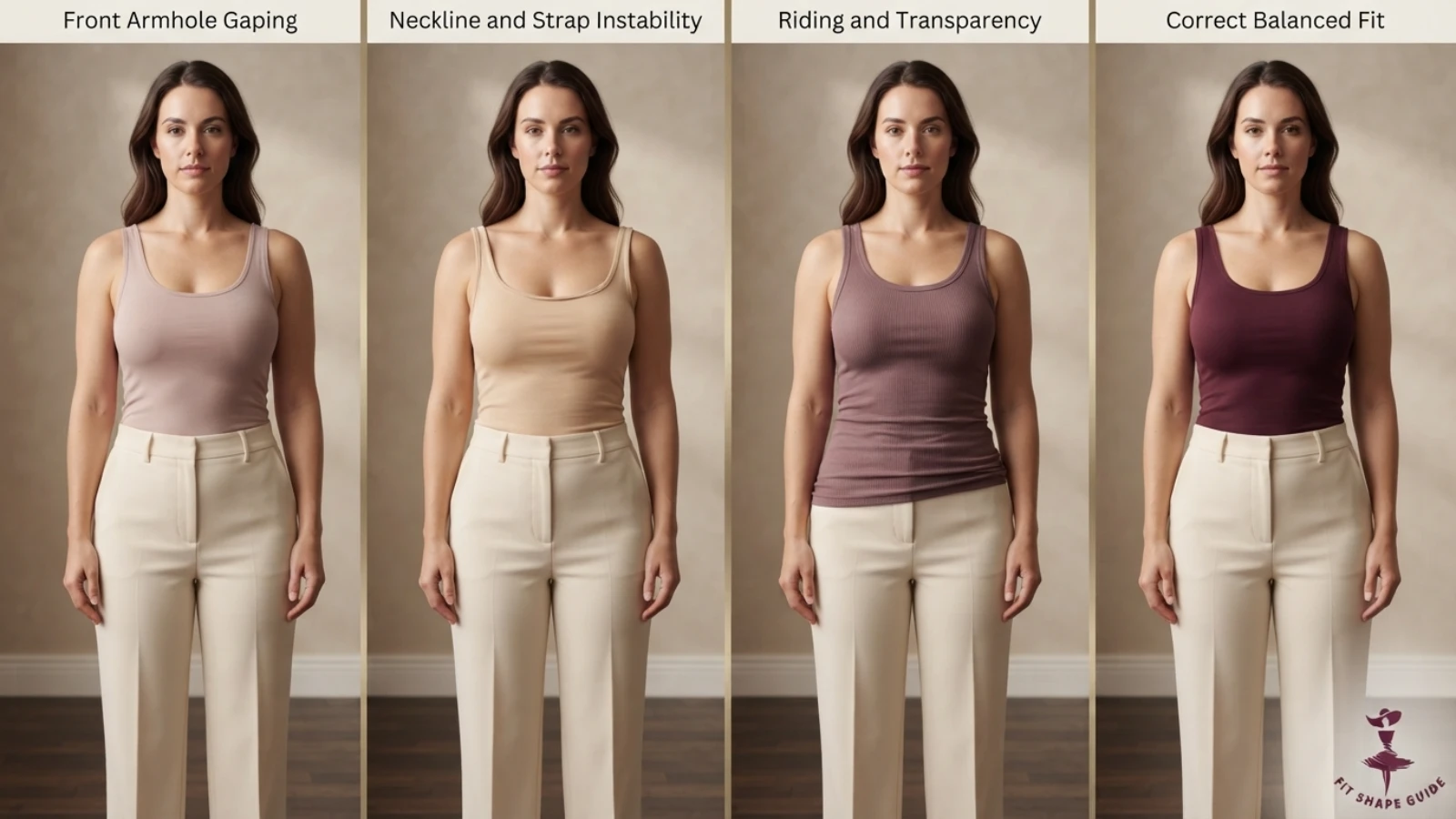
Front armhole gaps usually signal missing bust shaping
If an armhole stands away near the front of the underarm, the tank may have enough circumference but not enough three-dimensional room. The bust pushes the fabric forward, leaving excess at the edge. A smaller size may close the gap while becoming too tight across the chest. Curved side seams, a subtle bust dart, princess shaping, or a stretch fabric with excellent recovery can address the underlying geometry more effectively.
Armholes should clear movement without exposing the bra cup
The lower edge should sit high enough to cover the bra but not so high that it rubs. Check the front, side, and back in a contrasting-light environment. If the armhole reveals the side of the cup when your arm is down, it will expose more during movement. Deep dropped armholes are deliberate fashion details, not versatile everyday construction; they require a visible base layer or a bra you are comfortable showing.
How the best tank tops use recovery, ribbing, and opacity
Fiber composition is only the beginning. Knit structure, yarn thickness, fabric weight, finishing, and how much the garment must stretch all affect performance. Two cotton-elastane tanks can behave very differently. The best tank tops combine enough give to follow the bust with enough recovery to bring the neckline, armholes, and waist back into position.
Medium-weight jersey offers a reliable starting point
The best tank tops often use a compact medium-weight jersey because very light jersey can show every change in tension, become transparent, and collapse around the neckline. Very heavy jersey may feel hot or stand away below the bust. A compact medium weight usually gives better opacity and a smoother surface while remaining layerable. Hold the garment by one strap: the body should fall rather than twist heavily toward one side.
Rib knit must recover after horizontal stretch
Stretch the fabric sideways to a degree similar to wear, hold briefly, then release. Strong ribs contract quickly and remain defined. Weak ribs look wider, wavy, or shiny where they were pulled. Over a large bust, weak recovery can leave the upper body stretched out while the hem remains narrow, creating a permanent bell or tent shape after only a few hours.
Modal and Lyocell blends can drape well but need substance
These fibers are often used in smooth, soft knits that fall rather than stand. That can reduce visual bulk, especially in a relaxed tank. However, very fine versions may cling, reveal bra texture, or grow with wear. Look for a credible fabric weight, elastane where recovery is needed, reinforced edges, and care instructions compatible with your routine.
Opacity must be tested where the tank stretches most
A tank can be opaque while hanging and sheer over the bust. In daylight, place a hand behind one layer and stretch it gently. Pale colors, fine ribs, burnout effects, and loosely knitted fabric need extra scrutiny. A nude-to-you smooth bra can reduce contrast, but it cannot turn unsuitable fabric into reliable coverage. The best fabrics for a large bust guide provides a broader comparison of drape, surface, and structure.
Read labels accurately, then test the finished fabric
Fiber percentages help predict care and some performance, but they do not reveal fabric weight or knit density. The U.S. Federal Trade Commission’s official textile fiber-label guidance explains what manufacturers and sellers are expected to disclose. Use that label as one piece of evidence, then add your own stretch, recovery, opacity, and seam tests.
| Fabric signal | Promising evidence | Warning sign | Home or fitting-room test |
|---|---|---|---|
| Jersey weight | Compact, smooth, and opaque | Flimsy surface or stiff tenting | Hold to light and observe the drape |
| Rib recovery | Ribs contract promptly | Wavy or widened ribs remain | Stretch sideways for ten seconds |
| Edge recovery | Neckline returns flat | Curling, rippling, or spreading | Pull lightly at the edge and release |
| Opacity | Color and bra remain controlled | Fabric becomes translucent | Check in daylight under mild stretch |
| Surface | Matte or controlled sheen | Shine appears only over the bust | View from front and three-quarter angle |
Why the best tank tops balance bust ease, torso length, and hem
The best tank tops make room in more than one direction. Width accommodates circumference, while front length travels over projection. A tank that meets the bust measurement on paper may still ride up because the pattern lacks vertical room. Stretch can disguise the problem during a quick try-on, then reveal it through a climbing front hem, a high back, or side seams that angle forward.
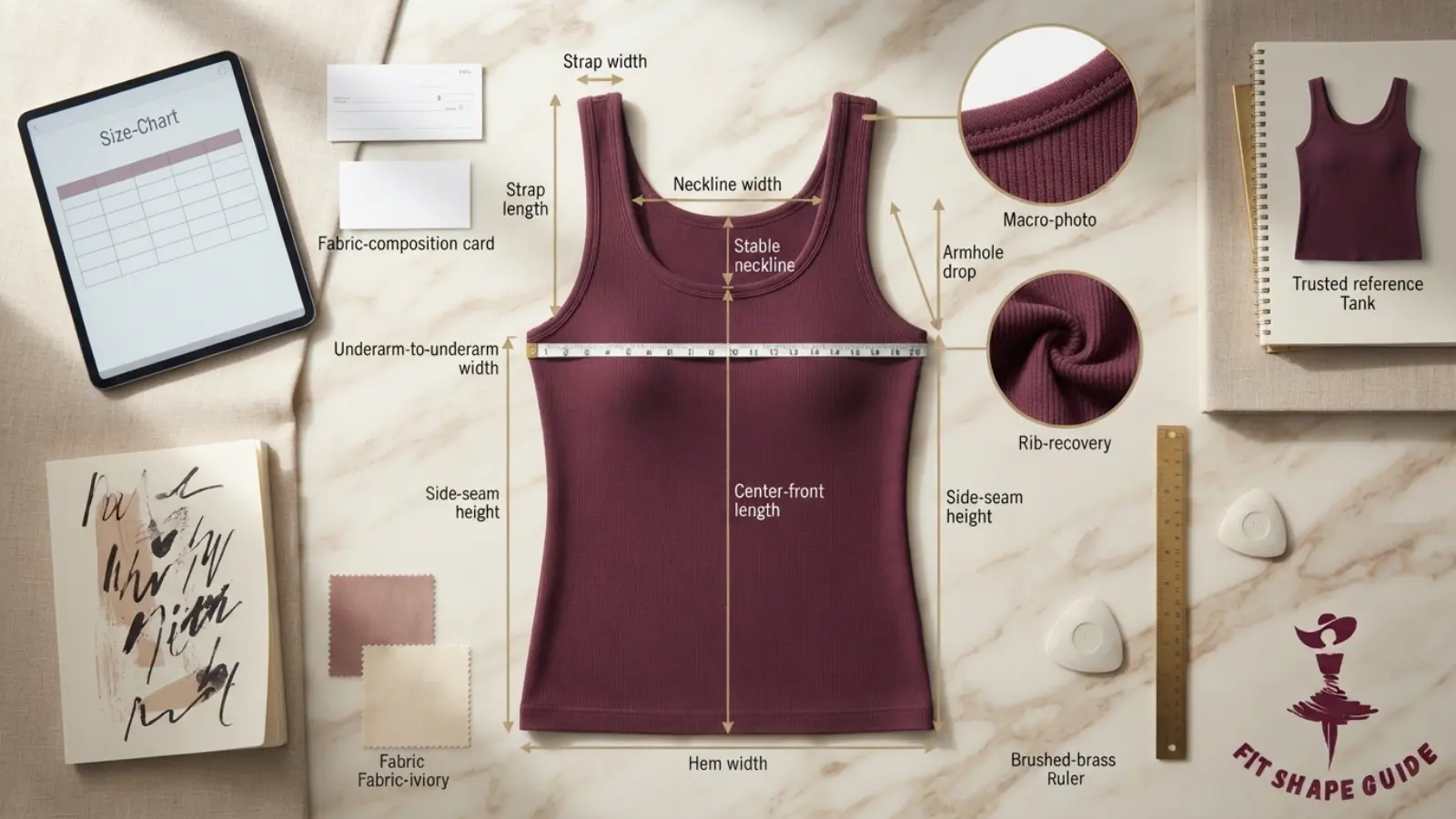
Use garment measurements from a successful tank
Lay a tank you already like flat without stretching it. Record the underarm-to-underarm width, shoulder-to-hem front length, strap width, neckline depth, and hem width. If useful, also measure from the highest shoulder point over the bust to the front hem because this path reflects projection. Compare like with like: a ribbed body measured relaxed behaves differently from a stable ponte shell.
Read negative ease only with the fabric’s recovery
A stretchy tank may be intentionally smaller than the body. That is not automatically a problem, but the fabric must remain opaque and the edges must not carry all the load. If the tank stretches substantially at the bust while hanging loose below it, the pattern is relying on elasticity instead of shaping. Strong negative ease is more suitable for a base layer than a polished standalone top, unless the garment was specifically engineered for that fit.
Front hem rise reveals missing vertical room
After putting the tank on, smooth it once and let it settle. Compare the front and back hems from the side. Some rise is expected because fabric travels over the bust, but a large difference, diagonal side seam, or constant upward movement signals insufficient front length. Longline and tall options can help, but extra length added equally front and back may create excess behind the waist. The best solution is front-aware length or enough stretch and drape to settle naturally.
Hem width determines whether the tank can fall again
A narrow hem may grip the high hip or waist and prevent the tank from dropping after movement. A very wide hem can hang away below the bust. Compare the bust and hem widths and consider where you plan to wear the hem. A gently shaped side seam often works better than a dramatic inward curve. If you tuck the tank, ensure there is enough length to remain tucked without pulling the neckline downward.
Do not downsize to solve waist excess
When a tank fits the bust but feels loose at the waist, the temptation is to size down. That usually transfers the problem upward: the fabric becomes sheer, the armholes cut, and the neckline spreads. Keep the bust and shoulders credible first. Then choose a shaped cut, use a partial tuck, or consider a simple side-seam alteration if the fabric and construction allow it.
Pair tank tops with the bra you actually intend to wear
The best tank tops and their bras form one system. The bra establishes bust position and projection; the tank’s straps, neckline, armholes, and length respond to that foundation. A change in bra shape can alter whether the same tank looks smooth or pulled. Test commercial candidates with your likely everyday bra before deciding on the size.
Use a smooth, correctly fitting bra for a clean diagnostic
A textured lace cup can show through thin jersey even when the tank fits. A smooth bra helps reveal whether wrinkles come from the garment rather than surface texture. However, do not use shapewear or aggressive compression to make a too-small tank appear suitable. The objective is a repeatable outfit you can wear comfortably, not a fitting-room workaround.
Match the neckline and strap map before purchasing
Compare the tank’s front neckline, strap position, armhole, and back with the bra. Product photography may not show every angle, so look for flat-lay photos or clear back views. If a square tank needs a wide-set balconette and you primarily own center-pull straps, the outfit may require constant adjustment. A versatile tank should work with at least one bra already in regular rotation.
Treat built-in shelf bras realistically
A shelf layer can add coverage or mild containment, but it often lacks the depth and underband stability required for a large bust. If the elastic floats away from the ribcage, the bust pushes beneath it, or the outer tank carries the weight, support is insufficient. True integrated support should state the sizing system and include structural features appropriate to the promised activity. For everyday tanks, a compatible separate bra is often the more flexible choice.
Best tank tops for work, weekends, travel, and layering
The best tank tops in a wardrobe do not all have to cover every role. Assigning a purpose before shopping clarifies how much coverage, polish, recovery, and layering compatibility you need. It also prevents a pretty but impractical neckline from being judged against an everyday brief it was never designed to meet.
For work: choose shoulder coverage and a compact surface
A knit shell or wide-strap tank with higher armholes, a controlled neckline, and a matte, dense fabric usually reads more polished than a lingerie-style cami. Check the workplace dress standard and how the tank looks when the jacket or cardigan is removed. The neckline should not require monitoring at a desk, and the armhole should cover the bra from the side.
For weekends: let ease look intentional
A relaxed scoop or V-neck can work when the armholes remain controlled and the hem has a deliberate finish. Relaxation should appear across the garment rather than only below a strained bust. Pair it with a defined waistband, straight denim, or a small front tuck to show that the volume is a styling decision.
For travel: prioritize recovery, opacity, and bra compatibility
Travel tanks are compressed by seat belts, bags, jackets, and long periods of sitting. Choose fabric that rebounds, straps that stay under the bra, and a neckline that does not stretch forward. A tank that can be worn alone and under an open shirt earns more space than a delicate style requiring a special bra and careful handling.
For layering: reduce friction and duplicated bulk
A base tank should have smooth seams, stable edges, and enough length to remain placed beneath the outer layer. Very heavy ribbing can catch on a blouse; very loose fabric can bunch below a jacket. Open layers create two vertical edges and let the tank’s neckline remain visible. The layering guide for a large bust explains how to keep those layers from becoming bulky.
For heat: coverage and breathability must coexist
Breathability does not require a deep armhole or transparent fabric. Look for a smooth, moisture-managing knit, enough ease for air movement, and an armhole that clears the underarm without revealing the cup. Light colors may feel cooler but deserve a stricter opacity test. A slightly relaxed woven-look shell can sometimes feel cooler than a tight, thin rib because it does not remain pressed against the body.
Diagnose fit problems before calling them the best tank tops
The best tank tops remain credible after movement, so wrinkles are evidence rather than a personal failure. Read their direction and timing. A problem present immediately may indicate size or pattern geometry; one that appears after an hour often points to weak recovery, hem grip, or edge stretching. Test the tank with the bra, bottoms, and layer you plan to use.
| What you see | Likely cause | Best next test | Keep, alter, or return? |
|---|---|---|---|
| Front armhole gapes | Missing bust shaping or armhole too deep | Pinch only the edge, then check chest tension | Alter only if the pinch is small and stable |
| Neckline spreads or bows | Weak binding or excessive negative ease | Try one size up and repeat movement | Return if the edge still distorts |
| Front hem climbs | Insufficient front length or narrow hem | Untuck, sit, stand, and observe side seam | Choose more length or a different cut |
| Back rises toward neck | Front borrowing fabric from the back | Check high-shoulder-to-hem path | Return unless a longer size corrects it |
| Fabric becomes shiny or sheer | Too much stretch or insufficient density | Daylight opacity test | Size up or select heavier fabric |
| Straps slide outward | Placement too wide or neckline pulling | Reach forward without resetting straps | Return if placement is structural |
| Side seams angle forward | Front width or projection is insufficient | Compare front and back tension | Try more bust room or shaping |
| Tank twists after washing | Knit torque or construction distortion | Lay flat and align side seams | Return if policy allows; avoid rebuying |
Reach overhead, reach forward, sit, lean, turn, and add your usual outer layer. Smooth the tank only once at the beginning. A successful fit should not need repeated strap, neckline, or hem corrections.
How to shop online for the best tank tops for a large bust
Finding the best tank tops online becomes easier when you replace adjectives with comparable evidence. “Stretchy,” “supportive,” and “double lined” are not measurements. Build a benchmark from a tank you own, then use product descriptions, size charts, photos, reviews, and return terms to decide whether a candidate is worth testing.
Write a role-specific brief
State whether the tank must work alone, under a jacket, for travel, or as a base. Record acceptable neckline depth, minimum strap width, required bra coverage, preferred fit, and whether you will tuck it. A precise brief filters more effectively than browsing by color first.
Measure a trusted tank flat
Capture underarm width, front length, strap width, neckline drop, armhole depth, and hem width. Note the fabric composition and whether the body is ribbed. These numbers are a benchmark, not universal rules, because fabric stretch and intended ease change the relationship.
Separate body and garment measurements
A size chart may show the body it intends to fit rather than the finished tank. Look for explicit garment measurements or contact the seller. If only body measurements are supplied, read the fit description and composition together, then keep the uncertainty inside your return decision.
Inspect every product angle
Front photos hide strap placement at the back and often obscure armhole depth. Look for side, back, close-up, and untucked views. Zoom in on neckline binding, rib density, seam alignment, and whether the model’s bra is visible. A flat lay can reveal the true shoulder and hem proportions.
Search reviews for observable facts
Prioritize comments about bra coverage, sheerness, neckline stretching, armhole size, front rise, shrinkage, and whether the rib recovers. Treat “flattering” as personal opinion unless the reviewer explains the construction and fit conditions behind it.
Confirm return terms before ordering
A tank must pass movement and daylight tests, so a practical return window matters. Check whether sale colors, intimate classifications, removed tags, or washed items are excluded. Do not wash until the unworn fit, opacity, and bra-coverage checks pass.
The best tank tops shortlist should contain only verified products whose current construction, sizing, seller, and availability have been checked. This page intentionally does not invent Amazon ASINs, ratings, prices, or personal wear tests. When affiliate products are added, the editorial reason for each pick should be tied to observable details and clearly separated from the commercial link.
Style, alter, care for, and value the best tank tops
The best tank tops simplify outfits rather than create a chain of compensations. Once the fit is stable, styling can control proportion, show the waist where desired, and repeat the tank across seasons. Care then protects the recovery and edge shape that made the garment useful in the first place.
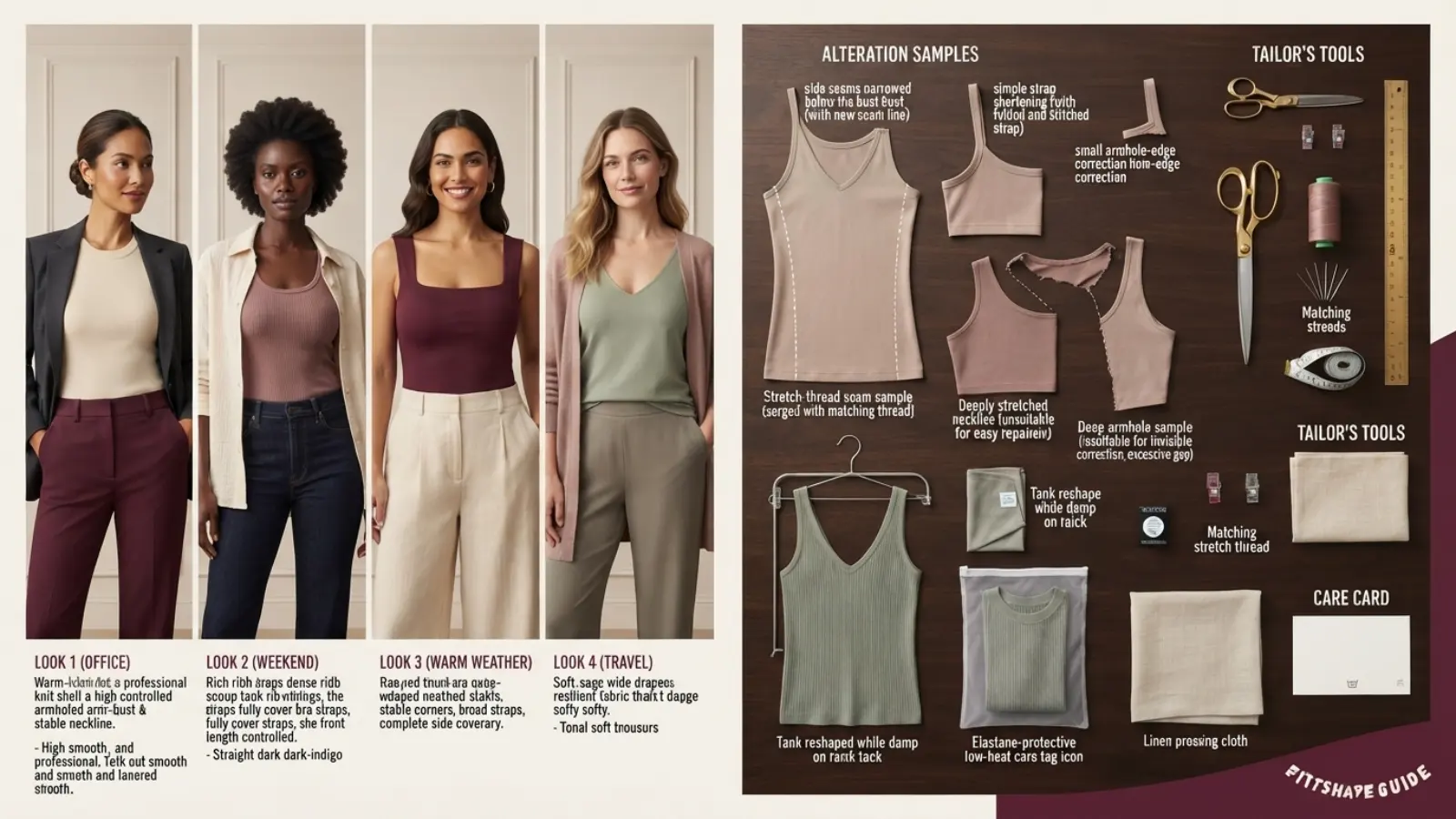
Office formula: knit shell + open blazer + high-rise trouser
A compact shell creates a smooth base, while the open blazer adds two vertical edges. Choose a tank neckline that remains visible and does not compete with the jacket lapels. The hem may be fully tucked when it is long and smooth enough; otherwise, use a clean untucked length that ends near the waistband rather than at the widest part of the hip.
Weekend formula: ribbed scoop + straight denim + open shirt
A dense rib gives definition, straight denim adds structure, and an open shirt provides coverage without hiding the tank’s fit. Keep the outer layer light enough to move independently. If you want a softer standalone alternative with more drape, compare the construction criteria in the best blouses for a large bust guide.
Warm-weather formula: shaped square tank + wide-leg trouser
A stable square neckline gives the upper body a clear frame, while a fluid wide-leg trouser balances the silhouette without requiring the bust to look smaller. Repeat one color across the tank and trouser for a long line, or use a controlled contrast at the waistband. Keep accessories away from the neckline corners so the shape stays visually clean.
Travel formula: wide-strap V tank + open cardigan + tonal bottom
Choose resilient jersey, reliable bra coverage, and enough length for seated wear. A cardigan gives temperature control and covers the side seam without trapping the tank. Tonal colors reduce the need for complicated outfit planning. If a sleeveless shell feels too warm or exposed for the trip, the best T-shirts for a large bust guide offers related short-sleeve criteria.
Alter only small, predictable problems
A tailor can often narrow side seams below the bust, shorten straps when the attachment is simple, or make a small armhole correction. Alterations are less reliable when the neckline has stretched, the armhole is dramatically deep, the tank is transparent at the bust, or major bust width is missing. Stretch knits also require appropriate equipment and thread. Compare the alteration cost with finding a better cut, especially for inexpensive basics.
Wash in a way that protects elastane and edge recovery
Follow the garment-specific label. Excess heat and aggressive drying can weaken elastane, shrink cotton, distort ribbing, and curl bindings. Reshape the neckline, straps, and hem while damp when the care instructions permit. The FTC’s official care-label guidance explains the information manufacturers are expected to provide; it does not replace the instructions sewn into your garment.
Calculate value by successful wears
Track whether the tank remains opaque, stays under the bra straps, works with several bottoms, and survives the care routine. A slightly higher price can be justified by stable fabric and repeated use; a cheap tank that becomes sleepwear after two outings is poor value. Treat it as a wardrobe repeat only after it proves compatible with your real bras, layers, and laundry.
Best tank tops for a large bust: final verdict
The strongest tank is not simply the one with the most stretch or the widest straps. It is the one whose edges remain controlled while the center front accommodates projection. Start with a wide-strap scoop, controlled V-neck, substantial rib, or shaped knit shell. Require bra coverage, daylight opacity, front length, and movement stability. Use measurements and return terms to reduce online risk, and add products only after their current construction is verified.
If you remember one rule, use this: the body fabric should make room for the bust without asking the neckline, armholes, straps, or hem to surrender their original position. That is the difference between a tank that merely goes on and one that becomes a dependable wardrobe piece.
FAQs about the best tank tops for a large bust
What type of tank top is best for a large bust?
A wide-strap scoop, controlled V-neck, substantial ribbed tank, or shaped knit shell is a strong starting point. The best type covers the intended bra, keeps the armholes close, stays opaque over the bust, and has enough front length to avoid riding up.
Are ribbed tank tops good for a large bust?
They can be excellent when the rib knit is dense, opaque, and quick to recover after horizontal stretch. Avoid ribs that become shiny, transparent, or permanently widened over the bust. Also check whether a narrow hem causes the tank to creep upward.
How wide should tank-top straps be to cover a bra?
There is no universal width because bra straps and tank placement vary. Measure your preferred bra strap, then check whether the tank covers it through forward and overhead reach. Placement and angle are as important as the strap’s stated width.
Why do tank-top armholes gape beside a large bust?
The bust may be pushing the center front forward while the pattern lacks three-dimensional shaping, leaving excess at the armhole edge. Sizing down often creates chest tension. Better options include a higher armhole, subtle bust shaping, curved seams, or resilient fabric.
Should I size up in tank tops for a fuller bust?
Size up when the current size becomes sheer, pulls the side seams forward, spreads the neckline, or climbs at the front. Do not size up automatically if it creates major armhole and neckline gaps. Compare garment measurements and try a different cut when neither adjacent size balances bust room and edge control.
Do built-in-bra tanks support a large bust?
Many basic shelf bras provide coverage or light compression rather than true support. Look for band-and-cup sizing, a supportive underband, adequate cup depth, adjustable straps, and clear activity guidance. Vague “built-in support” language is not enough evidence.
How can I stop a tank top from riding up in front?
Choose more front length, adequate bust ease, a hem that does not grip, and fabric with balanced stretch and drape. After smoothing the tank once, sit and stand to see whether it settles. If the back climbs and side seams angle forward, the pattern likely lacks front room.
What should I measure when buying a tank top online?
Compare underarm-to-underarm width, front length, strap width, neckline drop, armhole depth, and hem width with a tank you already like. Confirm whether the chart uses body or garment measurements, then read fabric composition, fit language, photos, and return terms together.