
Best Racerback Bras for a Large Bust
A fuller-bust guide to fixed racerbacks, J-hooks, convertible straps, front-close T-backs and active styles—focused on shoulder placement, cup depth, band stability and avoiding the neck pressure that can happen when racerback straps are overtightened.
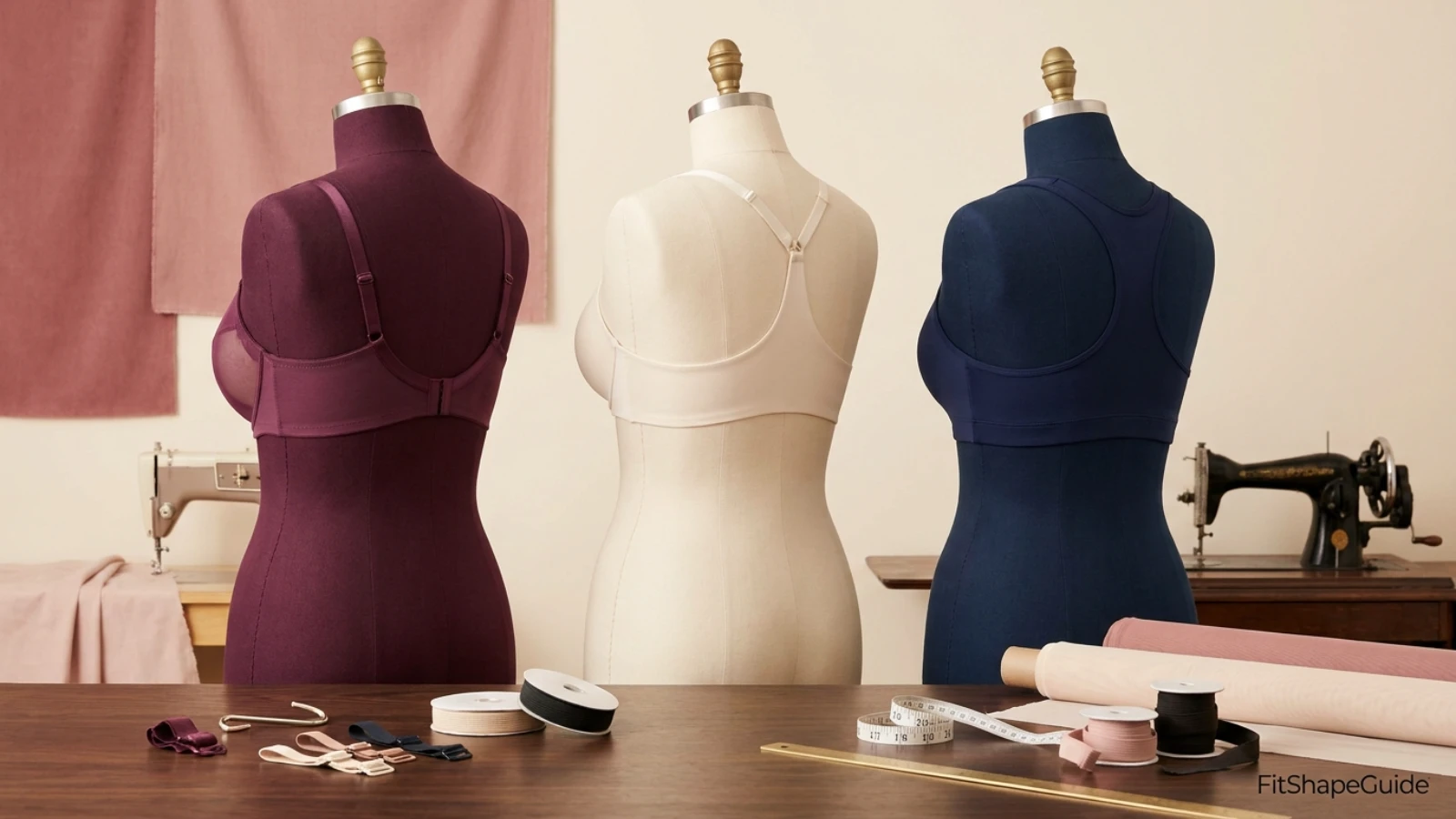
The 60-second racerback fit test
- Fit the band and cups before changing the straps.
- If using a J-hook, loosen the straps slightly first.
- Connect the racerback hardware.
- Check whether the straps now sit comfortably away from the outer shoulder.
- Turn your head and roll your shoulders.
- Make sure the new angle is not pulling toward the base of the neck.
- Raise both arms and check band stability.
- Put on the actual racerback or cut-in top.
How does a racerback bra support a large bust?
A racerback brings the shoulder straps closer together toward the center of the upper back. That changes where the straps sit on the shoulders and how they travel across the back.
For someone whose conventional straps repeatedly slip from the outer shoulder, that inward route can feel more secure. It can also hide straps beneath racerback tanks, cut-in sleeveless tops and some athletic clothing.
What a racerback does not do is replace correct bra sizing. The band still anchors the bra around the torso, while the cups still need enough depth, volume and side containment for the bust.
A loose band does not become properly supportive simply because the straps are clipped together. In fact, converting an unstable bra to racerback mode can tempt the wearer to rely even more heavily on shoulder tension.
| Racerback feature | Main purpose | Good sign | Possible problem |
|---|---|---|---|
| J-hook | Temporary racerback conversion | Easy strap repositioning | Neck pressure if straps remain too short |
| Fixed T-back | Permanent inward strap route | Straps stay away from outer shoulder | Less wardrobe flexibility |
| Front closure | Allows fixed rear racerback shape | Easy access when hardware works well | Front closure must match cup spacing precisely |
| Convertible straps | Multiple clothing configurations | Useful wardrobe versatility | Each configuration needs readjustment |
| Wide racerback straps | Pressure distribution | Comfortable shoulder contact | Can feel warm or bulky |
| Racerback sports frame | Upper-back stability | Secure during movement | Not automatically enough for high impact |
| Side-support cup | Centers breast tissue | Full containment | Panel may show through thin tops |
| Stable band | Main torso anchor | Remains level | Rides upward if too loose |
Best racerback bra styles for a large bust
J-hook full-cup bra
A movable hook connects ordinary adjustable straps at the upper back, allowing the same bra to be worn conventionally or in racerback mode.
Best for: everyday flexibility.
Side-support J-hook bra
Three-part cups and an internal side panel can provide fuller-bust shaping while the hook changes the rear strap route.
Best for: centered shaping plus narrow-shoulder security.
Front-close T-back bra
The front closure allows the rear of the bra to remain permanently shaped as a T-back or racerback.
Best for: sleeveless cut-in tops and easy fixed strap placement.
Smooth racerback T-shirt bra
Molded or spacer cups provide a seamless front while the straps meet toward the center back.
Best for: racerback tanks and smooth fitted tops.
Wireless racerback bra
A broad underband and shaped wire-free cups can provide everyday support while fixed rear straps reduce slipping.
Best for: softer everyday support.
Convertible multiway racerback
Detachable or repositionable straps let the bra switch between straight, crossed and manufacturer-approved racerback routes.
Best for: a versatile foundation wardrobe.
Racerback sports bra
A center-back strap route can stabilize the upper bra during exercise while broader straps and the underband distribute movement control.
Best for: activewear and workouts.
High-neck racerback bra
A higher front and centered rear straps can work beneath athletic or modest cut-in tops where conventional bra straps would show.
Best for: high-neck tanks and athleisure.
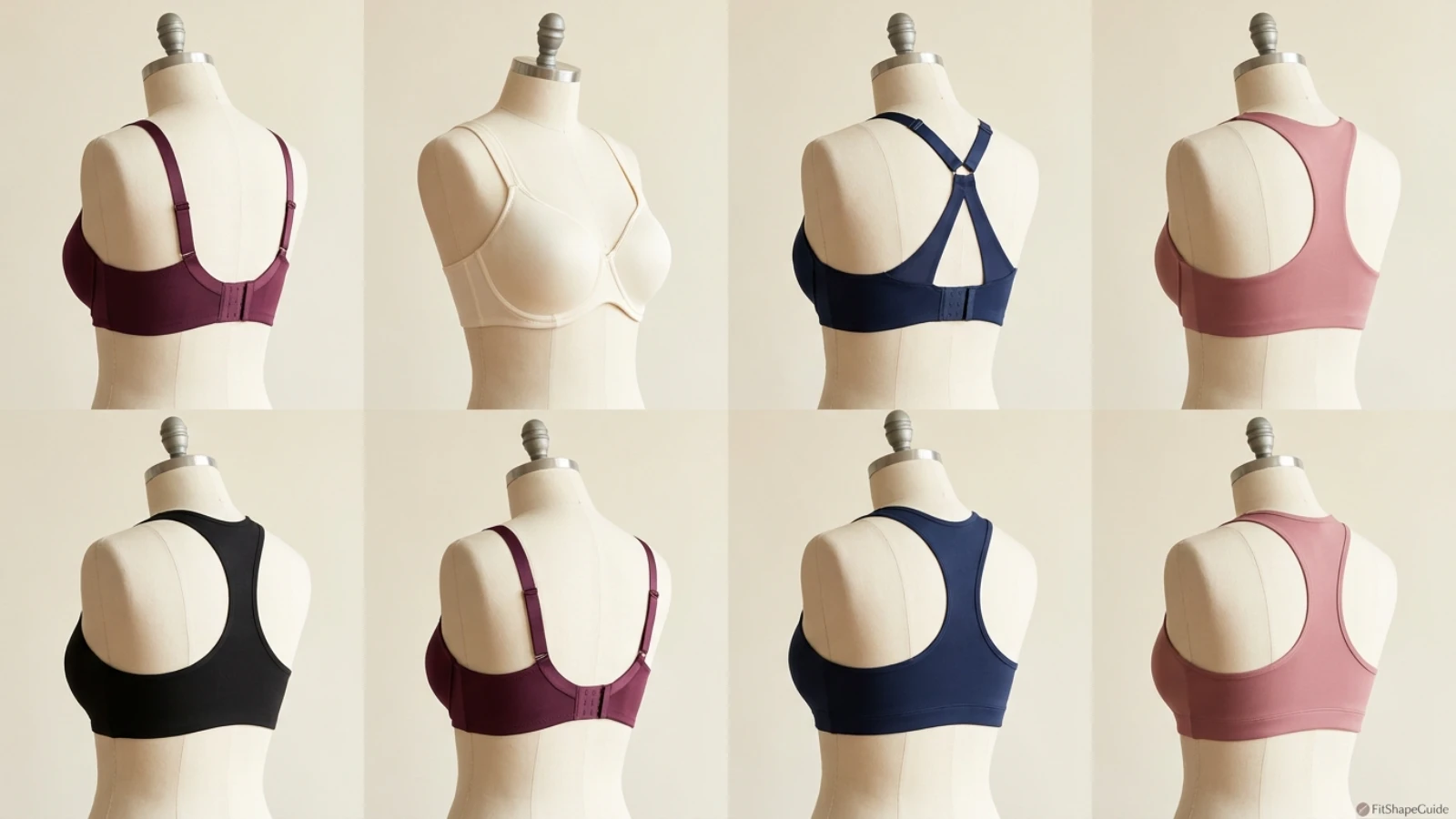
Why J-hook bras work well for a fuller bust
A J-hook or movable racerback hook connects the two straps behind the upper back. The advantage is flexibility: you can wear the bra with straight straps most of the time and convert it only when the outfit or shoulder placement calls for it.
Loosen the straps before connecting the hook
The racerback route changes the angle and effective path of the straps. If the straps were already adjusted tightly in their straight position, clipping them together can pull too strongly toward the neck.
Recheck cup position
The new strap angle may lift the upper cup slightly. Confirm that the cup edge has not started cutting in and the center frame has not changed position.
Moveable hooks are useful
Some hooks can slide along the strap. This lets the connection point move higher or lower depending on comfort and garment shape.
Do not clip incompatible straps with improvised hardware
If the bra has no built-in conversion system, use only accessories specifically designed for bra straps and ensure they do not create painful concentrated pressure.
Front-close racerback bras
A fixed racerback can make a conventional rear hook-and-eye closure difficult to reach or structurally awkward. That is why many true T-back or racerback bras close at the center front.
Front closure must sit correctly
Because the closure replaces a traditional center-front or part of the gore structure, its position should remain stable and comfortable.
Easy dressing can be useful
Some wearers prefer a front closure because it avoids reaching behind the back. That convenience is separate from whether the bra fits the bust correctly.
Check low-center compatibility
Front-close racerbacks often use a relatively low center. This can help under lower necklines, but the cup shape still needs enough volume and containment.
Check closure security
A barrel, clasp or other front closure should sit securely when you sit, twist and raise your arms. Do not rely on a closure that repeatedly rotates or presses into the sternum.
Fixed T-back and racerback construction
A fixed racerback permanently brings the straps toward the center of the back. That can be excellent for narrow or sloping shoulders because there is less opportunity for the straps to slide toward the outer shoulder edge.
Rear geometry matters
Some backs form a narrow T while others create a wider triangular or curved racerback panel. The wider version can distribute tension over more surface area.
Less wardrobe flexibility
A fixed racerback may show beneath wide boat necks, square necklines or some open-back clothing. It is a specialist foundation rather than a universal bra for every top.
Adjustment placement
Look for strap adjusters positioned where you can reach them. Some fixed racerbacks adjust from the front or lower rear strap.
Band and cup fit still matter most
Stable band
The back should remain approximately level around the torso. If it rises significantly, the band may be too loose or stretched.
Cup depth
A fuller-bust racerback still needs enough front-to-back depth. Shallow cups can push the frame away from the chest and increase strap tension.
Side-support cups
Racerback straps can help shoulder placement while a side-support panel manages breast direction. These are complementary features, not substitutes for one another.
Underwire position
In a wired bra, the wire should surround breast tissue rather than sit on it. The racerback angle should not drag an incorrectly sized cup into place.
Wing stability
Higher or firmer wings can help anchor a larger cup frame, especially when rear straps pull inward toward the center.
Strap adjustment
The straps should feel secure but not responsible for the entire weight of the bust.
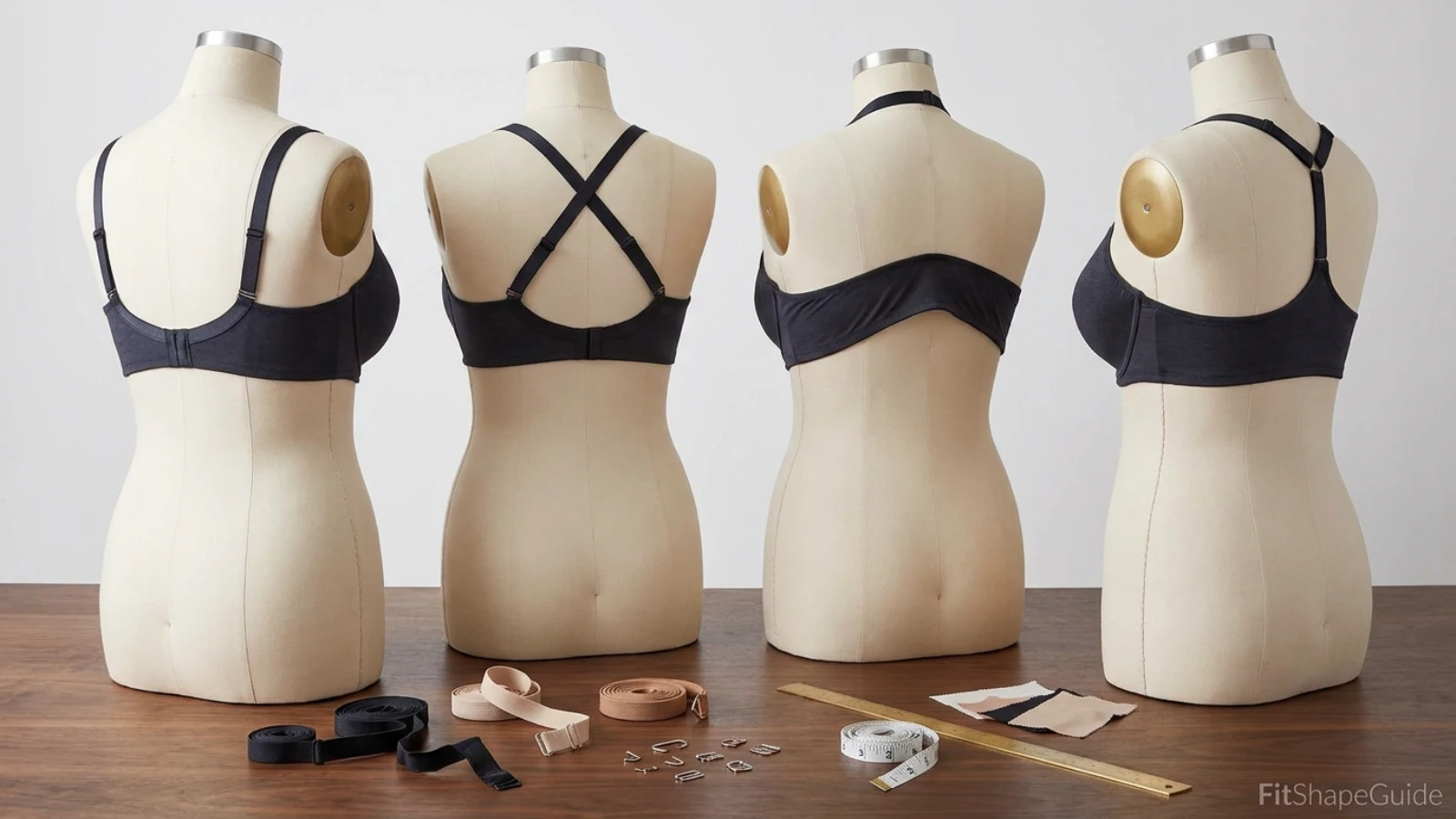
How to avoid neck and upper-trapezius pressure
The biggest comfort mistake with racerback conversion is connecting the straps without allowing for the new angle.
Lengthen before clipping
When straps travel inward toward the center back, the route often requires extra length. Loosen them before using the J-hook, then tighten only enough to remain secure.
Move the hook lower if possible
A connection point very high between the shoulder blades can pull the straps closer to the base of the neck. If the hardware is movable, a slightly lower position may feel more comfortable while still hiding beneath the top.
Check strap width
A wider strap can spread pressure over more shoulder area, though placement and adjustment still matter.
Do not convert solely for extra lift
A J-hook may make the bra feel more lifted because the strap angle changes, but it should not be used as a substitute for band or cup fit.
Turn your head
Rotate the neck side to side and roll the shoulders. Pressure that appears during normal motion is more meaningful than a perfect static mirror pose.
Are racerback bras good for narrow or sloping shoulders?
They often can be. Conventional bras with widely spaced straps may repeatedly slide toward the outer edge of narrower or more sloped shoulders.
Moving the rear straps inward changes the line across the shoulder and can make slipping less likely.
Centered straps
A bra does not necessarily need a full racerback to improve shoulder security. Center-pull straps or a leotard back may already position the straps farther inward.
J-hook as a test
If you are unsure whether racerback placement will help, a well-fitting J-hook bra can be a useful flexible option because you can compare straight and racerback positions in the same bra.
Do not overtighten slipping straps
Pulling conventional straps shorter may keep them from falling for a few minutes but can increase shoulder pressure. Placement may be the real issue.
For broader shoulder-comfort troubleshooting, see Best Bra Straps That Don’t Dig In and Best Wide-Strap Bras for a Large Bust .
Racerback sports bras for a large bust
Racerback construction is common in sports bras because it keeps straps away from the outer shoulder and can improve upper-back stability during arm movement.
Check the underband first
A broad stable underband remains critical during exercise. The racerback should enhance the bra’s overall structure rather than become the main support point.
Encapsulation versus compression
Fuller-bust sports bras may use individual cups, compression or a combination. Racerback geometry can be used with either system.
J-hook sports bras
Some fuller-bust sports bras let you wear the straps straight for lower-intensity or everyday use and connect them into racerback mode for additional upper-back stability.
Test overhead movement
Raise both arms repeatedly. The bra should remain stable while straps stay away from the neck.
High impact needs more than rear strap shape
Running and jumping support depends on the full bra: band, cup containment, material, strap control and movement engineering.
For exercise-specific support, continue with Best Sports Bras for a Large Bust and Best High-Impact Sports Bras for a Large Bust .
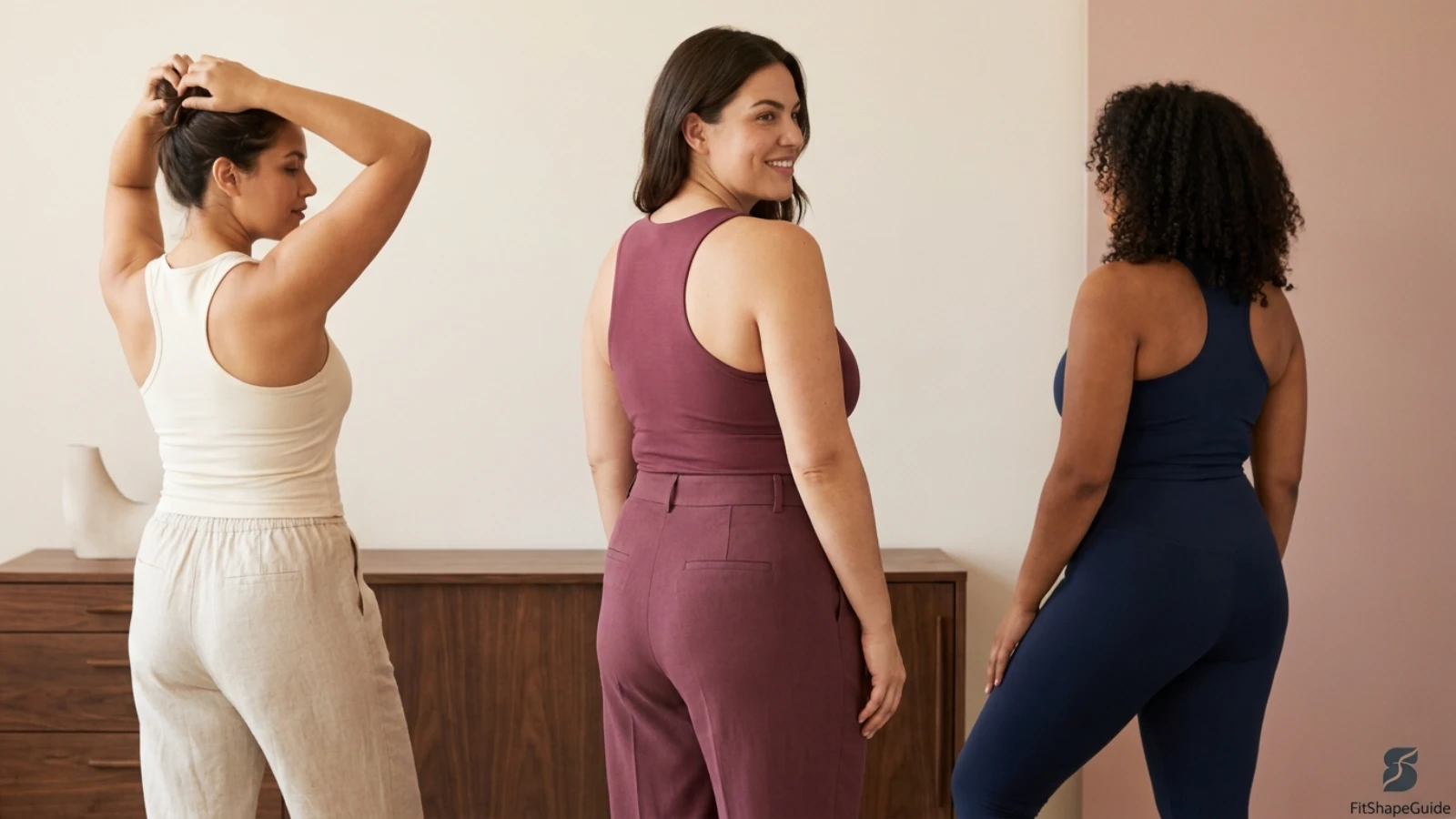
What tops work best with racerback bras?
Racerback tanks
The obvious pairing. Check the exact width of the garment back because a broad racerback panel can still show beneath a very narrow athletic tank.
Cut-in sleeveless tops
When the armholes angle inward toward the neck, conventional shoulder straps often become visible. Racerback placement can hide them more effectively.
High-neck tanks
A fixed racerback or high-neck bra can align well with athletic-style tops that cover the chest but expose the shoulder blades.
T-shirts
A racerback can be worn under ordinary tees if it is comfortable, although the specialized back shape may be unnecessary.
Wide boat necks
A strongly centered rear strap route can pull the front straps closer toward the neck, making them more likely to show at a wide neckline.
Backless clothing
A racerback is not a backless bra. The centered straps and rear structure may actually become more visible in an open-back outfit.
For open-back clothing, see Best Backless Bra Solutions for a Large Bust .
How to buy a racerback bra for a large bust online
- Verify your band-and-cup size. Do not assume “racerback” means the style is offered through fuller-bust cup ranges.
- Check fixed versus convertible. A J-hook provides more wardrobe flexibility than a permanently fixed racerback.
- Inspect cup construction. Full-cup, smooth molded, side-support and sports cups behave differently.
- Check strap adjustment. Racerback mode often requires additional length.
- Look at J-hook position. A movable hook offers more placement flexibility.
- Check rear strap width. Very narrow straps can concentrate pressure near the neck.
- Inspect band and wing construction. Do not let the racerback design distract from the main support frame.
- Check closure type. Fixed T-backs often use a front closure instead of a rear hook-and-eye.
- Review clothing compatibility. Compare the rear shape with the tank or sleeveless top you intend to wear.
- Review returns. Shoulder comfort depends strongly on strap angle and torso proportions.
Do not buy only because the straps cannot slip
A fixed T-back may solve slipping perfectly but be less useful with the rest of your wardrobe. Consider a J-hook design if flexibility matters.
Check how much of the strap adjusts
Some bras are fully adjustable while others have fixed front sections. This matters because racerback conversion changes the required strap length.
Check the actual cup size range
The term “full figure” does not guarantee large-cup availability in every band. Verify the exact combination you need.
Do not use racerback mode to force more lift
If the bra only feels supported after the straps are pulled aggressively inward, reassess the band and cup fit.
Use your hardest-to-hide tank for testing
A racerback foundation is successful when it stays concealed beneath the garment and remains comfortable at the same time.
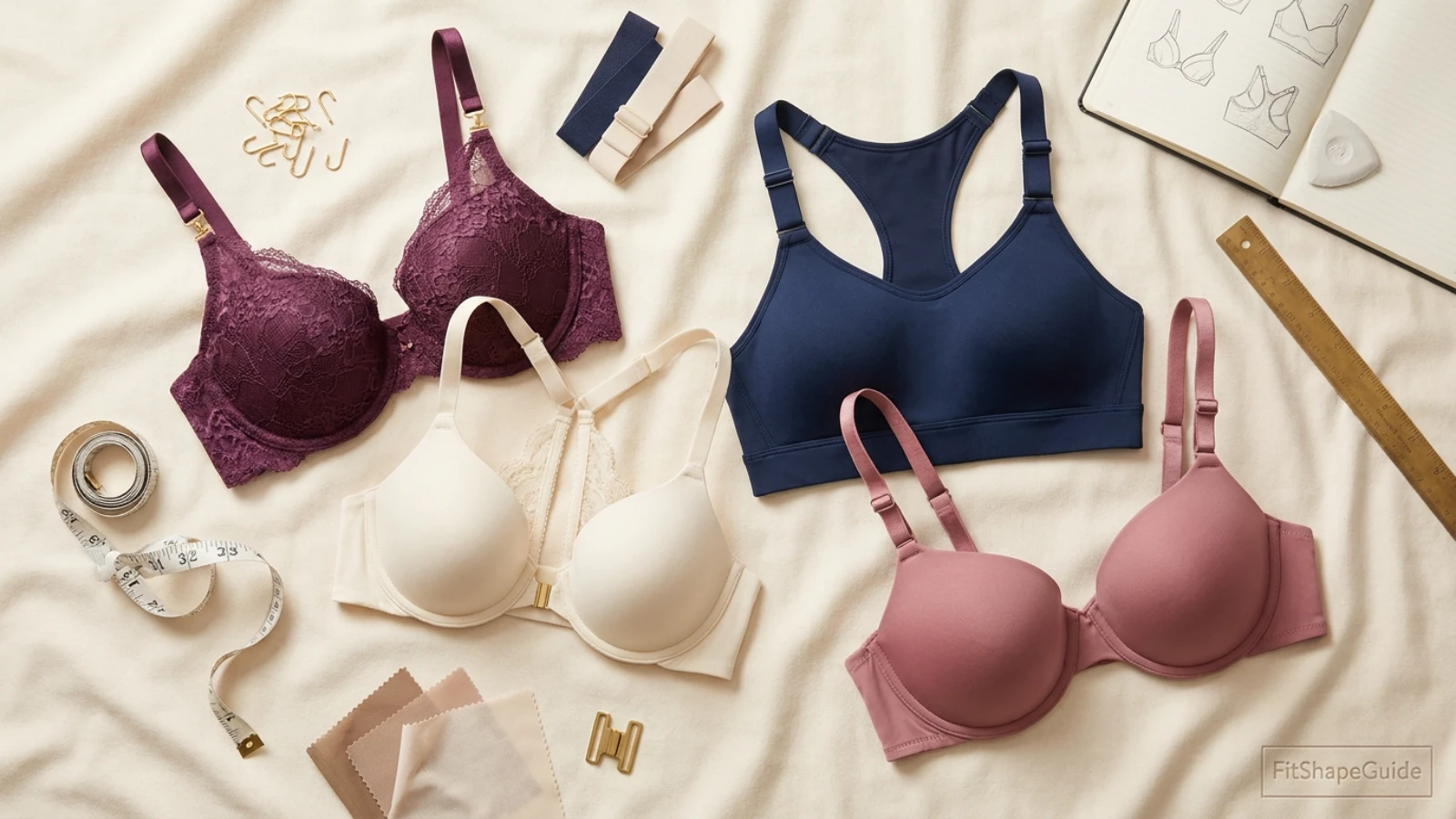
Common racerback bra fit problems
| Problem | Likely cause | Better next move | Avoid |
|---|---|---|---|
| Straps pull near neck | Racerback route too tight | Lengthen straps / lower hook | Accepting neck pressure |
| Band rides upward | Band too loose | Reassess band fit | Using racerback tension as support |
| Cups overflow after conversion | Upper cup pulled too tightly | Lengthen straps / check cup volume | Tightening further |
| J-hook difficult to reach | Hook position too high | Adjust before dressing | Forcing shoulder position |
| Straps still show under tank | Tank back narrower than bra | Different rear geometry | Pulling straps unnaturally inward |
| Front closure presses | Closure/cup geometry mismatch | Try another front-close frame | Ignoring sternum pressure |
| Shoulder straps dig | Too much tension | Recheck band/cup and strap length | Using racerback for extra lift |
| Fixed racerback shows under wide neck | Straps positioned too centrally for garment | Use straight-strap bra | Assuming racerback suits every top |
| Sports racerback bounces | Insufficient overall support | Higher-support sports construction | Judging support by racerback alone |
| One shoulder feels tighter | Uneven adjustment/asymmetry | Adjust each strap independently | Matching slider positions exactly |
The racerback stops slipping but hurts my neck
That usually means the inward routing is working for shoulder security but the straps are too short for the new path. Loosen them before abandoning the style.
The J-hook gives me more cleavage than I want
The new strap angle may be pulling the upper cups inward. Lengthen the straps and check whether the cup shape itself is too small or too closed.
My fixed racerback fits but is visible under everything
Use it as a specialist foundation for cut-in or racerback tops rather than expecting it to work beneath every neckline.
My sports bra has a racerback but still lacks support
Racerback geometry alone does not define impact support. Look for stronger underband, cup containment and movement-specific construction.
Which racerback bra should you choose?
Choose a J-hook full-cup or side-support bra if you want the most flexibility. Choose a front-close fixed racerback when shoulder security and cut-in clothing matter more than convertibility. A smooth racerback T-shirt bra works well beneath fitted tanks, while a racerback sports bra makes more sense when movement control is the main goal.
The most important fit rule is simple: convert the strap route only after the band and cups fit correctly. If the racerback causes neck pressure, shorten nothing—lengthen the straps, adjust the hook position and recheck the complete bra.
Frequently asked questions
Are racerback bras good for a large bust?
They can be, especially when the bra combines a stable band, properly fitted cups and straps routed inward without excessive tension.
Do racerback bras provide more support?
They can improve strap stability and upper-back control, but total support still depends on the cups, band and full bra frame.
What is a J-hook bra?
A J-hook connects the two shoulder straps at the upper back so a conventional bra can be temporarily converted into a racerback configuration.
Why does my racerback bra hurt my neck?
The straps may be too short for the inward racerback route. Loosen them and, if possible, move the connection point lower.
Are racerback bras good for sloping shoulders?
They can help because the straps are routed farther inward and are less likely to slide toward the outer shoulder edge.
Are front-close racerback bras supportive?
They can be when the front closure, cups, band and rear frame are all correctly fitted. The closure style itself does not determine support.
Can a racerback bra work under a T-shirt?
Yes. A smooth racerback T-shirt bra can work well under ordinary tees or racerback tanks when the rear geometry remains hidden.
Is a racerback sports bra automatically high impact?
No. High-impact support depends on the entire bra, including the band, cup containment, materials and movement control—not the rear strap shape alone.
How FitShapeGuide evaluates racerback bras
This guide evaluates racerback bras through strap routing, J-hook placement, fixed versus convertible construction, front versus rear closure, strap width, adjustability, cup depth, side support, underband stability, wing construction, shoulder placement and clothing compatibility.
Racerback styling is treated primarily as a shoulder-placement and wardrobe feature rather than a substitute for proper bra sizing.
Current specialist fuller-bust bras support this approach. Elomi currently uses moveable J-hooks on fuller-bust bras with three-piece cups and side support, allowing straight straps to convert into racerback configuration. Current Wacoal racerback and convertible collections likewise include J-hook, fixed T-back, front-close and active constructions rather than one universal racerback pattern.
Before publishing any commercial recommendation, FitShapeGuide should verify the exact live seller, product name, color, band range, cup range, fixed or convertible racerback construction, J-hook, front closure, cup construction, side-support panel, spacer or molded cup, underwire or wireless frame, band depth, wing height, strap width, adjustability, sports-support designation, fabric, care, availability and return eligibility.
No ASIN, cup range, band range, price, rating, review count, coupon, stock or delivery promise should be published unless directly verified.



One Comment