
Best Everyday Bras for a Large Bust
The best everyday bra for a fuller bust is not simply the softest bra in the drawer. It needs enough band stability, cup depth, side containment and strap control to remain comfortable through desk work, walking, commuting, meals and hours of normal movement—without constant pulling, adjusting or recovering escaped breast tissue.
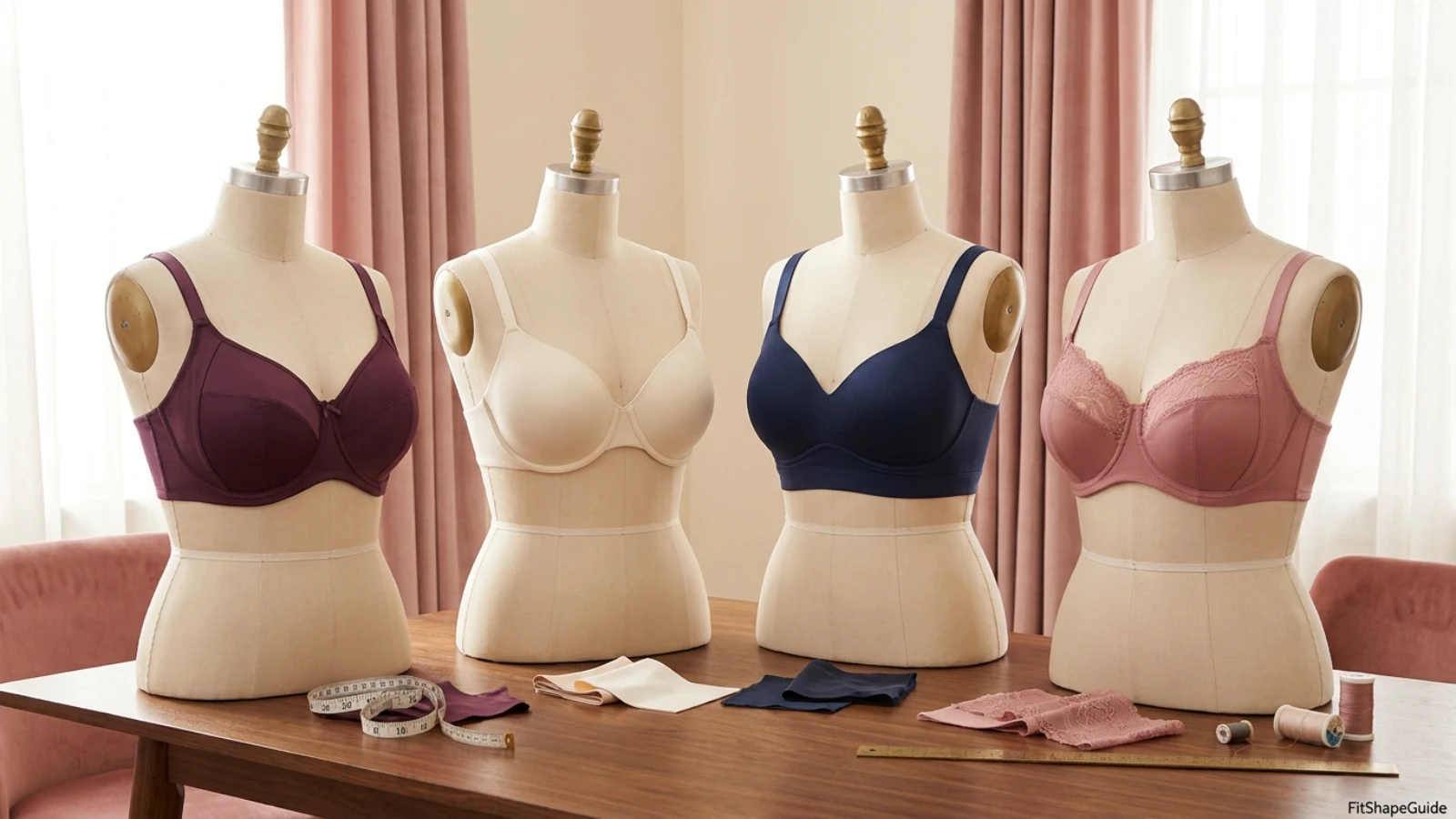
The 90-second everyday-bra test
- Settle all breast tissue fully inside the cups.
- Check that the back band sits approximately level.
- Check the cup edge for overflow or obvious gaping.
- Reach forward as if typing at a desk.
- Raise both arms overhead.
- Sit down and lean forward naturally.
- Walk briskly for a minute.
- Check whether either strap has begun slipping.
- Ask whether you would genuinely want to wear this bra for eight ordinary hours.
What makes an everyday bra good for a large bust?
An everyday bra has a harder job than the name suggests.
It may need to remain comfortable while you sit at a desk, commute, bend, reach, carry bags, walk outside, eat, drive, work around the house and wear several different tops.
A bra that feels beautifully soft for five minutes can still become frustrating after several hours if the band moves, the straps slip or the cups repeatedly need repositioning.
For a fuller bust, the most dependable everyday bras tend to combine support engineering with comfort details rather than prioritizing only one of those categories.
A level band, correctly sized cups and enough side-wing structure to keep the frame in place.
Soft cup linings, comfortable edges, breathable spacer or supportive fabrics and hardware that does not sit at a pressure point.
A neckline and surface that work beneath a meaningful portion of your real wardrobe.
| Feature | Why it matters | Good everyday sign | Potential problem |
|---|---|---|---|
| Band | Main torso anchor | Level and stable | Rides upward or painfully digs |
| Cup depth | Provides breast space | Bust sits inside cup | Compression or overflow |
| Side support | Directs outer breast tissue | Stable centered shape | Underarm escape |
| Upper cup | Controls neckline fit | Smooth transition | Cutting in or gaping |
| Straps | Position upper cup | Secure without digging | Slip or carry too much load |
| Wing fabric | Stabilizes frame | Good stretch recovery | Quickly becomes loose |
| Cup surface | Affects clothing visibility | Works with wardrobe | Texture shows under every top |
| Hardware | Allows adjustment | Sits away from pressure points | Rub or pinching |
Best everyday bra styles for a large bust
Full-cup side-support bra
A multi-part cup with an outer support panel can combine fuller coverage, projection and forward direction.
Best for: reliable all-day structured support.
Spacer T-shirt bra
Lightweight spacer construction creates a smooth cup surface without necessarily requiring heavy foam.
Best for: thin tops, office wear and smooth knits.
Seamed balcony everyday bra
A lower neckline with multi-part cups can provide projection while working beneath moderately open tops.
Best for: everyday clothing with lower necklines.
Supportive wireless bra
Uses band width, shaped cup panels, internal support and strap geometry instead of underwire.
Best for: everyday wireless comfort.
Wide-strap comfort bra
Broad adjustable straps can distribute shoulder contact while a stable band does the main anchoring.
Best for: long wear and pressure-sensitive shoulders.
Stretch-lace full-cup bra
A controlled stretch upper cup can adapt to mild asymmetry and everyday breast-volume changes.
Best for: softer upper breast tissue or size fluctuation.
Back-smoothing everyday bra
Broad side and rear panels can create a smoother transition beneath fitted clothing while maintaining full-cup support.
Best for: fitted tops and broad rear coverage.
Convertible everyday bra
A smooth supportive frame with removable or repositionable straps can add crossback flexibility to an otherwise ordinary daily bra.
Best for: mixed necklines and racerback tops.
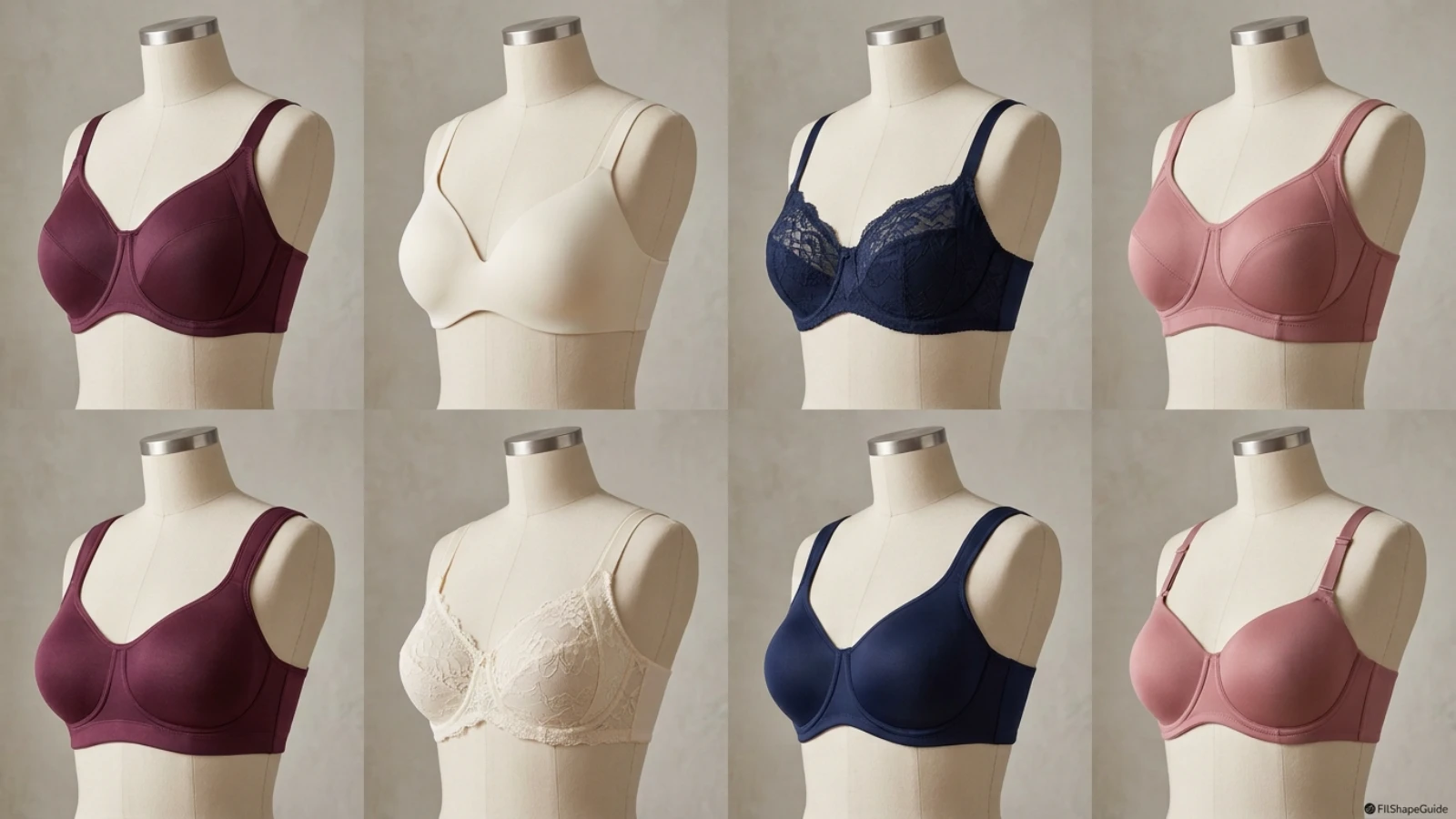
A stable band matters more than aggressive strap tension
The band provides the main horizontal anchor for the bra frame. If it repeatedly rides upward, the cups and straps lose a stable base.
The band should stay approximately level
Look from the side or use a mirror. A band that climbs sharply toward the shoulder blades is not staying where the bra was designed to sit.
Firm does not mean painful
Everyday wear magnifies small fit problems. A band that feels merely “very firm” for three minutes may feel intolerable by late afternoon if its edge or size does not suit you.
Wing depth can affect stability
Fuller-bust everyday bras often use more substantial side and back wings because a larger cup frame needs enough rear structure to stay anchored.
Stretch recovery matters
A favorite bra can gradually feel looser as its elastic ages. If you keep shortening the straps to compensate, inspect the band rather than blaming the shoulders.
Use the hook settings as designed
Follow the manufacturer’s fitting guidance. Do not buy an excessively loose band purely so you can start on the tightest hook.
Cup depth, coverage and everyday breast shape
A cup can technically cover the breast while still being too shallow.
When projection is insufficient, the bust may push the cup away from the torso, force tissue toward the side or create pressure at the lower cup.
Three-part cups
Seamed cups use individual fabric panels to create depth and can be especially useful when a smooth molded shape repeatedly feels shallow.
Full-cup coverage
A well-designed full cup can provide generous breast containment during bending and reaching. Fuller coverage does not require a high neckline on every body, but it can be an excellent everyday choice.
Elasticated or stretch upper edge
Controlled stretch can adapt to mild asymmetry or normal breast-volume changes throughout the month.
Wide or appropriately shaped wires
For underwire designs, the wire needs to surround breast tissue rather than sit on it.
Do not automatically size down for a firmer shape
An undersized cup can create compression and overflow rather than useful support.
Why side-support bras work so well for everyday wear
A side-support bra includes an extra panel or sling at the outer cup that helps direct breast tissue inward and forward.
For a fuller bust, this can create useful structure without requiring thicker padding.
More forward projection
The side panel can reduce excessive sideways spread and encourage breast volume toward the intended cup center.
More stable outer cup
The outer cup has additional structure instead of relying only on flexible fashion fabric.
Useful with full coverage
Side-support and full-cup construction pair well because one contains the breast while the other guides its direction.
Check underarm height
A fuller-coverage side panel should not extend so high that it rubs your arm during hours of ordinary movement.
Look at the back too
A strong side-support cup works best when the rear wing is substantial enough to stabilize the cup frame.
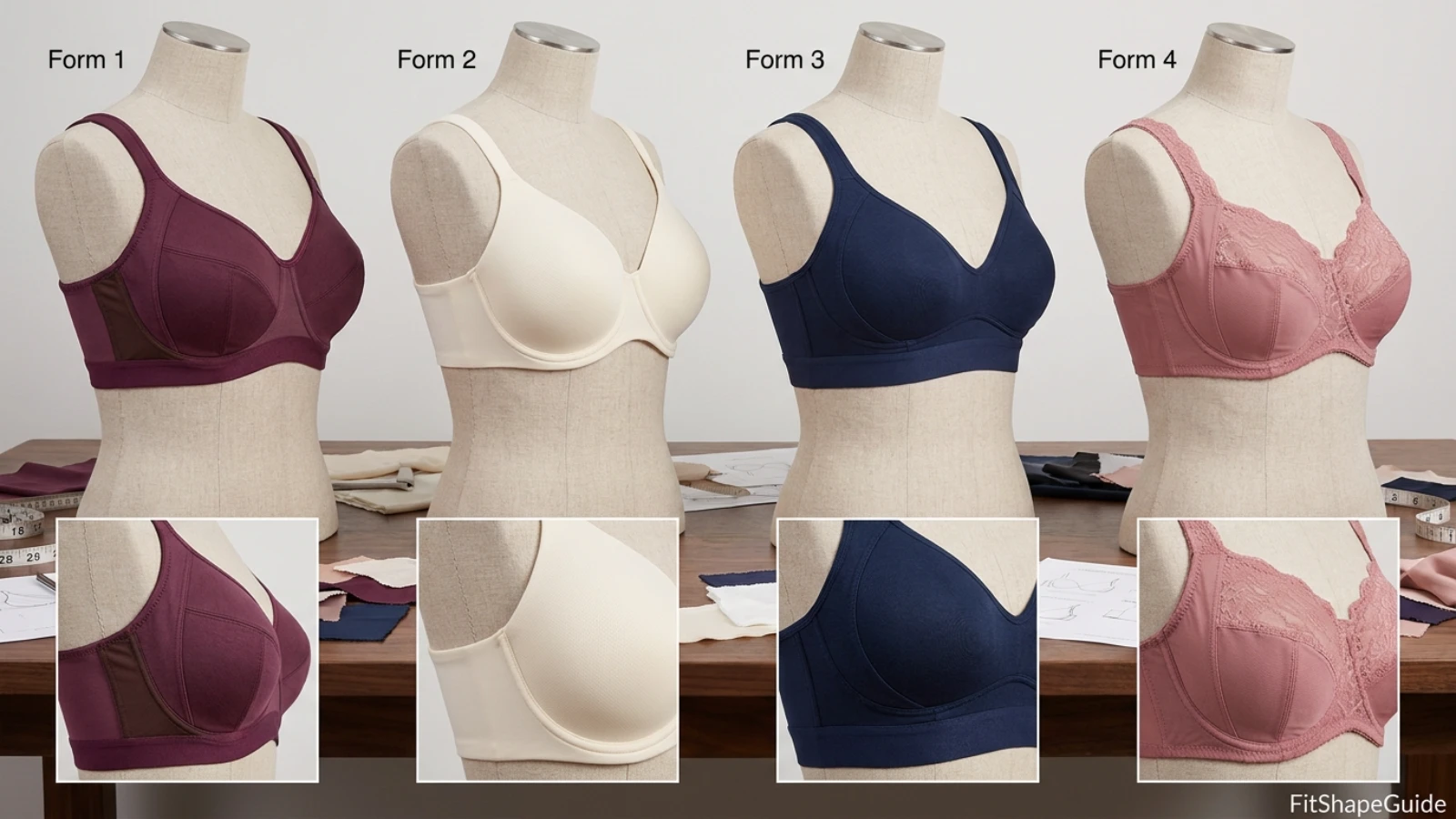
Spacer and T-shirt bras for everyday wear
A smooth bra is useful when your everyday wardrobe includes fitted cotton tees, office knits or fine blouses.
Spacer can be lighter than dense foam
Spacer cups are designed to create a smooth molded exterior while remaining relatively lightweight and allowing some air circulation through the material.
Smooth does not mean shallow
A molded bra still needs enough cup depth for your breast shape. Gaping near the edge can sometimes coexist with pressure deeper in the cup when the molded geometry is not a good match.
Flexible neckline edge
A softer upper cup transition can reduce the visible ridge that sometimes appears beneath thin tops.
Hidden internal slings
Some smooth bras add internal support without placing seams on the exterior cup.
Test beneath your hardest shirt
Do not judge a T-shirt bra only while wearing no shirt. Use the thinnest fitted top in your regular wardrobe.
For the complete smooth-cup guide, see Best T-Shirt Bras for a Large Bust .
Wireless everyday bras for a large bust
A supportive wireless bra replaces the rigid wire frame with other engineering.
Broad underband
The underband often plays an even more visible structural role in a wireless design.
Shaped cups
Darts, seams, molded zones or internal panels can create breast depth without wire.
Internal slings
Support panels can help guide the breast toward the center or reinforce the lower cup.
Side-wing support
A stable wireless cup still needs enough side and rear construction to stay in position.
Expect a potentially softer profile
Wireless support does not need to create exactly the same separation or lifted shape as underwire to be successful.
Use it for the job it performs best
Some people keep a wireless bra for long seated days and a structured underwire bra for outfits that require more specific shaping.
For softer foundations, see Best Bralettes for a Large Bust .
Everyday strap comfort
Adjustability matters
Strap length should be customized to your torso rather than copied from the other side or worn at one default setting forever.
Wide straps can improve contact comfort
A broader strap spreads contact over more shoulder area, particularly useful during long wear.
Padding is optional
A lightly padded shoulder section can be useful, but it does not replace the need for a stable band.
Rear placement affects slipping
Close-set, tow-back or leotard-style rear straps can reduce slipping for some shoulder shapes.
Straps may need seasonal adjustment
Elastic changes with wear, washing and time. Recheck your adjusters instead of assuming a strap position should remain permanent.
Repeated digging deserves a fit check
If your shoulders feel responsible for holding the bust up, assess band stability and cup fit before tightening the straps further.
Continue with Best Bra Straps That Don’t Dig In and Best Wide-Strap Bras for a Large Bust .
Desk-to-evening everyday bra test
Desk test
Sit and reach toward a keyboard. Check whether the side wing cuts into the underarm and whether the straps become noticeably tighter as the shoulders move forward.
Walking test
Walk briskly. Everyday movement should not require you to keep holding or repositioning the cups.
Driving or commuting test
Sit back against a chair and rotate the shoulders naturally. Check hook-and-eye comfort and wire position.
Meal test
The lower band should remain wearable after ordinary eating and sitting. Support does not require a band that only feels tolerable on an empty stomach.
Reach test
Reach above your head. The band should not travel dramatically upward with the breasts.
Late-day test
Notice what you want to adjust after several hours. Repeated strap pulling, underwire repositioning or cup scooping tells you more than the first minute of wear.

Why an everyday bra rotation can improve fit consistency
If you find one bra that works beautifully, it can be tempting to wear the same one every day.
But everyday bras contain elastic fibers that repeatedly stretch around the body. Giving the garment time between wears can help reduce constant strain on the elastic and also gives you another bra to wear while one is being washed and dried according to its care directions.
Keep at least two reliable foundations if practical
They do not need to be identical. One might be a seamed side-support bra and the other a smooth T-shirt bra.
Add wireless comfort if useful
A third softer option can be useful for travel, home, long seated days or any time you personally prefer a wire-free frame.
Rotate by clothing
Instead of asking one bra to work under every neckline, keep a small foundation wardrobe that matches your real tops.
Follow the specific care label
Wire, foam, elastics, lace and technical fabrics can have different washing requirements. Product care instructions should take priority over generic routines.
Retire stretched-out bras
If you have moved progressively through the tighter hooks and the band still rides up, or the elastic no longer recovers well, the bra may simply be worn out.
How to buy an everyday bra for a large bust
- Verify your current size. Do not assume the size of an old favorite remains the best starting point forever.
- Check cup depth. A daily bra should contain the breast without flattening or obvious overflow.
- Choose cup style from your shape. Compare multi-part seamed, spacer, molded and wireless constructions.
- Inspect side support. A dedicated sling can improve forward positioning.
- Check band depth and stretch recovery. The frame should remain stable without painful compression.
- Check wing height. Enough coverage to stabilize the cup, but not so high that it rubs your arm.
- Look at strap placement and width. Especially if straps routinely slip or dig.
- Check cup lining and seam finishing. Details that feel irrelevant for two minutes can matter after eight hours.
- Test your common shirts. Bring or wear a fitted T-shirt if smoothness matters.
- Check returns. Shape compatibility often cannot be predicted from measurements alone.
Do not choose solely by softness
Ultra-soft fabric is valuable, but it will not compensate for a loose band or shallow cup.
Do not choose solely by “maximum support”
Everyday comfort may be better with moderate structured support than with the stiffest possible bra.
Do not assume molded is automatically smoother
A molded cup that does not match your breast depth can create edge gaping or pressure even though it has no seams.
Do not rule out seamed cups under clothing
Flat seams and modern cup construction can be surprisingly discreet, especially beneath medium-weight tops.
Buy for your most common day
If you spend most weekdays sitting, test seated comfort. If you walk extensively, prioritize movement stability. Everyday should mean your everyday.
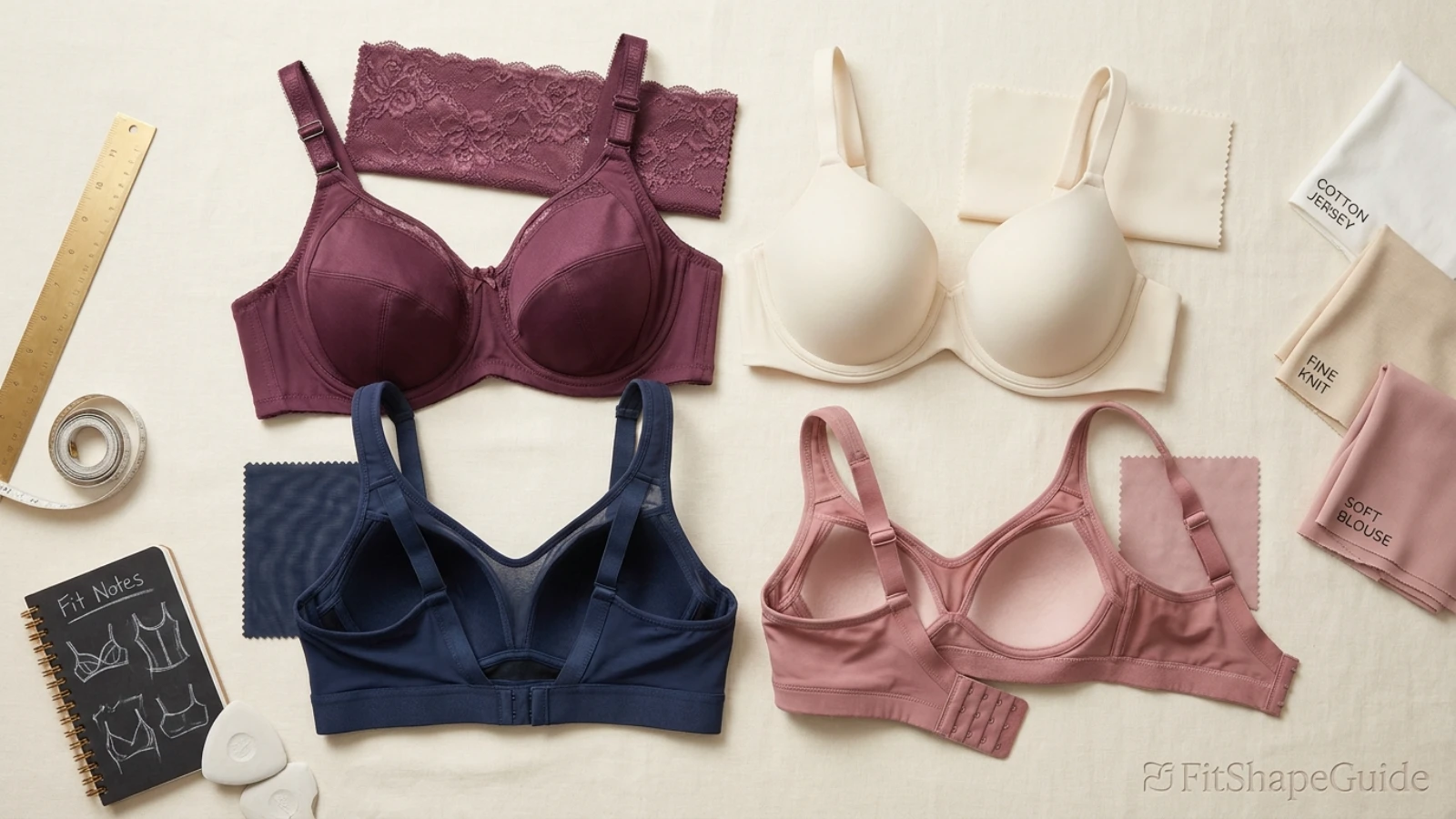
Common everyday bra problems
| Problem | Likely cause | Try next | Avoid |
|---|---|---|---|
| Band rides up by afternoon | Band too loose or stretched out | Reassess band fit | Shortening straps to compensate |
| Cup overflows after settling breast | Insufficient cup volume/shape | Deeper or larger cup | Buying a larger band first |
| Upper cup gaps | Shape mismatch or cup edge issue | Different cup geometry / stretch edge | Assuming smaller cup automatically fixes it |
| Breast tissue spreads toward underarm | Shape or side-support mismatch | Try side-support construction | Overtightening straps |
| Straps constantly fall down | Rear placement or adjustment issue | Centered/tow-back/racerback option | Making straps painfully short |
| Straps dig after several hours | Load distribution / narrow strap | Check band; try wider straps | Assuming padding alone fixes poor fit |
| Wire feels fine standing but rubs seated | Wire/torso shape mismatch | Different wire or wireless style | Accepting repeated discomfort |
| Wireless band folds underneath | Insufficient frame structure | Broader band / stronger cup construction | Tightening straps |
| T-shirt shows cup edge | Rigid edge or top tension | Softer spacer edge / different shirt fit | Compressing breast into smaller cup |
| Bra suddenly feels loose after months | Elastic fatigue | Evaluate replacement | Continuing to tighten straps indefinitely |
My best-looking bra is not my most comfortable bra
That is useful information. A dramatic lifted silhouette may not be your ideal all-day construction. Keep different bras for different jobs.
My everyday bra is visible under T-shirts
If the fit is otherwise excellent, keep it for heavier garments and add a smooth spacer or T-shirt bra to the rotation rather than replacing every foundation with molded cups.
My wireless bra feels comfortable but less separated
That can be a normal difference in wireless geometry. Judge containment, stability and comfort rather than expecting every design to produce the same silhouette.
I need to adjust my bra repeatedly during the day
Repeated cup repositioning, strap pulling or band adjustment suggests the frame is not staying where intended. Reassess fit or try another construction.
Which everyday bra should you choose?
Choose a full-cup side-support bra when dependable structure and projection matter most. Choose a spacer T-shirt bra when smoothness beneath fitted clothing is the priority. Choose a supportive wireless bra when you prefer a wire-free frame, and look for wide or padded adjustable straps when shoulder contact is an important comfort issue.
For many fuller-bust wardrobes, the strongest solution is not one perfect bra but a small rotation: one structured seamed bra, one smooth everyday bra and one softer option. Together they cover far more real-life clothing and comfort needs than forcing one construction to do everything.
Frequently asked questions
What is the best everyday bra for a large bust?
A strong starting point is a full-cup or side-support bra with a stable band, enough cup depth, supportive wings and adjustable straps. The best style still depends on breast shape and clothing.
Are T-shirt bras good for a large bust?
Yes, when the molded or spacer cup has enough depth. Smooth cups are useful beneath fitted clothing, but seamless construction alone does not guarantee a good fuller-bust fit.
Are wireless bras good for everyday fuller-bust support?
They can be. Look for shaped cups, substantial underbands, supportive wings, internal slings and adjustable straps rather than relying on stretch fabric alone.
Is a full-cup bra good for everyday wear?
Full-cup bras can be excellent everyday foundations because they provide generous containment and can pair well with side-support construction.
Are side-support bras comfortable for everyday wear?
They can be when the cup and wire shape suit you. The side panel helps guide outer breast tissue forward while the band stabilizes the frame.
Should everyday bra straps be wide?
They do not have to be extremely wide, but broader straps can distribute shoulder contact over more area. Correct band and cup fit remain more important than width alone.
How many everyday bras should I own?
There is no required number, but having at least two reliable bras can make rotation and washing easier. Many fuller-bust wardrobes benefit from a structured option plus a smooth or wireless alternative.
How do I know when my everyday bra is worn out?
If the band has lost recovery, rides upward even on tighter hook settings, straps require constant tightening or the cup frame no longer stays stable, it may be time to reassess or replace it.
How FitShapeGuide evaluates everyday bras
This guide evaluates everyday bras through band stability, cup depth, breast containment, side-support construction, upper-cup flexibility, wing height, strap comfort, fabric feel, smoothness beneath clothing and performance during ordinary movement.
No one cup construction is treated as universally superior. Seamed full cups can create strong projection and side support; molded or spacer bras can create a smoother clothing surface; wireless designs can use shaped cups, internal slings and broad underbands instead of a rigid wire.
Everyday suitability also means repeat wear. We consider whether the bra stays stable while sitting, walking, reaching and wearing ordinary clothes rather than judging only the initial standing fit.
Current fuller-bust lingerie construction supports this multi-style approach. Specialist everyday collections include full-cup, side-support, molded, spacer, plunge and non-wired options because different breast shapes and wardrobes need different cup geometries.
Before publishing any commercial recommendation, FitShapeGuide should verify the exact live seller, product name, color, band range, cup range, cup construction, cup depth, side-support design, upper cup, underwire or wireless frame, band depth, wing height, strap width, strap adjustability, rear strap placement, fabrics, care instructions, current availability and return eligibility.
No ASIN, size range, material claim, price, rating, review count, stock statement, coupon or delivery promise should be published unless directly verified.





6 Comments