Job Interview Outfits for a Large Bust
A practical guide to interview formality, secure tops, bust-aware tailoring, seated movement, video calls, weather, commute layers and a calm night-before check.
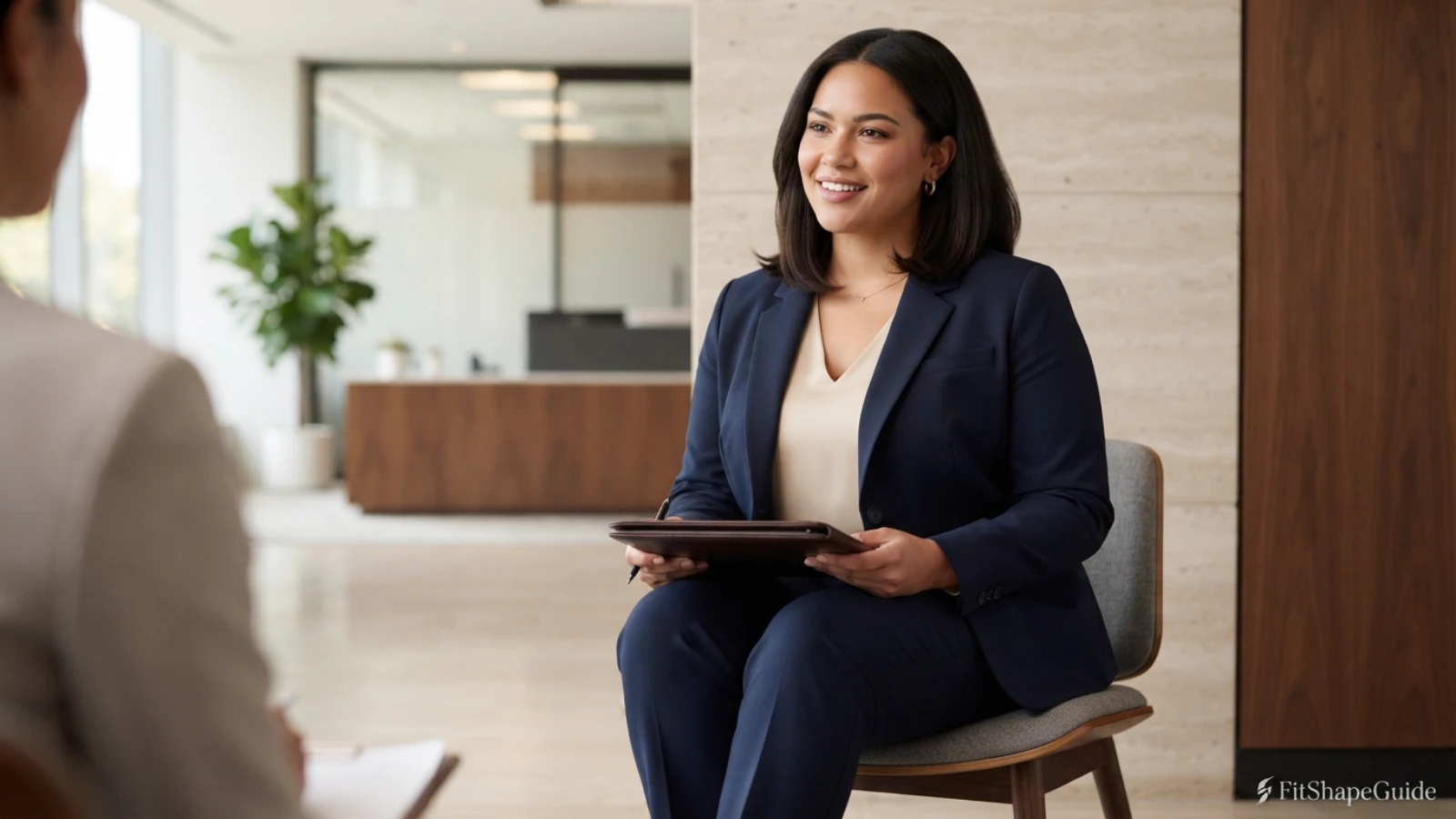
The 90-second interview outfit check
- Button naturally: close every functional shirt and jacket closure without pulling fronts together.
- Sit and answer: speak for one minute while checking neckline, collar, placket and waistband.
- Reach and greet: extend an arm, open a door, take notes and lift the portfolio.
- Wear the coat and bag: straps and outerwear should not drag the neckline or crush blazer shoulders.
- Walk in the shoes: include stairs, lobby flooring and a five-minute standing wait.
- Remove adjustments: if the outfit needs repeated pulling, pinning or covering, change the garment.
How formal should a job interview outfit be?
Interview attire is not identical across industries. Finance, law, government, executive and many client-facing roles may expect a traditional dark suit. A technology company, nonprofit, creative studio or trade environment may communicate a business-casual standard. Some recruiters send explicit guidance, and that instruction takes priority over general advice.
When no guidance exists, examine the employer’s careers page, staff photographs, location and role. Do not copy casual promotional images without context; people already employed may dress more casually than candidates. If appropriate, ask the recruiter, “Could you confirm the expected interview dress level?” That is more accurate than guessing from a job title.
| Interview context | Useful starting level | Fuller-bust outfit formula | Main trade-off |
|---|---|---|---|
| Finance, legal, government, executive | Business formal | Dark suit + secure light shell + polished shoe | Rigid tailoring can restrict seated reach |
| Corporate professional role | Formal unless told otherwise | Single-breasted suit or blazer + tailored dress/trouser | Mixed separates may read less formal than a suit |
| Technology or modern office | Polished business casual to formal | Blazer + knit shell + tailored trousers | Company employees may dress more casually than candidates |
| Creative or design role | Intentional business casual | Color accent blouse + structured layer + clean trouser | Statement pieces can distract if movement or sound is high |
| Academic or nonprofit interview | Role- and institution-dependent | Jacket + secure blouse + trouser/skirt or tailored dress | A full day may make delicate fabrics impractical |
| Recruiter says “casual” | Clarify the lower boundary | Fine knit + clean trouser + optional soft blazer | “Casual” can still exclude denim or sneakers |
Six job interview outfits for a fuller bust
Single-breasted trouser suit + moderate-V shell
A dark or neutral suit is the safest conservative formula. A substantial shell removes button-placket strain, while a one-button jacket can create a clean frame. Straight or gently tapered trousers keep the look conventional.
Trade-off: an open blazer may be comfortable, but the functional button should still close if the interview context expects it.
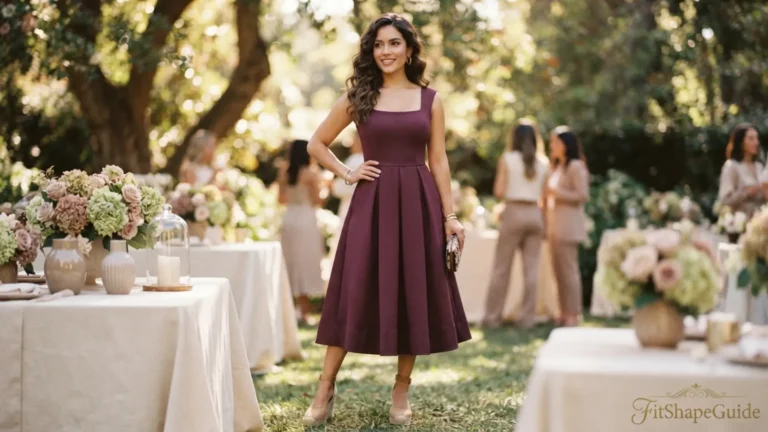
Tailored dress + structured blazer
A dress reduces coordination decisions. Choose vertical shaping, a secure neckline and a waist seam that sits correctly, then add a blazer for formality. This works well when trousers are not preferred.
Trade-off: dress, jacket and bust landmarks must all align. A jacket that catches on the dress fabric can make the neckline move.
No-gape button-down + suit trousers + blazer
A shaped shirt with hidden chest closure creates a traditional interview look without asking an ordinary placket to carry too much tension. Contrast between shirt and suit keeps the layers visually clear.
Trade-off: a hidden snap prevents opening but does not fix severe diagonal strain or a collar pulled backward.
Collarless jacket + shaped shell + trousers
A collarless jacket reduces lapel interaction and can sit cleanly over a scoop, boat or moderate-V shell. It offers formal structure with less bulk around the chest.
Trade-off: a high jacket edge may press the neckline, and very decorative trim can reduce versatility.
Secure blouse + tailored trousers + soft blazer
For explicitly business-casual interviews, a darted or fixed-wrap blouse with trousers and a soft blazer balances polish with approachability. Controlled color can show personal style.
Trade-off: fluid fabric can shift under a bag strap or jacket; confirm neckline position through movement.
Fine-gauge knit + trousers + structured cardigan
Use this only where the recruiter or employer clearly signals a relaxed standard. A compact knit and clean-edged cardigan are more intentional than a casual tee and slouchy sweater.
Trade-off: the formula may be too informal for final rounds, leadership roles or client-facing organizations.
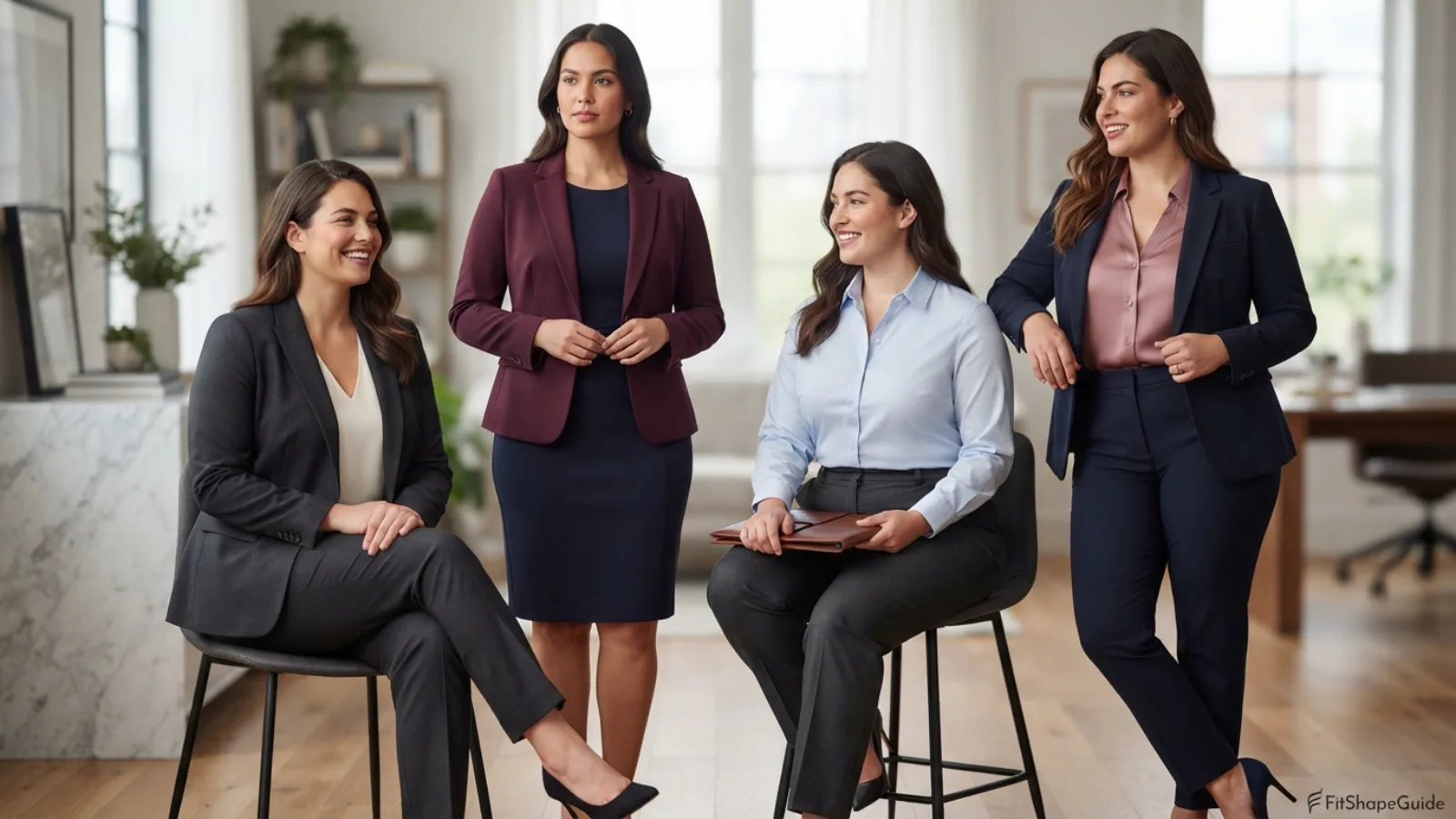
If the employer has specified business casual, use the complete business-casual outfit guide to adjust formality without losing garment security.
Secure tops, collars and necklines
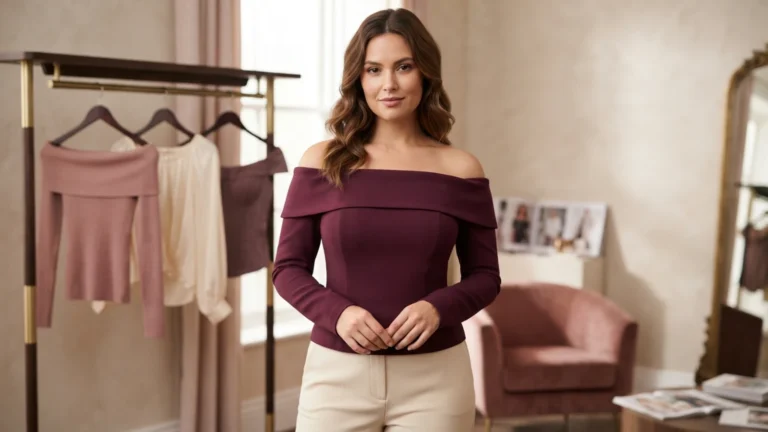
The top should remain quiet while speaking. A neckline that is technically covered but needs repeated adjustment is not interview-ready. Test it while leaning slightly forward, looking down to take notes and turning toward different interviewers. Choose enough front length so the top does not climb and press the throat.
Moderate-V and scoop shells
A moderate V or controlled scoop creates breathing room beneath a jacket and avoids a bulky collar. The edge should be substantial enough not to roll. Fine-gauge knit needs recovery and opacity; woven shells need darts or curved seams to move around the bust rather than bridge across it.
Button-down shirts
A shirt can be a strong formal choice when its center front remains straight. Look for bust darts, hidden buttons or snaps and a stable placket. Test it under the blazer because sleeve friction can pull the shirt sideways. Use the no-gape shirt guide when the placket is the main concern.
Wrap and draped blouses
A fixed wrap or secured surplice offers diagonal shaping and avoids buttons. Verify overlap depth, inner fastening and recovery after sitting. Loose ties, large bows and very fluid fronts can move or enter the microphone area during a video interview.
High necks and turtlenecks
High necklines can look polished, especially in cool weather, but they are not automatically more professional. The garment needs enough front length so the collar does not pull backward. Test temperature because interview nerves and heated rooms can make a heavy neck layer uncomfortable.
For more neckline and construction choices, compare the best tops for a large bust.
Blazers, suits and interview dresses
A blazer sets formality, but it should not function as a cover for an unstable top. Shoulder seams should relate to the intended shoulder point, sleeves should permit a handshake and lapels should lie calmly. A single-breasted one-button blazer is an accessible fuller-bust starting point because it uses less overlap than many double-breasted designs.
Can the blazer stay open?
Often yes, especially when seated, but the answer depends on the interview and jacket. If the blazer is part of a formal matched suit, be prepared to close it when standing if that is customary in the setting. The closure should meet without pulling. An open-only fit can be reasonable for an intentionally edge-to-edge jacket, but not for a buttoned style whose front lacks room.
Suit versus coordinated separates
A matched suit signals the highest conventional formality. Coordinated separates—a navy blazer with charcoal trousers, for example—feel one step more relaxed. Keep fabrics compatible in weight and finish. Two almost-matching blacks can look accidental under daylight, while clear contrast looks deliberate.
Dresses
Look for secure V, scoop, jewel or collar necklines; vertical seams; enough front length; and a hem compatible with sitting. A faux-wrap dress is more predictable than a true wrap. A sheath should allow full breath and stride. Test the blazer over the dress so the armholes and sleeves do not bind. The work-dress guide compares the most useful shapes.
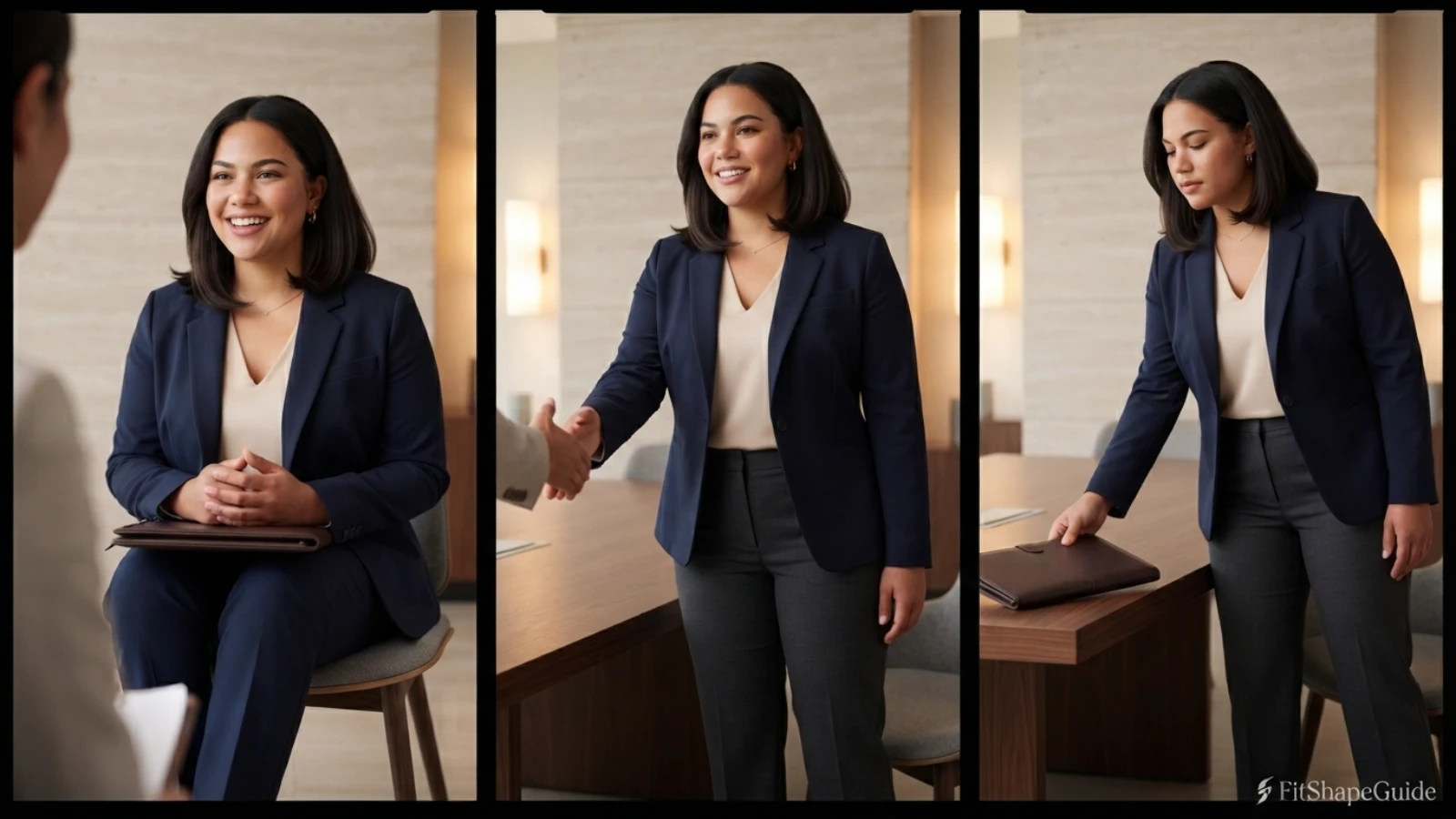
Use the detailed interview-ready work-blazer checks for lapel break, button stance, lining and desk movement.
The complete seated and movement test
Interview anxiety increases awareness of every garment issue. A neckline that shifts once during a calm fitting may become a repeated distraction in a panel interview. Wear the complete outfit during a short mock interview. Include the intended bra, hosiery or socks, shoes, bag, coat and jewelry.
- Sit in a similar chair: keep both feet placed naturally and answer aloud for five minutes.
- Lean slightly forward: imitate listening and taking notes without folding the neckline open.
- Turn left and right: simulate a panel while checking collar and jacket movement.
- Shake hands or reach: the sleeve and back should move without pulling the placket.
- Stand with the bag: lift the tote, portfolio or laptop and walk through a doorway.
- Remove the coat: make sure sleeves and shoulders resettle afterward.
Take front and side photographs in daylight. Photographs can reveal a rising front hem, bowed placket or uneven jacket more clearly than a familiar mirror. Use them to assess garments, not criticize the body.
Foundation compatibility
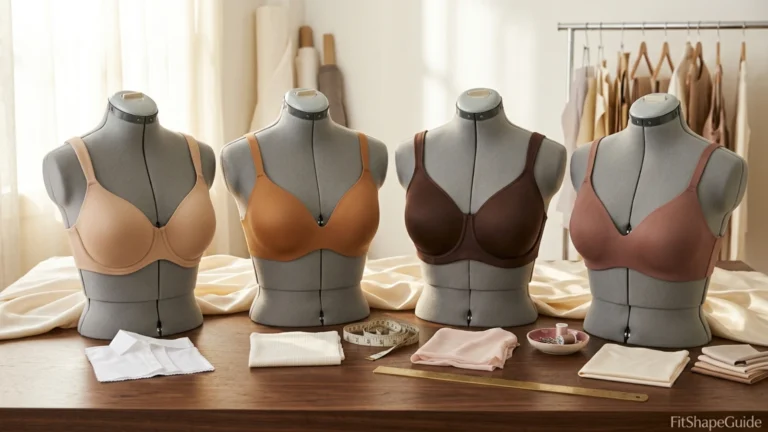
Wear the actual bra planned for the interview. Cup shape, strap position and seam texture change how a top sits. The correct goal is compatibility and comfort, not compression. Recheck the top after moving because a bra or camisole that shifts can change the neckline.
Shoes and walking
Interview shoes must handle parking, public transport, stairs and waiting. Flats, loafers, low heels and other polished options can all work when appropriate to the employer. Practice on hard flooring. Pain changes posture and attention, so do not save unworn shoes for interview morning.
Panel and full-day interviews
A final-round schedule may include a lobby wait, several seated conversations, a presentation, walking between rooms and a meal. Test the outfit for that sequence rather than for one 30-minute meeting. A blazer that feels comfortable for five minutes may become restrictive after repeated reaching; a delicate blouse may crease beneath a seat belt or bag; and a dress hem may move differently on a low chair. Choose breathable layers that can be removed and replaced neatly, pockets that do not distort when lightly loaded, and a top that remains secure without the jacket. Carry only the maintenance items that solve a realistic problem instead of an oversized emergency kit.
Cultural, religious and personal dress
Religious and cultural garments can be part of a polished interview outfit. Coordinate fabric weight, color and drape with the jacket or top, and test whether pins, wraps or layered edges remain secure while turning, speaking and wearing a coat. The goal is not to erase identity but to ensure that every chosen element performs reliably in the setting. The same applies to gender expression and personal style: select the trouser, skirt, dress, shirt or jacket formula that feels authentic while matching the employer’s stated formality.
Jewelry, fragrance and sensory comfort
Accessories should not click against the desk, catch on lapels or pull the neckline. Test earrings and necklaces with a headset if the interview is virtual. Keep fragrance light or omit it because shared rooms and interviewers may have sensitivities. Remove scratchy tags, test hosiery and check room-temperature comfort. A seemingly minor sensory irritation can consume attention that should stay on listening and answering.
Keep a final backup outfit that uses the same formality level but a different top. This is useful if the chosen blouse develops a mark, a closure fails or the forecast changes. The backup should already pass the seated test; an untested replacement recreates the original problem. Photograph both complete combinations and place every item together so the decision remains simple. The purpose of a backup is continuity, not an invitation to reconsider the entire wardrobe on interview morning.
Video interview outfits for a large bust
A video interview is still an interview. Dress to the same requested formality from head to toe, not only in the visible rectangle. Full dressing supports readiness and prevents an awkward mismatch if you need to stand, adjust equipment or retrieve a document.
Camera framing can visually enlarge high-contrast patterns, bright white fabric or shiny materials. Test the exact top against the background. A medium-value solid, subtle texture or controlled small pattern often reads clearly. The neckline should remain stable when leaning toward the camera, and a blazer lapel should not cast a heavy shadow across the chest.
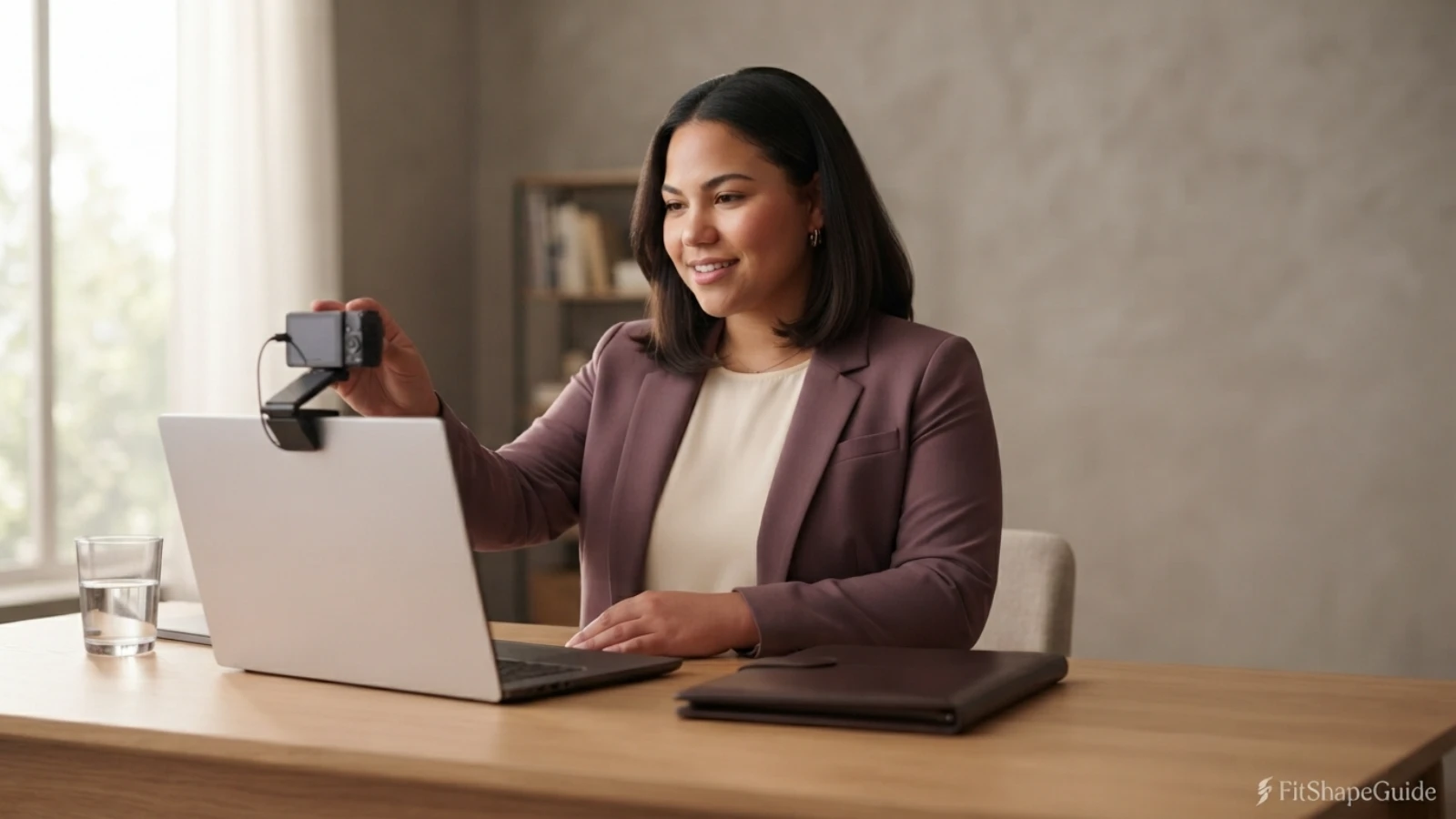
Camera and light test
Place the camera near eye level and far enough away to include the upper torso, not only the face. Use front-side light rather than strong backlight. Sit in the exact chair and check whether the desk cuts across the jacket button or causes the top to bunch. Record a one-minute sample while speaking and gesturing.
Microphones, necklaces and fabric noise
Long necklaces may strike a desk or lapel microphone. Stiff synthetic fabric can rustle when the arms move. A headset cable can pull a collar or tangle with jewelry. Run the complete audio test in the actual clothes and remove only the element causing interference.
Weather, commute and interview-day logistics
A strong outfit at home can change during a humid commute, rain, cold wind or a long wait. Check the forecast and route. Build a plan for the coat, umbrella and bag rather than treating them as separate from the outfit.
Warm weather
Choose breathable cotton, lightweight crepe, fine knits and partially lined tailoring where the dress level allows. Carry the jacket rather than wearing it through extreme heat, but protect it from creasing. Give yourself cooling time before arrival. Pale tops need a daylight opacity check after movement and perspiration.
Cold or wet weather
The coat must fit over blazer shoulders and close without pressing the chest. Test removing it smoothly. Choose footwear that manages the route; bring a clean indoor pair only if changing can be done discreetly and reliably. A compact umbrella should not overcrowd the interview bag.
The interview bag
Use a portfolio, tote or simple bag that holds documents, water and essentials without becoming heavy. A crossbody strap can divide the shirt front, distort lapels or shift a wrap neckline. If crossbody is necessary for the commute, remove or reposition it before entering and let the outfit settle.
The wider guide to dressing a large bust for the office covers commute layers and long workday comfort.
The 24-hour interview outfit plan
Do the final outfit decision the day before, not five minutes before departure. Clothing preparation reduces preventable distractions and creates time to replace a weak button or wrinkled shirt.
- Confirm instructions: re-read the invitation for location, video link, safety requirements and dress guidance.
- Check every piece: inspect stains, lint, hems, buttons, snaps, zips, soles and spare fasteners.
- Steam or press safely: follow the care label and allow fabric to dry and cool before dressing.
- Run the movement test: sit, reach, walk, wear the bag and remove the coat.
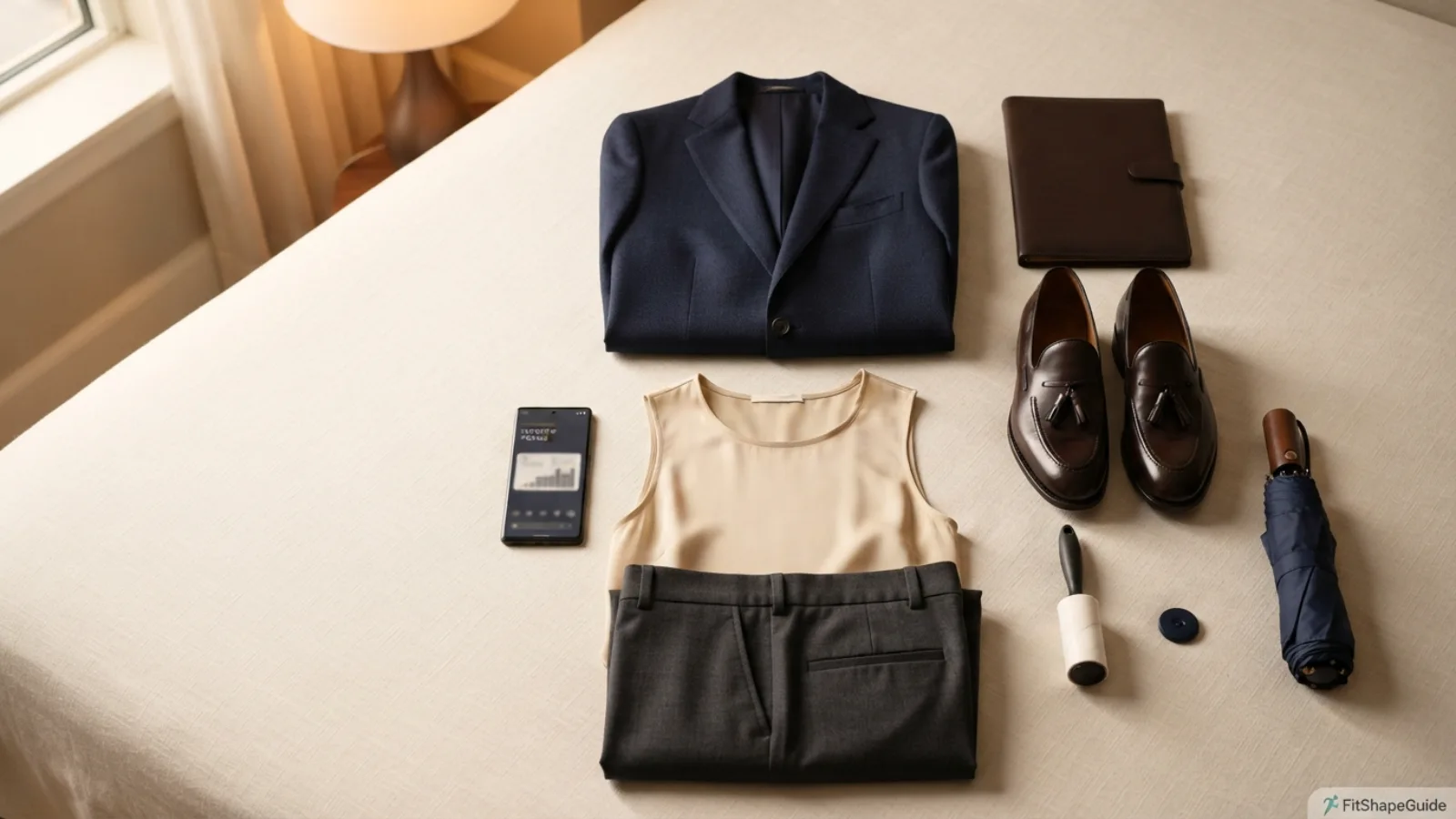
- Prepare a small kit: tissues, lint roller, stain wipe compatible with the fabric, spare hosiery if used, and one correct button.
- Set the full outfit out: include underwear, socks, jewelry, bag and weather layer.
- For video: test camera, microphone, power, background and chair in the complete outfit.
Buying an interview outfit online
Do not buy by size label alone. Read garment measurements, shaping, stretch, lining, button stance, sleeve length, care and returns. Allow enough time for two sizes or cuts and an alteration if needed. Do not rely on final-sale pieces for a fixed interview date unless the exact style is already known.
Common interview outfit problems and fixes
| Problem | Likely cause | Better response | Avoid |
|---|---|---|---|
| Shirt gaps while seated | Insufficient front room or wide button spacing | Bust shaping, hidden closure, different shirt cut | Covering severe strain with the blazer |
| Blazer lapels spring outward | Chest depth or break point is incompatible | Single-breasted shaped or collarless jacket | Pinning lapels under tension |
| Neckline opens when leaning | Edge lacks stability or top rides upward | Fixed neckline, longer front, compatible base layer | Repeated adjustment during the interview |
| Jacket restricts handshake | Shoulder, upper arm or back lacks movement | Different armhole/shoulder cut or stretch lining | Keeping arms unnaturally close |
| Top becomes transparent in light | Pale fabric, stretch or strong backlight | Opaque weave, compatible base, camera/light test | Assuming home lighting is enough |
| Suit feels too formal | Employer explicitly signals relaxed culture | Contrast blazer, knit shell and tailored trouser | Dropping directly to weekend clothing |
| Outfit feels too casual | Soft fabrics and no tailored element | Add structured jacket or sharper trouser | Assuming dark color alone creates formality |
| Coat crushes the blazer | Outerwear shoulders or armholes are too small | Roomier coat or lighter interview layer | Arriving with twisted sleeves and lapels |
When a small alteration is worth it
A tailor can shorten sleeves, hem trousers, refine a waist or add a hidden snap to an otherwise well-fitting shirt. Major shoulder and armhole changes are more complex. Buy enough chest room first when shoulders and length remain compatible, then alter only after wearing the complete interview foundation.
Emergency pins and tape
A safety pin or fashion tape is a temporary backup, not the main structure of an interview outfit. Pins can show or open; tape can fail with heat, texture or movement. Test any adhesive on the fabric and skin well before the event. If the garment depends on the fix to remain closed, choose another garment.
Final verdict
The best job interview outfits for a large bust begin with the employer’s formality level and a top that remains secure while sitting, speaking and reaching. When instructions are unclear, a dark single-breasted suit with a substantial moderate-V shell is the safest conventional option. A tailored dress with a blazer or a no-gape shirt with trousers also works; move to softer business-casual layers only when the employer signals that level.
Professionalism comes from appropriate, maintained garments—not hiding the body. Rehearse the complete outfit, including coat, bag and shoes, and test the real camera for video interviews. The strongest choice is the one that lets attention stay on qualifications and conversation.
Frequently asked questions
What is the safest interview outfit for a large bust?
A dark single-breasted trouser suit with a secure moderate-V or softly open-neck shell is a dependable formal starting point.
Should I wear a blazer to a job interview?
Wear one for formal or corporate interviews unless instructed otherwise; for explicitly casual settings, a structured cardigan may be sufficient.
Can I leave my interview blazer open?
Often yes while seated, but a blazer with a functional closure should still close comfortably if the interview context requires it.
Are V-neck tops appropriate for interviews?
Yes, when the depth suits the employer and the neckline stays stable while leaning, taking notes and carrying a bag.
How do I stop an interview shirt from gaping?
Choose targeted bust shaping, a stable placket and a hidden chest closure, then test the shirt under the blazer while seated.
What should I wear for a video interview?
Follow the same requested formality as an in-person interview, dress fully and test the complete outfit on the actual camera and lighting.
Can I wear a dress to a job interview?
Yes. Choose a tailored dress with a secure neckline, correctly placed bust seams, comfortable seated hem and an appropriate jacket when needed.
When should I test my interview outfit?
Complete the full seated, walking, coat, bag and camera test at least 24 hours before the interview so there is time to change a piece.
Editorial and verification standards
This guide evaluates employer context, neckline security, front depth, plackets, lapels, shoulders, sleeves, lining, opacity, fabric recovery, seated movement, camera behavior, commute practicality, care and returns. It does not treat a fuller bust as a professionalism issue or promise that one outfit fits every role or body.
Interview-formality guidance was checked against the current Harvard Mignone Center professional-attire guide, which recommends business formal for interviews unless the employer instructs otherwise; Texas A&M Career Center, which distinguishes business-professional and business-casual interview pieces; and the UNC Career Center attire guide, which emphasizes clean, well-fitting clothes appropriate to the professional setting.
Video recommendations were cross-checked against Penn Career Services video-interview guidance, which advises using in-person-level interview attire and testing how colors and patterns appear on screen.
Before publishing a product module, verify the direct live seller, exact variant, garment measurements, construction, fabric, care, interview suitability and returns. Affiliate relationships should be disclosed clearly and close to recommendations under the FTC endorsement guidance.