Best Jeans to Balance a Large Bust
A body-neutral denim guide to choosing leg shape, rise, waistband, pockets, wash and recovery that cooperate with fuller-bust tops, jackets and real movement.
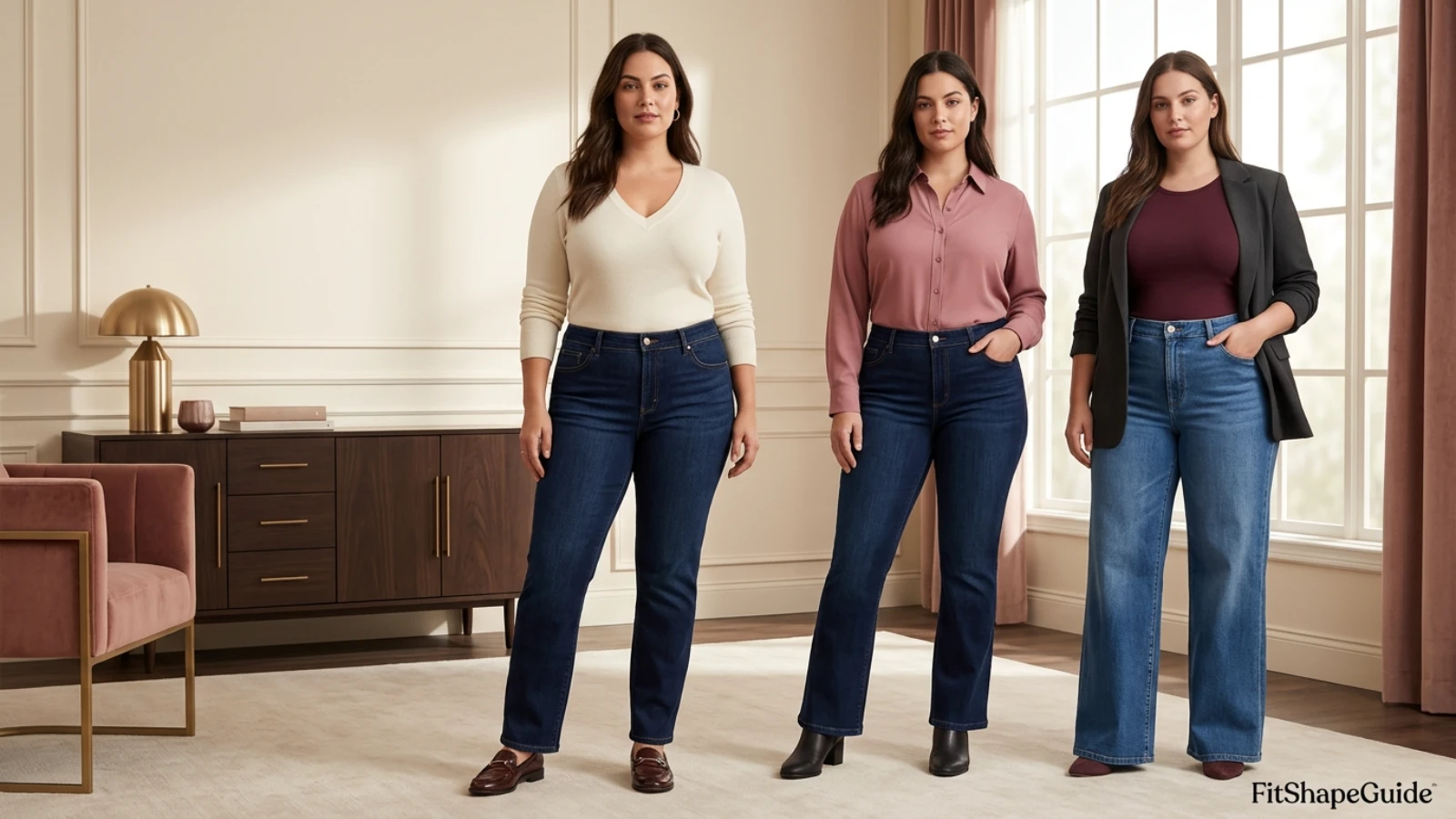
The 90-second jeans-and-top test
- Stand naturally: waistband, zipper, pockets and side seams should settle without arranging.
- Sit and breathe: check waist pressure, front-rise tension and whether the top pulls toward the waistband.
- Reach forward: the back rise should remain covered and the shirt should not be dragged from its intended position.
- Walk and turn: side seams should stay near the sides, and the leg should not twist around the calf.
- Add the real shoes: verify break, crop and floor clearance rather than judging an unfinished hem.
- Wear for ten minutes: note early waistband relaxation, knee bagging or pocket flare.
What “balance” means in this denim guide
Fashion advice often tells fuller-bust shoppers to add volume below the waist so the body appears “balanced.” That can be one styling preference, but it is not a fit requirement. Straight, slim, wide, flared and tapered jeans can all work. The useful question is whether the jeans create the outfit line, comfort and formality you want while cooperating with the top and layer.
Think of balance as distribution of garment structure. A voluminous wide leg may pair most easily with a shaped top or a controlled tuck because both pieces otherwise occupy a lot of visual and physical space. A slim-straight leg can accept a longer blouse or jacket because the lower half stays compact. A bootcut can connect a fitted thigh to a wider shoe or longer hem. These are outfit relationships, not rules about making the bust look smaller.
Start with the hardest area to fit. If waist-to-hip ratio makes jeans difficult, solve the waistband, rise and seat first, then choose a top length. If secure fuller-bust tops are harder, select the top first and identify the rise that works with its hem or tuck. A successful pair should fit independently before styling techniques are added.
| Jeans shape | Strong outfit starting point | Useful work or casual role | Main trade-off |
|---|---|---|---|
| Straight leg | Shaped knit, blouse, tee or open blazer | Most versatile everyday base | Very long tops can hide the clean leg line |
| Bootcut | Secure shirt, fitted knit or hip-length jacket | Smart casual and shoe-led outfits | Hem must match the intended shoe height |
| Subtle flare | Tucked shell or shaped blouse | Dressier denim and evening casual | Long flares can be impractical in wet weather |
| Wide leg | Controlled tuck, shorter top or fitted shell | Movement, modern office and creative days | Loose top plus wide leg can obscure garment structure |
| Slim straight | Longer blouse, cardigan or blazer | Compact layering and travel | Thigh and calf ease must remain comfortable |
| Tapered or mom fit | Popover, shaped tee or cropped jacket | Relaxed everyday outfits | High rise and narrow ankle may not suit every seated day |
| Barrel leg | Simple fitted knit or collarless top | Creative and fashion-forward settings | Curved volume requires deliberate top and shoe choices |
| Relaxed or boyfriend | Structured shirt, fitted tee or neat sweater | Low-pressure casual days | Dropped rise and distressing can reduce formality |
Eight jeans shapes for fuller-bust outfits
Straight-leg jeans
A straight leg maintains similar width from knee toward hem, though exact cuts vary. It is the easiest base for shaped tops, button-downs, sweaters and blazers because it is neither very narrow nor highly voluminous.
Trade-off: a rigid straight cut may need more seat or thigh ease than stretch denim. Check side-seam position and sitting comfort.
Bootcut jeans
Bootcut jeans fit more closely through the thigh and open modestly below the knee. The wider hem can work with ankle boots, loafers or low heels and supports jackets that finish around the hip.
Trade-off: the correct inseam depends on the shoe. One pair may not work with both flats and heels.
Subtle flare jeans
A flare creates a more visible change from knee to hem. It can produce a strong outfit line with a tucked knit, fixed-wrap top or shorter jacket. Choose a controlled flare for easier daily use.
Trade-off: full-length hems collect water and dirt when too long, while an unintended high break can interrupt the designed shape.
Wide-leg jeans
Wide legs offer room and movement from hip or thigh downward. A high or mid rise can create a clear meeting point for a shaped top. Pleat-free denim often layers more smoothly than wide trousers with front volume.
Trade-off: heavy denim can feel bulky, and a long loose top may hide the waistband and pockets completely.
Slim-straight jeans
Slim-straight cuts stay closer through the hip and leg without narrowing like a skinny jean. They make space for longer blouses, tunic-length knits and longline blazers.
Trade-off: “slim” is brand-specific. Verify thigh, knee, calf and hem measurements rather than relying on the name.
Tapered or mom-fit jeans
A tapered jean adds room through the seat or thigh and narrows toward the ankle. It can pair with a tucked tee, popover or shorter cardigan for a relaxed everyday outfit.
Trade-off: a very high rise or gathered front can become uncomfortable when seated and may interfere with longer bust-length tops.
Barrel-leg jeans
Barrel legs use curved outer seams or shaped panels to create volume through the leg before narrowing at the hem. A simple upper layer lets the denim construction remain deliberate.
Trade-off: the curved silhouette is less universal for formal settings and can require careful crop-to-shoe coordination.
Relaxed or boyfriend jeans
Relaxed jeans can reduce pressure through the hip, thigh and knee and support a casual shirt, fitted knit or structured jacket. A clean wash and controlled distressing make them easier to polish.
Trade-off: excess crotch length, a dropped rise or heavy fading can make the pair harder to combine with workwear.
Rise, waistband and front closure
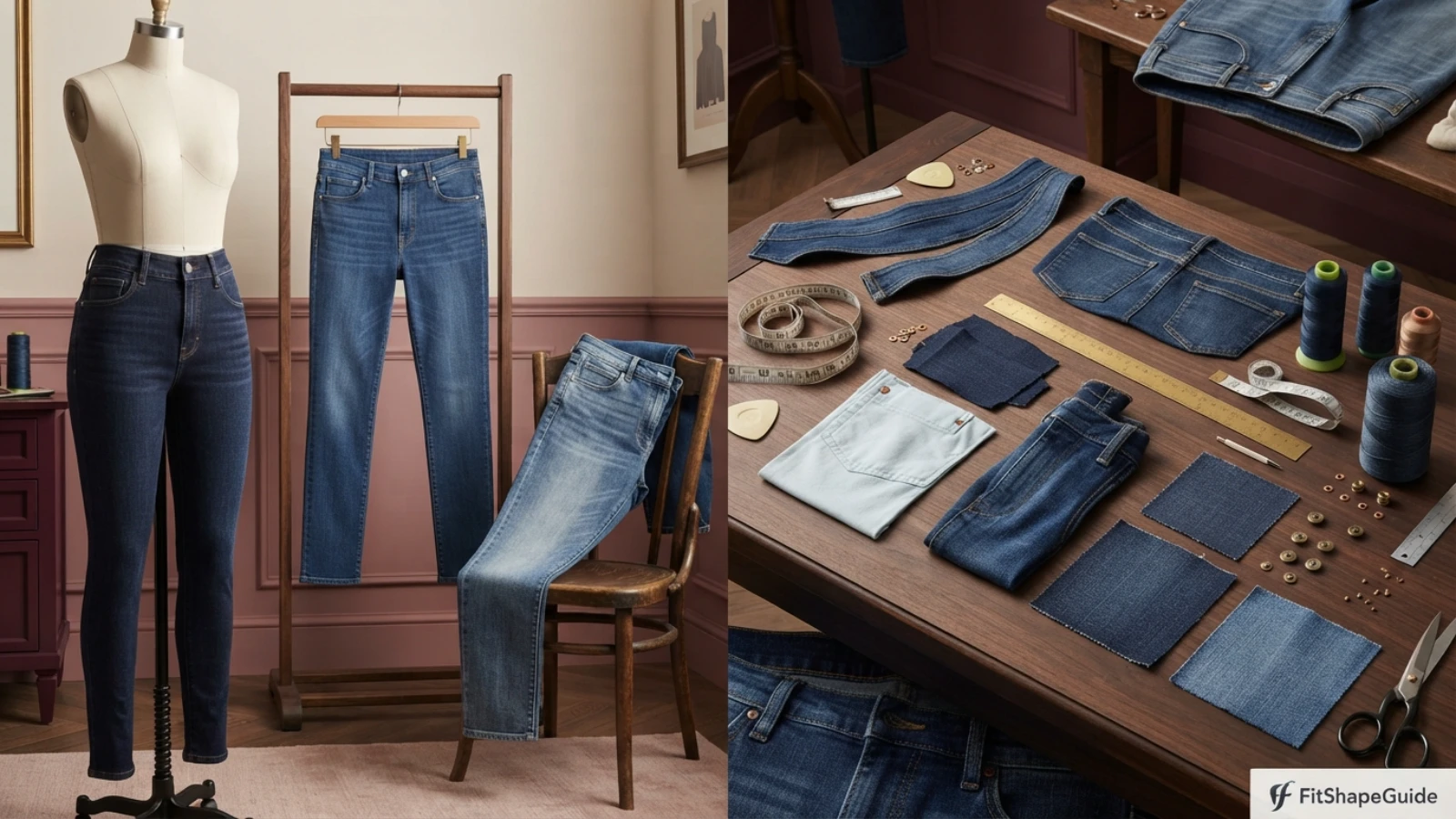
Rise determines where the waistband sits and how it meets the top. High, mid and low are relative brand terms; use the actual front-rise measurement when available. The best rise remains level and comfortable while sitting, breathing and bending. It should not be chosen only because a style rule calls it flattering.
High rise
A high rise can give a tuck a clear endpoint and may stabilize a wide or bootcut leg. For a shorter torso or fuller bust, the waistband may sit close to the bra band when seated. Test full breathing and make sure the top has enough front length to stay tucked without pulling the neckline downward.
Mid rise
Mid rise is often the most flexible for untucked and tucked tops because it leaves more vertical space between waistband and bust. It can work well with shaped tees, shirts and blazers. Confirm back-rise coverage during forward reaching; “mid” does not guarantee the same position across brands.
Low rise
A low rise can suit longer tops and people who dislike pressure on the upper waist. It requires enough back rise and secure coverage during sitting. A long torso or specific style preference may make it practical, but a low waistband should not need a tight belt to remain in place.
Contoured versus straight waistband
A contoured waistband is shaped to follow a difference between waist and hip, while a straight band has less curvature. If the back gaps while the hip fits, a contoured band or a small waist alteration may help. If the band digs at the top edge, more circumference, different rise or softer construction may be needed. A gap or pinch is a pattern issue, not a body flaw.
Button fly, zipper fly and pull-on styles
A zipper fly creates a familiar flat front when correctly sewn. A button fly distributes closure points but adds bulk and takes longer to manage. Pull-on denim can feel comfortable yet needs enough waistband recovery to stay level. Inspect whether the closure lies flat beneath the planned tuck or top hem.
| Waist or rise signal | Likely construction issue | Try next | Avoid |
|---|---|---|---|
| Back waistband gaps | Waist-to-hip curve exceeds waistband shape | Contoured band, curve cut or waist alteration | Sizing down if hip and thigh already fit |
| Top edge digs when seated | Rise, band stiffness or circumference conflicts | Different rise, softer band or more waist room | Assuming stretch will permanently solve it |
| Front waistband rolls | Band width, stiffness or rise is incompatible | Broader stable band or alternative rise | A tighter belt over a rolling band |
| Zipper area pulls open | Insufficient front, hip or rise room | More ease or different front-rise shape | Covering tension with a long top |
| Waist relaxes after one hour | Fabric growth or weak recovery | Different denim, size or waistband construction | Buying painfully tight for expected stretch |
| Back drops when reaching | Back rise is too short or seat room is limited | Longer back rise or different seat cut | Relying on an overtight belt |
Denim weight, stretch and recovery
Denim is commonly a cotton or cotton-blend twill, but jeans vary widely in weight, yarn, stretch direction, finishing and garment wash. A fiber percentage cannot predict fit by itself. Two jeans containing the same amount of elastane can recover differently because fabric construction, yarn and finishing differ.
Rigid and low-stretch denim
Rigid or mostly cotton denim holds a defined leg shape and may soften with wear. It normally requires more pattern ease at waist, hip, seat and thigh because it contributes less stretch. Straight, relaxed and wide-leg cuts often use this structure well. Sit, climb a step and bend the knee before committing.
Comfort stretch
Comfort-stretch denim gives limited movement while retaining a traditional appearance. It can help a straight or bootcut jean move through a seated day. The goal is enough give without continuous growth. After wearing for ten minutes, check whether the waistband, knees and seat return when you stand.
High-stretch denim
High stretch supports close cuts and can feel easy initially, but recovery is critical. If the fabric grows faster than the waistband or seams, the jean can sag at the seat, knees or upper thigh. A high stretch percentage is not inherently better for a fuller bust outfit; it is simply one performance choice.
One-way and multi-directional stretch
Some denim stretches mainly across the width, while other fabrics offer stretch in more than one direction. Marketing terms vary. Test the actual garment at the knee, rise and waistband rather than assuming four-way movement. More directions of stretch do not replace correct rise or seat shaping.
Shape retention
Gently extend the waistband and knee, release, and inspect recovery. Repeat after sitting; one quick pull in a store is not enough.
Opacity and thickness
Check the seat, pocket bags and thighs in bright light. Stretch can expose pocket outlines even when standing fabric looks substantial.
Surface and abrasion
Inspect whiskered, sanded and distressed areas. Heavy finishing may look intentional but can change hand feel and long-term wear.
Temperature
Dense, heavy denim can feel warm through a long seated day. Choose weight for climate and use, not only for perceived durability.
Heat and laundering can affect stretch denim, so follow the care label rather than applying one washing rule to every pair. If a jean depends on elastane for close fit, hot drying may be especially incompatible with the manufacturer’s instructions. Verify whether the product permits tumble drying before using heat.
Pockets, yokes, seams and wash placement
Pocket size and position affect function first. Back pockets should hold the intended items without pulling the yoke or sitting partly under the waistband. Front pockets should be deep enough to use and shaped so their openings do not flare. Decorative claims about “lifting” or “slimming” are less useful than checking whether the pockets lie flat and remain accessible.
Back pockets
Large pockets distribute stitching over more area and may feel visually quieter; small high pockets create a different detail. Neither is universally best. Check symmetry, reinforcement at corners and whether a phone changes the seat fit. A pocket placed too close to the side seam can rotate visually when the jean is tight.
Front pockets and coin pocket
Curved front openings can flare if hip ease is insufficient or the pocket bag is bulky. Slash-style openings on denim trousers may be more sensitive to tension. Place your hand inside and sit. If the pocket stays open after the hand is removed, try a different cut rather than sewing useful pockets shut before fit is solved.
Back yoke
The yoke is the shaped panel between waistband and back pockets. Its angle helps create seat shaping. If it digs, wrinkles sharply or pulls the waistband downward, the rise or seat shape may be incompatible. A different yoke and back-rise combination can fit better even at the same labeled size.
Side seams and inseams
Side seams should remain near the side unless deliberately twisted by design. A seam rotating forward can signal insufficient front width; rotation backward can have other pattern causes. Inseam twist around the calf may come from fabric or construction and is not always removable by sizing.
Wash and fading
Dark, even denim is easy to dress up, but medium and light washes can also create polished outfits when distressing and finishing fit the setting. Strong thigh fading, whiskers and contrast stitching create focal detail. Choose them because you enjoy the effect, not because a wash supposedly changes the body. Check for dye-transfer warnings and protect light bags, shoes and seating until care instructions have been followed.
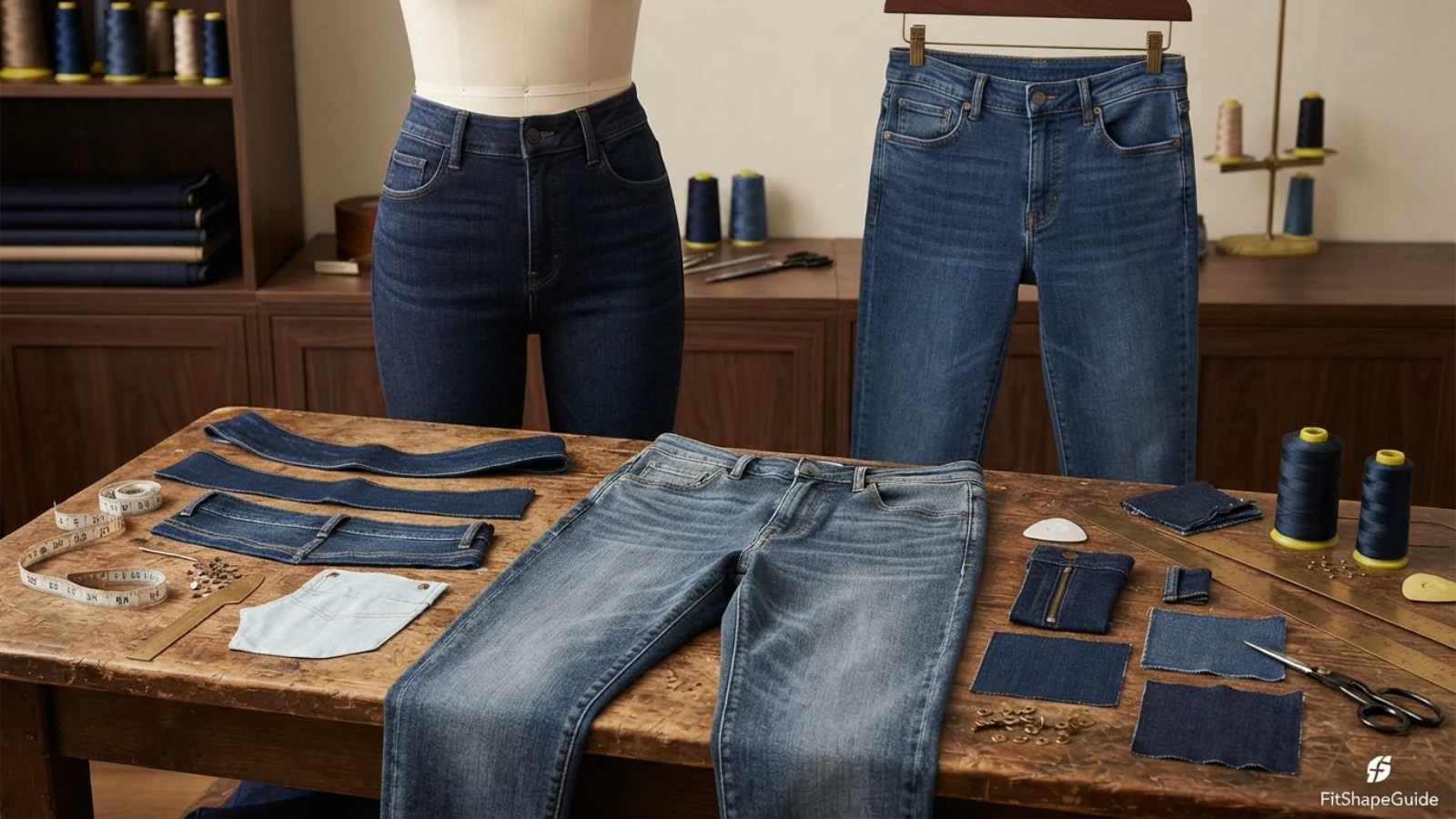
Pair jeans with fuller-bust tops and jackets
Jeans and tops interact at the waistband. The rise determines whether a shirt can tuck without pulling, whether a sweater ends cleanly and whether a blazer overlaps belt loops or pockets. Test every intended top with the jeans rather than choosing the denim in isolation.
Straight jeans + shaped V-neck top
This is the most flexible formula. A shaped knit, shell or blouse provides bust room and a secure neckline, while the straight leg gives a neutral base. Add an open blazer for work or a cardigan for casual days. Use the large-bust tops guide to compare darts, panels and necklines.
Bootcut jeans + no-gape shirt
A clean bootcut supports a shirt that is tucked, softly bloused or left at hip length. The placket needs enough bust room, and the hem should not bunch at the top of the flare. A pointed or almond-toe boot can fit beneath the opening when the inseam is coordinated.
Wide-leg jeans + fine-gauge knit
A fine knit adds less bulk beneath a high or mid-rise waistband. Use a full tuck only when front length and seated comfort remain secure. A shorter shaped top can preserve the waistband without exposing skin. Avoid assuming that the top must be tight; defined seams or a controlled hem can provide structure.
Slim-straight jeans + longline blazer
The compact leg leaves space for a longer jacket or blouse. Check that the jacket clears the front pockets and does not catch on the waistband. The blazer shoulders and button stance still need fuller-bust-compatible construction; see the work blazer guide.
Tapered jeans + popover
A popover avoids a full center placket and can end around the high hip. Pair it with a tapered jean that has enough seat and thigh room. If both top and jean add volume near the waist, use a clean hem or partial tuck rather than packing fabric into the front pockets.
Flare jeans + mock or split-neck knit
A simple upper layer keeps the flare as the main shape. A mock neck works in cold weather, while a split neck adds airflow. For more alternatives that layer cleanly, use the office turtleneck-alternatives guide.
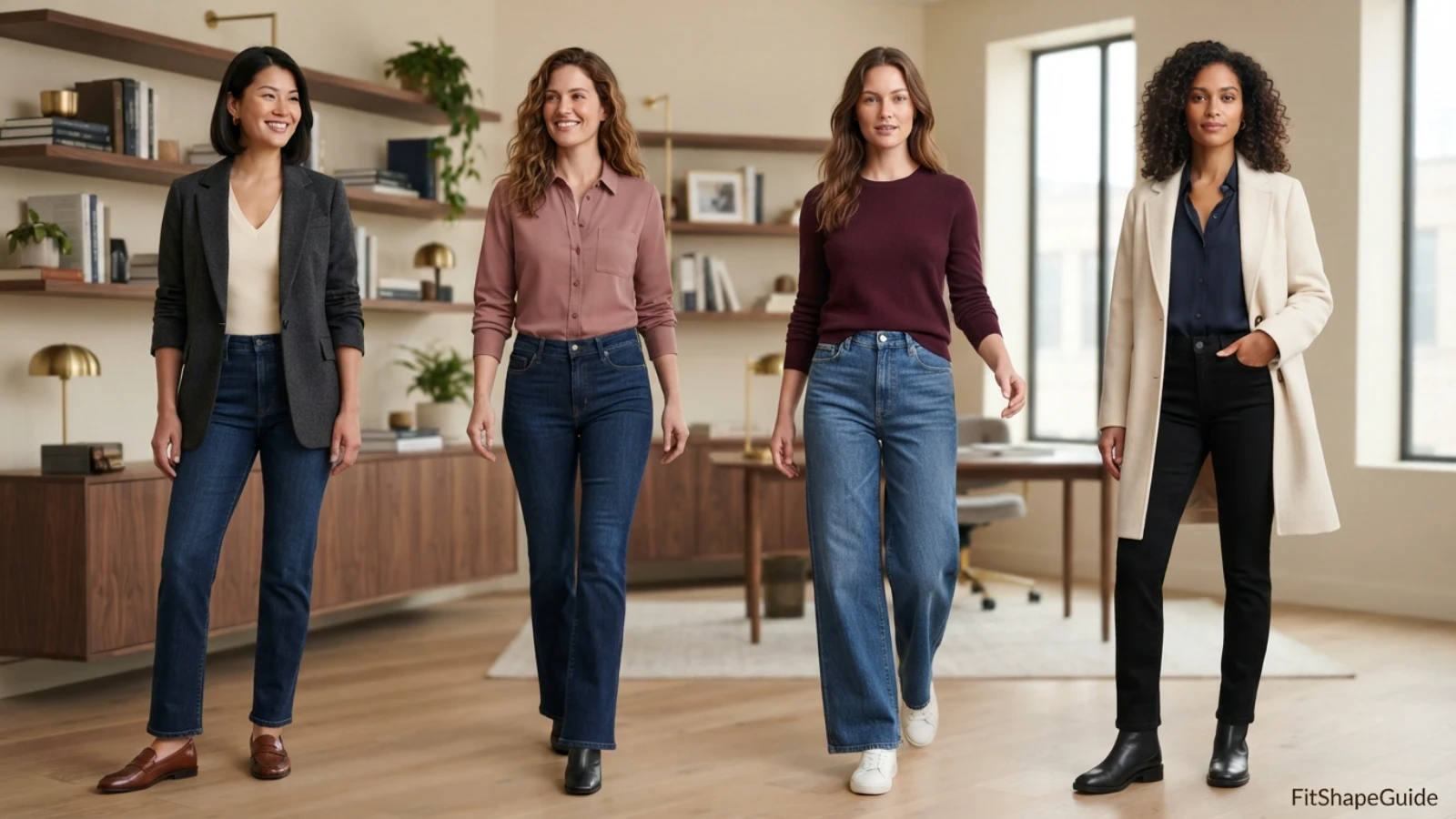
For office-compatible denim, adapt the same formulas through the business-casual outfit guide. Workplace dress codes vary, so confirm whether clean dark denim, visible rivets, fading or raw hems are permitted.
Movement tests and alterations worth considering
Try jeans at the time of day and with the underlayers you expect to wear. Fasten them without lying down, holding the breath or using a waistband tool. A firm new jean may soften, but pain, numbness, pinching or restricted breathing is not an acceptable break-in plan.
- Sit for five minutes: note band pressure, zipper position, pocket flare and back coverage.
- Climb a step: the thigh and knee should flex without pulling the waistband downward.
- Squat partially: check seat room, back rise and whether the top remains positioned.
- Walk quickly: look for inseam twist, thigh friction and hem interference.
- Load pockets lightly: use the phone or keys you actually carry and repeat the walk.
- Add a belt only if desired: jeans should not depend on painful belt tension to fit.
Hemming
Hemming is often the highest-value alteration. Bring the intended shoes and ask the tailor to preserve the designed leg shape. Original-hem techniques can retain factory fading, but the best method depends on the denim and desired finish. Wide, bootcut and flare hems need enough clearance for walking and weather.
Waist adjustment
A tailor may reduce a back-waist gap when the hip, seat, rise and pockets already fit. The amount and method depend on waistband, yoke, belt loops and topstitching. Major changes can shift pockets or side seams, so compare alteration cost with another cut.
Tapering or widening
Leg tapering can refine a good pair, but seam allowance, wash and original stitching limit the result. Widening is usually more restricted because fabric must already exist inside seams. Buy the intended leg shape when possible instead of planning a total reconstruction.
When alteration is not enough
A too-short rise, incompatible yoke, severe inseam twist or insufficient pocket placement is often better solved by a different pattern. Tailoring should refine a fundamentally compatible pair, not force a jean to become another model.
Online shopping, capsule planning and denim care
Measure a pair that works. Record waistband laid flat, front rise, back rise, hip, thigh, knee, inseam and leg opening. Note whether the denim is rigid, low stretch or high stretch. Compare garment measurements from the same measuring method; body charts cannot reveal actual jean ease.
- Verify the exact fit: straight, bootcut and wide-leg names cover many cuts, so inspect measurements and images.
- Read fiber content: note cotton, polyester, cellulosic fibers and elastane without assuming one blend guarantees recovery.
- Check rise and inseam: petite, regular and tall labels vary; use actual numbers and planned shoes.
- Inspect construction: waistband, closure, pockets, yoke, seams, belt loops, hem and distressing.
- Read care before wearing: wash and dry requirements affect whether the pair suits your routine.
- Confirm returns: keep tags and packaging until the seated and outfit tests are complete.
Build a three-pair capsule
Begin with a straight jean in a clean wash. Add a bootcut or subtle flare when shoe and jacket variety matter, or a wide leg when movement and contemporary volume are priorities. The third pair can be slim-straight for longer tops or relaxed denim for casual days. Each pair should work with at least three existing tops and one jacket.
The same jeans can move between casual and office-adjacent outfits when the workplace allows denim. A secure shaped top, clean blazer and polished shoe increase structure; a tee, hoodie or relaxed knit lowers formality. Use the work-pants and top pairing guide to translate rise, tuck and layer rules beyond denim.
Care without one universal rule
Follow the sewn-in care label for washing temperature, detergent, drying and ironing. Turn jeans inside out if directed, close fastenings and wash with compatible colors. Indigo may transfer, especially when new. Avoid automatically using high heat on stretch denim; manufacturer instructions control because fiber blends and finishing differ.
Wash frequency depends on soil, odor, activity, skin needs and maker guidance. Spot cleaning can reduce full washes when appropriate, but stains and hygiene still need proper care. Air jeans fully before storage. Fold or hang them in a way that does not create a permanent waistband crease.
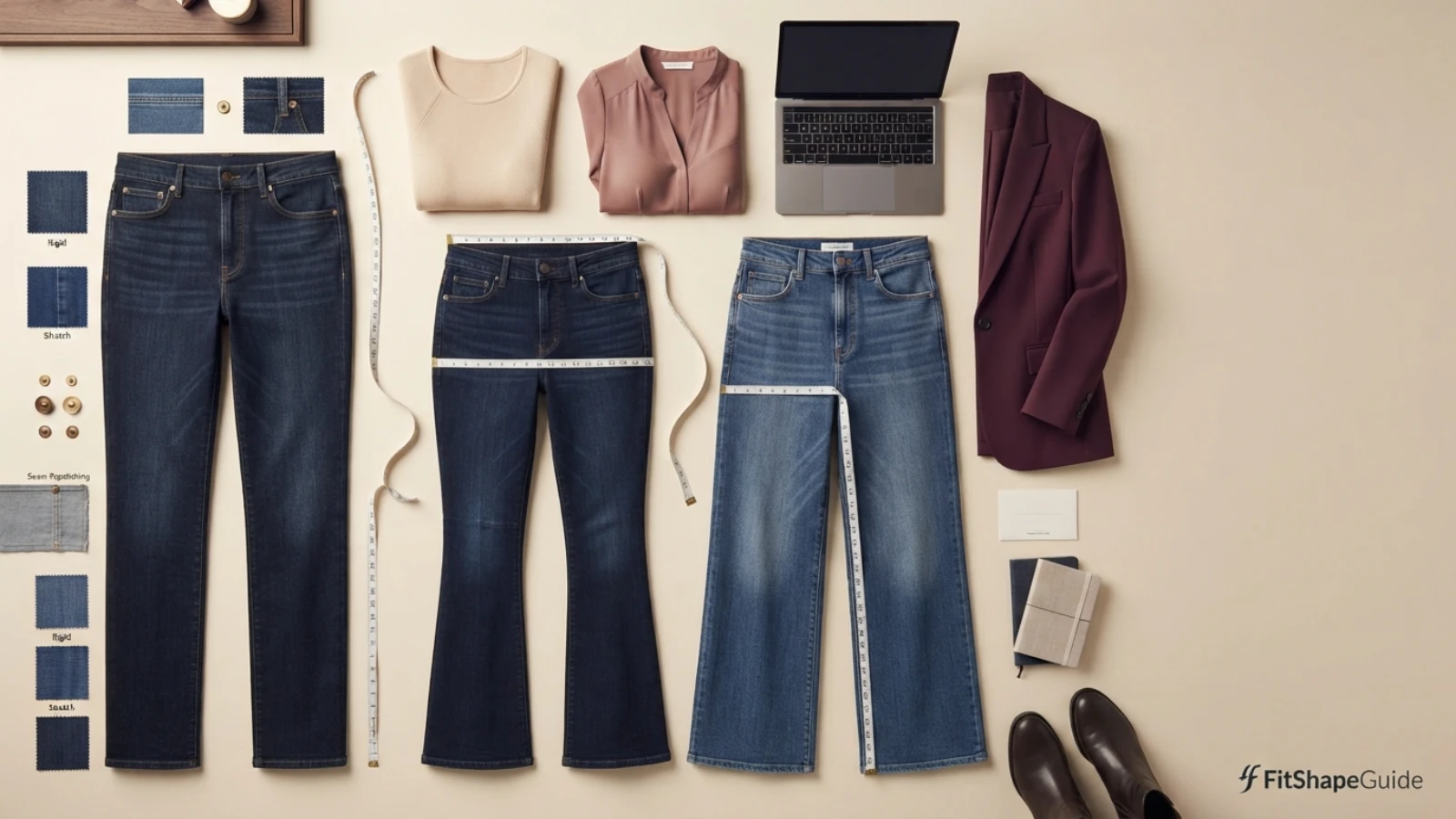
For a broader planning system covering meetings, commute and dress codes, use the large-bust office-dressing guide.
Common jeans problems and better responses
| Problem | Likely cause | Construction-first response | Avoid |
|---|---|---|---|
| Waist gaps but hips fit | Waistband curve does not match waist-to-hip difference | Contoured waistband, curve cut or alteration | Sizing down into hip tension |
| Pockets flare | Hip tension, opening angle or bulky pocket bags | More ease or different pocket construction | Sewing pockets closed before solving fit |
| Knees bag quickly | Weak recovery, high stretch or incompatible size | Different denim structure or more suitable cut | Buying painfully tight for anticipated growth |
| Front whiskers pull sharply | Rise, hip or thigh tension | Different rise, more room or alternate pattern | Assuming all whiskering is decorative |
| Back waistband drops seated | Back rise or seat room is insufficient | Longer back rise or different yoke and seat | Extreme belt tension |
| Wide-leg outfit feels shapeless | Top, jacket and jean all add unstructured volume | Shaped top, controlled hem or shorter layer | Blaming the body or sizing down everywhere |
| Bootcut hem drags | Inseam and shoe height do not match | Hem for the primary shoe or choose a crop | Permanent folding through wet weather |
| Dark denim transfers dye | Indigo or finish releases color | Follow care warnings and protect light surfaces | Assuming colorfastness before testing |
The top pulls downward after sitting
The waistband may be catching a short top or a tight tuck. Try more front length, another rise or an untucked shaped hem. Do not use tighter jeans to keep the shirt in place; both garments should fit independently.
The jeans feel good standing but hurt at a desk
Seated posture changes waist, hip and rise demands. Test another rise, waistband stiffness or size. A pair intended for long sitting must permit full breathing without unfastening.
One size up fixes the waist but ruins the seat
The issue may be pattern shape rather than size. Try a curvier waistband, different yoke, another rise or a brand with garment measurements closer to the working pair. Alteration can help when the rest of the jean is compatible.
The blazer catches on the waistband
Large belt loops, thick topstitching or a short jacket hem may collide. Test a longer or shorter blazer, smoother waistband or open styling. Do not remove functional belt loops until the jeans are definitely kept.
Final verdict
The best jeans to balance a large bust are the pair that coordinates garment structure without treating the body as a problem. Straight-leg jeans are the most versatile. Bootcut and subtle flares add hem width; wide legs provide movement and volume; slim-straight jeans support longer tops; and tapered or relaxed cuts suit casual outfits.
Choose rise, waistband, seat and thigh fit before styling. Then test denim recovery, pockets, top length, tuck, jacket and shoe together while sitting and walking. A successful pair stays comfortable, keeps its intended shape and works with several secure fuller-bust tops without constant adjustment.
Frequently asked questions
What jeans are best to balance a large bust?
Straight-leg jeans are the most versatile, while bootcut, flare and wide-leg jeans add progressively more width below the waist when that suits the intended outfit.
Are wide-leg jeans good for a large bust?
Yes. Pair them with a shaped top, controlled tuck or shorter jacket, and verify that the heavy denim and high rise remain comfortable when seated.
Do bootcut jeans work with a fuller bust?
Yes. The modestly wider hem works well with secure shirts, shaped knits and hip-length jackets, provided the inseam matches the planned shoes.
What rise is best with a large bust?
No rise is universally best. Choose the position that stays level and comfortable and leaves enough space between the waistband, top neckline and bra band.
Should jeans be tight when first purchased?
They may feel firm, but they should permit breathing, sitting and walking without pain. Do not rely on uncertain future stretching to correct a poor fit.
How much stretch should jeans have?
Choose stretch for the preferred cut and movement, then test recovery. Fiber percentages alone cannot predict whether the waistband, knees and seat will hold shape.
What tops work best with wide-leg jeans?
Shaped knits, secure shells, fitted shirts and controlled-tuck blouses keep the waistband clear without requiring the top to be uncomfortably tight.
How should I test jeans with a fuller-bust outfit?
Wear the intended bra, top, jacket and shoes, then sit, breathe, reach, walk and use the pockets while checking neckline, tuck, waistband, rise and hem.
Editorial and verification standards
This guide uses “balance” to describe interaction between jeans, tops, jackets and shoes—not a need to visually correct a fuller bust. Fit principles prioritize rise, waistband, seat, thigh, pockets, leg opening, inseam, denim recovery and movement. General denim terminology was checked against the Levi’s denim dictionary, which defines denim as a cotton or cotton-blend twill textile, and the official Levi’s fit guide for distinctions among straight, bootcut and slimmer fits. These are construction references, not product endorsements.
Stretch and recovery are treated separately because a jean can extend but fail to return. Denim performance guidance was checked against CottonWorks guidance on stretch-denim shrinkage and heat sensitivity. Care remains product-specific; the sewn-in label overrides generic washing advice.
Before publishing a product module, verify the direct seller, exact style and variant, garment measurements, rise, waistband, seat, thigh, leg opening, inseam, fiber content, stretch direction, wash, care, current availability and returns. Affiliate relationships should be disclosed clearly and close to recommendations under the FTC endorsement guidance. No product ranking appears until those details can be checked.
“Best” means suitable for an individual’s dimensions, preferred rise, movement, climate, dress code, top wardrobe, footwear and care routine. Every leg shape includes a trade-off, and no wash or silhouette is presented as a universal body solution.