Church Outfit Guide for a Large Bust
Six construction-first outfit systems for worship, community and service—built around the specific congregation, secure necklines, real bust projection, sitting, standing, volunteering, weather and personal faith expression.
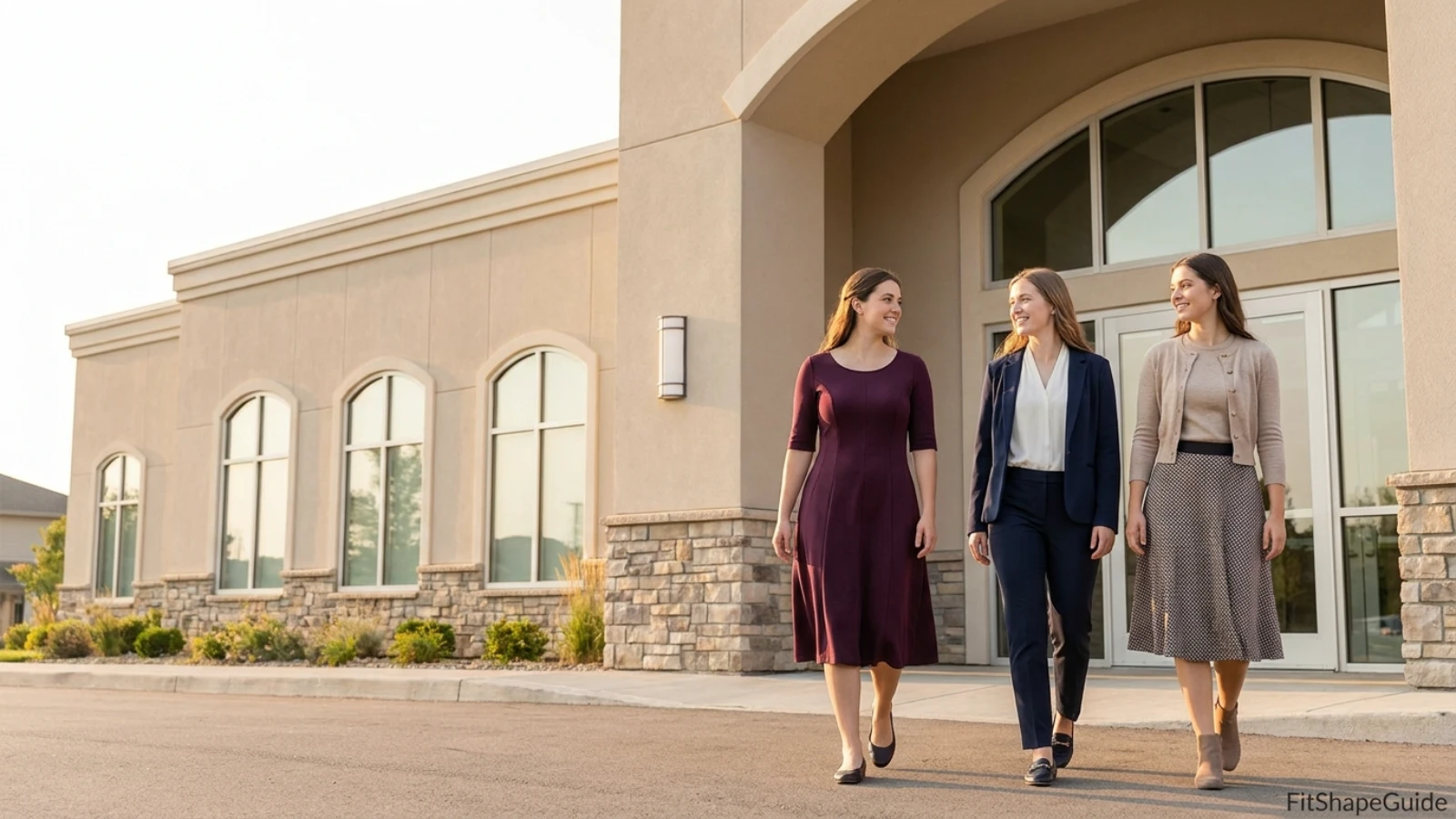
The 10-minute worship-service test
- Confirm the specific church, congregation, event and role before deciding formality or coverage.
- Wear the exact bra, underlayers, hosiery or socks and shoes planned for the service.
- Sit at pew or chair height for five minutes, stand, sit again and take full breaths.
- Raise both arms, hold a book or program, self-hug and reach as the planned role requires.
- Add the cardigan, blazer or coat and check that the base neckline stays in place.
- Walk, use steps and test opacity, hem movement, pockets and shoe grip in daylight.
The outfit should return to position without repeated neckline, strap, waistband or hem correction. Comfort is not disrespectful; it allows the wearer to participate without clothing becoming the main task.
How to use this church outfit guide for a large bust
“Church outfit” can describe a casual contemporary service, formal liturgy, rural congregation, cathedral visit, Bible study, choir rehearsal, volunteering shift, baptism, wedding, funeral or holiday service. These settings do not share one dress code. Even churches in the same denomination or city can differ, so the congregation’s own guidance is stronger evidence than a general list of modesty rules.
Official visitor guidance illustrates that range. Some churches explicitly welcome ordinary or casual clothing; others say members commonly wear smarter clothes, dresses or skirts while still welcoming visitors in comfortable attire. The useful lesson is not to choose one example as universal. Read the local website, look for an event invitation and contact the church if a role or ceremony has specific requirements.
For a first visit with no guidance, neat, comfortable smart-casual clothing is a low-risk starting point in many congregations. A shaped knit with trousers, a midi dress or a blouse with a skirt can be adjusted with a cardigan or blazer. However, “low-risk” is not a command: jeans, cultural dress, religious garments or more formal clothing may be entirely normal in that community.
Modesty must not become body-shaming. The same neckline can appear different on different bust projections, but a body is not inappropriate. Focus on garment evidence: enough center-front length, stable edges, opaque fabric, secure closures and a bra route that supports the wearer’s preference. Follow explicit congregation or event expectations without implying that a fuller bust must be hidden.
Special events need a separate check. A church wedding may specify guest attire; a funeral follows family and faith context; baptism or confirmation may involve water, robes or coordinated clothing; a choir or ministry may have a uniform. Weekly-service habits do not automatically transfer to these events.
Participation also changes the brief. A visitor who plans to sit quietly needs different pockets and movement from an usher, reader, musician, childcare volunteer or hospitality worker. Build around the real tasks and accessibility needs rather than an imagined still photograph.
| Church context | Reliable starting point | Fuller-bust priority | Main risk to check |
|---|---|---|---|
| Casual weekly service | Shaped knit with jeans or tailored trousers | Front length and easy support route | Assuming casual means poor fit or no polish |
| Smart-casual congregation | Midi dress, skirt outfit or blouse with trousers | Stable neckline and seated comfort | Copying generic modesty rules instead of local norms |
| Formal liturgy / cathedral | Structured midi, lightweight suit or refined separates | Low-maintenance bodice and quiet layers | Under- or overdressing without checking guidance |
| Reader, usher or choir | Role-approved dress or separates with pockets | Arm reach, breathing and long standing | Conflicting with uniform, robe or microphone |
| Community volunteering | Trousers or stable skirt with anchored top | Movement, washability and practical shoes | Fragile fabric or restrictive sleeves |
| Wedding, funeral or special service | Event-specific outfit and requested coverage | Correct formality and all-day support | Using weekly-service assumptions |
Six church outfits for a large bust
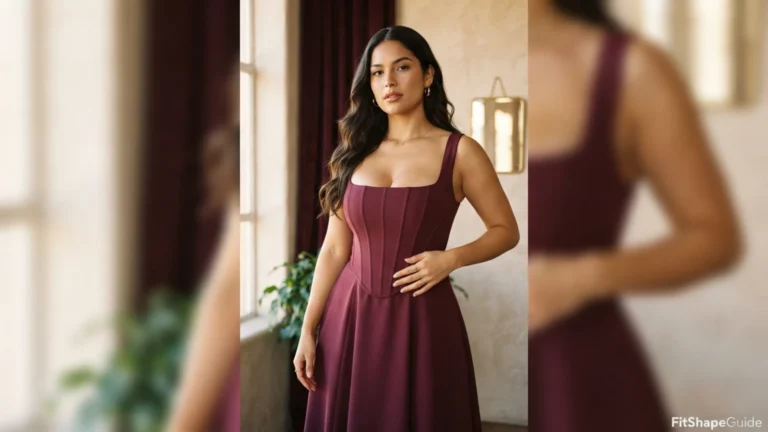
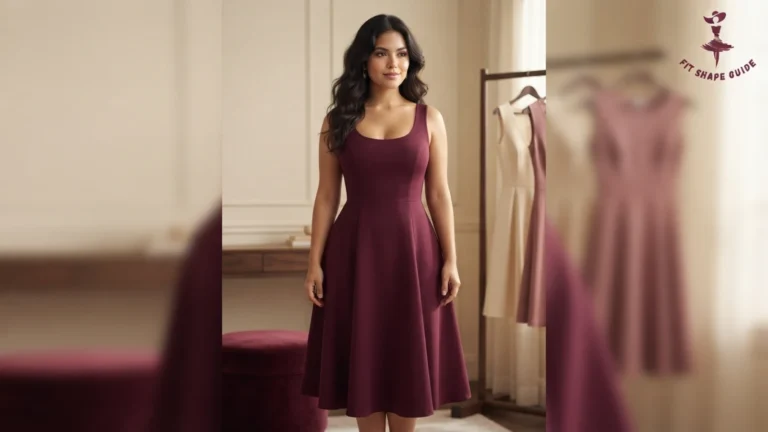
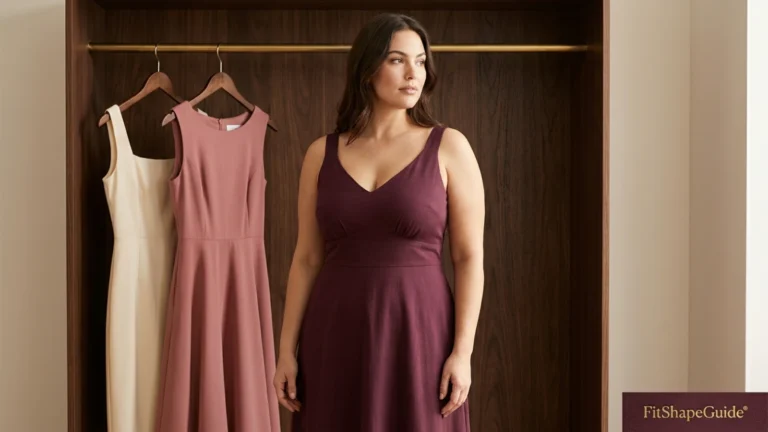
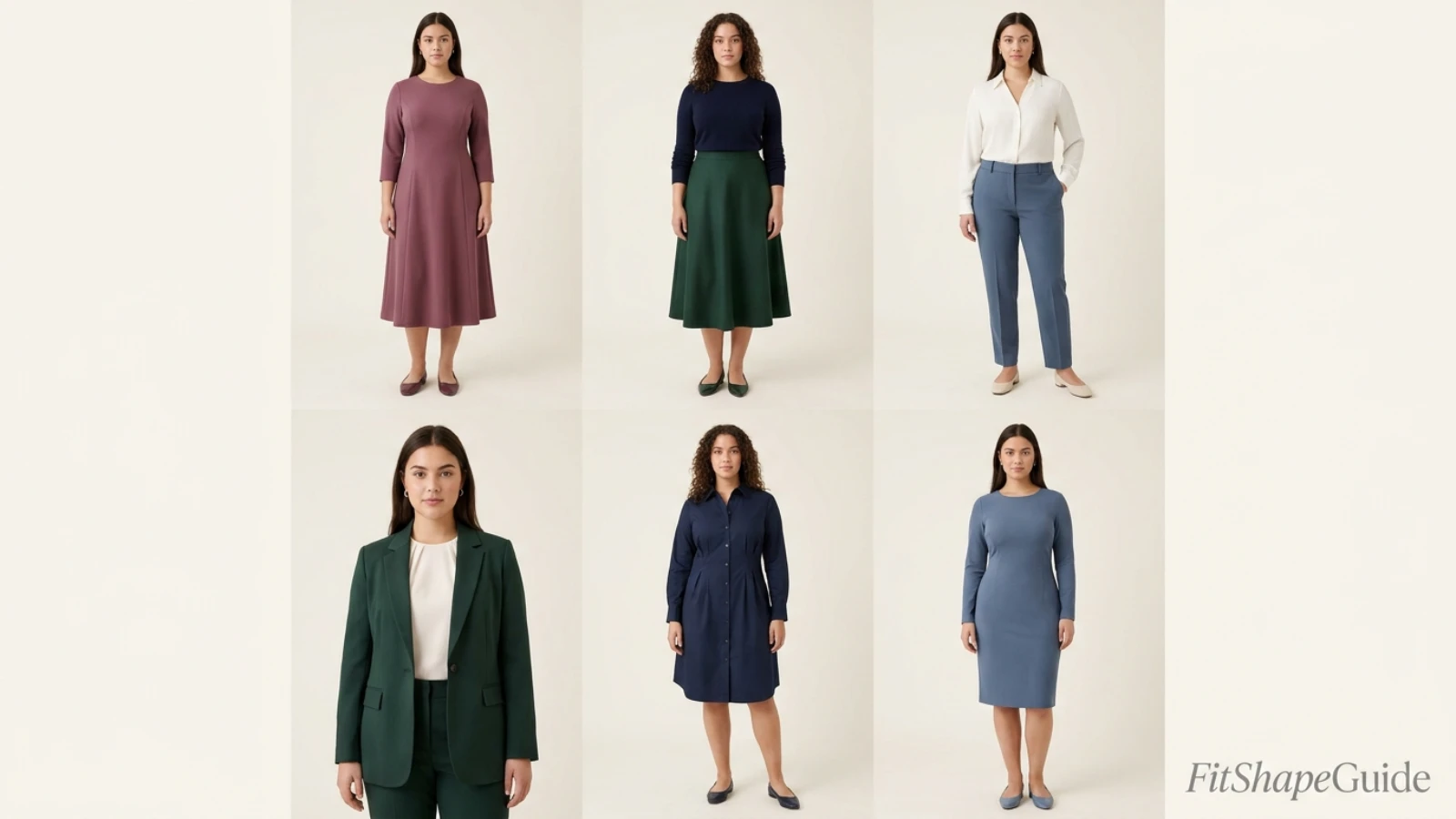
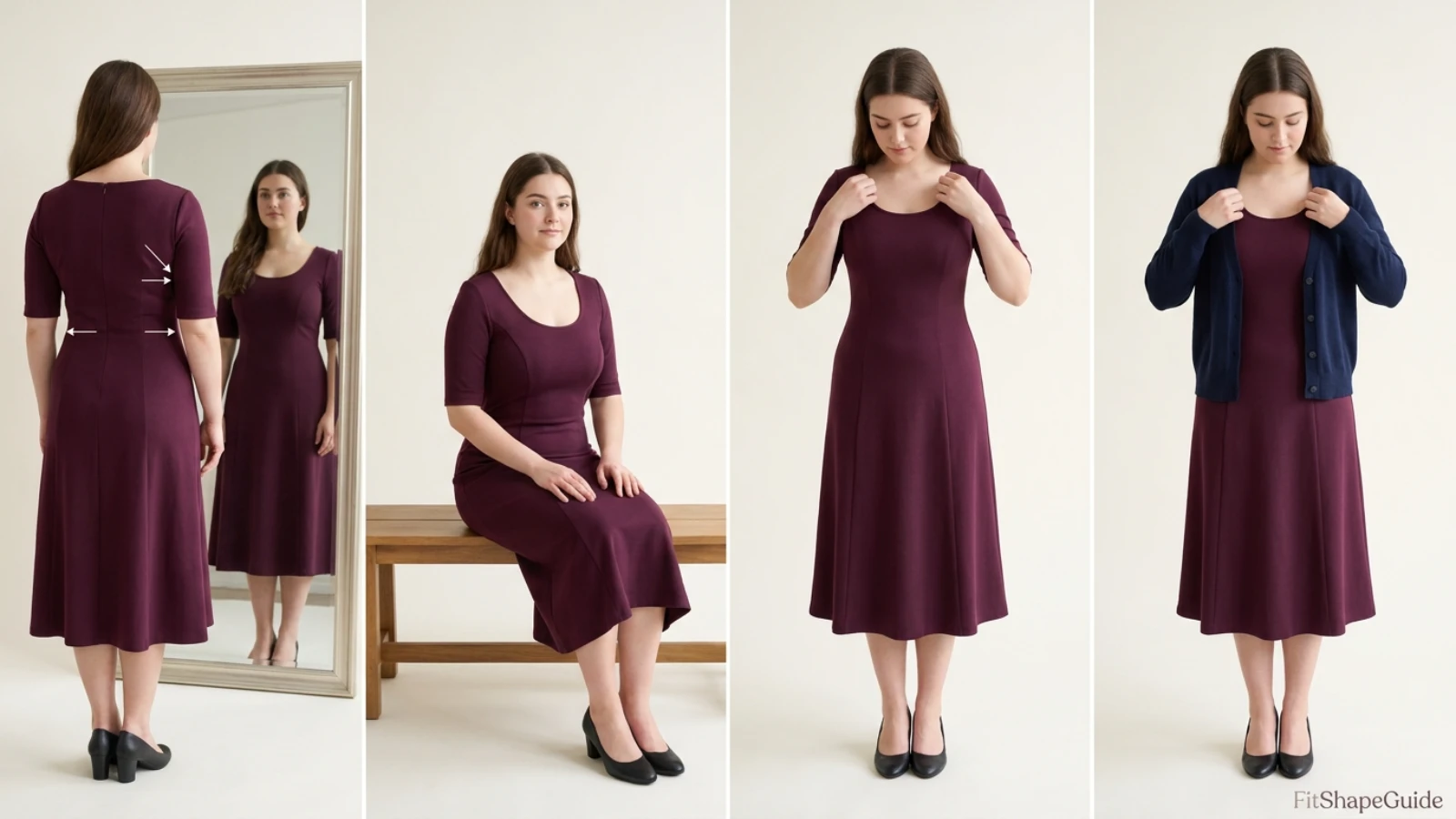
Princess-seam or darted midi dress
Best overall: functional seams can create three-dimensional bust room, keep the waist level and release into a skirt that works for sitting, standing and steps. Elbow, short or long sleeves simplify bra compatibility and layer neatly.
Trade-off: decorative seams may not provide projection. Check the seam apex, front waist and hem after sitting. A narrow skirt or high vent can limit movement; a fully lined dress may feel warm during crowded services.
Fine knit top with an A-line midi skirt
Best flexible formula: a dense scoop, crew or moderate V knit can fit the upper body independently, while an A-line skirt provides stride and pew comfort. A flat waistband and anchored tuck keep the layers calm.
Trade-off: thin ribbing may widen or become sheer over the bust, and heavy elastic can roll while seated. Test recovery, opacity and raised arms. The top should stay tucked without a very tight waistband doing all the work.
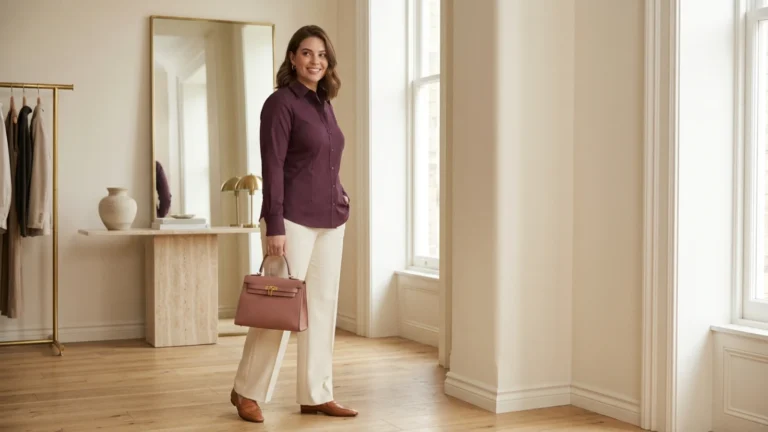
Non-gape blouse with tailored trousers
Best polished separates: a darted, princess-seam or hidden-button blouse provides bust room without excessive body width. Straight, tapered or softly wide-leg trousers work across casual and smart congregations when the rise feels comfortable.
Trade-off: a stiff placket can gap during greeting or reaching, and a high waistband may press the lower ribs. Check placket alignment, shoulder reach, tuck length, pockets and long seated comfort.
Shaped shell with soft blazer
Best adjustable formality: a simple shell with trousers or skirt can be made more formal through a softly structured single-breasted blazer. Removing the blazer supports warm rooms or active volunteering while the base remains complete.
Trade-off: tight shoulders, armholes or chest can pull the shell neckline backward. A blazer may close yet bow at the lapels. Test the self-hug, button stance and seated reach; open styling is not a substitute for missing front depth.
Shaped shirt dress
Best easy weekly uniform: a shirt dress with bust darts or princess seams, a secure placket and an A-line or gently straight skirt can look neat without complicated styling. A self-belt or defined waist offers adjustment when it stays level.
Trade-off: pulling the belt tighter cannot solve a gaping placket or short front bodice. Check button spacing, collar pressure, seated skirt opening and whether the dress remains secure without a jacket.
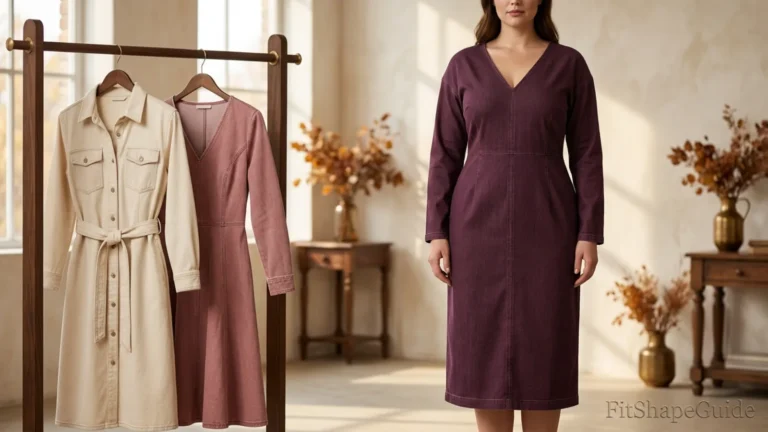
Refined knit or stretch-crepe dress
Best for long services and cool weather: a stable knit or stretch crepe with real shaping can provide movement, warmth and a quiet silhouette. A moderate neckline and long or three-quarter sleeves may fit many smart-casual settings.
Trade-off: stretch does not replace bust depth. Heavy knit may grow, fine knit may cling and tight sleeves may lift the entire bodice. Test recovery, opacity, temperature and arm movement before removing tags.
| Outfit formula | Strongest use | Support route | Decisive test |
|---|---|---|---|
| Shaped midi dress | Weekly service or formal church event | Standard, balconette or plunge by neckline | Level waist and sitting-to-standing recovery |
| Fine knit + A-line skirt | Smart casual and seasonal layering | Smooth everyday bra | Opacity, tuck and waistband comfort |
| Non-gape blouse + trousers | Reading, ushering or polished weekly wear | Standard bra matched to blouse | Placket security and shoulder reach |
| Shell + soft blazer | Adjustable formality and volunteering | Standard bra under shaped shell | Lapel behavior and free arm movement |
| Shaped shirt dress | Repeat weekly uniform | Everyday bra with concealed straps | Button spacing and collar comfort |
| Knit/stretch-crepe dress | Long service or cool weather | Neckline-matched everyday bra | Recovery, sleeve mobility and heat |
Trousers, skirts and dresses are not ranked by spirituality. Use the garments accepted by the congregation and comfortable for the wearer. Cultural and religious clothing, adaptive garments and personal style can be incorporated into any functional framework without being treated as exceptions that need apology.
Neckline, opacity and bra compatibility
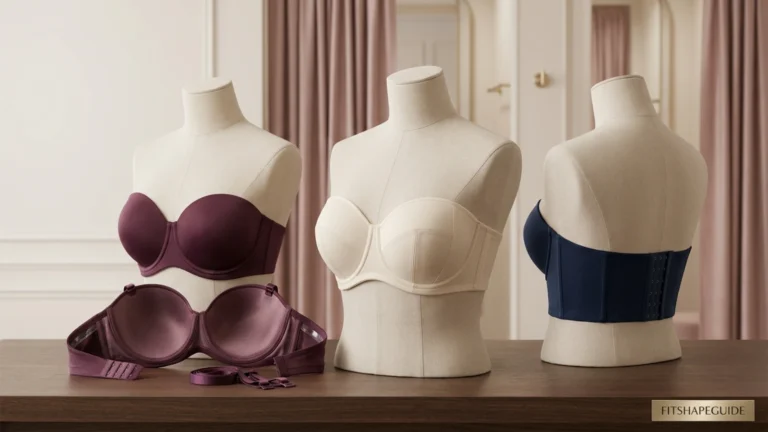
Begin with a bra comfortable enough for the full service, travel and any social time afterward. The band should remain level and snug without digging; cups should contain without cutting in or gaping; straps should stay secure without carrying all the support. Fit the outfit over that exact bra rather than assuming a familiar size will behave the same under every neckline.
There is no one church neckline. Crew, scoop, square, collared and moderate V shapes can all be suitable where the congregation accepts them. The practical requirement is edge stability: the neckline should remain where intended while sitting, standing, leaning for a bag, greeting and reaching. Event-specific coverage instructions still take priority.
Higher necklines are not automatically easier. When a top lacks bust projection or center-front length, the front can ride upward and the collar can press the throat. Pulling the top down repeatedly is a pattern problem, not evidence that the body needs a larger layer.
Darts should point toward the fullest bust area without ending directly on it. Princess seams should curve smoothly around the bust, and the front waist should remain level. Horizontal folds, lifted front hem, swinging side seams or a zipper under strain show that the bodice lacks room.
A button-front blouse needs adequate width, useful shaping and sensible button placement. Hidden bust buttons or snaps can stabilize an already suitable placket. They should not hold panels together under major tension. Test a self-hug, raised arms and the seated position.
Opacity changes in motion. Hold the garment to light, then check it while stretched across the bust and while seated. A camisole can provide coverage when it remains cool and smooth, but it should not rescue severe strain or create a second neckline that constantly shifts.
Built-in cups may not match the wearer’s width, depth or position. If the edge crosses breast tissue or the bodice stands away, choose a different construction. A separate well-fitting bra beneath a shaped dress or top often offers a simpler route.
For office-to-church polish, our large-bust office guide provides useful construction parallels. For placket detail, use the non-gape button-down guide.
Sitting, standing, greeting and ministry roles
Many services alternate sitting and standing, sometimes several times. Test the waistband, skirt and neckline through repeated transitions. A dress or top should settle without being pulled down; trousers should allow a full breath; the bra band should remain level. Narrow pews or closely spaced chairs can also make a bulky coat or large bag awkward.
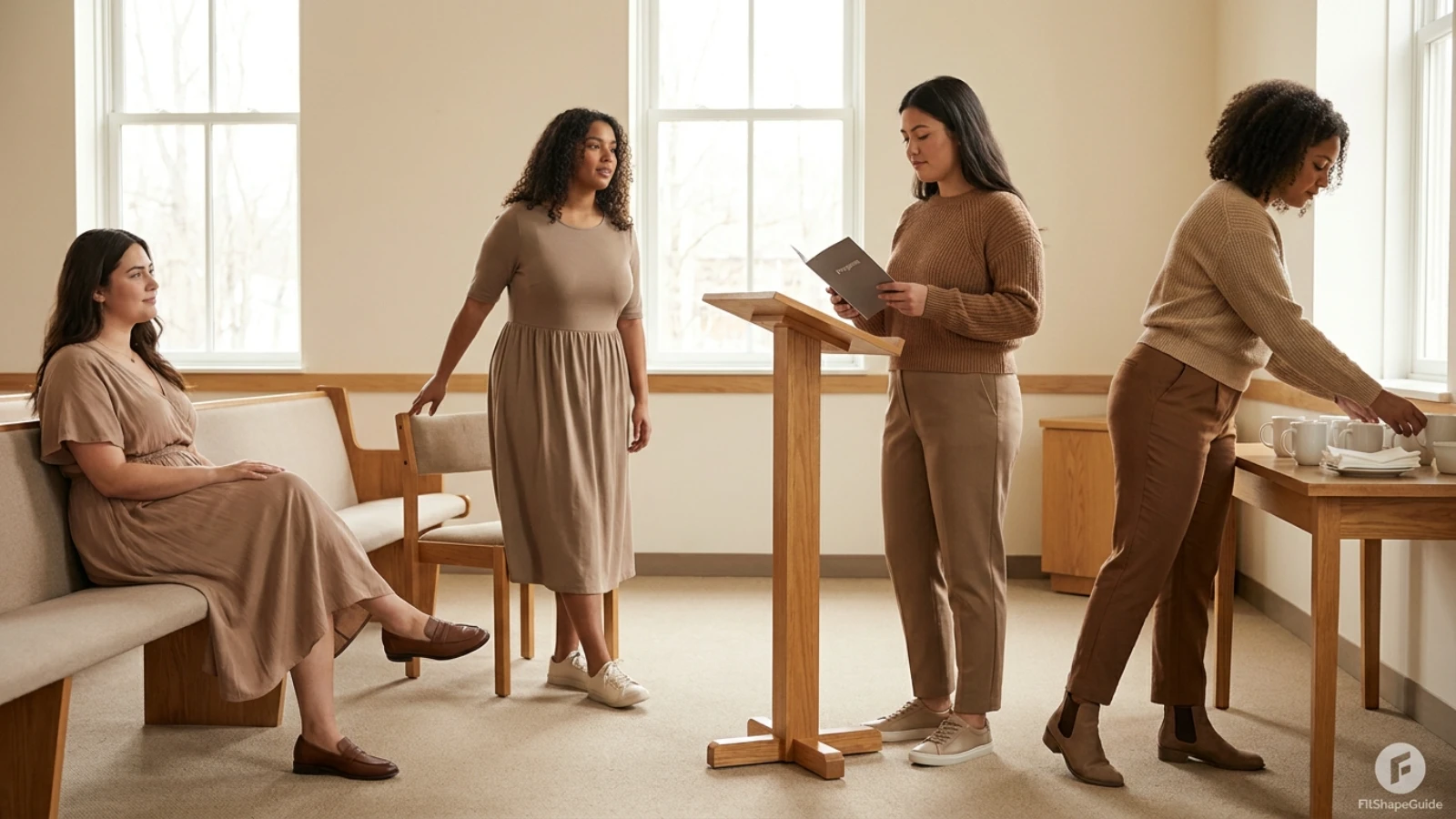
A reader may climb steps, stand at a lectern, hold papers and look downward. Check neckline security in that angle and confirm the sleeves allow the arms to lift. A pocket can hold a note card or tissue, but heavy items should not distort a knit dress or pull one side of a skirt.
Ushers and greeters may stand, turn, reach and move between spaces. A tailored trouser outfit, stable midi or skirt with anchored top can support those tasks. Shoes should handle long standing, and a blazer must permit a full self-hug rather than restricting the upper back.
Choir members or worship musicians should follow the director’s clothing and robe instructions. A choir robe adds warmth and volume; a bulky sleeve, high bow or large collar can interfere beneath it. Test the robe with the base outfit and confirm where microphones, folders or instruments contact clothing.
Childcare, hospitality and community-service roles may involve bending, lifting, food, cleaning or outdoor movement. Use secure necklines, washable fabrics, practical pockets and shoes with grip. A formal dress chosen for sitting may be less suitable than trousers and an anchored knit for active service.
Accessibility and sensory needs belong in the initial plan. Seating aids, mobility devices, braces, medical equipment, head coverings and fabric sensitivities may affect layers, closures and hems. Contact the church about access and role accommodations rather than treating functional clothing as less respectful.
Weather, seasons and removable layers
Church buildings vary from warm crowded rooms to cool stone interiors, strong air conditioning and outdoor gatherings. Check the forecast and venue, then choose a breathable base and removable layer. A cardigan, soft blazer or roomy coat can adjust temperature without requiring the base outfit to be excessively heavy.
For warm weather, use low-bulk woven or stable knit fabric with reliable opacity. Sleeveless clothing may be common in one congregation and unusual in another, so check local norms. A lightweight cardigan or shawl can add optional coverage indoors, but it should stay on the shoulders without constant adjustment.
For cold weather, fine knits, stretch crepe, lined trousers and a closing coat create a practical system. The coat needs enough front depth and shoulder reach. An open coat may look polished but is not a cold-weather solution if it cannot close when needed.
Rain and snow affect shoe grip, hem length and coat care. A long wide-leg trouser or maxi skirt can collect water. Choose a hem that clears the ground and a stable sole. Test umbrellas and bags in the entrance area so they can be stored without blocking others.
Holiday services, candlelight events and outdoor programs may be longer or more crowded than a normal week. Check start time, walking route and seating. Decorative fabrics can be appropriate, but texture should not obscure fit or create noise. Keep embellishment away from underarms, bag straps and any robe.
For jacket construction, compare the best blazer guide. For cardigan closure and knit stability, the cardigan guide for a large bust gives a focused framework.
Shoes, bags, jewelry and head coverings
Shoes should suit the route and role. Flats, loafers, supportive sandals, low block heels, boots or clean dress sneakers may all be appropriate depending on the congregation. Test stairs, polished floors, outdoor paths and long standing. A shoe does not become respectful by being painful.
Choose a bag that fits the seating and necessary items. A large tote can crowd a narrow pew; a crossbody strap can pull a neckline or divide the bodice. A compact shoulder bag or small structured tote may work, but medication, caregiving, study materials and accessibility needs come first.
Jewelry should coexist with the neckline and planned movement. Long pendants can fall into a V or hit a lectern; bracelets can make noise; large earrings can catch scarves. Meaningful faith or cultural items may be central to the outfit. Test them rather than applying a universal minimalist rule.
Head coverings vary widely across traditions and individuals. Follow the wearer’s practice and the church’s guidance. Test scarves, hats or veils with the neckline, collar, outerwear and any microphone or robe. Pins and underscarves should remain comfortable throughout the service.
Fragrance policies and sensory considerations may matter in close seating. Check any local request and keep personal comfort supplies discreet and reachable. The goal is not aesthetic perfection; it is an outfit that supports worship, community and service.
Shopping, capsule planning and alterations
Measure the body in the intended bra and close-fitting clothing. Record full bust, high bust when useful, waist, hip, shoulder-to-waist length, rise and inseam as relevant. Compare with the current chart for the exact garment. “Modest,” “church dress” or “relaxed” is marketing language, not a fit specification.
Look for front, side and back photographs. Darts, princess seams, placket spacing, neckline facing, sleeve head, lining, vents and pockets determine function. Hair, crossed arms and jackets may hide a low back or side pulling. Save the listing because materials and construction can change.
Size up when it restores bust room and front length while shoulders, armholes and waist remain manageable. If a fixed waist seam stays on the bust, generic cups remain too small or the collar still pulls backward, choose another construction rather than continuing to size up.
A tailor can shorten straps, stabilize a neckline, adjust a waist, hem trousers or skirts, add bra keepers and install a modesty snap where enough overlap exists. Creating missing bust projection, moving fixed cups or rebuilding a small armhole is more involved. Request an assessment before the return deadline.
Build a small repeat capsule: one shaped midi, one dependable top, tailored trousers or skirt, a cardigan or blazer and comfortable shoes. Change color, scarf, jewelry or layer across seasons. Repeat wear can reduce decision pressure and often provides better value than a special “church outfit” with one difficult bra route.
For skirt shapes and waistbands, use the best skirts guide. For trouser-rise and top combinations, see the work pants and top pairings guide.
| Shopping checkpoint | Evidence to confirm | Warning sign | Best response |
|---|---|---|---|
| Church context | Congregation, event and role guidance checked | Applying one denomination’s norms universally | Use local visitor page or ask organizer |
| Bust shaping | Seams align and front waist stays level | Pulling, raised hem or side-seam swing | More projection, front length or another pattern |
| Neckline and bra | Edges, cups and straps stay secure in motion | Gape, spill, slide or throat pressure | Different neckline/bra or minor alteration if close |
| Sitting and standing | Full breath, stable waistband and easy transitions | Rolling waist or garment needing rearrangement | More ease, recovery or different rise |
| Layer and role | Free arm reach, manageable heat and useful pockets | Blazer pulls top or robe crowds neckline | Roomier, softer or lower-bulk layer |
| Care and value | Label, returns and alteration cost understood | Final sale or impractical specialist care | Choose a repeatable capsule garment |
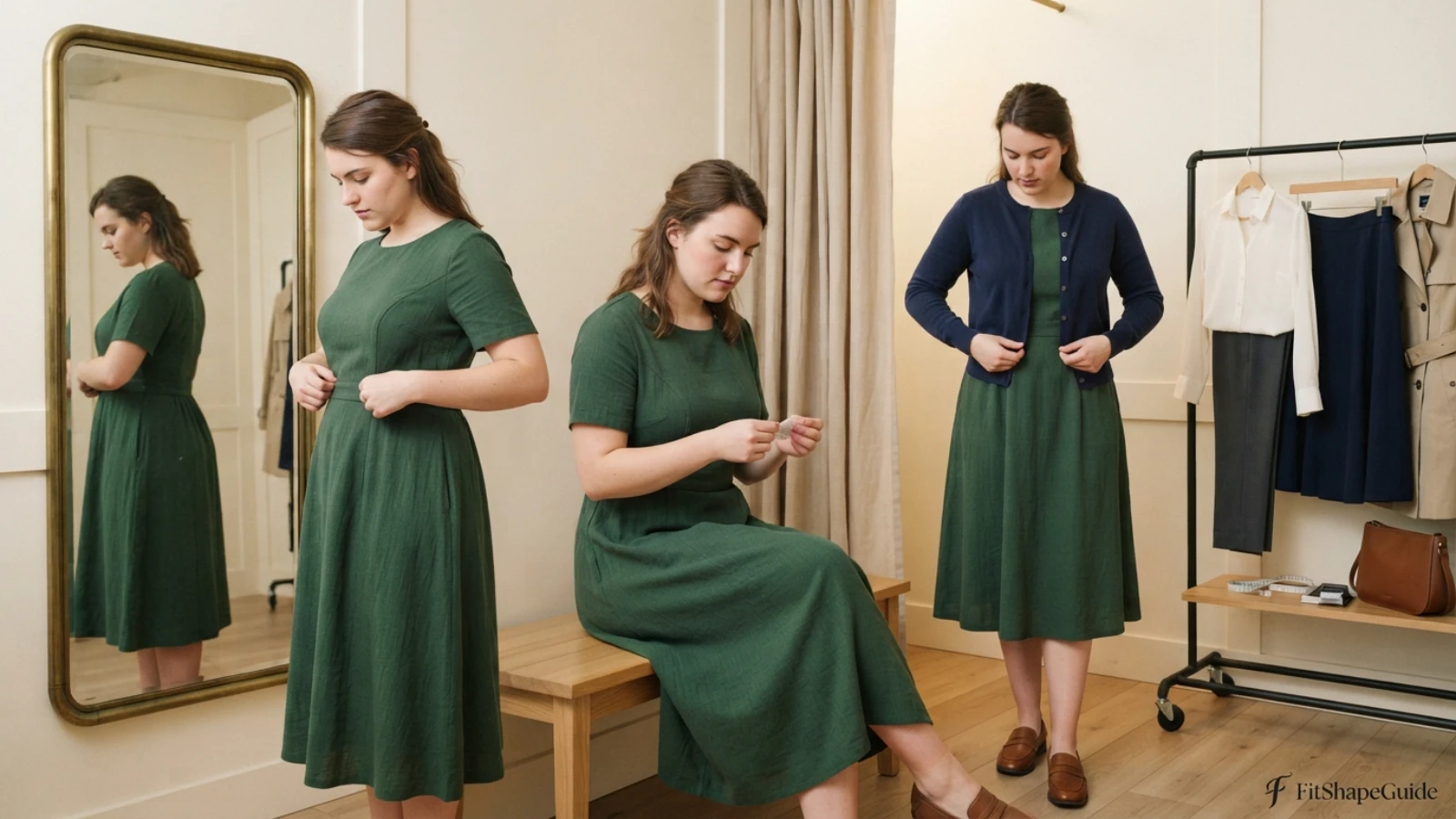
Before removing tags, wear the exact bra, shoes, bag and layer. Sit at service height, stand repeatedly, reach, walk and check opacity in daylight. The garment should support the actual worship experience rather than only a product photograph.
Common church outfit problems and fixes
The neckline opens when sitting in the pew
Sitting changes torso angle. Check neckline-edge length, bust depth and bra shape. A small alteration can stabilize a close fit; broad gaping needs a different bodice rather than more tape or an obligatory scarf.
The collar presses the throat after standing
The garment may lack center-front length and ride backward over the bust. Look for more projection, deeper darts or a different collar pattern. Pulling the top forward repeatedly is not a lasting fix.
The blouse gaps while greeting or volunteering
Shoulder reach increases placket tension. Check bust ease, armhole mobility, button spacing and hidden closures. A snap can stabilize adequate room; it cannot hold a strained shirt together.
The cardigan edges spread far apart over the bust
The cardigan may lack front width, shaping or a suitable closure. Wearing it open is valid when intentional, but it should not be the only way to avoid distortion. Try more front room, a waterfall edge or a softer closure layout.
The skirt waistband rolls during the service
The band may be too narrow, tight or soft for the seated torso. A wider contoured waistband, smoother closure, different rise or more ease may be more stable. Test pew-height sitting before alterations.
The blazer lifts the dress neckline
The jacket is likely tight at the chest, shoulder, armhole or upper back. Test the dress alone, then layered. Choose more front depth and shoulder reach so the base stays in position.
The knit dress becomes longer by the end
Garment weight and weak recovery can cause growth. Test the dress hanging and after sitting before removing tags. A denser knit, lighter pockets or stable stretch-crepe may hold its shape better.
I do not know what the congregation expects
Check the church’s visitor page or social photos for broad context, then contact the office or person who invited you. A neat familiar outfit is usually better than buying a restrictive garment based on an uncertain rule.
Let the congregation guide the context and the garment support you
Start with a shaped midi for broad versatility, a fine knit and A-line skirt for flexible sizing, a non-gape blouse and trousers for polished movement, a shell and blazer for adjustable formality, a shirt dress for repeat wear or a refined knit dress for long services.
No neckline, skirt or trouser is universally more faithful. Check the church and event, then choose real bust room, a secure bra route, comfortable sitting, useful layers and safe shoes. The strongest outfit leaves attention available for worship, community and service.
Frequently asked questions
What church outfit works well for a large bust?
A princess-seam or darted midi with a stable neckline, bra-friendly sleeves and an easy-moving skirt is a versatile option. A fine knit with an A-line skirt or a non-gape blouse with tailored trousers can work equally well.
Is there a universal dress code for church?
No. Dress norms vary by denomination, congregation, culture, country, service and event. Check the church’s visitor guidance or invitation and ask the organizer when a role, ceremony or coverage expectation is unclear.
What neckline is appropriate for church with a large bust?
A secure crew, scoop, square, collared or moderate V neckline can all be appropriate when the garment has enough front length and suits the congregation. Follow specific church or event guidance without treating body shape as inappropriate.
Can I wear trousers or jeans to church?
Yes in many congregations, while others commonly dress more formally. Choose neat trousers or jeans with a shaped top when local norms allow them, and check special-service or ministry-role requirements separately.
How do I stop a church blouse from gaping?
Look for adequate bust room, darts or princess seams, sensible button spacing and a hidden bust closure. A minor snap can stabilize a close fit, but it cannot create missing fabric. Test greeting, reaching and sitting.
What bra should I wear under a church outfit?
Use a well-fitting full-cup, balconette, plunge, demi or other comfortable bra that matches the neckline and straps. The band should stay level, the cups should contain smoothly and the complete combination should pass sitting and movement tests.
How should I dress for volunteering or reading at church?
Follow any role-specific uniform, then prioritize secure necklines, free arm movement, useful pockets and supportive shoes. Test steps, standing, looking down, carrying materials and any choir robe, microphone or apron.
Should I size up in a church dress for a large bust?
Size up when it restores bust room and front length while shoulders, armholes, waist and back remain manageable. If fixed cups or waist seams stay misplaced, choose another construction rather than continuing to size up.
Related FitShapeGuide guides
Editorial and verification standards
This guide evaluates congregation and service context, bust shaping, neckline stability, bra compatibility, opacity, sitting and standing, ministry roles, weather, layers, footwear, care and alterations. The range of visitor dress guidance was checked against current official United Methodist Church, Church of England and Church of Jesus Christ of Latter-day Saints visitor resources. Their differences support the central rule: use the specific local church rather than universal assumptions.
Bra-fit principles were checked against Bravissimo’s current fitting guidance, and garment-care statements were checked against current Federal Trade Commission care-label guidance. No outbound source link appears in the visible article.
FitShapeGuide does not invent product names, ASINs, prices, ratings, review counts, sellers, materials, stock or performance. Before an Amazon module is published, verify the direct live listing, seller, size chart, garment measurements, fiber content, care, returns and image rights; place a clear affiliate disclosure near recommendations.
“Best” means the most suitable verified outfit for an individual body, support preference, church, event, culture, climate and role—not a promise that one church outfit works for everyone.