
Best Convertible Bras for a Large Bust
A construction-first guide to multiway bras that can switch between straight straps, crossback, halter, one-shoulder and strapless configurations—without assuming every mode provides exactly the same support.
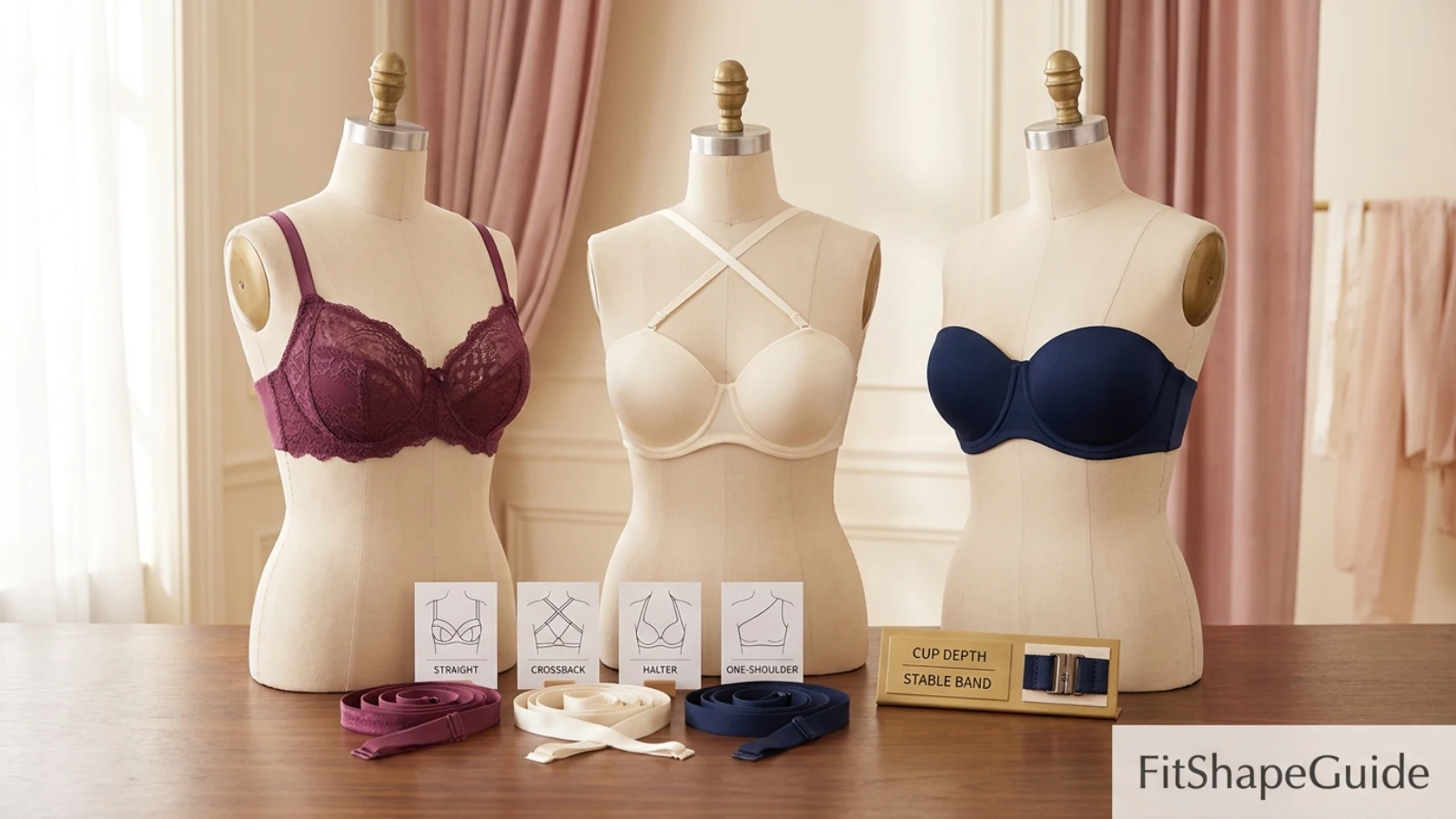
The 90-second convertible-bra test
- Fit the bra first in its standard supported configuration.
- Check that cups fully contain the bust.
- Check that the back band remains level.
- Change to the mode you actually plan to wear.
- Readjust strap length for that specific configuration.
- Raise both arms.
- Turn your shoulders and sit down.
- Check the bra beneath the actual top or dress.
- Repeat for every mode you intend to use.
How convertible bras work for a large bust
A convertible or multiway bra uses removable or repositionable straps so the bra can work beneath more than one neckline or shoulder design.
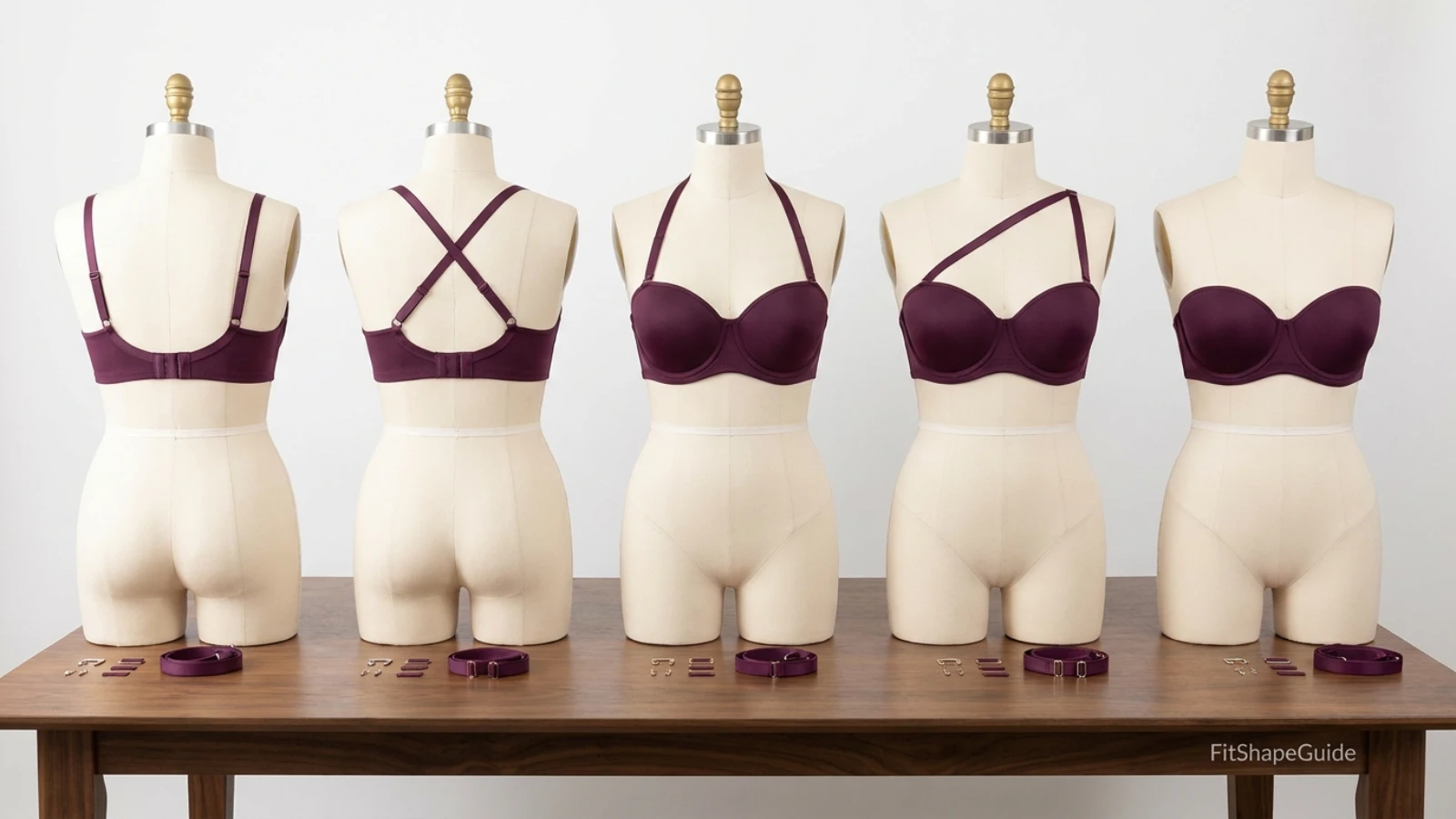
Depending on the specific construction, the straps may attach at several points along the front cup and rear band. That can allow straight straps, crossback, halter, one-shoulder or asymmetric configurations.
Some convertible bras are built on a genuine strapless frame. Those bras are engineered to remain supported through their cups and band even after both straps are removed. Others simply use detachable straps for crossback or halter styling but still rely on shoulder straps for normal support.
That difference is critical for a fuller bust.
If strapless wear matters, evaluate the bra specifically as a strapless bra. Do not assume that “detachable straps” automatically means “designed to be worn without straps.”
| Mode | What changes | Main support concern | Best test |
|---|---|---|---|
| Straight | Standard strap route | Band + cup fit | Everyday movement |
| Crossback | Straps cross behind shoulders | Extra strap-path length | Shoulder/neck comfort |
| Halter | Strap routes around neck | Neck pressure | Long-wear comfort |
| One shoulder | Asymmetric strap path | Uneven tension | Left/right stability |
| Strapless | No shoulder support | Band/cup anchoring | Arm raise + seated test |
| Wide-set straps | Front attachments moved outward | Shoulder slipping | Garment neckline test |
| Closer-set straps | Attachments moved inward | Neck proximity | Shoulder rotation |
| Asymmetric fashion route | Non-matching left/right setup | Uneven cup lift | Front + side mirror test |
Best convertible bra styles for a large bust
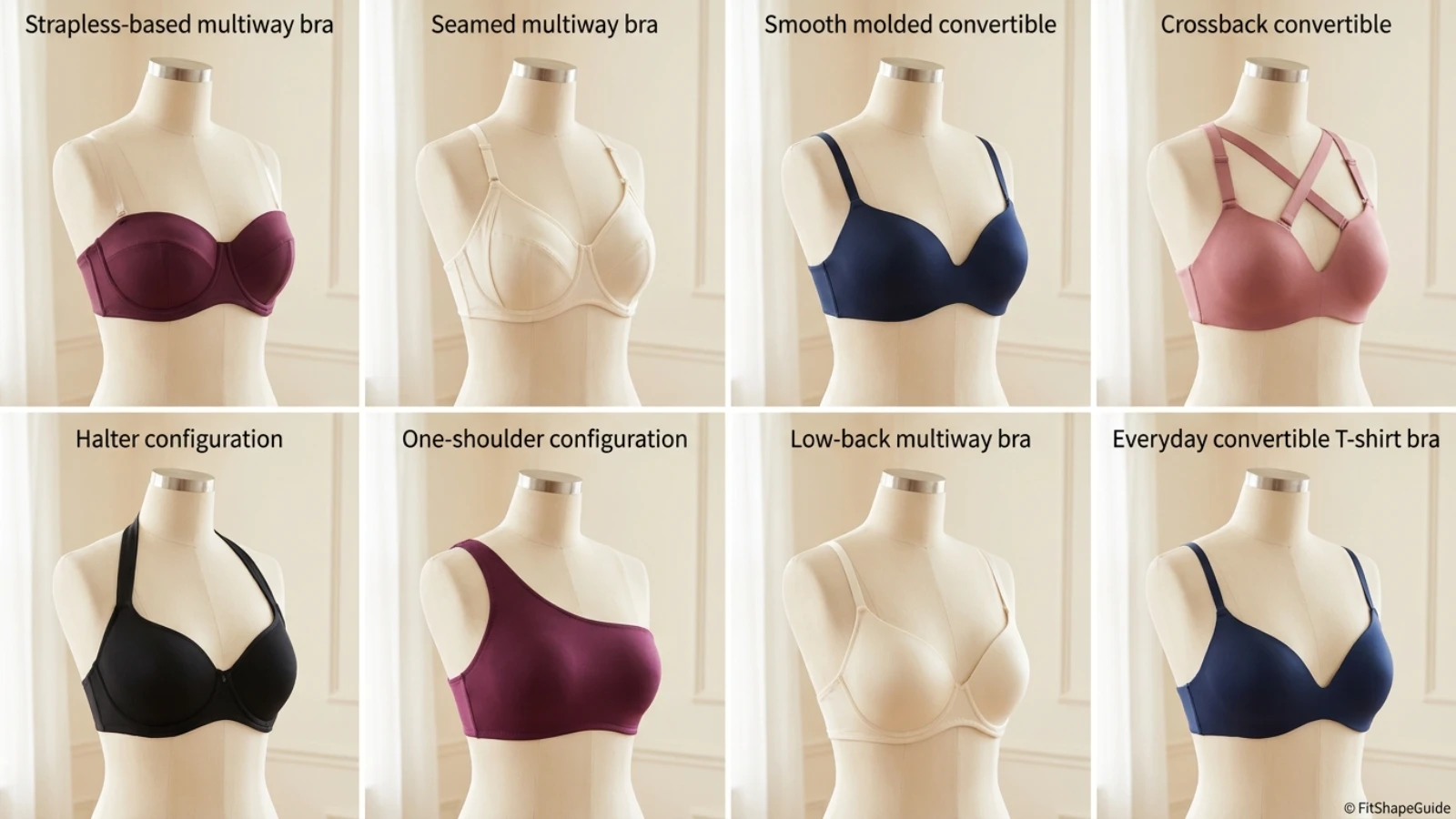
Strapless-based multiway bra
A strong strapless frame with detachable straps provides the broadest wardrobe flexibility because the band and cups are engineered to support the bust even without shoulder straps.
Best for: formalwear and multiple neckline types.
Seamed multiway bra
Seamed cups can create more shaping and projection while detachable straps allow different routes.
Best for: fuller busts that prefer structured cup shaping.
Smooth molded convertible bra
A molded cup creates a cleaner surface beneath fitted dresses and tops while detachable straps adjust for shoulder coverage.
Best for: smooth occasionwear.
Crossback convertible bra
Detachable rear straps can cross behind the body to stay hidden beneath cut-in or racerback-style clothing.
Best for: sleeveless tops and inward-cut shoulders.
Halter convertible bra
A longer strap can connect across the front cup attachment points and route around the neck.
Best for: halter dresses when neck pressure remains comfortable.
One-shoulder multiway bra
A long strap can sometimes connect diagonally or around one shoulder according to the manufacturer’s approved setup.
Best for: asymmetric formal necklines.
Low-back multiway bra
Some specialized convertible frames combine a lower rear band with detachable straps for formalwear that exposes more of the back.
Best for: dresses requiring both strap flexibility and lower back coverage.
Convertible T-shirt bra
A smooth everyday bra may offer straight and crossback strap settings without being designed for true strapless wear.
Best for: everyday wardrobe versatility.
Start with the base frame
Convertibility can make strap design look like the main feature, but for a fuller bust the base bra matters more.
Stable underband
The band should remain approximately level around the torso and provide meaningful support before you experiment with different strap routes.
Structured cups
Seamed cups, molded foam, internal slings or other supportive cup architecture can keep breast tissue contained as strap tension changes.
Strong side wings
Substantial wings stabilize the cup frame and help distribute band tension.
Strapless engineering when required
If the bra is intended for strapless use, look for a frame explicitly engineered for that mode. Current fuller-bust multiway ranges use features such as structured cups, supportive bands, inner slings and non-slip elements rather than relying on detachable straps alone.
Do not size down for security
A tighter band or smaller cup is not a substitute for proper strapless construction. Use the correct size and assess the frame itself.
Straight-strap mode
Straight straps are usually the simplest configuration and provide the best baseline for evaluating overall fit.
Check the band first
If the bra is unstable in straight mode, changing the strap route is unlikely to solve the underlying fit problem.
Set individual strap lengths
Left and right straps do not need identical adjuster positions. Fit each side independently.
Check cup placement
The upper cup should remain smooth, and the straps should not need extreme tension to pull the cups into position.
Crossback mode
Crossing straps at the back can keep them hidden under inward-cut tops and can reduce slipping from the outer shoulders.
Lengthen the straps first
A crossed route travels farther than a straight path. If you reconnect the straps without adding length, shoulder and neck pressure can increase quickly.
Check rear attachment points
Only connect straps to positions approved for the specific bra. Improvised attachment can twist the wing or create uneven pull.
Check the upper cup
Crossback routing can pull the upper cup slightly inward. Make sure the neckline edge does not start cutting into breast tissue.
Test shoulder rotation
Reach forward and rotate both shoulders. A crossback that feels secure in a static pose can become uncomfortable when the shoulder blades move.
Halter mode for a large bust
Halter mode routes one or more straps around the back of the neck instead of over separate shoulders.
The band still needs to anchor the bra
A fuller bust should not be suspended primarily from the neck. The band and cups need to do most of the structural work.
Use enough strap length
The halter strap should be long enough that it does not pull sharply downward on the neck.
Check strap width
A broader halter strap can spread pressure over more area, although correct base-bra fit remains more important.
Test for longer than a minute
Neck pressure can develop gradually. Wear the bra with the actual dress for a meaningful period before an event.
Strapless may be better
If the halter configuration creates neck discomfort but the bra has a strong strapless base, wearing it without the halter strap may be preferable if the garment allows.
One-shoulder convertible bra setups
One-shoulder clothing creates an unusual support problem because one shoulder needs to remain visually clear while the other can hide a strap.
Follow manufacturer-approved routing
Some multiway bras allow one long strap to connect diagonally between different cup and rear attachment points. Others are not engineered for this mode.
Check asymmetric cup lift
One side may receive more strap tension than the other. Compare the top edges of both cups from the front.
Keep the band level
The diagonal pull should not twist the entire bra frame around the torso.
Use strapless mode if cleaner
A strong strapless foundation can sometimes work better beneath a one-shoulder dress than a complicated diagonal strap setup.
Strapless mode for a large bust
For many multiway bras, strapless is the most demanding configuration because shoulder straps no longer contribute to cup positioning.
The band carries more responsibility
A strong strapless foundation should stay stable without being painfully tight.
Cups need structure
Current fuller-bust multiway bras use molded or seamed cups, inner slings and strong band structures to preserve shape without shoulder straps.
Non-slip details can help
Some strapless designs use silicone or other grippy elements along the band. If you have skin sensitivity, verify the exact materials before purchase.
Arm-raise test
Raise both arms, reach forward and sit. The bra should not noticeably slide downward or require repeated pulling up.
Do not assume detachable equals strapless
Some convertible everyday bras allow straps to cross or reposition but are not intended to be worn with both straps removed.
For a dedicated deeper guide, see Best Strapless Bras for a Large Bust .
Match the convertible bra to the outfit
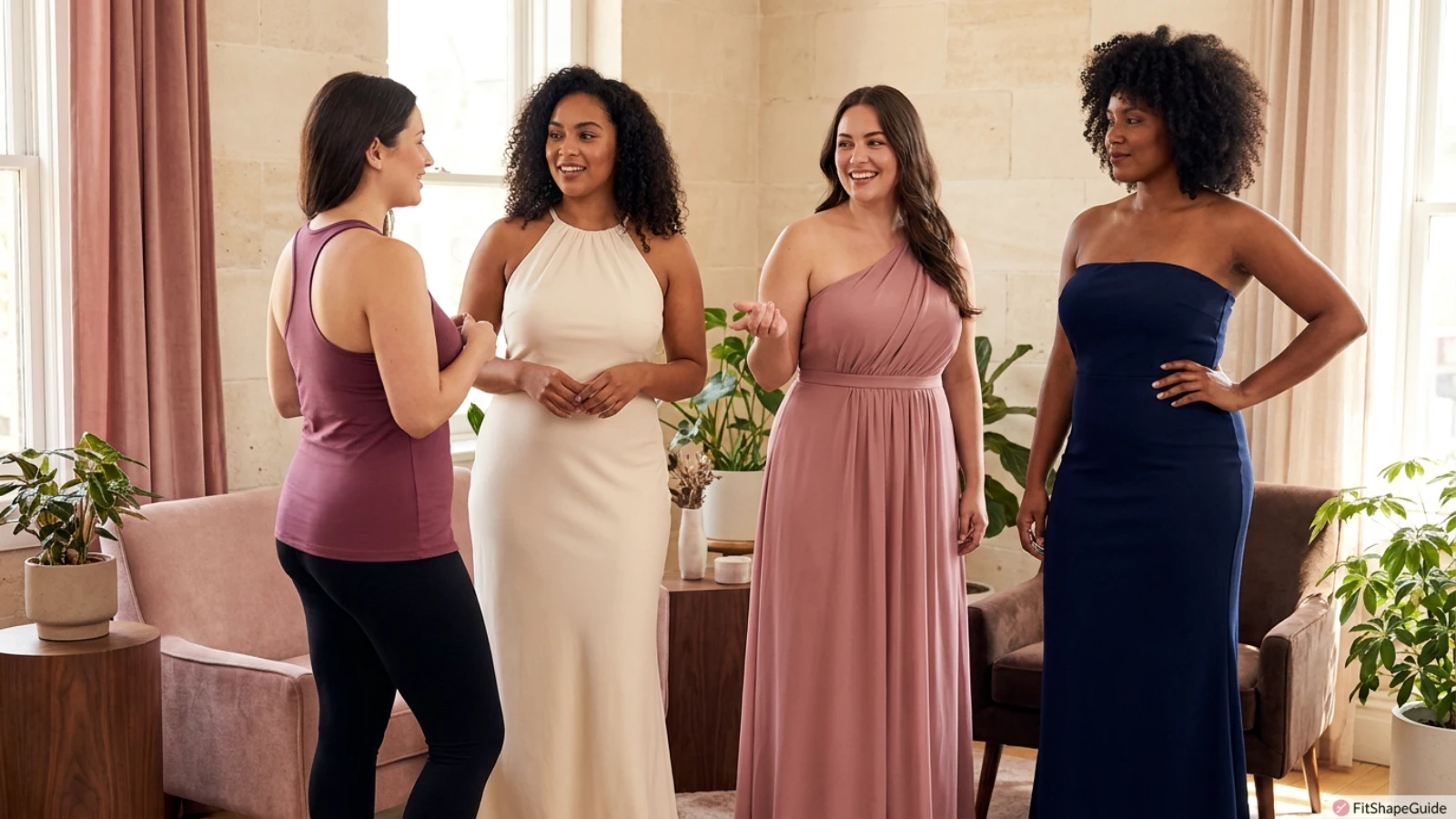
Standard T-shirt or blouse
Wear the straps straight unless another mode improves your shoulder comfort. There is no benefit in creating a more complicated setup when the clothing does not require it.
Racerback tank
Cross the straps or use another approved inward rear route to keep them inside the garment’s shoulder line.
Halter dress
Test halter mode and strapless mode. Choose the one that remains hidden while creating less neck pressure.
One-shoulder dress
Compare the approved asymmetric strap route with full strapless wear. The simplest hidden configuration is often the most comfortable.
Strapless dress
Use only a bra genuinely engineered for strapless support.
Square or wide neckline
A convertible bra may let you move front strap attachments slightly outward when that configuration is explicitly supported by the design.
Low-back clothing
A standard convertible bra may still show at the back. Detachable straps do not automatically lower the band.
For deeper backs, see Best Backless Bra Solutions for a Large Bust .
Movement-test every mode separately
Raise both arms
Check whether the band remains stable and whether the converted straps become significantly tighter.
Reach forward
Crossback and halter straps can change tension as the shoulders move. Check the neck and upper back.
Sit down
A strapless or longline-style convertible foundation can feel different when the torso shortens.
Turn side to side
One-shoulder and asymmetrical configurations should not twist the bra frame around the torso.
Wear the setup before the event
A five-minute fitting cannot fully predict neck pressure, strap rubbing or band slipping during several hours of wear.
Retest after changing modes
Do not assume settings from straight straps can be reused unchanged for crossback or halter configurations.
How to buy a convertible bra for a large bust online
“Convertible,” “multiway” and “detachable strap” can describe different levels of versatility. Read the actual configuration instructions.
- Verify your exact band and cup. Large-cup availability may vary across bands.
- List the modes you genuinely need. Do not pay for complexity you will never use.
- Check whether strapless is officially supported. Detachable straps alone do not prove that it is.
- Inspect cup construction. Seamed, molded, side-support and plunge cups behave differently.
- Check band depth. A strapless-based design often uses more substantial band construction.
- Look for inner slings or reinforcement. These can help preserve cup shape when straps are removed.
- Check attachment points. More strategically placed loops can provide more approved configurations.
- Inspect strap length. Halter and crossback modes require enough length.
- Verify skin-contact materials. Especially if the strapless base uses silicone grip.
- Review returns. The correct mode may not be obvious until you test it beneath your own clothing.
Do not count configurations from marketing photos alone
A long strap can theoretically be arranged in many shapes, but only use configurations the manufacturer actually approves for the bra.
Check whether extra straps are included
Some multiway setups require one long strap or a specific accessory. Verify exactly what comes with the product.
Check strap width by size
Fuller-bust manufacturers may grade strap width as cup or band size increases. Do not assume the sample image shows the exact strap used in every size.
Prioritize the modes you wear most
If 90% of your need is strapless formalwear, buy for strapless stability first and treat other strap routes as bonuses.
Consider separate specialist bras
One excellent strapless bra plus one everyday J-hook bra can sometimes serve a wardrobe better than one highly complicated foundation that performs every mode only moderately well.
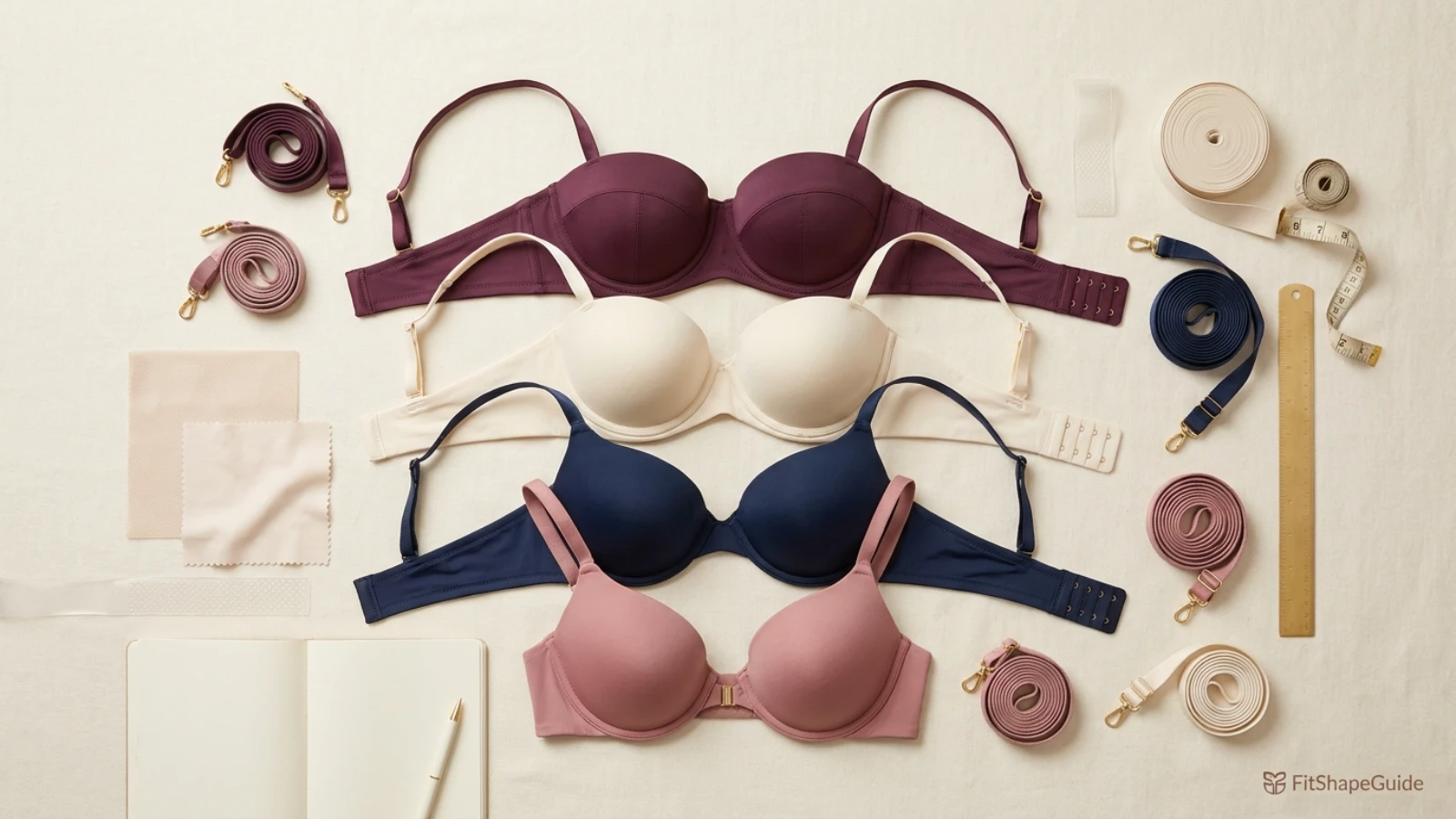
Common convertible bra fit problems
| Problem | Likely cause | Better next move | Avoid |
|---|---|---|---|
| Crossback straps dig | Straps too short for longer route | Lengthen before crossing | Accepting neck pressure |
| Halter hurts neck | Too much load on halter strap | Improve base support / try strapless | Tightening halter further |
| Strapless mode slips | Base not engineered strongly enough or poor fit | Dedicated strapless frame | Sizing down automatically |
| One-shoulder mode twists bra | Uneven diagonal tension | Re-route or use strapless | Overtightening one side |
| Cup cuts in after conversion | New strap angle pulls upper cup | Lengthen straps | Ignoring cup distortion |
| Band rides up | Band too loose | Reassess base fit | Using straps as main support |
| Straps show under outfit | Wrong attachment geometry | Use another approved mode | Improvising unsafe routing |
| Attachment hook irritates skin | Hardware sits at pressure point | Different loop/strap position | Leaving twisted hardware |
| Low-back dress exposes band | Convertible does not equal low-back | Low-back solution | Pulling normal band downward |
| One mode fits better than another | Normal geometry change | Use mode-specific adjustments | Expecting identical performance |
My convertible bra is great with straps but poor strapless
That usually means the bra works well as a detachable-strap design but its base frame is not strong enough for your preferred strapless fit. A dedicated fuller-bust strapless bra may suit you better.
The crossback mode feels much tighter
That is expected if the straps were not lengthened. Crossed straps travel along a different, usually longer route.
The halter mode gives good lift but hurts
Good visual lift is not enough if the neck is carrying too much load. Reduce halter tension and rely more on band and cup support.
The one-shoulder mode looks uneven
Asymmetric routing can alter cup height. If adjustment cannot correct it, strapless mode may create a cleaner result.
Which convertible bra should you choose?
Choose a strapless-based multiway bra if you need the broadest formalwear versatility. Choose a seamed multiway bra if cup shaping and projection matter most. A smooth molded convertible bra works well beneath fitted clothing, while an everyday crossback-convertible bra is ideal when you mainly need straight and crossed straps.
The best convertible bra is not the one advertising the most possible configurations. It is the one whose base frame fits correctly and whose specific modes remain comfortable when you actually wear them.
Frequently asked questions
Are convertible bras supportive for a large bust?
They can be when the bra uses a stable band, correctly fitted cups and strap attachment points engineered for the supported configurations.
What is a convertible bra?
A convertible bra has detachable or repositionable straps that can be worn in more than one approved configuration, such as straight, crossback, halter or strapless.
Can every convertible bra be worn strapless?
No. Some bras have detachable straps only for crossback or other multiway use. Strapless wear should be explicitly supported by the bra’s design.
Why does crossback mode feel tighter?
Crossed straps follow a different path and usually need to be lengthened compared with the straight-strap setting.
Are halter bras comfortable for a large bust?
They can be when the band and cups provide most of the support. Excessive reliance on the neck strap can become uncomfortable.
Can I wear a convertible bra with a one-shoulder dress?
Some multiway bras support approved asymmetric strap configurations. A strong strapless mode may also work and can sometimes be simpler.
Is a multiway bra the same as a strapless bra?
Not always. Some strapless bras are multiway, while some convertible bras still require at least one or two straps for normal support.
Should I size down in a convertible strapless bra?
No. Start with the correct band-and-cup size and evaluate the specific strapless frame. Sizing down can distort cups and cause discomfort.
How FitShapeGuide evaluates convertible bras
This guide evaluates convertible bras through base-frame stability, cup depth, seamed or molded construction, internal slings, side wings, underband stability, detachable strap hardware, strap length, approved strap configurations and performance beneath real clothing.
Convertibility is treated as a wardrobe feature, not a substitute for correct bra fit. The same bra can behave differently in straight, crossback, halter, one-shoulder and strapless modes because each route changes tension.
Current fuller-bust multiway collections support this construction-first approach. Bravissimo’s current D+ strapless and multiway range describes detachable adjustable straps, supportive structured cups and strong underbands as key features. Current Curvy Kate multiway styles likewise use structured cups, inner slings, supportive band construction and removable straps rather than relying on strap changes alone.
Some current fuller-bust strapless multiway designs also use non-slip elements around the band and grade strap width by size, reinforcing why the entire frame—not the number of advertised configurations—matters.
Before publishing any commercial recommendation, FitShapeGuide should verify the live seller, product name, color, exact band range, cup range, strapless capability, approved strap modes, strap length, strap width, attachment points, inner sling, molded or seamed cups, underwire or wireless construction, band depth, grip material, back height, fabric, care, current availability and return eligibility.
No product name, ASIN, size range, price, review count, rating, configuration claim, coupon, stock statement or delivery promise should be published unless directly verified.


3 Comments