Best Linen Shirts for a Large Bust
A construction-first buyer’s guide to breathable linen without button gape: bust ease, shaping, placket stability, shoulder fit, fabric weight, opacity, shrinkage, wrinkling, and movement.
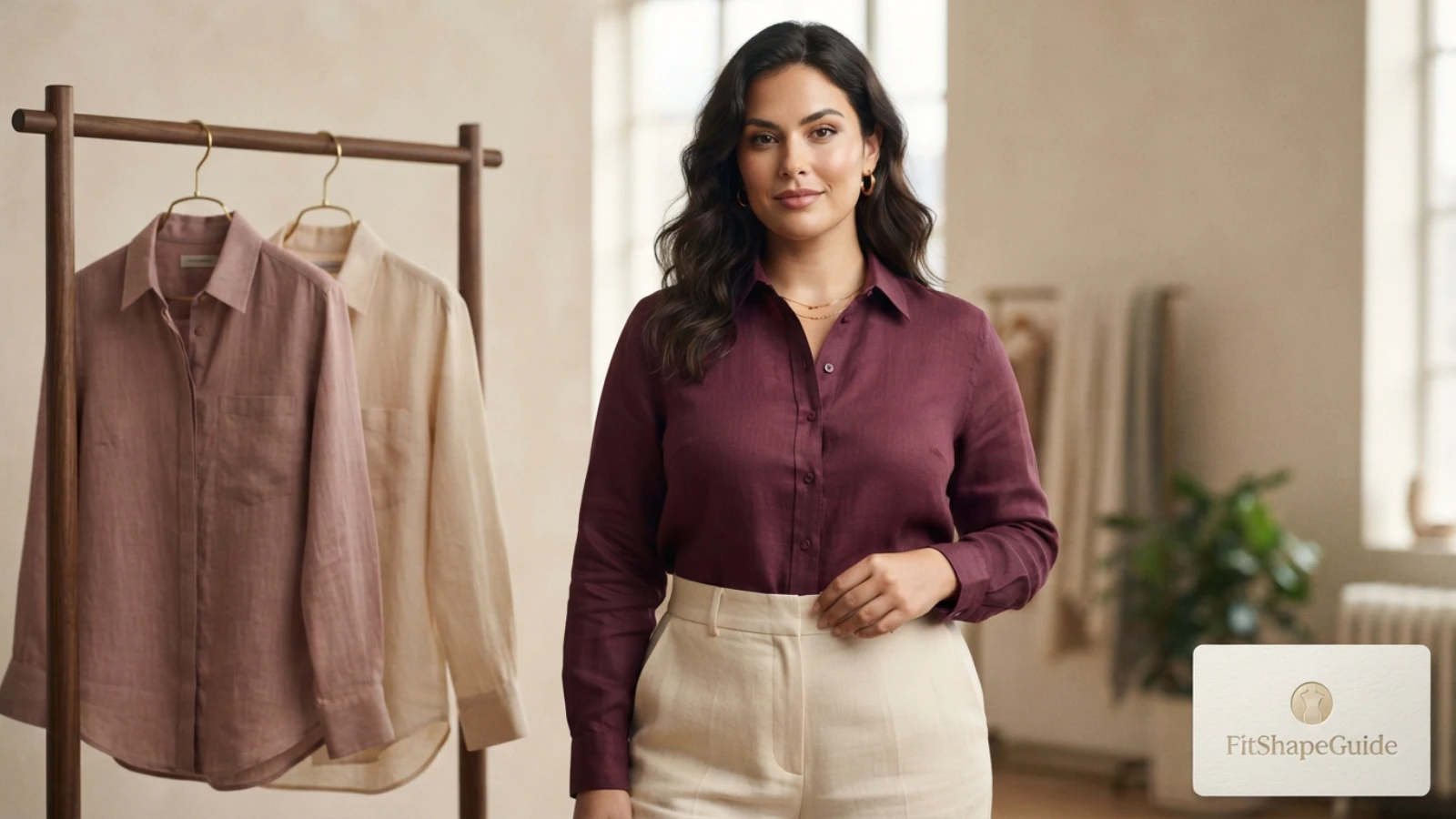
The best linen shirts for a large bust preserve what makes linen appealing—airflow, visible natural texture, an easy warm-weather finish, and a fabric that softens with use—without turning the chest into the garment’s stress point. Linen is made from flax fiber; shirt fabrics vary widely in weight, yarn irregularity, weave density, finishing, opacity, and drape. Pure linen usually has little useful stretch, so it cannot automatically reshape itself around three-dimensional curves. When the pattern is too flat, the placket opens between buttons, diagonal strain lines radiate toward the bust, the collar shifts backward, side seams rotate forward, and the front hem rises. Sizing up may close the buttons, yet it can also drop the shoulders, enlarge the armholes, and bury the waist. A better shirt places volume where it is required through darts, curved panels, gathers, a fuller-bust block, a soft linen blend, or a deliberately relaxed cut. This guide compares the constructions that solve those problems, explains how to judge weight, opacity, shrinkage, and wrinkles online, and shows which failures are fixable. Product modules remain private until live names, materials, garment measurements, care, returns, stock, imagery rights, affiliate links, and retailer details are verified.
The 60-second linen shirt check
- The shoulder seam ends near the shoulder edge unless a dropped shoulder is an intentional design feature.
- The placket touches itself evenly and remains flat at the fullest bust level without an X-shaped pull.
- A button or hidden closure sits near the highest-tension point rather than leaving it midway through a wide gap.
- Bust darts point toward the fullest area and stop before it; princess seams follow the bust curve cleanly.
- The fabric remains opaque and matte when the arms move forward and the wearer takes a full breath.
- Side seams stay vertical instead of rotating toward the front to donate width to the bust.
- The collar does not migrate backward and the center-front hem does not rise sharply above the back.
- After sitting and reaching, the placket, collar, sleeves, and hem return without repeated adjustment.
Best linen shirts by construction
The best linen shirts do not depend on the fiber stretching around the bust. Some build projection into the pattern, some soften the cloth through blends or washing, some strengthen the closure, and some make ease an intentional part of the silhouette. Compare the best linen shirts by the architecture that matches the planned outfit and the wearer’s bust-to-waist, shoulder, torso, and arm proportions; then evaluate actual garment measurements.
Darted midweight linen shirt
Best for: polished work-to-weekend wear. Side bust darts create depth without adding equal width at the waist, while a medium-light but opaque linen can hold a collar and still soften around the body. Seek a stable placket, close button spacing, and darts that end before the fullest point. Because pure linen has little stretch, the shirt must fit before movement; an undersized front develops open button intervals, hard diagonal lines, and front-hem lift.
Panelled or princess-seam linen shirt
Best for: a larger difference between bust and waist. Curved vertical seams add projection and remove excess below it, giving low-stretch cloth a three-dimensional route around the torso. The strongest versions use a separate center-front or side-front panel, correctly placed seam curvature, enough underarm coverage, and pressing that does not pucker the natural weave. Precision matters: a curve sitting too high or too low is harder to alter than an ordinary side dart.
Fuller-bust cut with extra closure
Best for: preserving shoulder and neck fit while gaining front room. This pattern may use a larger front piece, deeper darts, a longer center front, closer buttons, or a discreet internal snap. Look for size information explaining how the fuller-bust option differs from the standard block. A label alone is not evidence; finished garment measurements and flat product photography are still necessary.
Soft linen-blend shirt with stable placket
Best for: shoppers who want linen texture with more fluid drape and easier layering. Linen-viscose, linen-lyocell, or linen-cotton blends can hang differently from pure linen; the exact percentages and care instructions matter. Seek targeted bust shaping, an opaque weave, close button spacing, and a placket supported just enough to stay flat. Softer drape may reduce boxiness, but it cannot replace missing circumference or front length.
Relaxed washed-linen overshirt
Best for: open layering, casual tailoring, and intentional ease. Garment washing can soften linen from the first wear, while a back pleat, dropped or extended shoulder, curved side seams, and a rounded hem make volume look designed rather than accidental. Check that the front is independently long enough over the bust and that the back is not supplying all the ease. Oversized should still have stable sleeve balance, adequate bicep room, and a placket that hangs vertically.
Popover or tunic-length linen
Best for: reducing pressure on a full button front and increasing styling flexibility. A half placket can open for dressing while the lower front stays uninterrupted; side slits and a longer body improve seated comfort. Seek a neckline opening wide enough to dress without straining, bust shaping below the placket, and sufficient hip ease. Deep side slits must begin below the desired bust and bra coverage.
| Construction | Best use | Strong evidence | Main trade-off |
|---|---|---|---|
| Darted midweight linen | Office and smart casual | Correct dart height, opaque cloth, stable placket | Little give; garment ease must be correct |
| Princess seams or panels | Defined waist and shaped fit | Seam curve follows bust and returns toward waist | Misplaced curvature is difficult to alter |
| Fuller-bust cut | Protecting shoulder and neck fit | Extra front depth, length, and closure details documented | Brand labels vary; measurements still matter |
| Soft linen blend | Fluid workwear and layering | Exact blend, opaque weave, shaping, stable placket | May wrinkle or care differently from pure linen |
| Relaxed washed linen | Layering and casual outfits | Intentional shoulder, back pleat, balanced front length | Can overwhelm a short torso if too long |
| Popover or tunic | Low-gape casual polish | Useful opening, bust shaping, side slits, hip ease | Less adjustable through the lower front |
How the best linen shirts for a large bust prevent button gape
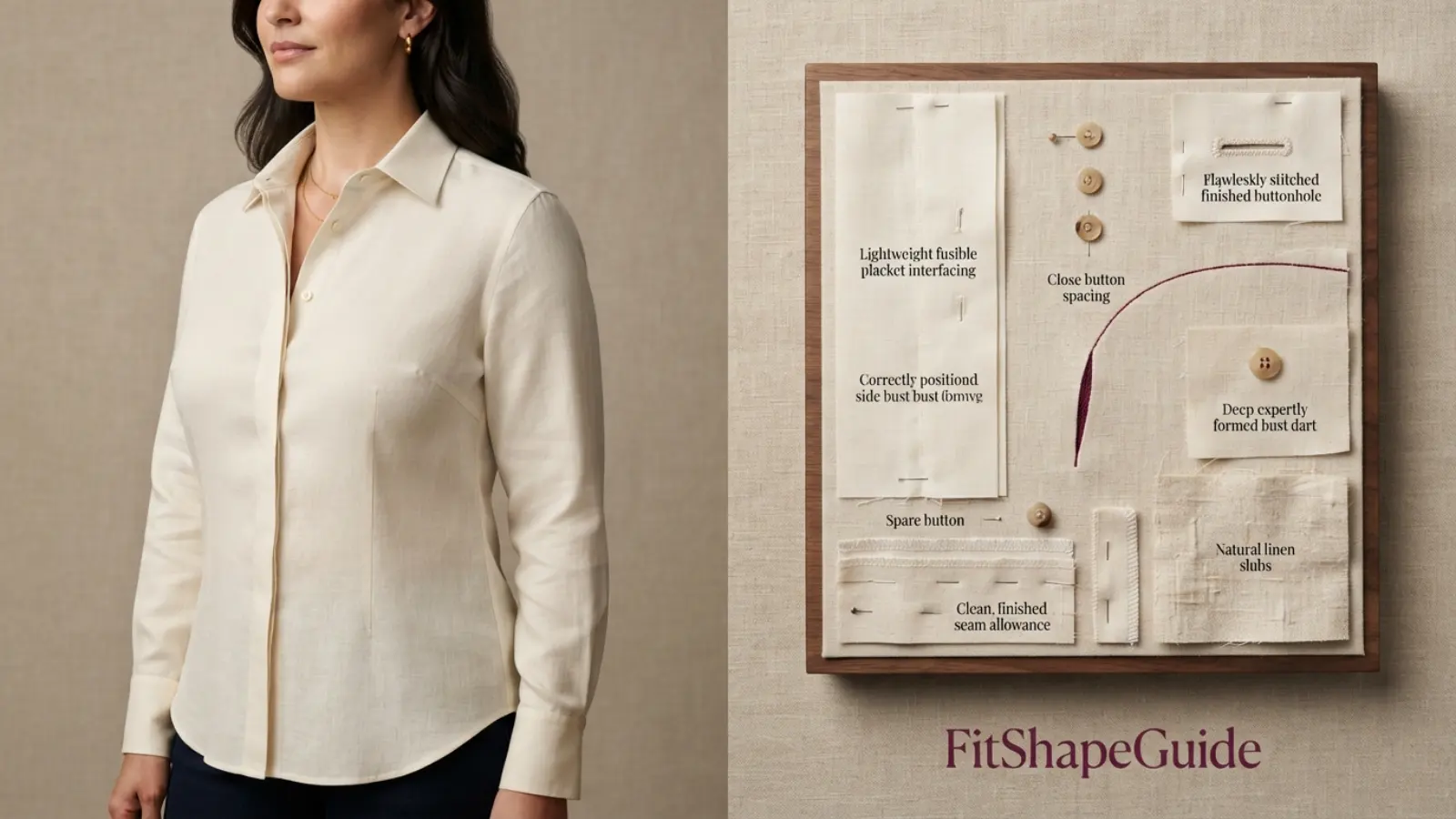
The placket is the vertical band that carries buttons and buttonholes. On linen, ordinary soft creases are expected, but a repeated X-shaped pull or an opening between buttons still signals load. A flat placket requires both enough body room and enough local stability. If the front pattern is shallow, stronger interfacing may keep the edge straight while the fabric beside it strains. If the body is generous but the placket is weak, the buttons may stay closed while the edge scallops or twists. The shirt needs both fit and engineering.
Button position should meet the tension point
One closure should sit close to the fullest horizontal bust line, with another reasonably near above it. A wide empty span across the highest-tension zone invites separation even when total circumference is adequate. A hidden snap or internal button can strengthen a locally weak interval, provided the visible placket already meets naturally. It should act as insurance, not force two edges across missing space. Tiny fashion buttons placed far apart may suit a decorative blouse but are weak evidence for a fitted linen work shirt.
Interfacing must stabilize without creating a shelf
Interfacing is the supporting layer inside the placket, collar, and cuffs. Press the placket lightly between the fingers. It should feel firmer than the shirt body while remaining flexible enough to curve with the torso. Too little support allows buttonholes to stretch and the edge to corkscrew. Too much can make the front stand away, especially over projected areas. A concealed placket adds another layer, so inspect whether its edge lies flat from collar to hem in front, three-quarter, and side photos.
Placket grain and stitching affect long-term stability
Linen’s visible grain, slubs, and tendency to take a crease make cutting accuracy important. The placket should run straight with the grain, topstitching should remain parallel, and buttonholes should look dense without puckering or fraying. A front already twisting on the hanger is unlikely to become balanced in wear. Check that the button shanks or threads allow the two fabric layers to meet without crushing them. Spare buttons are useful, but a loose button does not explain recurring gape between correctly secured closures.
Linen weight, composition, opacity, wrinkles, and shrinkage
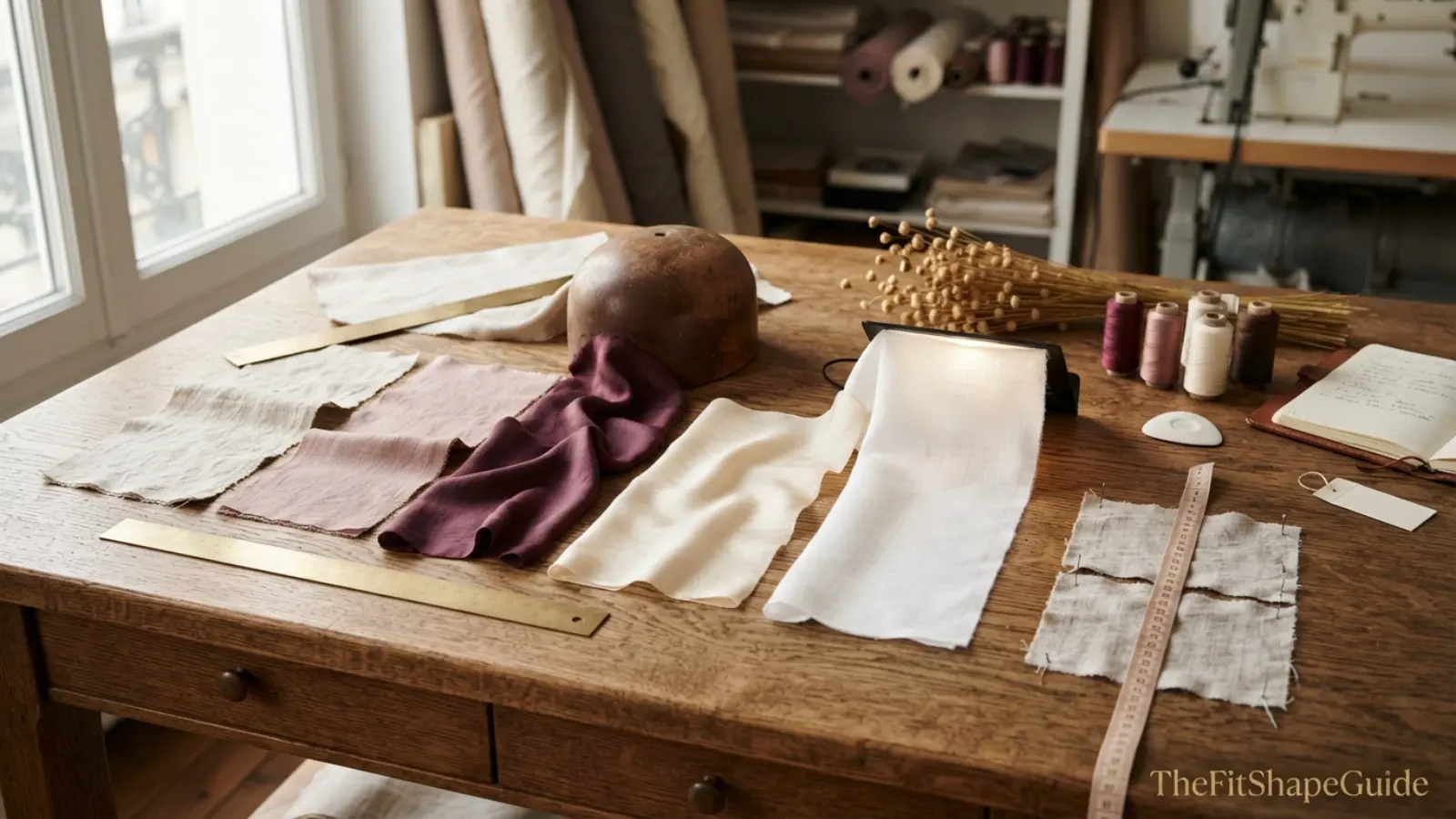
The best linen shirts begin with a suitable fabric and pattern rather than the word “linen” alone. Pure flax linen, linen-cotton, linen-viscose, linen-lyocell, and linen-synthetic blends can all look similar in a small product photo yet behave differently on the body. One shirt may be airy and semi-sheer, another dry and structured, and another fluid enough to fall closer to the waist. Exact fiber percentages, yarn size, weave density, fabric weight, washing or enzyme finish, color, and garment cut all matter. The best linen shirts treat those variables as one system. Marketing terms such as “premium linen,” “French flax,” “European linen,” “wrinkle-free,” or “easy care” do not replace a full composition, usable measurements, and clear care instructions.
Pure linen
Pure linen is breathable, absorbent, quick to release moisture, and usually low in elastic recovery. That low stretch makes pattern room especially important across the bust and upper back. A well-cut pure-linen shirt can look polished while retaining natural slubs and soft creases; a tight one develops harder strain lines, opens at the placket, and may become more transparent where the yarns are pulled apart. Check whether the garment is prewashed, garment-dyed, or sold in a crisp unfinished state because the initial hand can change after laundering. A shirt that fits with no reserve before its first wash has little margin for dimensional change.
Linen-cotton blends
Cotton can make a linen shirt feel more familiar, reduce some of the dry hand, and change how firmly it holds a crease. The result still may have little stretch, so do not assume a linen-cotton label provides extra bust room. Compare the actual percentages: a small amount of linen in a mostly cotton cloth behaves differently from a linen-rich blend. Seek enough opacity for the intended bra or camisole, a stable placket, and a weight that can support buttons without becoming bulky over the bust.
Linen-viscose, linen-lyocell, and easy-care blends
Viscose or lyocell can add fluid drape and a softer hand, which may help a relaxed shirt fall rather than stand away from the body. Synthetic content may reduce wrinkling or drying time, but breathability, static, sheen, and heat response can differ. These blends may also stretch or grow differently when damp. Read the exact shell and trim composition and follow the garment-specific care label. If a retailer lists only “linen blend,” request percentages when they materially affect comfort, opacity, care, or value.
Opacity must be judged under movement
Hold the shirt against light, then view it over the actual bra or camisole intended for the outfit. Bend the elbows, reach forward, and take a full breath. Fabric that looks opaque while hanging loose may reveal a foundation or turn glossy where it is tensioned. A dense weave, soft color contrast, and enough ease usually matter more than fabric thickness alone. Double fronts can improve coverage but add heat and stiffness, so examine the whole wear context.
Wrinkles are normal; strain lines are diagnostic
Soft, irregular creasing at elbows, waist, and seat is normal linen behavior. Repeated diagonal lines pointing to the bust, a hard horizontal fold between buttons, polished tension, or a permanently lifted front hem indicate fit pressure rather than ordinary character. Evaluate photos and the home try-on after several minutes of sitting and reaching. The goal is not a crease-free shirt; it is a shirt whose natural wrinkles remain distributed instead of concentrating at one stressed area.
Prewashed is useful information, not a guarantee
Linen can change in length or width depending on construction, finishing, and laundering. “Prewashed” or “preshrunk” suggests treatment, but it does not promise zero dimensional change under every wash and dryer setting. The best linen shirts leave practical length and circumference reserve for their approved care method. Record sleeve and front length before the first wash if those dimensions are close. Follow the garment’s own instructions, avoid higher heat than recommended, reshape the placket and collar while damp, and confirm return restrictions before laundering a new shirt.
Bust ease, darts, princess seams, shoulders, and front length
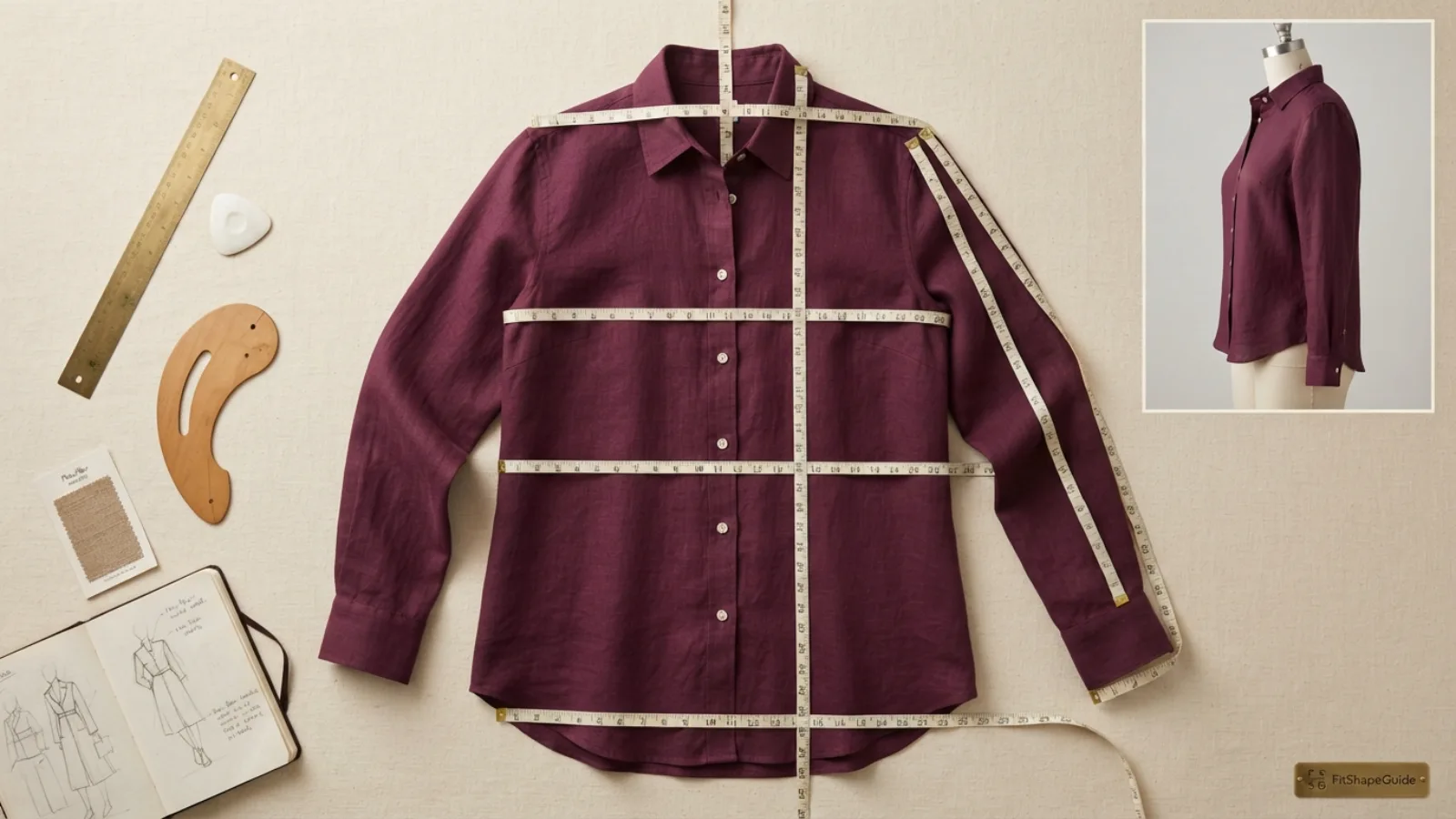
Bust ease is the difference between the garment’s available circumference and the body plus the intended foundation layer. It must allow breathing and movement, but the number alone does not show where the fabric sits. A boxy shirt can have generous circumference yet pull at the bust because most of its width is in the back, the front is too short, or the armholes are positioned incorrectly. The best linen shirts place enough width and length on the front while keeping the shoulder, neck, and upper back balanced. That is why the best linen shirts combine circumference with darts, panels, shoulder alignment, and front-length evidence.
Use a successful garment as the reference
To compare the best linen shirts, button a reference shirt that fits well, lay it flat without pulling the weave, and measure straight across at the fullest bust level; double that figure for an approximate garment circumference. Also record shoulder width, waist, hem, front length from high shoulder point, back length, bicep, sleeve, armhole depth, and dart location. Compare like with like: a relaxed washed-linen shirt requires different ease from a fitted pure-linen style, while a fluid linen blend may hang closer even at a similar circumference.
Darts create depth only when they point correctly
A side bust dart should aim toward the fullest area but finish before it. A dart ending above the bust may leave surplus fabric near the upper chest while the lower front strains; one placed too low can drag the shirt downward and hollow above. The dart intake must also be deep enough for the shape. A small decorative dart on a standard block may not create meaningful projection. View from the side: the front should travel over the bust and fall toward the waist without tipping the placket outward.
Princess seams distribute shaping over a longer line
Princess seams can add volume around the fullest point and remove it toward the shoulder or waist. They often produce a closer silhouette with fewer horizontal wrinkles. Inspect whether the seam’s deepest curve aligns with the wearer rather than sitting on the upper chest or under the bust. If the seam contains no puckering and follows the correct route, it can be a strong choice. Moving that entire curve is a pattern-level alteration, so buy its placement accurately.
Shoulder fit is the limit on sizing up
Sizing up is sensible when the larger size restores bust and upper-back room while the shoulders, collar, armholes, and sleeves remain usable. It becomes a poor solution when the shoulder seams fall onto the upper arm, the collar floats, the sleeve head twists, and the cuffs cover the hands. A deliberately oversized linen shirt may use dropped shoulders and broad sleeves as design; a fitted work shirt should not acquire those features by accident.
Projection consumes front length
The shirt front travels outward before it can fall downward. A standard front length may therefore sit higher than the back even when circumference seems adequate. Seek longer front pieces, shaped hems, darts, curved seams, or a high-low design that accounts for the difference. Judge tuck length while seated. Adding overall length may create excess at the back without fixing the path over the bust, so front and back measurements are more useful when stated separately.
How to find the best linen shirts for a large bust online
Online shopping becomes more reliable when product evidence is treated as a pattern description rather than a mood board. Start with finished garment measurements. A body-size chart tells you whom a brand intends to serve; it does not reveal the actual ease, front length, shoulder width, or bicep room of a specific shirt. If only a bust range is supplied, ask whether it is a body measurement or the garment measured flat and whether stretch was used.
Measurements to request
Request full garment bust at the intended level, shoulder width, front and back length, waist, hem, bicep, sleeve length, cuff, and armhole depth. For a shaped shirt, ask the high-shoulder-point-to-dart distance or compare it visually with the model’s proportions. Ask for exact linen and blend percentages, whether measurements were taken before or after garment washing, and whether the listed bust is the body or finished garment. A maximum stretched figure is not a comfortable target for a woven linen shirt.
Photos that provide evidence
Useful listings show the shirt buttoned from front, three-quarter, side, and back views; untucked and, ideally, tucked; with the arms relaxed and at least slightly moved. Zoom in on the placket at bust level, dart or princess seam, side seam, shoulder, armhole, cuff, collar, and hem. A jacket, crossed arm, handbag strap, strong pose, or hair can hide the exact area shoppers need to inspect. Video helps only if the shirt remains buttoned and visible throughout movement.
Reviews need location-specific language
Reviews of the best linen shirts use location-specific language; “runs small” is not enough. Useful reviews state the purchased garment size or relevant measurements, the support layer worn, and where the fit changed: tight across the upper back, dart too high, sleeve narrow, placket opened between the third and fourth buttons, or front hem too short when seated. A review from a different height, torso length, shoulder width, or bust-to-waist ratio is context, not a verdict. Repeated reports at the same location are stronger evidence than one broad rating.
| Evidence | Why it matters | Strong signal | Warning signal |
|---|---|---|---|
| Finished garment bust | Reveals usable ease | Measurement method and relaxed figure stated | Only a broad body-size range |
| Front and back length | Predicts hem balance and tuck security | Both values stated separately | One generic “length” number |
| Fiber, weight, and finish | Predicts drape, opacity, wrinkles, care, and heat | Exact percentages, garment finish, and care stated | “Premium linen” without composition or weight clues |
| Closure and shaping | Predicts gape resistance and projection | Darts, seams, interfacing, and hidden closure shown | Front detail concealed by styling |
| Returns and condition | Enables a careful home movement test | Clear unworn return window and conditions | Ambiguous final-sale or laundering rules |
How the best linen shirts for a large bust pass the movement test
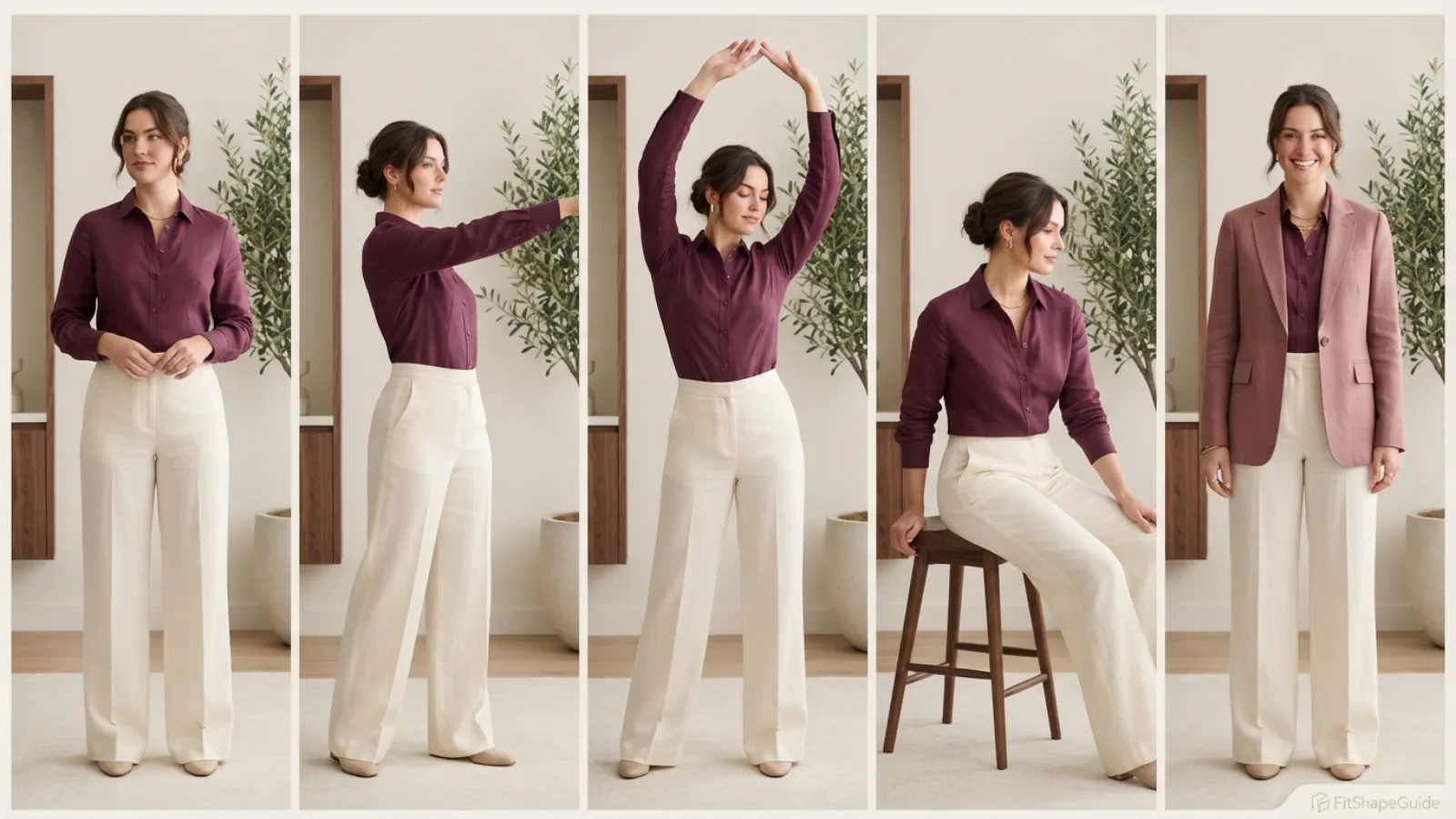
Try the shirt over the exact bra, camisole, or base layer planned for wear, with tags attached and within the return policy. Button it completely and smooth it once. Then stop managing it. The test is not whether linen remains perfectly still; woven fabric must shift during movement. The question is whether the placket, collar, side seams, sleeves, and hem return to a comfortable position without the wearer pulling them back.
1. Neutral breathing and side view
Take three full breaths. The buttons should remain centered, the placket should meet without opening, and the collar should rest against the neck without being pulled backward. From the side, check that the dart or seam curve aligns with the fullest area, the side seam is vertical, and the hem remains reasonably balanced. Persistent horizontal creases are a sign of missing width or depth, not a pressing problem.
2. Forward reach and self-hug
Reach toward a desk, then cross the arms gently as if hugging. This loads the upper back, armholes, sleeves, and bust simultaneously. A successful shirt allows the shoulder blades to move without sending a strong pull through the bust buttons. Watch for the back yoke becoming rigid, side seams rotating forward, the placket opening, or cuffs dragging the whole sleeve. Small temporary wrinkles are normal; retained distortion is not.
3. Controlled arm lift
Raise both arms to shoulder level and then overhead if the wearer’s routine requires it. The shirt hem will rise somewhat, but it should return after the arms lower. Armholes should not pull the entire front upward or expose the foundation at the side. If the placket lifts and stays lifted, compare armhole shape, sleeve head, bicep room, and front length rather than assuming only the bust is tight.
4. Sit, lean, and turn
Sit in the trousers or skirt planned for the outfit, lean forward, and turn in both directions. Check whether a tucked hem escapes, lower buttons strain over the abdomen or hips, the collar moves back, and the front folds sharply beneath the bust. A shirt intended for desk work must remain breathable and neat while seated, not only in an upright fitting-room pose.
5. Add the layer and wait
Put on the blazer, cardigan, sweater, or coat that will be worn over it. Confirm that the linen sleeve does not twist, the collar sits correctly, and thick placket or pocket layers do not create pressure. Wear the combination for several minutes, remove the layer, and inspect the shirt’s position. Soft new creases are acceptable; a shifted collar, rotated seam, lifted hem, or reopened placket is not. Keep the shirt when its closure remains calm and comfort does not depend on constant posture control.
Fit failures that eliminate the best linen shirts
Linen communicates tension clearly. Use the direction of each wrinkle and the part that moves to identify the source. Do not automatically size down because the shirt looks loose at the waist, or size up because one button gaps. A pattern may need more front projection, a different dart height, a broader upper back, a deeper armhole, or additional center-front length without equal changes everywhere.
| Symptom | Likely cause | Try first | Walk away when |
|---|---|---|---|
| Placket opens between buttons | Missing bust ease or depth, wide spacing, weak interfacing | Shaped front, larger size if shoulders allow, closer closure | A hidden snap must pull the edges together |
| Diagonal lines from bust to armhole | Shallow front, narrow chest, or armhole conflict | More projection, correct dart, different armhole shape | Sizing up drops shoulders without clearing lines |
| Front hem rises above back | Insufficient front length or bust depth | Longer shaped front, darts, princess seams, higher waistband | Extra overall length only makes the back excessive |
| Collar shifts backward | Front length pulled upward or upper back restricted | More front length and depth; check back-yoke ease | Collar must be dragged forward repeatedly |
| Side seam rotates forward | Front borrowing width from the back | Fuller front pattern or more correctly placed ease | Waist and back become loose before seam straightens |
| Fabric turns shiny or sheer | Excess strain or low-density cloth | Larger size, denser linen, stronger shaped construction | Opacity fails in normal posture |
When sizing up works
Size up when the next size lets the placket lie flat, restores opacity, allows upper-back movement, and increases front length while shoulder seams, collar, armholes, and sleeves remain acceptable. Excess waist width and sleeve length may be altered if the shirt construction permits. The larger size is not a failure; it is simply useful only when its proportional changes solve more problems than they create.
When a different construction is smarter
Choose princess seams when bust and waist need different amounts of room. Choose a fuller-bust cut when standard sizing damages the shoulders. Choose a concealed placket when local reinforcement is useful, a relaxed shaped-hem shirt when ease is intentional, and a popover when a long button line remains the weak point. If a softer woven is desired, a general blouse guide may offer more drape than crisp linen.
Which linen shirt alterations are realistic?
The best linen shirts are generally cooperative to tailor when the weave is stable and seam allowances are sufficient, but natural texture can still reveal puckering or inaccurate work. Among the best linen shirts, tailoring is most efficient when the garment already fits the bust, shoulders, collar, and armholes. Pin the proposed change, button the shirt, and repeat the movement test before fabric is cut.
Reasonable adjustments
A tailor may add a discreet hidden snap, replace or reposition a button slightly, reinforce a weak buttonhole, take in the waist through side or back seams, shorten sleeves, move cuffs, refine a shaped hem, or shorten a dart that ends too close to the fullest point. Small back darts can remove surplus at the waist, provided they do not steal upper-back movement. Existing seam allowance may permit a modest release, but it must be measured rather than assumed.
Alterations that can change another area
Taking in side seams may narrow the hem and alter armhole balance. Deepening darts can remove waist width but also change their tips and the placket’s path. Moving buttons too far sideways can make the placket overlap unevenly. Shortening the body can reduce tuck security after sitting. Every adjustment should be evaluated with the intended trousers, skirt, bra, and outer layer.
High-risk reconstruction
Adding substantial bust depth, lowering or moving an entire princess curve, rebuilding shoulders, enlarging armholes, inserting a large front panel, or lengthening a too-short front are pattern-level projects. A tailor may perform them, but the cost and visible seams can exceed the value of starting with a better block. Fashion tape, safety pins, or a permanent camisole worn solely to hide structural gape are not true alterations.
How to style the best linen shirts
Styling should take advantage of linen’s clean geometry rather than distract from fit. A shirt that already closes calmly can be tucked, layered, cuffed, or worn open without being treated as a body-correction project. Start with the activity and waistband, then decide how much structure and coverage the outfit needs.
Workwear: semi-fitted shirt with high-rise trousers
A darted or princess-seam shirt tucked into high-rise straight or wide-leg trousers creates a polished line while the waistband helps secure the hem. Sit before committing to the tuck; the front must remain long enough after the torso folds. Add an open blazer with enough bust clearance so its lapels do not push the shirt placket inward. If a fully buttoned shirt feels too formal, open one collar button only after confirming bra and camisole coverage.
Layering: relaxed linen over a stable base
Wear a relaxed shaped-hem linen open over a bra-friendly tank, camisole, or fitted tee. The base should be opaque and secure enough that the shirt can move without being held closed. This formula works for temperature changes and reduces pressure on the placket, but the shoulder and sleeve must still fit beneath a coat. A very crisp oversized shirt can add volume; rolled cuffs, a deliberate half-tuck, or a shorter front hem can keep the proportions intentional.
Soft tailoring: linen with a cardigan or sweater
Under a cardigan, keep collar and placket layers thin enough to avoid ridges. Under a sweater, choose a linen shirt with comfortable armholes, smooth cuffs, and a hem that will not bunch beneath the knit. Letting the collar or lower hem show can create contrast, but check that the sweater does not pull the shirt backward. For a longer open line, a tunic-style linen can work with slim or straight bottoms when its side slits sit at the intended height.
Weekend: shaped hem with denim or a midi skirt
A curved-hem linen worn untucked can look deliberate with high-rise jeans, a column skirt, or tailored shorts. The front should not be so short that bust projection exposes the waistband unexpectedly. A soft front tuck can control volume, but do not use the tuck to hide a badly raised center front. Texture contrast—crisp linen against denim, knit, suede-like fabric, or fluid satin—creates interest without adding decorative bulk at the bust.
Care for the best linen shirts without distorting the fit
Follow the garment’s own care label because linen percentage, companion fibers, interfacing, color, buttons, trims, and finishing change the safe method. The FTC’s textile-label guidance explains fiber-content disclosures, while its care-label guidance explains care-instruction responsibilities. Close or protect buttons as directed, treat stains before heat sets them, avoid overloading the washer, and reshape the collar, cuffs, placket, and hem while damp. Excessive dryer heat can shrink or hard-set creases in linen and may also affect blended fibers or fused interfacing.
Press from the inside when suitable, use the temperature permitted for the fiber blend, and test steam on a discreet area. Pulling hard on a hot, damp placket can lengthen one edge and create a permanent wave. A pressing cloth helps protect dark or blended linen from shine. Store the shirt dry on a hanger that supports the shoulders, or fold along stable lines without crushing the collar. Repair loose buttons and opening seams before they enlarge.
Value is cost per calm wear, not the lowest price or crispest product photo. Count how many settings the shirt serves, which bras and base layers it accepts, whether it works tucked and untucked, how demanding its care is, and whether buttons, cuffs, or waist can be repaired. The best linen shirts earn repeat wear because the placket remains closed, the shoulders stay aligned, the front length works while seated, and the wearer can move without monitoring the garment.
Final buyer checklist
- Finished garment bust and upper-back ease support breathing and reaching.
- Darts, princess seams, gathers, or a fuller-bust block create real front projection.
- The placket is stable, buttons are sensibly spaced, and any hidden closure lies flat.
- Shoulder seams, collar, armholes, biceps, sleeves, and cuffs fit the intended silhouette.
- Linen remains opaque in motion and natural creases do not concentrate into hard strain lines.
- Front length and shaped hem stay useful while sitting and tucking.
- Fiber content, care, shrinkage risk, and return conditions are understood.
- The shirt passes the five-position test without repeated adjustment.
Frequently asked questions
Is linen a good fabric for a large bust?
Yes, when the shirt pattern provides enough bust depth, front length, shoulder balance, and upper-back movement. Pure linen has little stretch, so darts, curved panels, fuller-bust patterning, or deliberate relaxed ease are more dependable than a flat fitted front. Check fabric weight, exact composition, opacity, finishing, shrinkage risk, and care separately.
What are the best linen shirts for a large bust?
A darted midweight linen shirt is a versatile starting point. Panelled or princess-seam designs suit a larger bust-to-waist difference; a fuller-bust cut protects shoulder fit; soft linen blends improve drape; relaxed washed-linen shirts support layering; and popovers reduce pressure on a full button line. Choose by garment measurements and movement, not style name alone.
How do I stop a linen shirt from gaping at the bust?
First confirm adequate finished garment bust room, front projection, upper-back ease, and button placement. A correctly fitted shirt may benefit from a hidden snap or internal button at the tension point. If the edges must be pulled together, fabric turns shiny, side seams rotate, or the front hem rises, a snap or tape will not replace the missing pattern room.
Should I size up in a linen shirt for a fuller bust?
Size up when the larger size restores placket stability, opacity, front length, and movement while the shoulders, collar, armholes, and sleeves remain usable. If the shoulders drop and the waist becomes excessive before the bust fits, look for darts, princess seams, a fuller-bust cut, or extra front length. Tailoring excess waist is easier than rebuilding shoulders.
Is pure linen better than a linen blend?
Neither is universally better. Pure linen offers characteristic airflow, texture, and softening but usually has little stretch and wrinkles readily. Linen-cotton can feel more familiar, while linen-viscose or linen-lyocell may drape more fluidly. Compare exact percentages, fabric weight, opacity, care, shrinkage risk, and the intended silhouette rather than choosing from the word “linen” alone.
How much bust ease should a linen shirt have?
There is no single correct number because ease depends on weave, stretch, cut, support layer, and movement. Compare the finished garment bust measurement with a linen shirt that already fits, then check shoulder width, upper back, bicep, armhole, and front length. The correct amount allows full breathing and reaching without persistent horizontal pull or an unintended oversized shape.
Can a tailor fix a linen shirt that is too tight at the bust?
Only sometimes. A tailor may release side seams if enough allowance exists, add a hidden snap for a small local separation, or refine darts and waist shaping. Adding substantial front width, moving an entire princess curve, rebuilding shoulders, or lengthening the front is more complex. Tailoring works best when the bust and shoulders already fit and secondary areas need refinement.
What measurements should I check when buying a linen shirt online?
Check finished garment bust, shoulder width, front and back length, waist, hem, bicep, armhole depth, sleeve, and cuff. For shaped shirts, compare dart or princess-seam height. Confirm exact fiber percentages, whether the garment was prewashed, opacity, fabric-weight clues, placket details, care instructions, and return conditions. Compare the numbers with a similar shirt that already passes your movement test.