Denim Overalls and a Large Bust
A construction-first guide to bib overalls that sit cleanly through the chest, adjust through the torso and move comfortably without asking the body to compensate for a short bib, rigid rise or unstable straps.
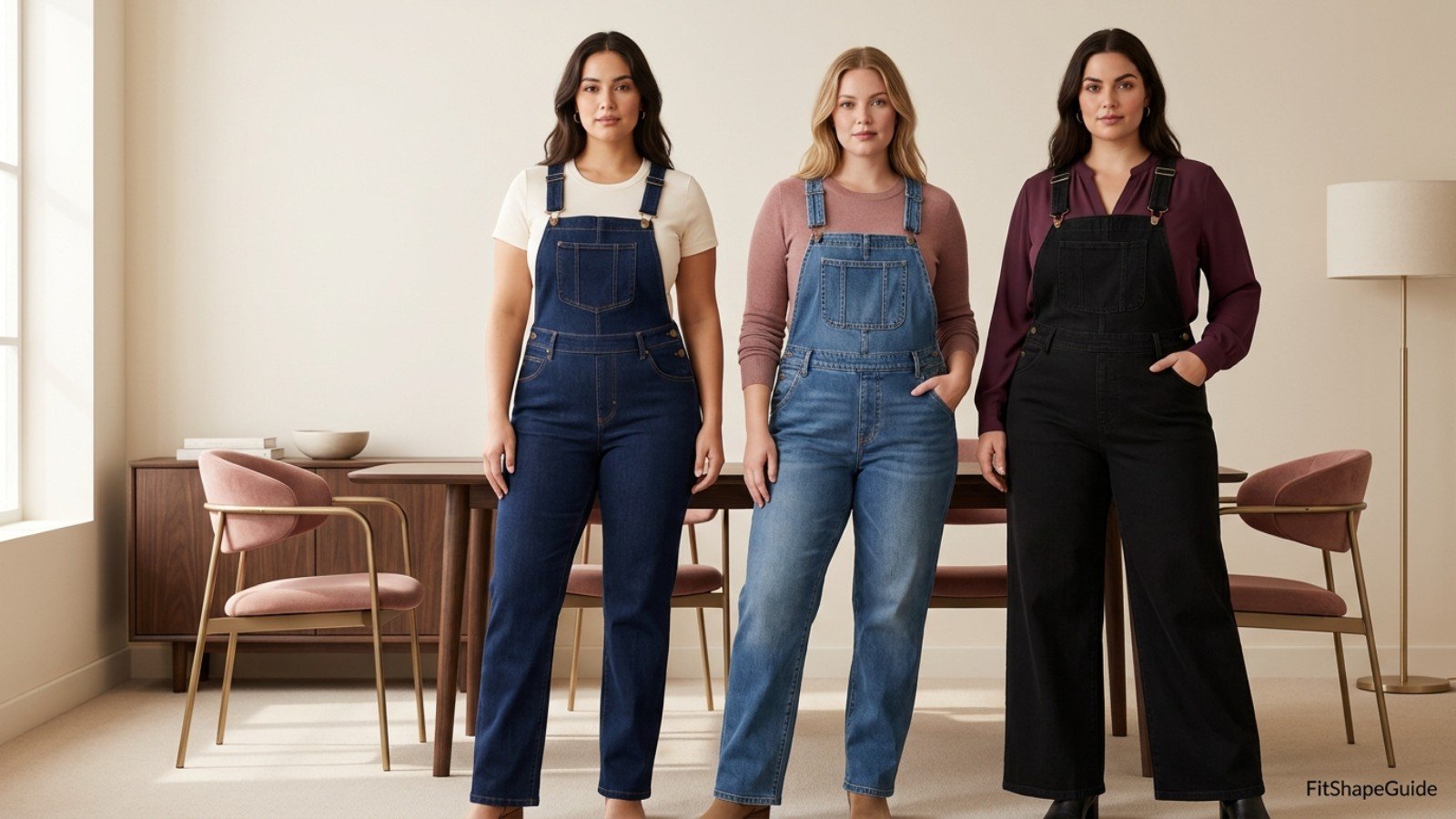
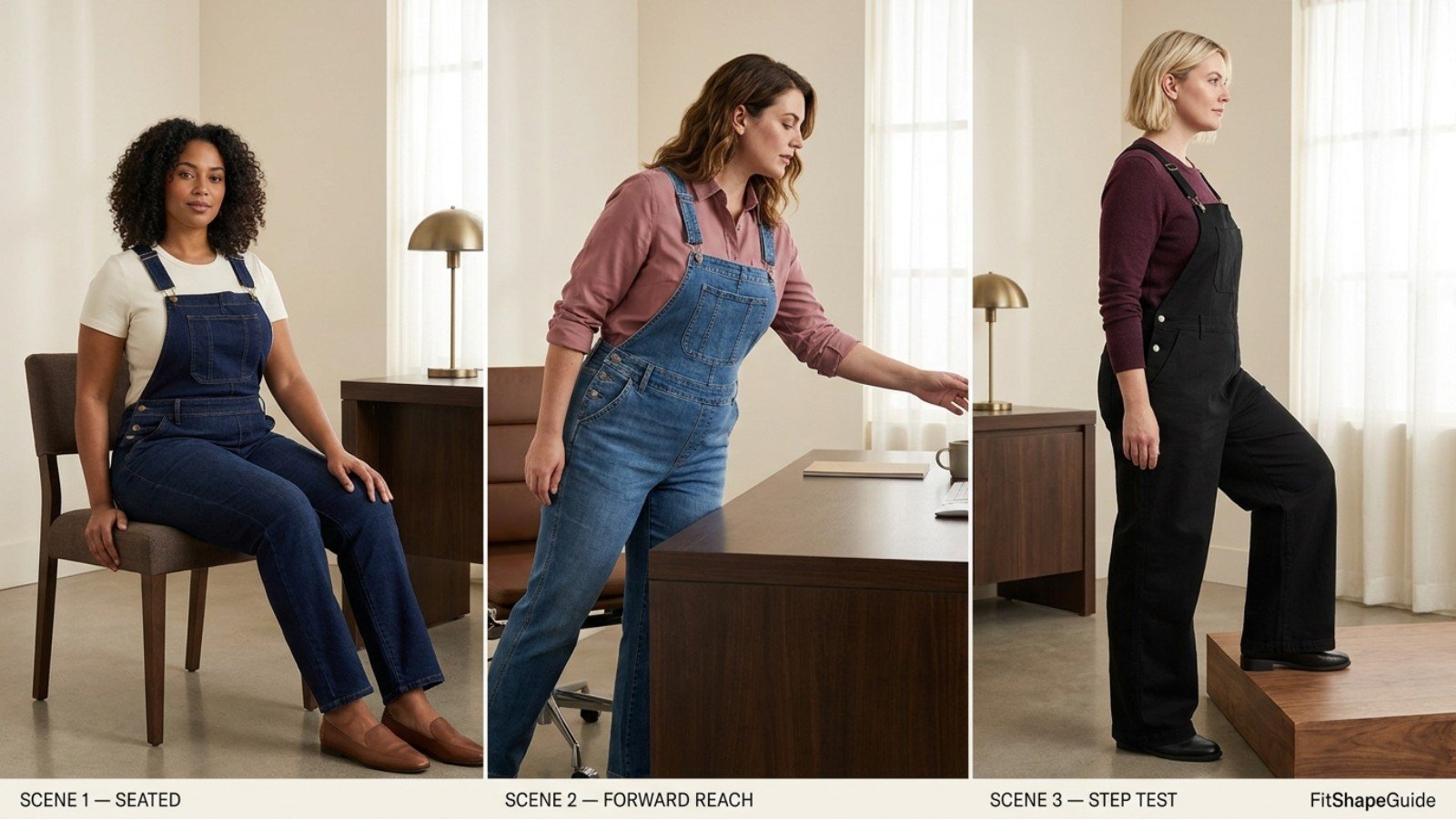
The 90-second overall test
- Wear the bra and top you would normally layer underneath.
- Set both straps to equal effective length and close every side button or zip.
- Check that the bib stays flat, the top edge does not bisect the bust and the side seams remain vertical.
- Sit, squat lightly, reach forward and lift one knee as if climbing a step.
- Confirm that the crotch does not pull, straps do not dig or slip, and the bib returns to position.
- Undo and refasten the garment as you would in a restroom; practicality is part of fit.
If loosening the straps fixes the bust but drops the crotch too low, the overall needs a different bib or torso proportion—not merely another strap setting.
How overalls fit differently from jeans
Jeans stop at the waist or hip. Overalls connect trousers to a bib through straps, so a change at the chest can travel into the rise, seat and leg. Shortening the straps raises the bib, but it also raises the crotch. Lengthening them lowers the bib, but it may lower the waist position and reduce control at the sides. That connected geometry is why choosing only by jeans size often fails.
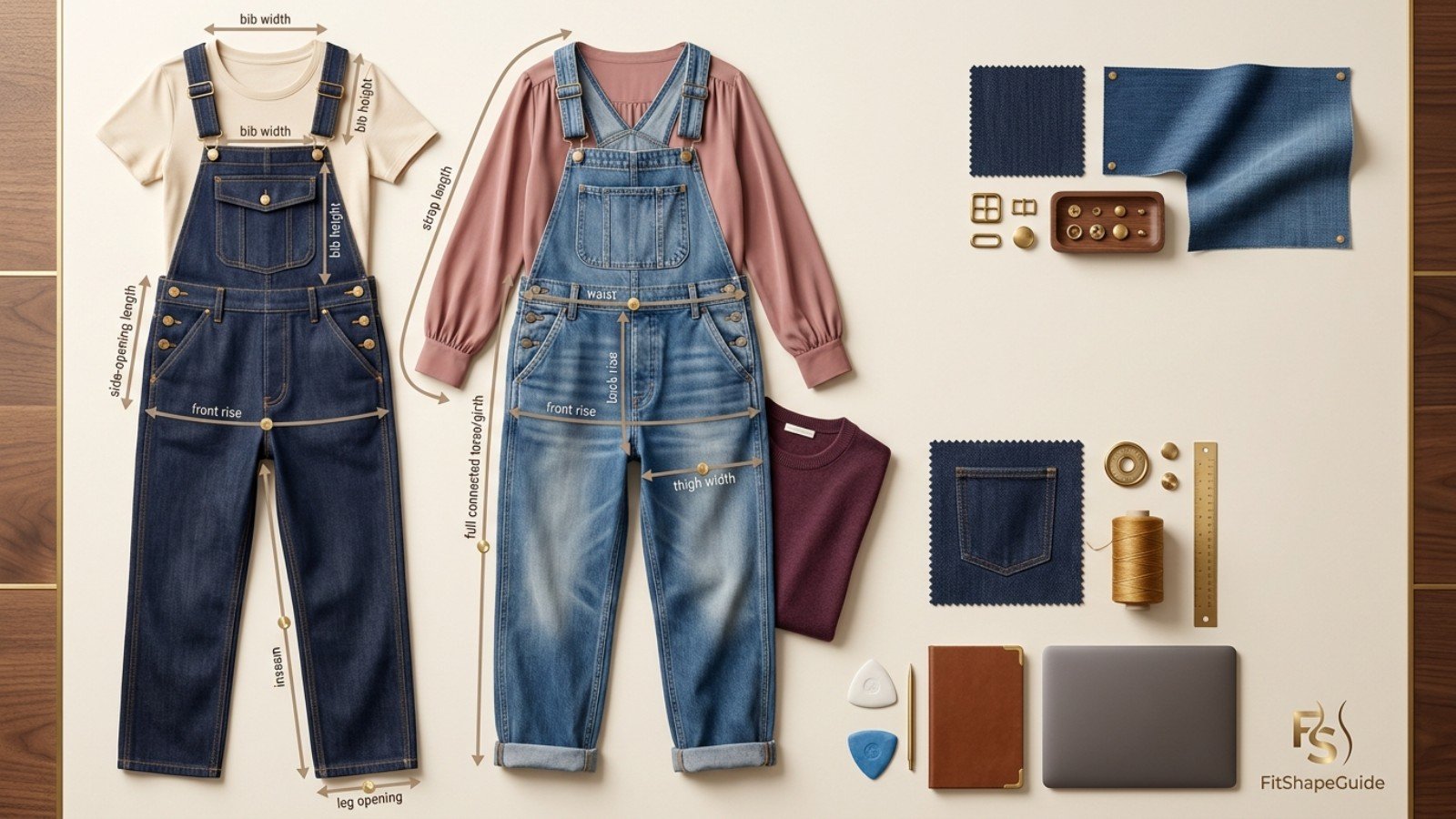
Measure the fullest bust over the intended bra, the natural waist, fullest hip and inside leg. Add a practical girth check: place a flexible tape at the high shoulder, run it down the front through the legs and back to the starting point without pulling tight. Retailers rarely publish total girth, but comparing this measurement with the garment’s front rise, back rise, bib and strap range can explain why two overalls with similar hip measurements feel completely different.
Official bib sizing guidance commonly treats bust, waist and hip as distinct inputs rather than assuming one number represents the whole body. The Carhartt size and fit guide, for example, explains how to measure the fullest bust with the tape parallel to the floor and separately locate the natural waist and fullest hip. Use a brand’s own chart for the exact item; numeric sizes are not interchangeable between labels.
| Fit area | What good fit looks like | Warning sign | Better construction response |
|---|---|---|---|
| Bib | Lies calmly over the layer; top edge sits intentionally | Top edge cuts across bust or center bows outward | Longer/wider bib, curved edge or more front ease |
| Straps | Equal, secure and adjustable with room remaining | Fully extended, digging, slipping or twisting | Longer strap range, better buckle, rear cross-back |
| Side closure | Buttons or zip close vertically without gaping | Diagonal wrinkles from bust to upper hip | More side length, curved seam or additional closure positions |
| Rise and seat | Allows sitting, walking and knee lift without pull | Crotch tension, wedging or bib dragged downward | Longer front/back rise, deeper seat or relaxed cut |
| Leg | Moves independently of torso and works with shoes | Thigh grabs and tugs entire garment when walking | More thigh ease, stretch or straighter/wider leg |
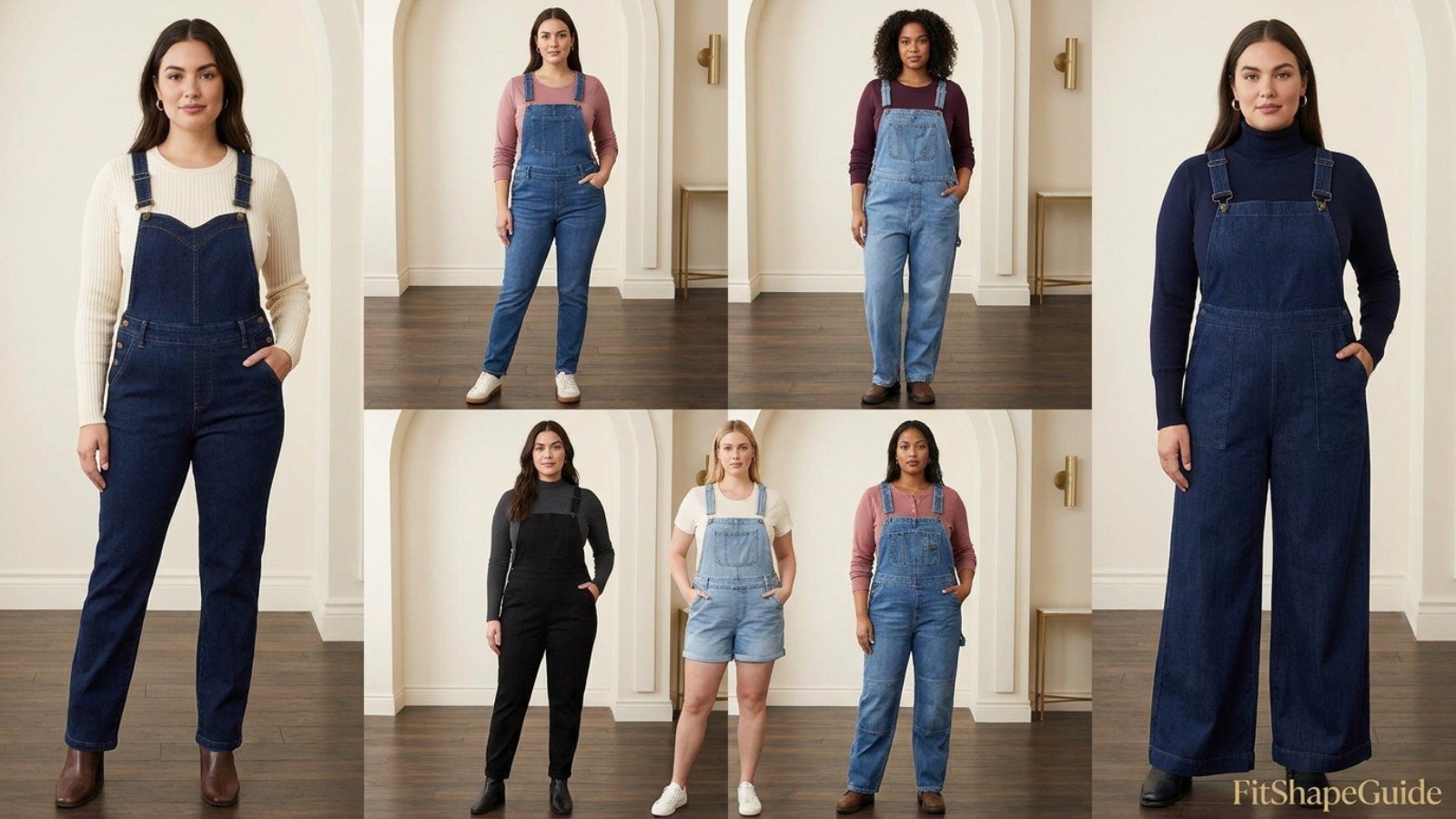
Eight denim-overall styles compared
Shaped straight-leg bib overalls
Best for: a defined everyday look with both open and layered outfits. A softly shaped waist, curved side seam or contoured bib can reduce excess fabric below the bust while preserving hip room.
Trade-off: a close shape exposes proportional errors quickly. If the waist seam sits too high or the torso is short, it can pull the bib forward and the rise upward.
Stretch denim overalls
Best for: sitting, commuting, reaching and bodies whose measurements fall between sizes. A small stretch component can make side closures and thigh movement more forgiving.
Trade-off: stretch is not a replacement for sufficient pattern room. Weak recovery can create bagging at the bib, knee or seat, while tight stretch denim may still show closure strain.
Relaxed classic overalls
Best for: casual layering, fluctuating layers and a workwear-inspired silhouette. Extra ease through torso and hip lets the bib hang rather than cling.
Trade-off: extra volume can bunch at the waist, and a very wide bib may push outward over a thick top. Keep shoulder hardware and side closures stable.
Wide-leg denim overalls
Best for: thigh ease, airflow and a deliberate full-length silhouette. The wider lower half can make the connected garment feel less restrictive.
Trade-off: hem length becomes important, especially because changing straps also changes where the leg hangs. Shoes and alteration plans should be decided before purchase.
Tapered or slim overalls
Best for: compact outfits, ankle boots and a cleaner line under coats. A tapered leg can limit excess fabric without requiring a tight bib.
Trade-off: narrow thighs may pull the rise with every step. Confirm that the leg—not just the bust—permits a full stride and seated knee bend.
Denim shortalls
Best for: warm weather, beach layering and casual weekends. With less leg fabric, torso and bib proportions become easier to read.
Trade-off: short inseams can ride when sitting, and side openings may expose more of the underlayer. Test the hem, rise and pocket openings together.
Workwear bib overalls
Best for: practical pockets, durable fabric and physical tasks. Tool pockets, reinforced panels and strong buckles can improve utility.
Trade-off: heavy rigid cloth and bulky bib pockets add weight over the front. Functional hardware may be less comfortable under a seat belt or outer layer.
Jumpsuit-style denim overalls
Best for: a more polished one-piece appearance, sometimes with a defined waist, zip front or collar. They can transition into casual office styling.
Trade-off: fixed shoulders, sleeves or a closed bodice remove the adjustment advantage of classic straps. Bust, torso and rise must all align more precisely.
| Style | Bust/torso flexibility | Layering capacity | Main check | Likely trade-off |
|---|---|---|---|---|
| Shaped straight | Medium | Light to medium | Waist and side seam placement | Less forgiving of torso mismatch |
| Stretch | Medium–high | Light to medium | Recovery after sitting | May bag with wear |
| Relaxed | High | Medium–heavy | Bib stability and excess waist fabric | More visual and physical volume |
| Wide leg | Medium–high | Medium | Hem after strap setting | May require alteration |
| Slim/tapered | Low–medium | Light | Thigh and seated movement | Leg can tug the torso |
| Shortall | Medium | Light | Rise and seated coverage | Short hem may ride |
| Workwear | Medium–high | Medium–heavy | Fabric weight and hardware | Bulk and stiffness |
| Jumpsuit-style | Low | Usually light | Full torso and closure | Less adjustability |
Bib depth, width and pocket placement
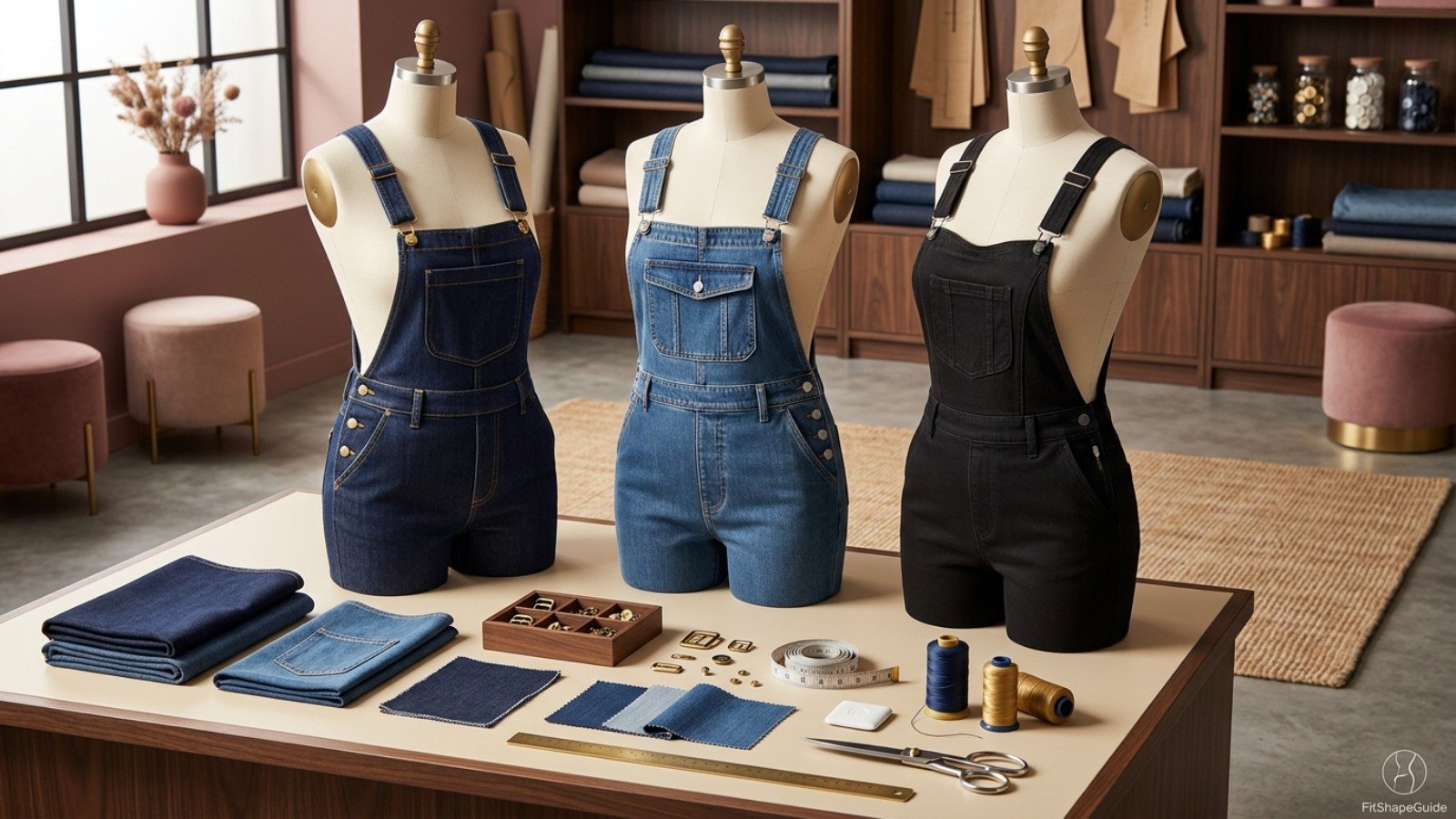
The bib does not have to cover the entire bust. It does need to look intentional at the height where it ends. Three common placements are below the fullest point, across the upper bust and high near the collarbone. A mid-bust top edge is often the hardest because the horizontal seam may be pushed forward while the corners pull backward. A lower bib can sit against the ribcage; a sufficiently wide and long high bib can follow the torso. Neither is automatically more flattering—choose the one that stays stable during movement.
Check the upper corners. When they point outward or the bib forms a shallow tent, the issue may be insufficient width, a too-short bib, or straps anchored too close together. Curved upper edges, deeper arm-side shaping and flexible strap anchors can help the panel travel around the bust rather than balancing on top of it. If the fabric is rigid, the pattern needs to provide this shape; tightening hardware rarely creates it.
Bib pockets add a second layer of denim and often a flap, zip or tool division. A large patch pocket can visually organize the front, but it can also stiffen the panel. Place your phone or keys inside during the try-on. If the pocket’s weight tips the bib outward, choose a lighter pocket, lower placement or use the trouser pockets instead. Decorative seams should remain level; a bowed pocket opening is evidence of strain, not a body problem.
Straps, buckles and torso length
Adjustable straps are useful only when the correct fit falls inside their range. In the fitting room, note whether the slider sits near an extreme. A strap at maximum length leaves no allowance for a thicker top, slight fabric shrinkage or a lower bib preference. A strap shortened almost completely may create a bulky doubled section near the shoulder or buckle. Ideally, the chosen setting leaves usable adjustment in both directions.
The back design affects stability. Parallel straps can slide on sloped shoulders; cross-back straps resist outward movement but may feel closer to the neck; a racerback or high back panel distributes tension but adds coverage. Wide straps spread pressure better than narrow straps, yet very rigid wide denim can rub at the shoulder. The best system lets you reach the buckles, keeps the straps flat and does not transfer all garment weight to the upper body.
Buckle security matters more with heavier denim. Walk, sit and reach several times, then compare the strap lengths. If one slider creeps, the bib will rotate and the rise will feel uneven. Metal hardware should move deliberately, not release under normal tension. Check that the slider does not land directly under a bag strap, bra adjuster or car seat belt.
Torso length is not the same as height. Two people of equal height can need different rise, bib and strap proportions. If the overalls fit the hip but the bib cannot reach a stable position without crotch pressure, search for long-torso, tall or extra-adjustable options. Petite proportions may need a shorter rise or bib, not simply a shorter leg. Hem alterations cannot correct a torso mismatch.
Rise, seat, hips and side closures
A large bust may be where overall fit is first noticed, but the rise often controls comfort. When the front rise is short, the crotch pulls upward and the bib is dragged down; the wearer may then tighten the straps to lift the bib, making the cycle worse. When the back rise or seat depth is short, sitting pulls the straps backward and the front bib upward. Test a seated position for at least a minute rather than relying on a standing mirror.
Side buttons create an opening large enough to step into the garment and also shape the upper hip. Close every button. Leaving the top one open may relieve tension, but it changes the intended side height and can expose the layer. A better fit provides adequate side length or a curved seam. Zipped sides create a smoother line but offer fewer micro-adjustments. Multiple button positions can be useful only if the placket stays flat in the chosen setting.
Fit the hip and thigh independently. A roomy bib cannot compensate for a tight seat, and a wide leg can still be narrow at the high thigh. Sit, squat, climb a step and put a hand in each pocket. If the pocket mouths gape before the bib changes, hip tension is likely. If the pockets remain flat but the bib lifts, examine torso length and strap setting.
For a more defined silhouette, look for darts, curved side seams, an inset waistband or adjustable side tabs rather than relying on a belt over bulky denim. Belts can look polished, but they also anchor the garment; if the rise is short, anchoring the waist increases pull. A gently floating waist is often more comfortable for long seated periods.
Rigid denim, stretch and garment weight
Rigid denim holds the bib and leg shape clearly. It can be excellent for relaxed or workwear overalls when the pattern includes adequate ease. Its trade-off is that pressure does not disappear: a small shortage at the bust, rise or thigh is transmitted through the connected garment. Break-in may soften hand feel, but it should not be used to justify painful or movement-limiting fit at purchase.
Stretch denim can accommodate breathing, sitting and reaching, especially in closer silhouettes. Read the full fiber content and assess recovery. After sitting for several minutes, stand without adjusting the garment. Knees, seat and bib should settle instead of remaining bubbled. More stretch does not always mean more support; a soft lightweight blend may drape beautifully but let hardware and pockets sag.
Fabric weight interacts with a fuller bust because the entire garment hangs partly from the shoulders. Heavy denim, reinforced knees, multiple pockets and metal hardware can create cumulative load. If the garment feels heavy when empty, add the weight of a phone, wallet and keys before deciding. A lighter denim may be better for all-day casual wear, while durable workwear may justify more weight for specific tasks.
Check the sewn-in care label. Levi’s official denim care guidance recommends spot cleaning small marks, washing less frequently and air drying when possible to limit fading and shrinkage; exact instructions still depend on the garment. For stretch denim, avoid assuming that heat is harmless to elastic fibers. Dark indigo can transfer dye, so test cautiously around pale tops, bags, upholstery and shoes, particularly when the denim is new or damp.
What to wear under denim overalls
The underlayer changes fit as much as styling. A close crew-neck tee makes the bib easiest to assess because it adds little bulk and keeps the edges secure. A fitted rib knit offers stretch but can catch under rough denim. A button-down adds placket and sleeve volume; make sure the overall does not press its buttons or force the shirt to pool at the waist. Fine-gauge knits usually work better than bulky sweaters in shaped overalls.
Start with the bra that supports the planned activity and neckline. The overall straps should not be expected to hold bra straps in place, and hardware should not stack directly over adjusters. A secure shell from our tops guide for a large bust creates a clean base. For a workwear-inspired double-denim outfit, vary wash and texture rather than trying to match exactly; our denim shirts guide explains how shirt seams and closures behave through the chest.
Proportion can be adjusted through leg and shoe choice without treating the bust as something to disguise. Straight and wide legs work with substantial shoes; tapered legs expose more ankle; a rolled hem creates a deliberate horizontal finish. The same rise and waistband principles discussed in our high-waisted jeans guide apply when the trouser section of the overall sits high.
For cooler weather, layer a jacket over overalls only after checking hardware. A cropped or waist-length outer layer can meet the overall’s side button area; a longer layer may cover pocket bulk. The construction checks in our denim jackets guide help prevent two sets of rigid seams from stacking at the bust and shoulder. If the outfit needs a polished setting, a dark, minimally distressed overall with a fine knit and structured shoe can borrow ideas from our business-casual outfit guide, subject to the actual workplace dress code.
Shopping, alterations and a two-overall capsule
Before ordering, record bust, waist, hip, high thigh, inseam and body girth. Compare those numbers with the brand’s garment or body chart and read how the intended fit is described. “Loose” may refer only to the leg; “relaxed” may not add bib width; “oversized” may add volume everywhere. If only a generic size chart is available, treat uncertainty as a reason to prioritize easy returns—not as permission to assume.
Product photography should include front, side and back views. Zoom in on strap length, back attachment, bib top edge, pocket layers, side opening and waist seam. Confirm whether buttons are functional, whether the straps detach, and whether the denim is rigid or stretch. Reviews can reveal patterns, but individual height or bra size alone cannot predict fit; look for measurements, torso comments and repeated construction observations.
Alterations are possible but vary in complexity. Hemming is usually straightforward unless the leg has zips, snaps or a shaped cuff. Shortening straps can be manageable when hardware allows excess length to be secured. Adding strap length, changing a bib, increasing rise depth or creating hip room is more involved because matching denim, topstitching and hardware may be required. Buy for the hardest-to-alter area first.
A practical capsule needs only two distinct roles. One shaped medium- or dark-wash pair can work over tees, shells and fine knits; one relaxed or workwear pair can accommodate sweatshirts, creative tasks and casual weekends. Their legs should differ enough to change function—perhaps straight plus wide, or full-length plus shortall. This creates more range than buying several nearly identical pairs with the same fit problem.
Pairing the trouser portion with familiar proportions helps. If straight or wide jeans already work, use the jeans balance guide to identify which rise and leg shape can transfer to overalls. Then give equal attention to bib and torso measurements, because they are the new variables.
Common overall fit problems and fixes
| What you see or feel | Likely cause | First test | Better solution |
|---|---|---|---|
| Bib floats away from chest | Bib too short/narrow, stiff pocket or close strap anchors | Remove pocket contents and lengthen straps slightly | Longer/wider or shaped bib with better anchor spacing |
| Top edge cuts across fullest bust | Unhelpful bib height | Test a clearly lower and clearly higher bib | Choose an intentional edge position rather than mid-bust |
| Straps slip outward | Back anchors too wide or strap path incompatible with shoulders | Cross straps if construction permits | Cross-back, racerback or closer rear anchors |
| Crotch pulls when straps look right | Insufficient torso girth or rise | Lengthen straps without judging bib height | Longer torso/rise pattern; tall option where suitable |
| Side buttons gape diagonally | Short side length, insufficient upper-hip room or bib pull | Check seam with straps loosened | Curved side seam, more ease or longer side opening |
| Pockets open or flare | Hip/thigh strain or bulky pocket construction | Empty pockets and sit | More hip/thigh ease or flatter pockets |
| One strap gets longer | Slider creep or uneven buckle tension | Mark settings temporarily and move | More secure hardware or replace buckle |
| Hem changes after adjusting bib | Strap setting changes total hang | Finalize straps with planned shoes | Hem only after torso fit is settled |
| Seat bags after sitting | Low-recovery stretch or too much ease | Wait and see whether fabric resettles | Better recovery or a more structured blend |
| Bathroom use feels impractical | Hard-to-reach buckles, complex layers or insecure straps | Time a full undo/refasten cycle | Simpler front hardware and manageable layer |
Do not solve every symptom by sizing up. A larger size can add bust and hip room, but it may also lengthen the rise, widen the bib, lower the waist and increase leg volume. Size up only when those changes remain compatible. Otherwise change proportion, construction or style.
Choose the connected fit, not one isolated measurement
The best denim overalls for a large bust coordinate a stable bib, usable strap range, sufficient torso girth, smooth side closures and a rise that permits real movement. A shaped straight-leg pair is the strongest versatile starting point; stretch improves motion when recovery is good; relaxed and workwear cuts allow thicker layers; wide legs add thigh ease; and jumpsuit styles trade adjustment for polish.
Set the straps over the real underlayer, close every opening and test sitting, reaching, walking, knee lift, pockets and restroom use. If improving the bib creates crotch pull—or fixing the rise makes the bib collapse—the pattern proportion is wrong. The correct overall should let the body move while its own seams, pockets and hardware return to place.
Frequently asked questions
Can you wear denim overalls with a large bust?
Yes. Choose a bib height and width that sit intentionally, adjustable straps with usable range, sufficient torso girth and side closures that remain flat during movement.
Should I size up in denim overalls?
Size up only if the added bib, rise, hip, thigh and leg dimensions also work. A different torso proportion or shaped style may fit better than a generally larger size.
Where should the bib sit on a large bust?
The top edge can sit below or above the fullest point, provided it remains stable and intentional. An edge that cuts directly across the fullest area is more likely to bow or pull.
Are stretch denim overalls better for a fuller bust?
Stretch can improve sitting and reaching, but it cannot replace enough bib and torso room. Look for recovery so the bib, knees and seat return to shape after movement.
What top should I wear under denim overalls?
A secure fitted tee, shell, button-down or fine-gauge knit works well. Test the overalls with the actual layer because thickness changes bib, side and strap fit.
How tight should overall straps be?
Straps should hold the bib without digging, slipping or pulling the crotch upward. The correct setting should leave some adjustment available in both directions.
How do I know if the rise is too short?
A short rise causes crotch pressure, strap tension, a bib that is dragged downward or discomfort when sitting and lifting a knee, even when hip width seems adequate.
How should I test denim overalls before buying?
Wear the intended layer, set both straps, close every side fastener, sit, reach, walk, lift a knee, use the pockets and practice undoing and refastening the garment.
Editorial standards
This guide prioritizes garment construction, measurable fit, movement and explicit trade-offs. It does not treat a large bust as a flaw, promise that one silhouette suits every reader or infer product performance from marketing language. General measurement guidance was checked against official brand resources, while care advice is subordinate to each garment’s sewn-in label.
Before publishing any commercial recommendation, FitShapeGuide should verify a direct live listing, seller, exact style and wash, current size range, garment measurements, intended fit, bib and strap construction, closure, fiber content, stretch, lining, care, stock and return policy. Any material connection should be disclosed clearly and near the recommendation in line with the FTC endorsement guidance.