Best Backless Bra Solutions for a Large Bust
A construction-first guide to low-back bras, multiway foundations, converters, longline support, adhesive cups, breast tape and dress-integrated solutions—matched to how low and open the outfit actually is.
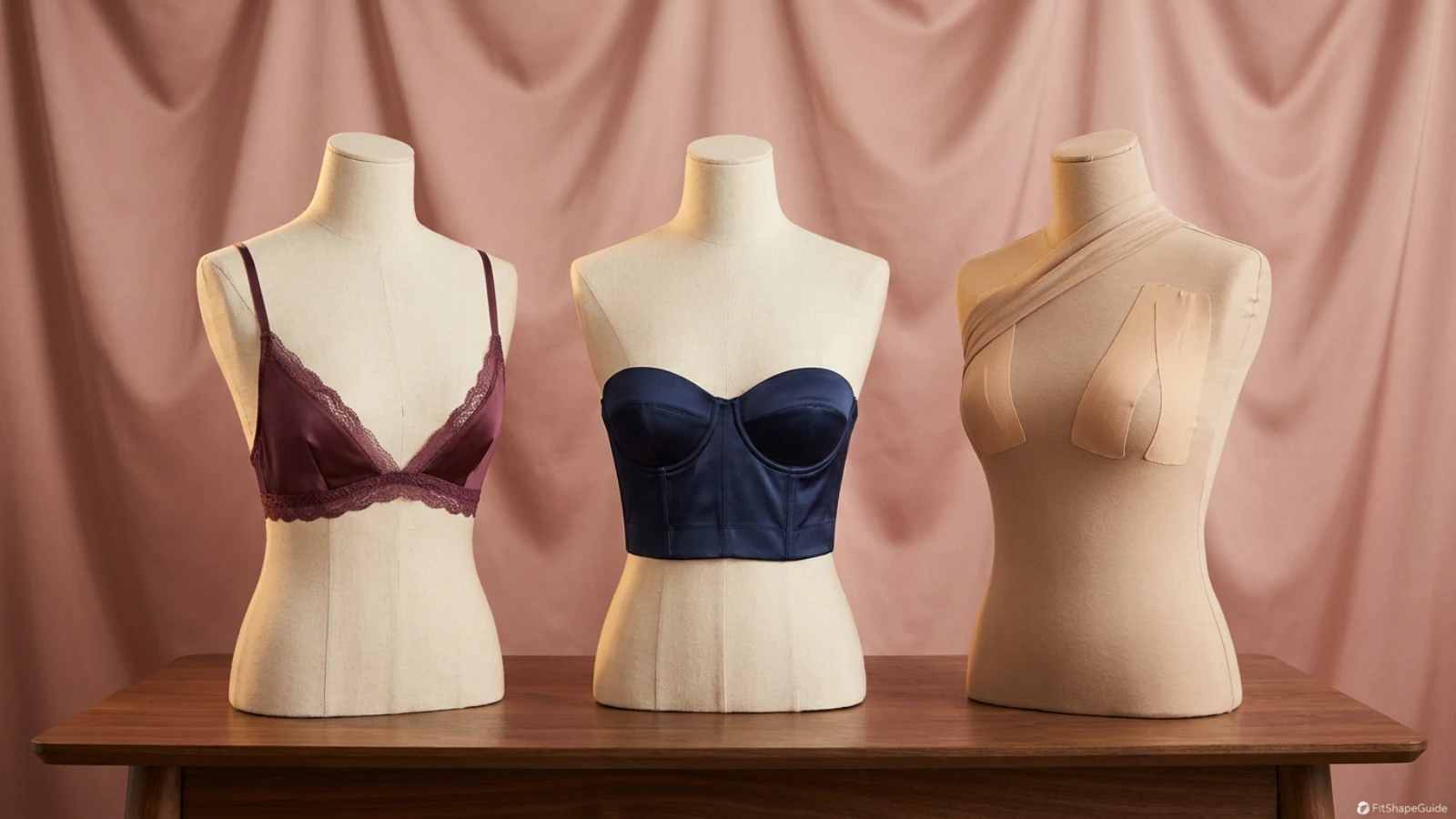
The 90-second backless-dress test
- Measure the dress back first: find the lowest visible point before buying any foundation.
- Put the foundation on correctly: do not push a conventional bra band lower than its intended position just to hide it.
- View the outfit from behind: check bra band, converter, wings, tape and cup edges.
- Turn three-quarters: many low-back solutions become visible near the side seam before they show at center back.
- Sit and raise both arms: check support and whether the dress shifts enough to expose the solution.
- Wear it for longer than a mirror test: especially when adhesive, boning or a low-back converter is involved.
There is no single “backless bra” construction
“Backless” is often used for several very different clothing problems. A dress that drops five centimeters below an ordinary bra band may still allow a modified band-based solution. A dress cut almost to the waist removes the very structure that normally provides much of a bra’s support.
That distinction matters more with a large bust because conventional support is distributed through the cups, frame, band, wings and straps. Lowering or removing the back changes where tension can be anchored.
The most supportive solution is therefore not automatically the one with the least visible material. It is the option that hides beneath the garment while preserving as much effective structure as the neckline and back allow.
Start by measuring the dress. Put it on over your preferred everyday bra and mark where the ordinary band becomes visible. You may discover that you need only a modestly lower back—not a completely adhesive solution.
| Dress back | Strong starting solution | Support source | Main limitation |
|---|---|---|---|
| Slightly below normal bra band | Low-back converter | Existing bra cups + altered band path | Can change band tension and angle |
| Moderately low back | Purpose-built low-back multiway bra | Underwire + cups + lowered back frame | Back cannot drop indefinitely |
| Deep V front + low back | Specialist plunge low-back bra | Plunge cups + specialized band | Fit range is more specific |
| Low-back formal gown | Longline / bustier foundation | Extended torso structure | Must remain hidden beneath dress back |
| Structured formal dress | Sewn-in cups + boning | Dress itself | Requires correct garment fit or tailoring |
| Open back with some side coverage | Adhesive cups | Adhesion + cup shape | Less anchoring than a full band |
| Very open back | Purpose-made breast tape | Adhesive positioning | Skin tolerance and application matter |
| Extreme open-back couture-style dress | Hybrid dress structure + tape/support | Garment construction + selective adhesive | Often benefits from professional fitting |
Best backless bra solutions for a large bust
Purpose-built low-back multiway bra
This is often the strongest first choice when the dress exposes a normal bra band but still leaves enough lower-back fabric for a redesigned band system.
Best for: moderately low backs, plunging formal dresses and multiway necklines.
Low-back converter
A converter attaches to a compatible bra closure and redirects the band lower around the torso. It can preserve the familiar cups of a bra you already know fits.
Best for: a modest drop below ordinary band level—not truly open-back dresses.
Longline low-back foundation
An extended torso frame can redistribute support below the cups and sometimes allow the upper back to be cut lower than a standard bra.
Best for: structured gowns and formal dresses with enough side and lower-back coverage.
Bustier or corset-style formal foundation
A well-fitted formal foundation can use cups, boning and torso structure to anchor support lower on the body.
Best for: formal gowns designed to accommodate the foundation’s exact shape.
Sewn-in cups and dress boning
When the dress itself is structured, cups and internal boning can turn the garment into the main support system rather than hiding a separate bra inside it.
Best for: weddings, galas and important dresses worth tailoring.
Adhesive cups
Adhesive cups provide front coverage and shaping without a conventional back band. Some designs connect at center front, while others are separate.
Best for: open-back garments where moderate shaping is sufficient and skin tolerates the adhesive.
Purpose-made breast-support tape
Tape can be positioned according to the garment neckline and back because it does not require a fixed cup or band shape.
Best for: very open formal clothing when used exactly as directed and when the skin tolerates adhesive.
Hybrid dress support
A structured dress can provide most support while selective tape or adhesive manages an edge, neckline or small area that would otherwise move.
Best for: complex evening dresses where neither an ordinary bra nor adhesive alone is ideal.
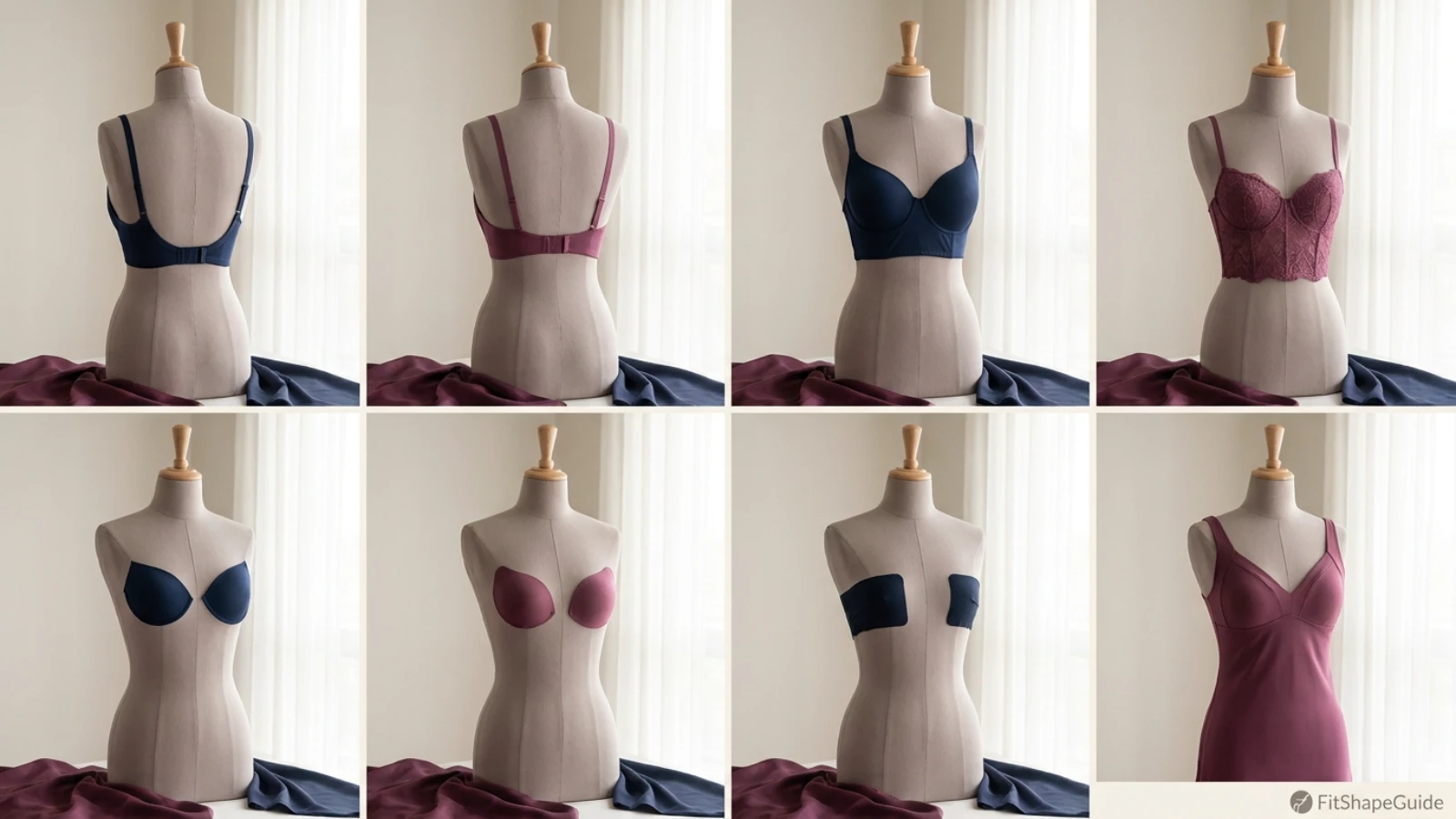
Low-back bras for fuller-bust support
A dedicated low-back bra is different from simply pulling an ordinary bra lower. Its straps, cups and band geometry are designed around a lower rear anchoring point.
Low-back multiway frame
A multiway low-back design may combine plunge cups with flexible strap positions so the front, shoulders and back can all work with more revealing formal clothing.
Cup fit remains essential
The lowered back does not excuse shallow cups. The breast should remain fully contained without the center, side wire or cup edge being pulled out of position.
Band angle
The band may sit at a different angle from an ordinary horizontal bra. Follow the intended construction rather than assuming it should look exactly like your everyday bra from the back.
Side wing height
A low center-back bra can still have supportive side sections. Check the dress from the side because the wing may show before the center back does.
Plunge depth
If the dress is low in both front and back, a low-back plunge foundation may be required. Verify both dimensions; solving the back while the bra center shows at the front does not help.
Multiway straps
Detachable or repositionable straps can accommodate halter, crossback or wide-neck clothing. They should assist the frame rather than substitute for an unstable band.
When a low-back bra converter works
A low-back converter connects to a compatible bra’s hook-and-eye closure, wraps around the torso and fastens lower at the front or side depending on its design.
The advantage is obvious: you may be able to keep the cups and wire shape of an existing bra that already fits your bust.
Best use
Converters are most useful when the dress misses covering a normal bra band by a relatively modest amount.
Band tension changes
Redirecting the closure changes the band’s path around the body. Reassess cup position, center gore and side wires after attaching the converter.
Torso placement
The converter should lie where the manufacturer intends. Do not drag it much lower around the abdomen merely to chase a deeper dress back.
Dress side seams
Turn to each side. Converter straps sometimes become visible near dress cutouts or low side panels even when center back looks clear.
Seated comfort
Because the converter travels lower around the torso, sitting can change tension. Wear the complete system long enough to identify rolling or pressure before an important event.
Longline bras, bustiers and low-back formal foundations
Longline and bustier-style foundations extend below the ordinary bra band. This creates more area for structure and can help formalwear when the dress leaves enough torso coverage to hide the foundation.
Extended torso frame
Instead of concentrating tension in one narrow band, the foundation may distribute it across a deeper section of the ribcage and upper waist.
Boning or flexible support channels
Vertical reinforcement can help keep the extended frame from folding. It should remain comfortable when sitting rather than pushing sharply into ribs or waist.
Built-in cup structure
Check cup depth exactly as you would with any bra. A longline body cannot compensate for undersized or poorly shaped cups.
Back height
Not every longline is low-back. Some actually rise higher than a standard bra because they are designed for smoothing rather than open-back clothing.
Dress waist
The lower edge of the foundation should not create a visible ridge beneath a fitted formal dress. Try the two garments together before alterations are finalized.
Torso length
A shorter torso may not have enough vertical room for a deep bustier. A shorter longline or structured dress itself may be more comfortable.
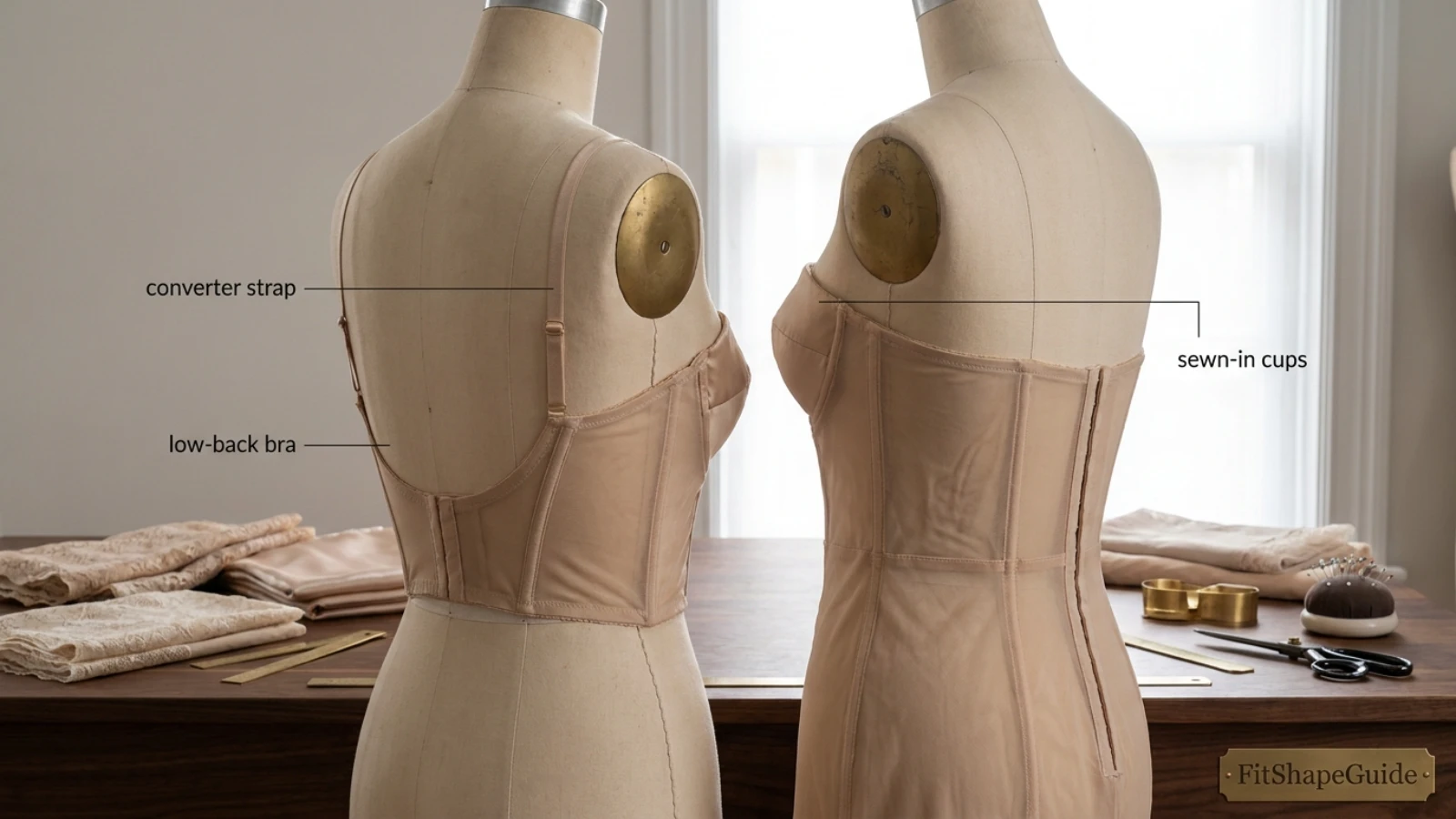
Sewn-in cups, boning and professional dress alterations
A backless formal dress removes space for ordinary lingerie. Instead of fighting that design, the garment itself can sometimes become the support system.
Sewn-in cups
Cups can provide shaping and coverage, but generic small foam inserts are not automatically enough for a large bust. Cup position and volume need to match the wearer.
Princess seams
A formal bodice with vertical seams can create three-dimensional bust projection before any internal cup is added.
Boning
Boning helps a structured bodice resist collapsing. It should support the garment rather than press directly into breast tissue.
Waist stay
An internal waist anchor can help transfer some dress weight to the waist instead of asking the neckline or shoulders to carry everything.
Back edge stability
A low-back gown needs enough internal structure around its back edge so it remains in position rather than widening or slipping with movement.
Alterations
For an important gown, fitting the bodice to the wearer can be more reliable than searching indefinitely for an invisible external bra. A tailor may be able to adjust seams, cups, boning or back construction depending on the garment.
Fit before hemming
Changing bust support can change where the entire gown hangs. Finalize the upper bodice and foundations before making the final floor-length hem decision.
Adhesive cups for a large bust
Adhesive cups attach directly to the front of the breasts and leave the shoulders and back uncovered. Some connect at center front; others remain separate.
Their biggest advantage is invisibility beneath open-back garments. Their biggest structural difference is equally important: there is no conventional band wrapping around the torso.
Shaping versus full bra support
Adhesive cups may provide coverage, positioning and some shaping, but the amount of lift and stability can differ substantially from an underwire bra anchored around the ribcage.
Cup dimensions
Look beyond generic S–XL labeling. The adhesive cup needs enough surface area and depth for the breast rather than stopping partway across tissue.
Center closure
A front clasp may pull separate cups toward the center, but it does not create the same support system as a band and side wings.
Dress pressure
A structured dress worn over adhesive cups can provide additional containment. A very loose open dress may ask the adhesive product to do substantially more work by itself.
Heat and perspiration
Skin moisture, heat, oils and the specific adhesive formulation can affect wear. Follow the exact manufacturer’s preparation and wear directions.
Removal
Do not remove adhesive products aggressively simply because the event is over. Follow the product’s specified removal process to reduce unnecessary skin trauma.
Breast-support tape for backless dresses
Purpose-made breast tape can be positioned differently for V-necks, square necks, halters and open backs, making it one of the most flexible backless styling options.
It is also the solution that places the greatest emphasis on adhesive technique and skin tolerance rather than a conventional garment frame.
Use only products designed for skin
Do not substitute duct tape, packing tape, elastic bandages or other household products. Use a product specifically intended for wearable skin application and follow its instructions.
Protect sensitive areas
Follow the product instructions for nipple protection and placement. Adhesive should not be improvised directly across especially sensitive tissue when the manufacturer instructs protective coverage.
Skin should be suitable for adhesive use
Do not apply tape over skin that is already injured, blistered, sunburned or significantly irritated. If you have a known adhesive allergy or significant skin condition, adhesive-based solutions may not be appropriate without professional advice.
Do not apply excessive tension
More tension is not automatically more support. Excessive adhesive tension can increase skin stress and discomfort.
Practice before the event
Do not make an important wedding or gala the first time you use a new adhesive system. Test compatibility, technique and dress coverage in advance according to product directions.
Remove slowly according to instructions
Rapid removal can traumatize skin. Follow the manufacturer’s recommended removal process and stop if you experience significant pain or visible injury.
Match the solution to the actual backless dress
Moderately low-back dress
Start with a low-back bra or converter. If you can preserve a conventional cup-and-band system while keeping it hidden, there may be no reason to move directly to adhesive products.
Deep V front + low back
Check both front and back depth at the same time. A perfect low-back band is irrelevant if the center gore shows through the plunge neckline.
Square-neck low-back dress
The challenge may be both rear band height and upper cup height. Check the bra from the front corners of the neckline as well as the back.
Halter-backless dress
A purpose-built multiway or dress-integrated solution can preserve a clearer shoulder line. A neck strap should not become the only support mechanism if that creates discomfort.
Open-back formal gown
If the back reaches nearly to the waist, a conventional bra band may be incompatible with the design. Structured dress support, adhesive cups or tape become more relevant.
Low-side dress
Side cutouts can make even adhesive solutions visible. Turn both side-on and three-quarters during the final fitting.
Thin satin
Bra cup edges, adhesive cup edges and tape overlaps may all show beneath very smooth fabric. Direct phone flash can reveal transitions that are subtle under soft fitting-room light.
Sheer or lace back
A “backless” visual effect can sometimes be created with sheer structure. In that case, sewn-in cups and dress boning may be more effective than trying to hide a bra beneath transparent fabric.
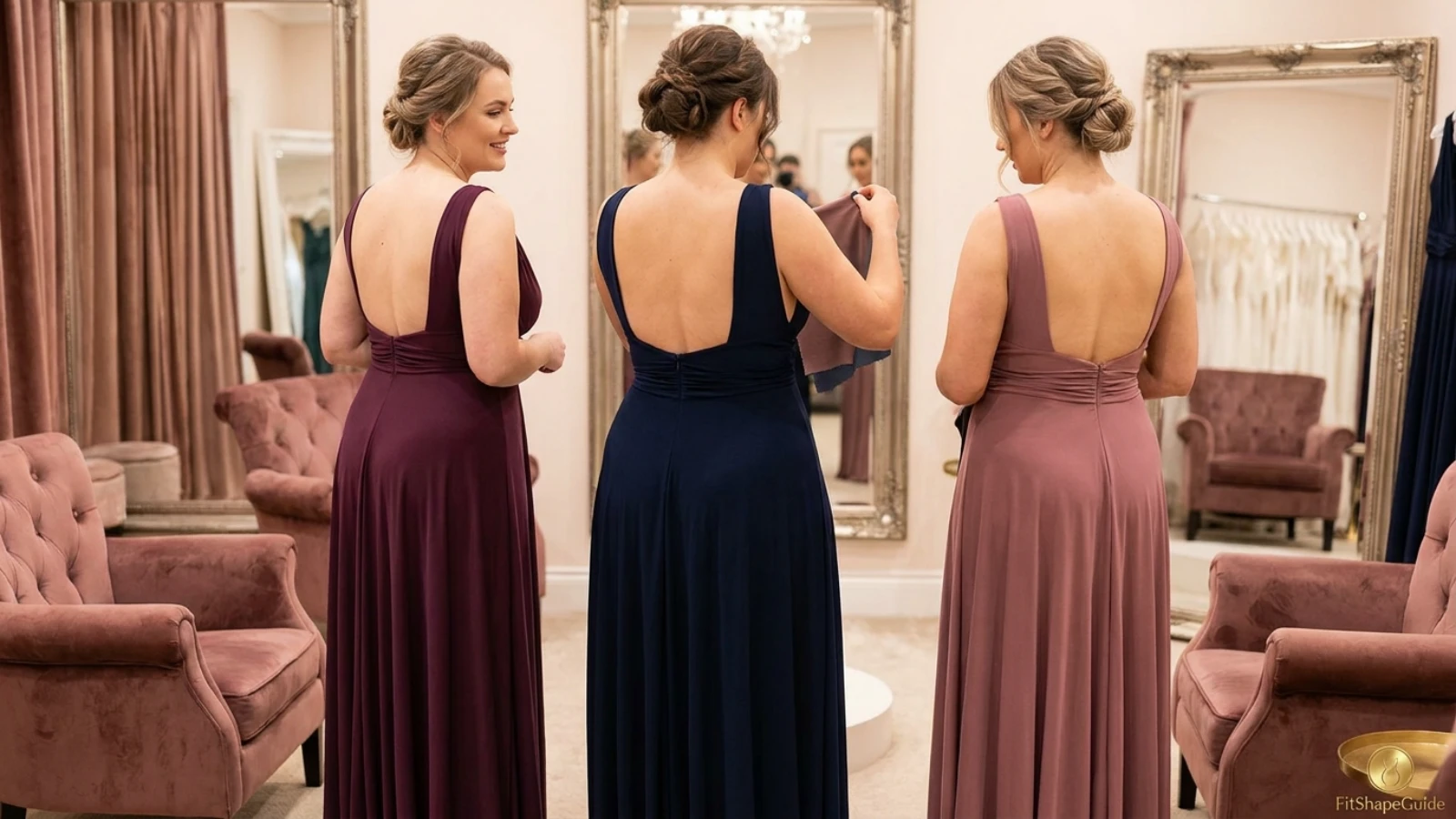
How to buy a backless bra solution online
The biggest online-shopping mistake is buying something called “backless” without comparing it with the actual dress. Back depth, side coverage and front neckline vary too much for the category name alone to predict compatibility.
- Put on the dress over a normal bra: measure how far the dress drops below your ordinary band.
- Check front neckline depth: the solution must disappear at both ends of the garment.
- Measure side coverage: low side cutouts can expose wings or tape.
- Start from your current bra size: for any band-and-cup solution, use a recent well-fitting size as the reference.
- Verify cup range: do not assume a “full bust” claim includes your actual cup.
- Check back height: look for real garment measurements or clear construction images.
- Inspect support mechanism: band, converter, longline frame, boning, adhesive cup or tape.
- Check skin-facing materials: especially for adhesive solutions.
- Review care and reuse claims: follow only verified manufacturer instructions.
- Check returns: foundation garments and adhesives can have different hygiene-return conditions.
Choose the least complicated solution that works
If a simple converter hides beneath the dress and remains comfortable, there is little benefit in moving to a complicated adhesive setup. If no band can remain hidden, then evaluate more specialized options.
Check the dress before assuming you need a bra
Some formal gowns already contain enough cups, boning and internal structure that adding a separate bra makes the bodice fit worse. Evaluate the dress on its own before stacking multiple support systems.
Do not force a conventional bra downward
An ordinary bra band is designed to sit at a specific level around the ribcage. Pulling it several inches lower can change cup and wire position and undermine support.
Order early for formal events
Backless solutions often need more trial than everyday lingerie. Build in enough time to test the foundation, dress and shoes together before alterations are finalized.
Bring the solution to alterations
If the dress is being tailored, wear the exact foundation at each important fitting. Changing from a low-back bra to adhesive tape after the bodice is altered can change bust position and garment length.
For shoulder-free outfits where a normal back remains covered, start with Best Strapless Bras for a Large Bust . For formal dress testing, continue with Gala Outfit Guide for a Large Bust and Red Carpet-Inspired Looks for a Large Bust .
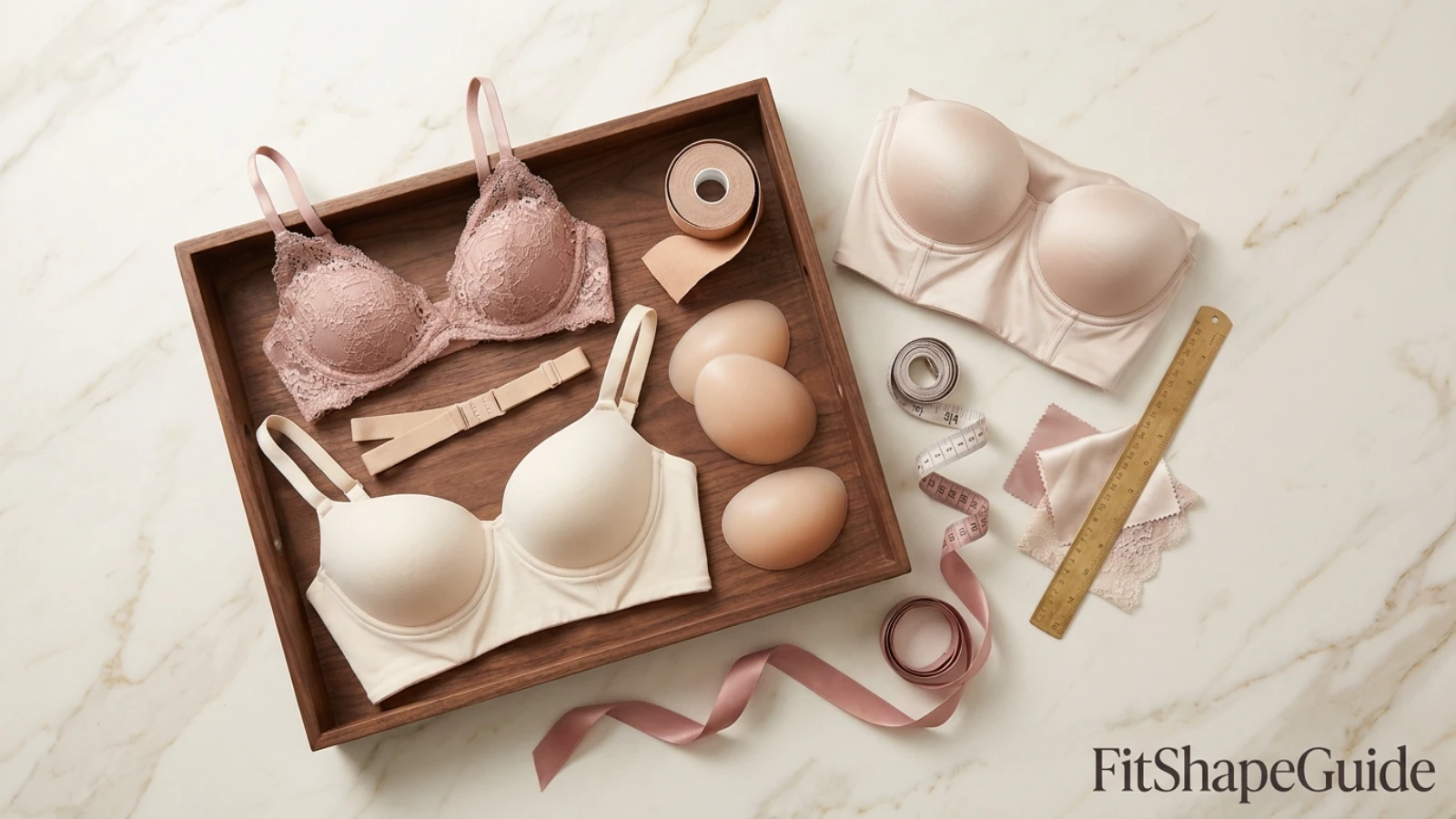
Common backless bra problems
| Problem | Likely cause | Better response | Avoid |
|---|---|---|---|
| Low-back bra still shows | Dress back deeper than bra design | Lower-back or dress-integrated solution | Pulling bra band downward |
| Converter makes cups shift | Band angle/tension changed | Readjust or use purpose-built low-back bra | Ignoring cup distortion |
| Side wings show | Dress side cut too low | Narrower-side or adhesive/dress solution | Checking only center back |
| Longline rolls | Torso/waist shape mismatch | Different longline depth | Tightening lower frame excessively |
| Adhesive cups peel | Skin/product/fit incompatibility | Follow instructions or choose another system | Adding household glue or tape |
| Tape irritates skin | Adhesive reaction, friction or technique | Remove according to instructions and discontinue | Continuing through significant irritation |
| Tape provides less lift than expected | Application or support expectation mismatch | Structured dress or hybrid support | Applying extreme tension |
| Sewn-in cups create double-bust line | Internal cups too small or misplaced | Correct cup size/position through alteration | Adding more padding |
| Dress slides despite adhesive bra | Dress bodice itself lacks stability | Alter/structure dress | Expecting adhesive cup to support garment |
| Foundation works standing but not seated | Torso tension changes | Retest converter/longline position | Evaluating only mirror pose |
The dress is only slightly lower than my bra
Start conservatively. A converter or purpose-built low-back bra may preserve substantially more support than moving immediately to adhesive cups.
The dress is completely open to the waist
A normal band-based bra is unlikely to remain invisible. Evaluate the garment’s own structure, specialist adhesive options or a hybrid tailoring solution.
The tape lifts the bust but the dress still moves
Breast support and dress support are separate. A loose backless bodice may need its own boning, waist anchoring, fashion tape at garment edges or professional alteration.
The low-back foundation changes the front neckline
That indicates the support path is changing cup position. Judge the system as one outfit rather than assuming front and back fit are independent.
Final verdict
The best backless bra solution for a large bust is the most supportive system the dress can hide. For a modestly low back, that may be a converter or purpose-built low-back multiway bra. For deeper formal backs, a longline, bustier or structured dress can preserve more anchoring. For genuinely open backs, adhesive cups and breast-support tape become more relevant but should be treated as different support mechanisms rather than invisible copies of an everyday bra.
Measure the outfit first, test the foundation from front, side and back, and wear the complete system long enough to assess comfort. For major formal events, solving support through the dress itself can be more predictable than trying to force a conventional bra into a silhouette that was designed without one.
Frequently asked questions
What is the best backless bra solution for a large bust?
If the dress is only moderately low, a purpose-built low-back bra or compatible converter is a strong first option because it preserves more conventional band-and-cup structure. Deeper open backs may require longline, dress-integrated or adhesive solutions.
Do backless bras work for a large bust?
Some purpose-built low-back bras are designed for fuller-bust cup ranges, but the amount of support possible depends on how much band and side structure the dress allows to remain hidden.
Can I use a low-back converter with a large bust?
Potentially, especially for a modestly lower dress back. Because the converter changes the band’s path, recheck cup, wire and side-wing position after attaching it.
Do adhesive bras support a large bust?
Adhesive cups can provide coverage, shaping and some positioning, but they do not use the same ribcage-anchored band system as a traditional supportive bra. Performance varies by design, garment and wearer.
Can breast tape work for a large bust?
Purpose-made breast-support tape can be adapted to open-back and unusual necklines, but application technique, skin tolerance and the structure of the dress strongly affect the result.
Is a longline bra good for a backless dress?
It can be when the specific longline is designed with a sufficiently low back and the dress provides enough side and lower-back coverage to hide the frame.
Can cups be sewn directly into a backless dress?
Yes. For structured formalwear, sewn-in cups can be combined with darts, princess seams, boning and waist anchoring so the dress itself provides more of the support.
How do I test a bra for a backless dress?
Put on the full outfit and inspect it from front, back, side and three-quarter views. Then sit, lean and raise both arms to confirm that support remains stable and no foundation edge becomes visible.
Editorial and verification standards
This guide evaluates backless foundation options through cup depth, underwire and cup structure, band path, back height, side-wing coverage, converters, longline anchoring, dress boning, sewn-in cups, adhesive cup coverage, tape compatibility, skin considerations and real garment movement.
“Backless” is not treated as a single performance category. A low-back band solution and a completely adhesive solution use fundamentally different support mechanisms and should not be described as equivalent merely because both can remain hidden beneath some open-back clothing.
Current fuller-bust lingerie design demonstrates that low-back and multiway support can extend into D+ cup ranges using specialized plunge frames, adjustable strap routing and deliberately lowered back construction. Existing fuller-bust formalwear guidance also uses low-back extenders for dresses that require a modest band drop rather than a completely open back.
Adhesive solutions require additional care. Research on adhesive-related skin injury shows that adhesive selection, skin condition, correct application and careful removal can affect the risk of irritation or mechanical skin injury. FitShapeGuide therefore does not recommend improvising with household tapes or ignoring product wear and removal instructions.
Before publishing any commercial recommendation, FitShapeGuide should verify the exact live seller, product, color, band range, cup range, cup construction, underwire, back depth, side-wing height, converter compatibility, strap configurations, longline dimensions, adhesive materials, intended skin use, wear directions, removal directions, care, current availability and return conditions.
No ASIN, band range, cup range, price, rating, review count, coupon, stock claim or delivery promise should be published unless directly verified. Affiliate disclosure should remain clearly visible near commercial recommendations.



3 Comments